
1982 Toyota Land Cruiser
$34,997
Vehicle Details
Toyota
Land Cruiser
1982
89,495 miles
FJ40935498
SUV
Manual
Gasoline
2F 4.2L Inline-6
Description
1982 Toyota Land Cruiser FJ40 — White over Gray, 2F Inline-6, 4-Speed Manual Why This Car Is Special The 1982 Toyota Land Cruiser FJ40 sits at the end of one of the most significant runs in off-road vehicle history. Toyota produced the FJ40 from 1960 through 1984 in most markets, and by the early 1980s the platform had been refined into one of the most capable and reliable four-wheel-drive vehicles ever sold in the United States. The 1982 model year is particularly notable because it represents the FJ40 in its mature form — the rough edges of the early trucks had been smoothed out, the drivetrain was well understood, and the parts ecosystem was already robust.
Toyota ended U.S. FJ40 sales after 1983 to make room for the FJ60 wagon, which means the 1982 is one of the last few years American buyers could get a new short-wheelbase Land Cruiser from a dealer. That cutoff has made low-production-year FJ40s increasingly desirable to collectors and off-road enthusiasts who understand what they represent.
The FJ40 designation itself tells you something. The 'F' identifies the engine family — the carbureted inline-6 that powered these trucks for decades. The 'J' denotes the Land Cruiser series. The '40' identifies the short-wheelbase body style that became the template for serious four-wheeling in the 1960s and 70s.
Land Cruisers of this generation were used by militaries, missionaries, farmers, and governments across Africa, Australia, South America, and the Middle East precisely because they kept running when everything else quit. The FJ40 earned that reputation by combining a simple, low-stress powertrain with solid axles front and rear, a body-on-frame chassis, and mechanical systems that could be diagnosed and repaired with basic tools far from any dealership. This particular 1982 Toyota Land Cruiser FJ40 presents in white over a gray vinyl interior, retains its correct 2F engine and 4-speed manual transmission, rides on oversized all-terrain tires, and shows a clean undercarriage — a detail that matters enormously on a vehicle that was designed and used to go off-road.
The VIN on this truck confirms it as a genuine FJ40-series vehicle, which is the short-wheelbase body configuration that the collector market consistently values over the longer FJ55 wagon and the later FJ60. Features List - 2F 4.2-liter carbureted inline-6 engine - 4-speed manual transmission - Part-time 4-wheel drive with manual transfer case - Solid front and rear axles - Power brakes - Oversized all-terrain tires - White steel wheels - Rear spare tire mount with matching oversized tire - AC compressor present in engine bay - Land Cruiser badged steering wheel - Gray vinyl interior - Manual windows and door locks - Clean undercarriage - White exterior Mechanical The 2F engine is the heart of any late FJ40, and it is a large reason why these trucks have held their value and usability so well. Displacing 4.2 liters across six cylinders, the 2F is a cast-iron, overhead-valve design that Toyota used in Land Cruisers from 1975 through 1987.
It produces modest horsepower by modern standards — rated at approximately 135 horsepower in U.S. specification — but that number undersells the engine's character. The 2F was tuned for torque at low RPM, which is exactly what you want when crawling terrain in low range. It runs a single two-barrel carburetor, a mechanical fuel pump, and a distributor-based ignition system, which means there is no engine management computer to diagnose, no electronic throttle body to fail, and no proprietary software needed to work on it.
Mechanics who know carbureted engines from the 1970s and 80s can service a 2F with standard tools. The 4-speed manual transmission feeds into a two-speed transfer case that gives this FJ40 both high and low range four-wheel drive. The solid front and rear axles are central to the FJ40's capability and its longevity — unlike independent front suspension, solid axles articulate predictably
Classic Toyota Land Cruiser Buyer's Guide (FJ40 / FJ55 / FJ60 / FJ62)
Toyota Land Cruiser Market Overview
Based on 69 Toyota Land Cruiser listings currently on ClassicCarsArena.com
Classic Toyota Land Cruiser Buyer's Guide (FJ40 / FJ55 / FJ60 / FJ62)
I approached my first Toyota Land Cruiser the way I approach every potential project: with a flashlight, a screwdriver, and a healthy skepticism about anything the seller told me. What I found was a vehicle engineered to a standard of mechanical integrity I hadn't encountered before — overbuilt axles, a bulletproof inline-six, and a simplicity of design that made every system accessible and rebuildable. That first FJ40 taught me why United Nations field teams, Australian outback farmers, and California trail enthusiasts all converged on the same truck. The challenge isn't whether to buy one — it's buying the right one, at the right price, in a market that has moved sharply upward.
What to Check Before Buying
Common Issues
What to Look For
Price Guide
Did You Know?
1982 Toyota Land Cruiser
Contact Seller
Listed by dealer
Nationwide consignment dealer
WeBe Autos lists vehicles from sellers across multiple states. The vehicle may not be at the dealer's address shown. Contact the dealer to confirm the vehicle's actual location before traveling.
Buying safely?
Read our scam-avoidance tips before paying →
Listing Actions
Browse by Era
1980s Classics for SaleAll 1982 Classics
Browse all 1982 Trucks for SaleOriginal Factory Colors
Official paint codes for the Toyota Land Cruiser (1982).
🎨 View Factory ColorsModel History
How the Toyota Land Cruiser evolved (1958–1997) — 5 generations.
📈 View Full EvolutionGet classic car alerts
Latest arrivals, newest deals, and discount coupons — straight to your inbox.
Selling your classic car?
Reach millions of classic car enthusiasts on the largest US classics marketplace.
Sell Your Car →Similar Listings
 Dealer
 United States
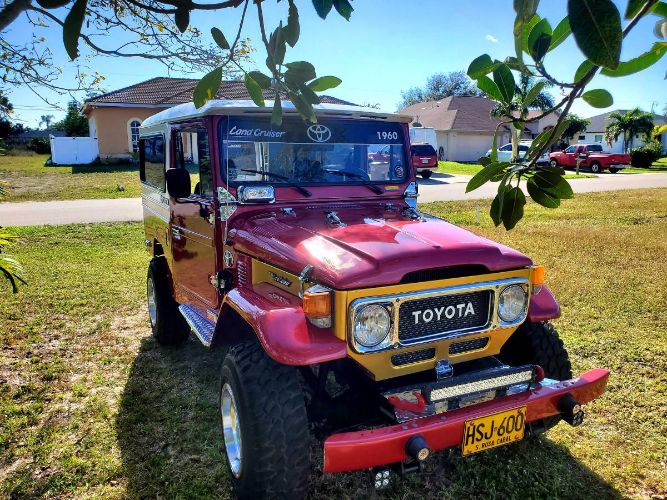
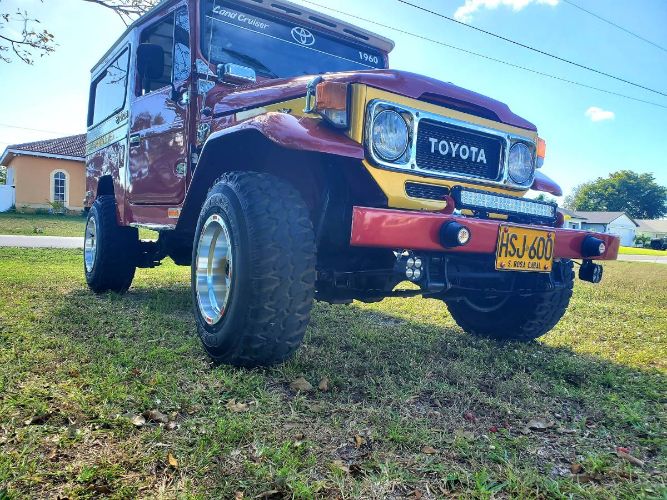
1960 Toyota FJ43
 Dealer
United States
Dealer
United States
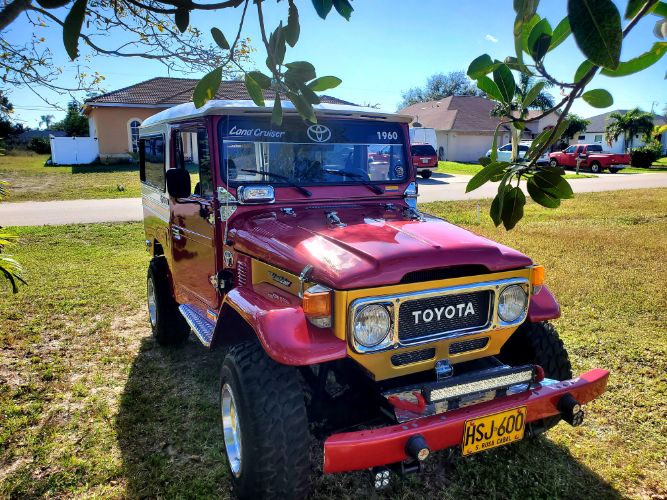
1960 Toyota Land Cruiser
 Dealer
United States
Dealer
United States
1960 Toyota Land Cruiser
 Dealer
United States
Dealer
United States
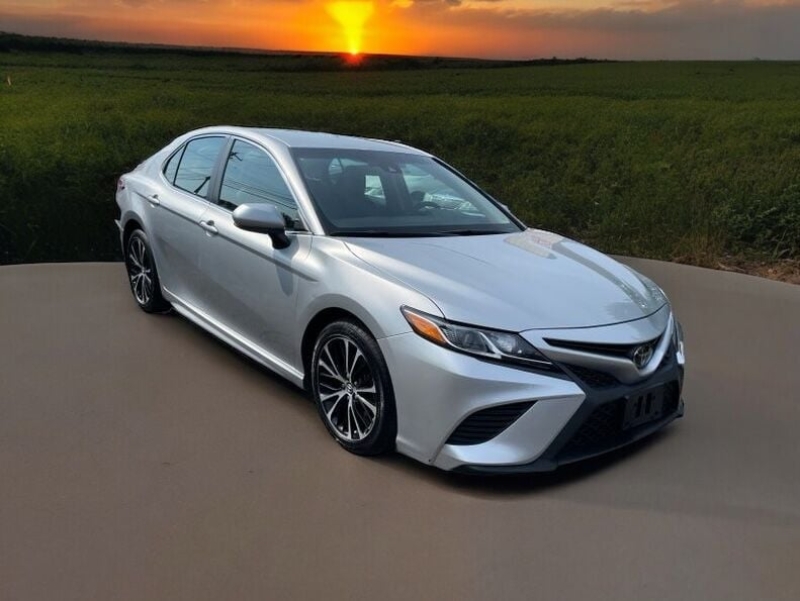
1961 Toyota Camry
Contact Seller
Call this seller?
You're about to call WeBe Autos about the 1982 Toyota Land Cruiser.
+1 (631) 339-0399
Report this Ad
Help us keep the marketplace clean. Our moderation team reviews every report within 24 hours.