
Cadillac Fleetwood Buyer's Guide
The Cadillac Fleetwood is not merely a car — it is the summit of coachbuilt American luxury, the standard by which every full-size automobile of the postwar era was measured, and the vehicle that defined what the word "Cadillac" meant as an aspirational shorthand for the very finest.

Sarah Whitfield here. The Fleetwood name carries history that most buyers don't fully appreciate. Fleetwood Metal Body Company of Fleetwood, Pennsylvania was one of America's premier coachbuilders — crafting custom bodies for chassis from Packard, Lincoln, and Cadillac — before General Motors acquired it in 1925. GM used the Fleetwood name to designate their finest, most carefully constructed bodies from that point forward. When you buy a Cadillac Fleetwood, you're buying the continuation of that coachbuilding heritage applied at industrial scale.
The postwar Fleetwood from 1955 through 1976 represents the apex of this tradition. The 1959 Fleetwood with its famously extreme tailfins is perhaps the most recognizable single American car of the century. The later Fleetwood Brougham is the executive transport standard. Both deserve serious collector attention.
The Fleetwood Heritage
General Motors acquired Fleetwood Metal Body Company in 1925 specifically to elevate the quality of Cadillac's coachwork. The arrangement allowed Cadillac to offer longer, more elaborate bodies with tighter panel fits and richer interior work than the standard Fisher Body production could achieve. By the late 1920s, the Fleetwood name had become synonymous with the best that Cadillac could offer — applied to the extended-wheelbase formal cars, the limousines, and the special-order bodies that occupied Cadillac's uppermost price strata.
The postwar Fleetwood line settled into a defined structure: the Fleetwood 60 Special (a longer-wheelbase formal sedan), the Fleetwood Seventy-Five (the extended-wheelbase limousine and seven-passenger sedan), and eventually the Fleetwood Brougham (the flagship personal luxury car). These were not trim levels in the modern sense — they were distinct models with specific wheelbases, unique body components, and higher prices than the standard DeVille.
1955–1958: The PreTailfin Era
The 1955–1958 Fleetwoods represent Harley Earl's design language at its most confident before the tailfin exuberance of 1959. These are elegant, proportioned cars with the characteristic Cadillac eggcrate grille, modest rear fins developing through the years, and an interior quality that placed them genuinely above the standard DeVille production. The 331ci and 365ci V8 engines of this period are strong, well-understood units that respond to basic maintenance.
1959–1964: The Tailfin Apex
The 1959 Cadillac represents a design moment that has never been equaled for sheer audacity. Harley Earl's final design direction before his retirement produced the highest tailfins in American automotive history — 42-inch fins that swept up from the roofline and ended in twin bullet taillights that are instantly recognizable from any distance. The Fleetwood Sixty Special in 1959 had a 130-inch wheelbase, an interior of genuine luxury, and those extraordinary fins.
1965–1970: The Formal Era
Bill Mitchell's design direction after Earl brought a more controlled elegance to the Fleetwood. The fins were reduced dramatically, replaced by a crisp formal roofline that suited the car's executive character better than the fins had. The 472ci V8 arrived in 1968 — one of the largest passenger car engines in American production history, producing effortless torque that matched the Fleetwood's boulevard-cruiser purpose perfectly.
1971–1976: The Brougham Peak
The Fleetwood Brougham became its own model designation in 1971, separating it definitively from the standard Fleetwood 60 Special. These are the largest, most opulently equipped Cadillacs of the era: the 500ci V8, the opera windows, the padded landau roof, the Dual Comfort front seat with adjustable reclining cushions, and an interior that genuinely rivaled the best European luxury cars of the period on material quality if not on handling dynamics.
| Era | Engine | Wheelbase | Notes |
|---|---|---|---|
| 1955–1958 | 331ci / 365ci V8 | 133 in (60 Special) | Pre-tailfin elegance |
| 1959–1964 | 390ci V8 | 130 in | Tailfin apex |
| 1965–1967 | 429ci V8 | 133 in | Formal era transition |
| 1968–1970 | 472ci V8 | 133 in | New large-displacement era |
| 1971–1976 | 500ci V8 | 133 in | Brougham apex; full luxury |
The Fleetwood 75 Limousine
The Fleetwood Seventy-Five — the formal limousine on the extended 149.75-inch wheelbase — is among the rarest and most expensive Cadillacs for the collector. Production numbers were small (typically under 1,500 per year), many were used as commercial livery vehicles, and survivors in original condition are genuinely uncommon. From a concours judging perspective, a documented original Seventy-Five is a significant find that commands significant premiums at major auctions.
"Among the marque registries, the 1959 Fleetwood Sixty Special in original two-tone finish with documented build sheet is the single most coveted postwar Cadillac for serious collectors. I have examined perhaps thirty in the field — fewer than a dozen were genuine unrestored originals. The authentic survivor commands its premium honestly."
— Sarah Whitfield
Browse Cadillac Fleetwood listings
 Dealer
 United States
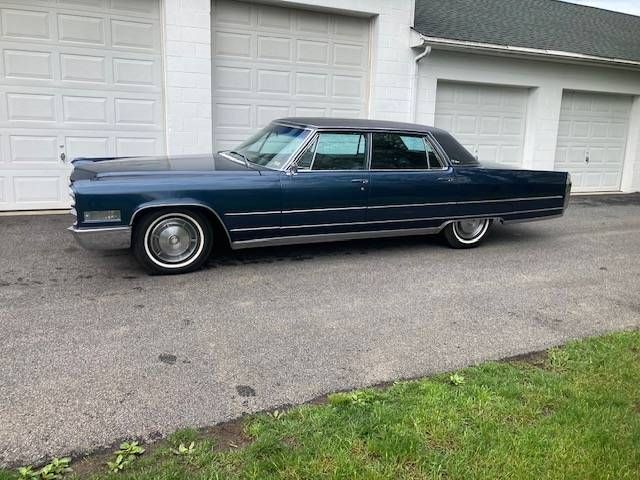
1966 Cadillac Fleetwood
 Dealer
United States
Dealer
United States
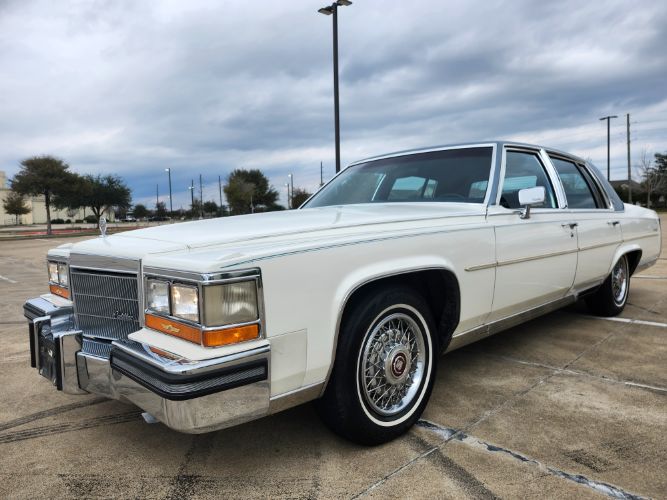
1986 Cadillac Fleetwood
What to Look For
Interior condition is paramount for Fleetwood valuation — the specific upholstery materials, piping details, and hardware on each year are documented in the marque registries, and incorrect replacement materials reduce value significantly. Verify the interior against the production specification for the year. Inspect the vinyl or leather carefully for tears and the correct color code. On 1959–1964 cars, inspect the tailfin structure for rust at the fin bases and the lower quarter panel — these areas trap road spray. On any Fleetwood, check the power seat track operation: the motors are rebuildable but seized tracks indicate overall electrical neglect. On the 500ci V8 (1970–1976), inspect for exhaust smoke and verify the carburetor function — a Rochester Quadrajet that has been sitting will need rebuilding. On the Fleetwood 75 limousines, inspect the rear jump seat mechanisms and the extended roof structure for any leaks or rust.Pre-Purchase Checklist
-
Interior Specification
Compare interior materials and colors against the registry specification for the year — incorrect materials are a value deduction. -
Power Seat Operation
Test all seat positions and the reclining mechanism — seized motors or tracks indicate electrical neglect. -
Tailfin Rust (1959–1964)
Probe the tailfin bases and lower quarters on fin-era cars — trapped road spray creates rust in these locations. -
V8 Cooling System
Warm to operating temperature and monitor for overheating — 472/500ci engines are sensitive to coolant system neglect. -
Carburetor Function
Cold start and warm idle should be smooth — Rochester Quadrajet gums up when the car is stored. -
Air Conditioning
Note whether the AC has been converted from R-12 to R-134a — R-12 systems still operating are valuable on original cars. -
Electrical Ground Straps
Test all accessories — intermittent failures often trace to corroded ground straps rather than component failure. -
Vinyl Roof Condition
Check vinyl roof carefully at all seams — trapped moisture is the primary rust vector on formal-roof cars. -
Body Code Documentation
Verify the body tag and build sheet match the car's specification — especially important before paying documented-example premiums.
Common Issues
Power seat motor failures and seized seat tracks — nearly universal on high-mileage or long-stored examples. Interior vinyl and leather deterioration from age and UV exposure — sourcing original-specification replacement materials requires specialist vendors. 1959–1964 tailfin base rust where fins meet the lower body. Cooling system deterioration on high-displacement V8s — the 472 and 500ci are heat generators that punish neglected coolant and hoses. Rochester Quadrajet carburetor deterioration on stored cars. Air conditioning system R-12 freon requiring conversion to R-134a. Electrical system ground strap corrosion causing intermittent accessory failures.More Fleetwood for sale
 Dealer
United States
Dealer
United States
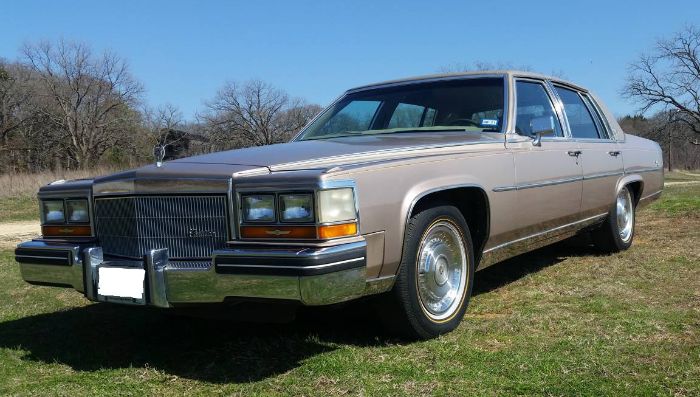
1985 Cadillac Fleetwood
 Dealer
United States
Dealer
United States
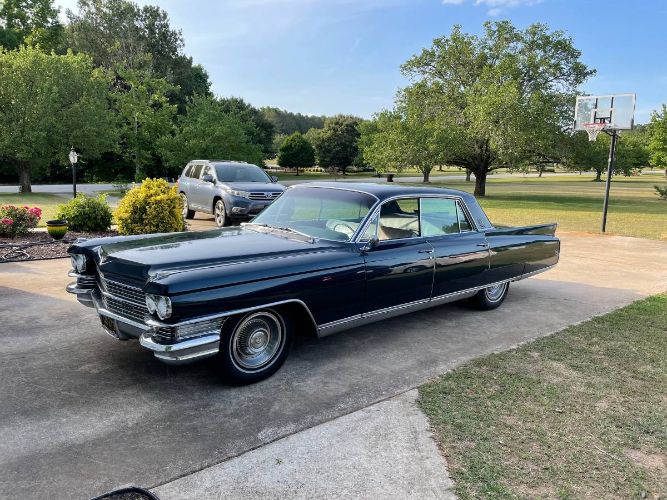
1963 Cadillac Fleetwood
Pricing Guide
1955–1958 Fleetwood 60 Special (driver): $18,000–$35,000. 1959 Fleetwood 60 Special: $35,000–$80,000+ for quality examples. 1960–1964 Fleetwood: $18,000–$40,000. 1965–1970 Fleetwood Brougham: $14,000–$30,000. 1971–1976 Fleetwood Brougham: $12,000–$28,000. Fleetwood 75 Limousine (any era): $20,000–$55,000 depending on condition and documentation. Original-color, matching-numbers documented examples add 30–50% over comparable undocumented cars.Fun Facts
The Fleetwood Metal Body Company, from which Cadillac's most prestigious cars took their name, was a small coachbuilder in Fleetwood, Pennsylvania that General Motors acquired in 1925 specifically for its exceptional craftsmanship. The 1959 Cadillac Fleetwood's tailfins at 42 inches tall remain the highest ever fitted to a production American automobile — a record that has stood for over 65 years. The 500ci V8 in the 1970–1976 Fleetwood displaced 8.2 liters, making it one of the largest passenger car production engines in American automotive history.Frequently Asked Questions
Ready to find your Fleetwood?
Browse 6+ active Cadillac Fleetwood listings on Classic Cars Arena.
View Listings →