
1945 Classic Cars for Sale
VJ Day August 15, 1945: Ford and GM scrambled to restart civilian lines, producing a tiny handful of 1945 passenger cars before year's end
1945 is the transition year, and it is genuinely complicated. Germany surrendered in May. Japan surrendered on August 15. Within weeks, American manufacturers were fighting to retool and restart civilian production. A small number of passenger cars were assembled before December 31, 1945, and those vehicles carry a 1945 model designation.
The numbers are tiny. Ford produced an estimated 34,439 civilian cars in 1945. General Motors plants came back online at different rates. Chrysler managed limited production. These were not new designs. They were 1942 body stampings pulled from storage or lightly tooled, assembled with whatever parts could be sourced in the frantic postwar scramble. Some had mismatched trim because the right pieces simply were not available.
Owning a documented 1945 civilian automobile is owning a piece of the exact moment America exhaled. These cars were built in a state of industrial chaos and genuine national relief. The workers building them had brothers and sons still coming home from the Pacific. Find a legitimate 1945 civilian car and you have something genuinely uncommon, because most buyers default to 1946 without realizing 1945 production happened at all.
- Ford Motor Company restarted civilian passenger car production on July 3, 1945, becoming the first American automaker to build a postwar civilian car, a Ford Super De Luxe Tudor Sedan.
- Estimated total U.S. civilian passenger car production for 1945 was roughly 69,500 units across all manufacturers, produced entirely in the final months of the year after VJ Day.
- The War Production Board formally lifted restrictions on civilian automobile production on August 20, 1945, five days after Japan's surrender, triggering an immediate but constrained industry restart.
Showing 1 listing
 Dealer
 United States
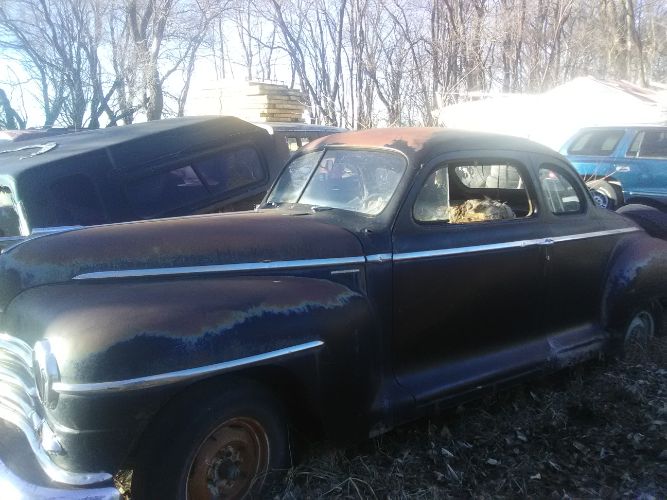
1945 Plymouth Convertible
Market: Verified 1945 civilian automobiles with documented production dates command a collector premium purely for their historical rarity. A well-documented 1945 Ford or Chevrolet in good condition might trade between $18,000 and $45,000, while rarer body styles or open cars could go higher. The premium exists because most buyers do not know these exist, and those who do pay for the story.
Buyer's note: Demand documented proof of the 1945 build date, specifically a firewall data plate or factory broadcast sheet, because many 1942 and 1946 cars have been incorrectly titled as 1945 models over the decades.