
Dodge D100 Buyer's Guide
The Dodge D100 gave the American half-ton pickup a distinct personality when the Chevy and Ford dominated the market — a tough, honest work truck with the legendary Slant-Six and optional V8 power that has earned a quiet but devoted collector following.

Robert Halloran here. The Dodge D-series truck doesn't get the same collector noise as a Chevy C10 or an early Ford F-100, and I understand why — the production numbers were lower and the factory-show presence was smaller. But I've driven these trucks and worked on them, and I'll tell you plainly: the D100 with the 225ci Slant-Six is one of the most durable powertrain combinations ever put in an American half-ton. The Slant-Six doesn't stop. Water it, oil it, and it doesn't stop.
The 1961–1971 D-series Dodge trucks — D100 for half-ton, D200 for three-quarter ton — have an honest, workmanlike character that the restomod crowd is discovering. They're not as flashy as a C10, but they're solid trucks with good bones and a loyal parts network.
D-Series History: 1961–1971
Dodge launched the second-generation D-series in 1961 with a complete body redesign. The new trucks were cleaner than the 1957–1960 "Forward Look" trucks that preceded them — lower hood line, wider cab, and a more modern appearance that competed directly with the current Chevrolet and Ford full-size pickups. The design ran with minor updates through 1971, when the third-generation "Sweptline" body arrived.
The 1961–1971 D-series came in two distinct bed configurations: the Sweptline (flush, integrated fenders matching the cab width) and the Utiline (traditional separate-fender design with running boards). The Sweptline was the modern choice; the Utiline has the traditional proportions that collectors often prefer visually. Both are collectible; the Utiline is rarer because most working buyers chose the Sweptline for its wider, more practical bed.
The Power Wagon Connection
Dodge's Power Wagon heritage — the military-derived W-series trucks built from 1946 forward — gave the D-series a credibility with serious truck buyers that neither Chevrolet nor Ford could claim in the 1960s. The Dodge name was synonymous with heavy-duty capability, and even the standard D100 benefited from this association. The D200 and D300 variants that shared the body were legitimately capable work trucks with the Power Wagon's DNA.
Engine Options
| Engine | Type | Output | Notes |
|---|---|---|---|
| 225ci Slant-Six | OHV inline-6 | 140–145 hp | The right choice; legendary reliability |
| 318ci V8 | LA V8 | 230 hp | Adequate performance, easy to find parts |
| 360ci V8 | LA V8 | 245–255 hp | 1971+ option; torquey, practical |
| 383ci V8 | B-block | 270–330 hp | Optional big-block for heavy haulers |
The 225ci Slant-Six is the correct engine for a D100 buyer who wants authenticity and low maintenance cost. It's canted 30 degrees from vertical — the "slant" — which lowered the hood line and improved weight distribution. The architecture is simple, the reliability is extraordinary, and the engine is well-documented for rebuild when the time comes. The 318ci LA V8 is the practical performance choice: good torque, plentiful parts, and easier to work on than the big-block options.
Sweptline vs. Utiline
The choice between Sweptline and Utiline is the first decision any D-series buyer makes. The Sweptline (smooth, flush fenders matching cab width) is the more available truck — it was what most working buyers chose. The Utiline (separate rear fenders with running boards) is rarer and has a traditional, more visual appeal to collectors who want the "old truck" look. Neither is wrong. The Utiline carries a modest premium in today's market for its scarcity.
"The D100 with the Slant-Six is one of those combinations you don't appreciate until you've owned it for a while. It just keeps going. Hot days, cold starts, long miles — the Slant-Six doesn't complain. Don't buy somebody else's project V8 swap. Buy the truck with the original six in it and drive it."
— Robert Halloran
Market Position
The D-series has been discovered by the restomod crowd in the past five years, and prices have responded accordingly. Clean 1968–1971 Sweptline trucks in Sun Belt condition are no longer inexpensive, but they're still priced 25–40% below equivalent C10s. The Utiline body style is the most sought-after and commands the highest prices. As the C10 market matures at higher price levels, Dodge buyers are benefiting from the spill-over attention.
Browse Dodge D100 listings
 Dealer
 United States
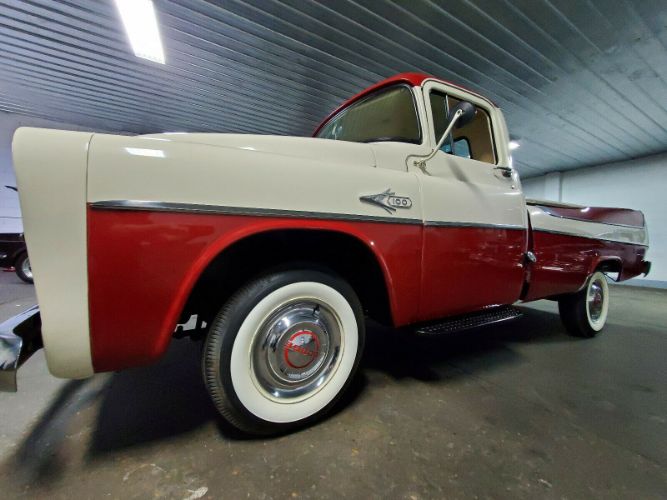
1957 Dodge D100
 Dealer
United States
Dealer
United States
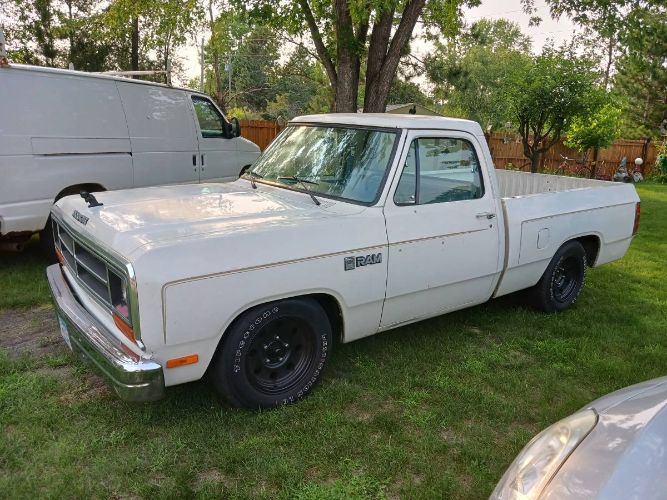
1986 Dodge D100
What to Look For
Cab corners are the primary rust location — probe thoroughly, especially at the lower rear cab area where water pools. The floor pans are the second concern on Midwestern and Northeastern trucks. On Utiline trucks, inspect the separate rear fender mounting points and the running board brackets for rust perforation. Verify the Slant-Six runs clean without oil consumption — a cold-start smoke test shows ring condition. On V8 trucks, check the LA block for coolant leaks from the intake manifold gaskets (a known weak point on the 318ci). Verify the transmission (manual or A727 Torqueflite automatic) operates without slipping. On 4WD D-series, test both 4H and 4L engagement.Pre-Purchase Checklist
-
Cab Corner Rust
Probe cab corners thoroughly — primary rust location, often worse than it appears on the surface. -
Floor Pan Condition
Inspect floor from underneath and inside — perforation is common on unrestored trucks. -
Slant-Six Smoke Test
Cold start and warm idle — clean exhaust confirms ring condition; blue smoke requires investigation. -
LA V8 Intake Gaskets
On 318/360ci trucks, look for coolant leaks around the intake manifold — a known weak point. -
Utiline Fender Mounts
On Utiline trucks, probe rear fender mounting points and running board brackets for rust. -
Bed Floor Condition
Inspect the bed floor planks and the metal mounting structure underneath. -
Transmission Function
Test manual through all gears or A727 auto through all selector positions — no slipping. -
4WD Engagement (if equipped)
Test 4H and 4L — smooth engagement with no grinding. -
Wiring Condition
Check all lights and switches — deteriorated wiring harnesses are common on 50+ year old trucks.
Common Issues
Cab corner rust — universal on unrestored salt-belt trucks. Floor pan perforation. Utiline running board bracket rust. Slant-Six oil leaks from the valve cover gasket (minor but messy). LA V8 intake manifold gasket coolant leaks. Rust in the Sweptline bed floor and tailgate mounting points. Wiring harness deterioration causing intermittent electrical issues on 40+ year old trucks. Brake system rubber components requiring refresh on any unrestored example. Manual transmission synchromesh wear on high-mileage trucks.More D100 for sale
 Dealer
United States
Dealer
United States
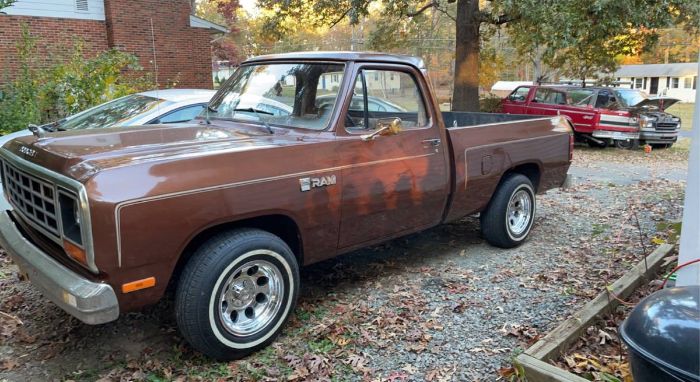
1984 Dodge D100
 Dealer
United States
Dealer
United States
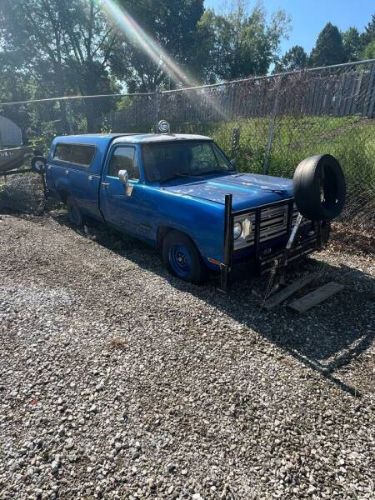
1972 Dodge D100
Pricing Guide
1961–1967 D100 Sweptline (Slant-Six driver): $10,000–$22,000. 1968–1971 D100 Sweptline: $12,000–$28,000. D100 Utiline (any year): $16,000–$35,000. D100 with V8 and 4WD: $18,000–$38,000. Rust-free Sun Belt examples command 30–40% premium. Show-quality restorations: $35,000–$55,000. The market has appreciated 40–50% over the past five years and continues to be discovered by C10 buyers priced out of that segment.Fun Facts
The 225ci Slant-Six engine that powered the D100 was designed by Chrysler's engineers in 1959 and entered production in 1960 — and a version of this engine was still in production until 1987, a 27-year run that speaks to its fundamental correctness. The Slant-Six's tilted orientation (30 degrees from vertical) was intentional: it lowered the center of gravity, allowed a lower hood line, and moved weight distribution toward the center of the vehicle. Dodge's D-series trucks were the only American pickups of the era with a truly civilian-adapted military truck (the Power Wagon W-series) as an acknowledged ancestor.Frequently Asked Questions
Ready to find your D100?
Browse 6+ active Dodge D100 listings on Classic Cars Arena.
View Listings →