
Dodge Coronet Buyer's Guide (1965–1976)
The Dodge Coronet is the foundation of the Mopar B-body universe — the same platform that underpins the Charger, Road Runner, and Super Bee. The Super Bee package on the Coronet is the hidden gem of B-body collecting: Hemi-eligible, properly fast, and still priced below the Charger equivalent. Know what you're looking at before the seller does.

People focus on the Charger and overlook the Coronet, which has kept prices more reasonable for longer than they should have stayed. The platform is identical — same frame, same suspension geometry, same engine bay that accepts everything from a 318 two-barrel to a 426 Hemi. The Super Bee was literally a Coronet with a performance package, and it was built that way because Dodge needed a budget muscle car to compete with the Plymouth Road Runner. That packaging decision created one of the best values in Mopar collecting. I've seen well-documented Super Bee Coronets sell for half what a comparable Charger would bring. That gap has been closing, but it's still real.
History & Overview
Dodge reintroduced the Coronet nameplate for 1965 on the new B-body platform — the mid-size body that would become the foundation of Mopar's muscle car era. The Coronet was positioned as a mid-size model between the full-size Polara and the compact Dart, and it was immediately available with the full range of Mopar performance engines.
1965–1967: The Establishment Years
The 1965–1967 Coronets are the classic B-body shape — slightly smaller than later cars, cleaner lines, and available with the 426 Hemi from its introduction in 1966. These are true muscle car era cars with all the engine options. The 1966 introduction of the 426 Street Hemi made the Coronet one of the first production cars to offer the engine that had been dominating NASCAR and drag racing.
1968–1970: The Super Bee Era
Dodge introduced the Super Bee package for 1968 as the Coronet's performance sub-model — positioned to compete with Plymouth's Road Runner on price and performance. The Super Bee came standard with the 383 Magnum four-barrel, a heavy-duty suspension package, and the bumblebee stripe graphic. The 440 Six-Pack and 426 Hemi were available options. This three-year window represents the peak of the Coronet's collector appeal and commands the highest prices.
1971–1976: The Final B-Body Generation
The 1971 Coronet received a major redesign with a new fuselage-style body. Compression ratios dropped in 1971 to accommodate lower-octane fuel, and insurance surcharges were increasingly penalizing high-performance cars. The Super Bee package moved to the Charger after 1970. The 1971–1976 Coronet is a large, comfortable B-body car but represents the decline of the performance era rather than the peak. Values are lower, though clean early-1970s examples are finding appreciation.
The Mopar B-Body Engine Family
The Coronet's engine bay accepts the full range of Mopar B and RB-series engines:
- 318 A-body two-barrel: 230 hp. The basic transportation engine. Reliable and plentiful but the least interesting option.
- 383 Magnum four-barrel: 335 hp. The standard Super Bee engine and the sweet spot for daily-driver muscle car use.
- 440 Magnum (single four-barrel): 375 hp. More torque than the 426 Hemi, better street manners, and a more accessible price point. Underrated by many buyers.
- 440 Six-Pack (three two-barrels): 390 hp. The look and sound of three carbs is hard to argue with. Period-correct performance package.
- 426 Street Hemi (dual four-barrels): 425 hp (factory-rated, understated). The benchmark. Documented Hemi Coronets are significant collector cars.
Rust Locations
The Mopar B-body has a predictable rust pattern. Lower rear quarters — the area at the bottom of the rear quarter panel directly behind the rear wheel opening — are the signature failure zone. Water is thrown up by the rear tire, collects at the lower quarter seam, and deteriorates from inside. Floor pans are the secondary zone. Trunk floor corners collect water from trunk lid seal failures. The rear frame rails under the rear axle area — accessible only from under the car — are a structural rust zone on compromised examples.
| Engine | Power | Super Bee? | Notes |
|---|---|---|---|
| 318 two-barrel | 230 hp | No | Base transportation engine |
| 383 Magnum | 335 hp | Standard | Sweet spot for driver use |
| 440 Magnum | 375 hp | Option | Best street torque in the lineup |
| 440 Six-Pack | 390 hp | Option | Three-carb visual drama |
| 426 Hemi | 425 hp | Option | The benchmark — verify with documentation |
"The Coronet Super Bee is the value play in B-body Mopar collecting that fewer people talk about than should. Same platform as the Charger, same engine options including the Hemi, but buyers have been conditioned to chase the Charger. I've seen documented 440 Six-Pack Super Bees sell for thirty percent less than a comparable Charger. That premium compression is still there if you want the Charger — but if you want the car rather than the name, the Super Bee is where I'd put my money."
— Mike Sullivan
Pricing & Market
Base Coronet driver quality with 318 or 383 power: $14,000–$22,000. Super Bee driver with 383 Magnum: $28,000–$45,000. Super Bee with 440 Six-Pack documentation: $50,000–$70,000. Documented 426 Hemi Coronet: $80,000–$120,000+. Convertible body styles add a 15–25% premium at all condition levels. The 1971–1976 post-muscle era cars trade for $10,000–$20,000 at driver condition with modest collector premium.
Browse Dodge Coronet listings
 Dealer
 United States
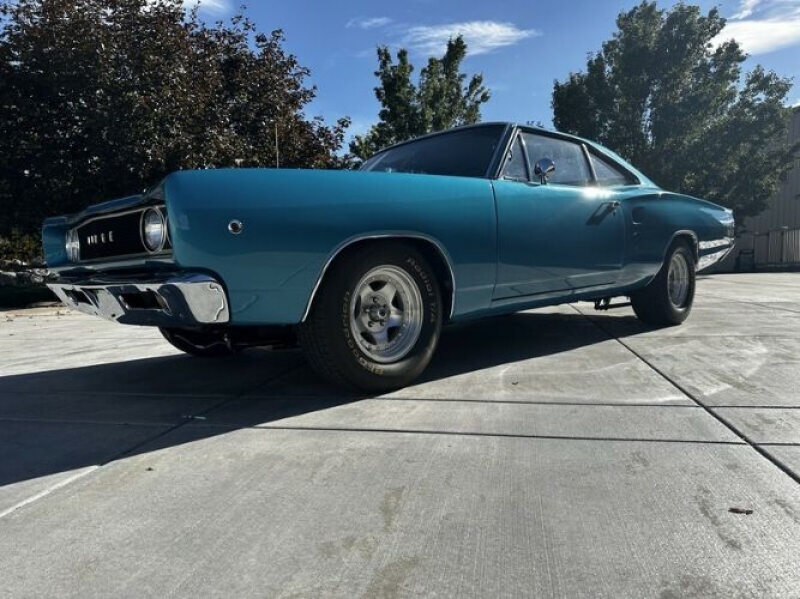
1968 Dodge Coronet
 Dealer
United States
Dealer
United States
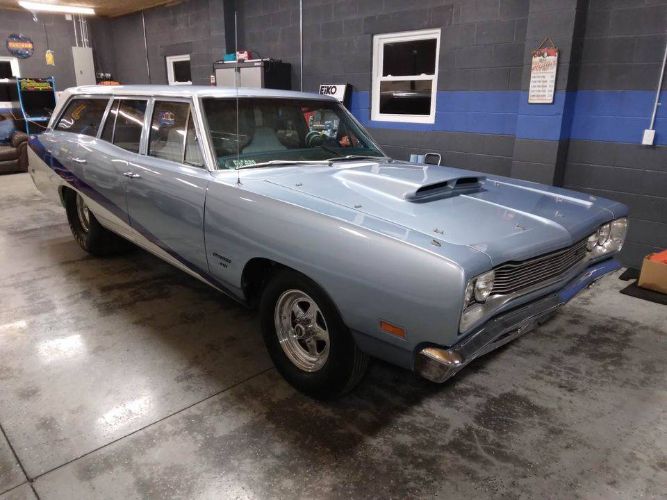
1969 Dodge Coronet
What to Look For
Verify engine codes against the fender tag and VIN before any powertrain valuation. Lower rear quarters are the B-body signature rust zone — inspect at the bottom of the rear quarter panel behind the wheel openings from inside the wheel well. Floor pans under both front seats. Trunk floor corners and trunk lid seal condition. Rear frame rails under the axle area — requires getting under the car. Look for the build sheet under rear seat cushion or trunk area — its presence significantly aids authentication. On Super Bee cars, verify the bumblebee stripe is original (paint code evidence) vs. added. Hemi cars require VIN verification — the engine code is embedded in the VIN on 1968+ Dodge products. Check all rubber seals and weatherstripping on convertibles.Pre-Purchase Checklist
-
VIN and fender tag verification
Decode VIN and match to fender tag — engine code must be consistent for any premium valuation -
Lower rear quarter inspection
Inspect from inside wheel well at bottom of quarter panel — primary B-body rust zone -
Floor pans
Lift front seat carpet and check for rust-through or patch repairs -
Trunk floor corners
Remove trunk mat and probe all four corners for rust penetration -
Rear frame rails
Get under car and inspect frame at rear kick-up area for structural rust -
Build sheet search
Check under rear seat cushion and trunk area for original build sheet -
Hemi authentication
For 426 Hemi cars: verify VIN engine code, block casting numbers, and date codes -
Torsion bar alignment
Check front ride height and verify torsion bar adjustment is correct -
Multi-carb function (440/Hemi)
Verify all carburetors open and function correctly — six-pack progressive linkage especially -
Power steering leaks
Check power steering pump and lines for seepage -
Convertible body structure
Check door gap consistency and windshield frame for flex-related issues on drop-tops
Common Issues
Lower rear quarter rust is the defining B-body issue — the inner structure corrodes before the exterior skin shows it. Floor pan rust accompanies quarter rot. Trunk floor corners deteriorate from trunk lid seal failures — universal on high-mileage cars. Rear frame rust at the kick-up area is a structural issue visible only from underneath. Mopar torsion-bar front suspension requires periodic adjustment and eventually wears at the torsion bar anchor points — a proper alignment reveals problems. Power steering pump leaks are common on hydraulic systems with age. Carburetor rebuilds are needed on most multi-carb setups (440 Six-Pack, Hemi) that haven't been recently serviced. Engine identity fraud is a documented issue on Hemi cars — a 440-to-Hemi conversion using correct cosmetic components fools casual inspection; verify VIN encoding.More Coronet for sale
 Dealer
United States
Dealer
United States
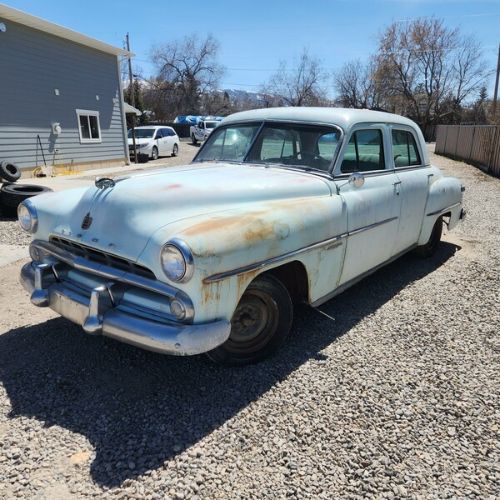
1951 Dodge Coronet
 Dealer
United States
Dealer
United States
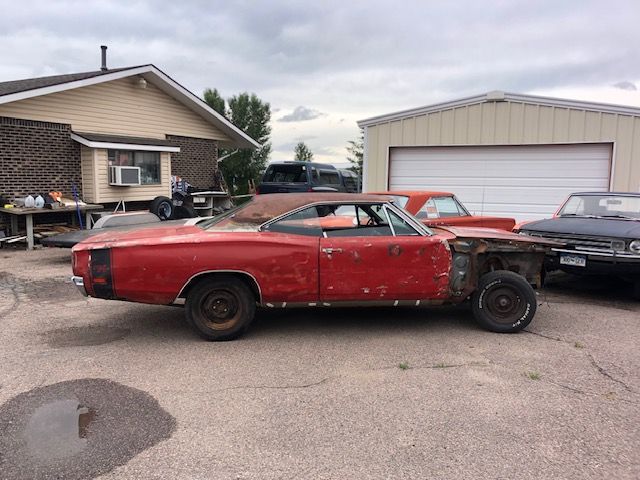
1969 Dodge Coronet
Pricing Guide
Base driver (318/383): $14,000–$22,000. Super Bee 383 driver: $28,000–$45,000. Super Bee 440 Six-Pack documented: $50,000–$70,000. Documented 426 Hemi Coronet: $80,000–$120,000+. Convertibles add 15–25% at all condition levels. 1971–1976 cars trade at $10,000–$20,000 driver condition. The Coronet consistently prices 20–35% below equivalent Charger models — that gap represents the best value proposition in B-body collecting for buyers who want the car rather than the nameplate.Fun Facts
The 1966 Dodge Coronet 426 Hemi was one of the first production cars sold to the public with an engine that had been winning NASCAR races — the street Hemi was barely detuned from the race version. The Super Bee package was introduced for $3,295 in 1968 — cheaper than the base Charger. Mopar B-body cars appear in more drag racing record books than any other factory platform from the muscle car era. The Coronet name was actually used by Dodge as far back as 1950 — the 1965 B-body revival was a deliberate callback to an earlier prestigious nameplate.Frequently Asked Questions
Ready to find your Coronet?
Browse 6+ active Dodge Coronet listings on Classic Cars Arena.
View Listings →