
Ford Customline Buyer's Guide
The Ford Customline was the volume leader of the early 1950s Ford lineup — a mid-trim family car that outsold its competition through a combination of honest value, clean styling, and Ford's new overhead-valve V8 that made the competition look old overnight.

Mike Sullivan here, and I want to make a case for the Ford Customline that most people haven't considered. These early 1950s Fords are among the most undervalued collectibles in the market right now. They're beautiful cars — clean, proportionate, and designed with a confidence that the excess of the late 1950s hadn't yet reached. And the Y-block V8 that Ford introduced in 1954 is one of the most underrated American engines of the postwar period.
The Customline was Ford's mid-trim offering from 1952 through 1956, sitting between the basic Mainline and the premium Crestline/Fairlane. It was the car most Americans actually bought — not the stripped fleet model, not the fully optioned showroom queen, but the one that represented a genuine step up from basic transportation without breaking the budget. Finding one today means finding an honest, practical American car from the decade that defined what the American family car could be.
Five Years of Evolution
The Customline ran through two significant design generations within its five-year lifespan. The 1952–1953 cars used the final development of the Ford flathead V8 alongside the overhead-valve inline-six, and their styling reflected the transition from the rounded, pre-war aesthetic toward the cleaner slab-sided look of the 1950s. These are honest, attractive cars that have been somewhat overlooked in favor of the more dramatic 1955–1956 designs.
Everything changed with the 1954 model year. Ford introduced the Y-block overhead-valve V8 (239ci initially, growing to 272ci and 292ci in subsequent years), which immediately made the flathead feel obsolete. The Y-block wasn't just more powerful — it was a modern engine in a way the flathead wasn't, with overhead valves, better breathing, and a more developed cooling system. The 1954 Customline with a Y-block V8 drove like a completely different car than the 1953 with a flathead.
The 1955–1956 High Point
The 1955 Ford represented a genuinely fresh design that caught both GM and Chrysler off guard. The clean, elegant body with its lower hood line, the integrated tailfins, and the available two-tone color combinations put Ford in genuine competition with the best-styled cars of the period. The 1955 Customline in the Victoria hardtop body style is particularly handsome — the pillarless design, the swept-back roofline, and the color options create a car that looks expensive without being ostentatious.
The 1956 Customline received minor updates while maintaining the 1955 body's fundamental elegance. The grille was revised, safety features were emphasized in marketing (Ford made "lifeguard design" a selling point in 1956, including a deep-dish steering wheel and optional seatbelts), and the 292ci V8 became the primary offering for 1956 (the 272 had been the 1955 base V8). A 1956 Customline with the Thunderbird Special 312ci V8 (a factory option) is one of the most underrated performance bargains in early postwar American cars.
Body Styles Worth Knowing
The Customline was available in a range of body styles across its production run: the two-door Tudor sedan (highest volume, most common), the four-door Fordor sedan (family choice), the Victoria two-door hardtop (no B-pillar, most collectible), and the country sedan station wagon (available on Customline trim in some years). The Victoria hardtop is the premium collector body style — its combination of clean styling and open-air feel makes it the Customline most people want when they imagine one.
The Y-Block in Practice
Ford's Y-block V8 earned a mixed reputation over its production life, and some of that reputation was deserved. The engine has a tendency toward oil retention — essentially, oil doesn't drain back from the upper engine as effectively as on most V8 designs, leading to oil consumption and blue smoke if valve seals aren't maintained. This earned it the nickname "oil burner" among some owners. The fix is well understood: fresh valve seals, consistent oil changes, and keeping the PCV system functional address the issue.
Beyond the oil management quirk, the Y-block is a robust, willing engine that responds well to basic maintenance. Carburetor rebuilds, ignition tune-ups, and cooling system attention keep these engines running indefinitely. Parts availability is good through Ford specialists and the established aftermarket, and the engine has a large enough enthusiast following that expertise is readily available.
Browse Ford Customline listings
 Dealer
 United States
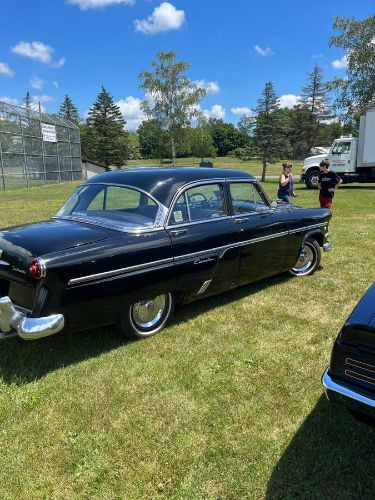
1954 Ford Customline
 Dealer
United States
Dealer
United States
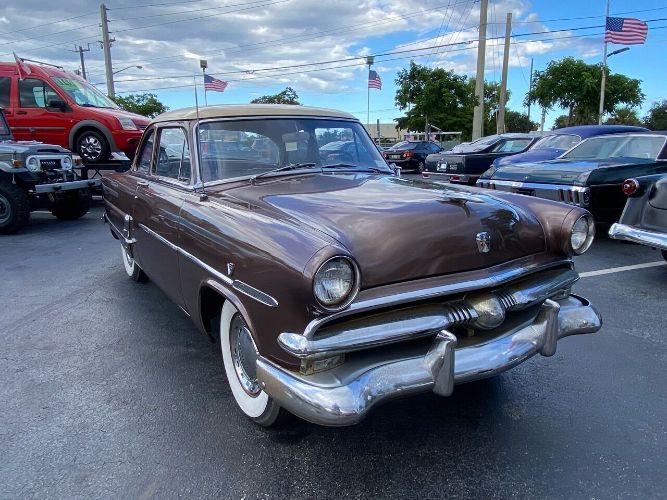
1953 Ford Customline
What to Look For
Inspect lower rocker panels and rear quarter lower edges for rust — common on cars from northern states. Check the floors from underneath for perforation. On Victoria hardtop models, inspect the door seal areas and window channels for water intrusion damage. Verify the Y-block V8 isn't consuming oil excessively on a warm test drive — watch for blue exhaust smoke. Check the two-speed Ford-O-Matic automatic (if equipped) for smooth engagement. Confirm Victoria hardtop body panels are original — these cars attract restoration work that can involve non-matching panels.Pre-Purchase Checklist
-
Y-Block Oil Consumption
Test drive at highway speed and check for blue exhaust smoke — oil consumption is manageable but should be known upfront. -
Rocker Panel Rust
Probe the lower rocker panels and rear quarter lower edges — common rust locations on northern examples. -
Floor Pan Condition
Check floors from underneath and lift the carpet inside — perforation is common on unrestored cars. -
Victoria Panel Authenticity
On hardtop models, check window channel alignment and body seams for evidence of non-original panel replacement. -
Ford-O-Matic Transmission
Test automatic transmission through all ranges — smooth gear changes with no slipping or delayed engagement. -
Cooling System
Verify operating temperature stays in the normal range during warm idle — overheating is a recurring issue on deferred maintenance cars. -
Trim Completeness
Inventory the chrome trim pieces — replacement trim can be expensive and varies in quality by supplier. -
Engine Identification
Note the engine type (flathead vs Y-block) and displacement for accurate valuation.
Common Issues
Y-block V8 oil consumption from worn valve stem seals — well-understood and manageable issue. Lower rocker panel and rear quarter rust on northern-state cars. Floor pan rust under the carpet and door sill areas. Ford-O-Matic automatic transmission wear on high-mileage examples. Cooling system inefficiency leading to overheating in traffic on the 1952–1953 flathead examples. Incorrect or non-original body panels on restored Victoria hardtops.More Customline for sale
 Dealer
United States
Dealer
United States
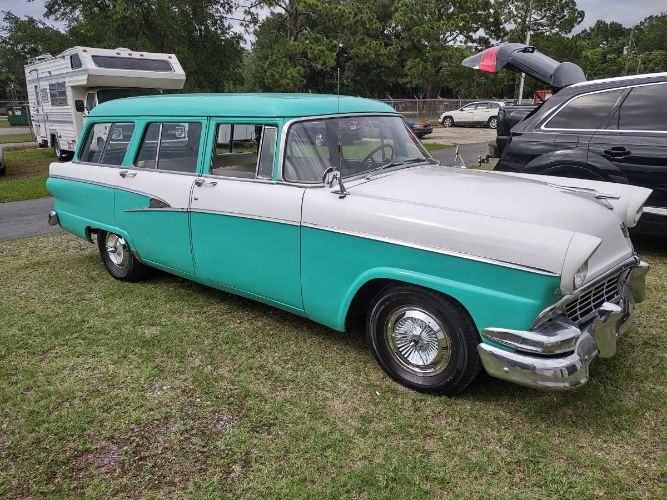
1956 Ford Customline
 Dealer
United States
Dealer
United States
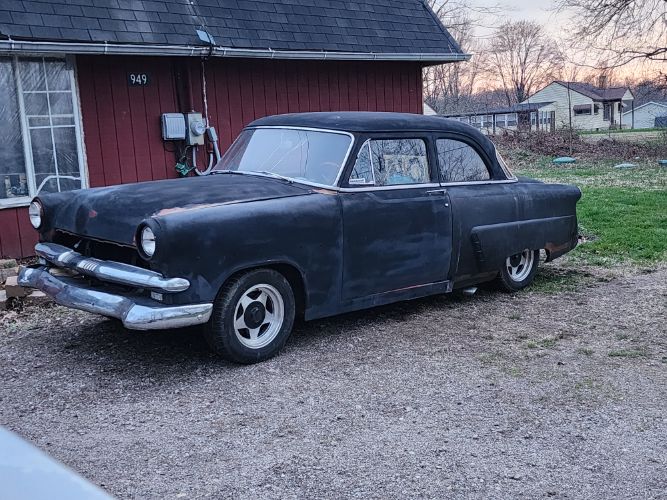
1953 Ford Customline
Pricing Guide
1952–1953 Tudor sedan: $8,000–$16,000. 1954–1956 Tudor sedan: $10,000–$20,000. Victoria hardtop (any year): $18,000–$35,000. 1955–1956 Victoria with Y-block V8: $22,000–$40,000. Station wagon variants: $15,000–$30,000. The premium Y-block engines (272, 292, 312) add $2,000–$5,000 value over base inline-six cars.Fun Facts
The 1956 Ford Customline was one of the first American cars marketed specifically on safety features — the "Lifeguard Design" campaign included a deep-dish steering wheel, padded dashboard, and optional seatbelts at a time when most manufacturers were marketing horsepower exclusively. The Y-block V8's unusual oiling issue earned it the "oil burner" nickname, which was unfair — properly maintained Y-blocks run cleanly and last well past 200,000 miles.Frequently Asked Questions
Ready to find your Customline?
Browse 6+ active Ford Customline listings on Classic Cars Arena.
View Listings →