
Ford Econoline Buyer's Guide
The Ford Econoline pioneered the American van as a practical vehicle — a compact, front-axle-over-engine design that fit more cargo than a pickup in less overall length, and became the foundation of a custom van culture that defined 1970s road culture.

Robert Halloran here. The Econoline doesn't get the collector attention of a VW Bus or a Chevy Van, but it probably should. The first-generation E-Series (1961–1967) is one of the most mechanically clever vehicles ever designed for American roads: the engine sits between the front seats, the front axle sits ahead of the driver, and the result is a vehicle that maximizes cargo capacity within a short overall length. It's a practical-engineering tour de force.
The custom van movement of the 1970s adopted the Econoline enthusiastically, and the second and third generations (1968–1974) have a devoted following that treats them as legitimate collector vehicles. A properly sorted classic Econoline — whether it's a clean original van or a period-correct custom — is a genuinely rewarding ownership experience.
First Generation (1961–1967): The Engineering Masterpiece
The original Econoline was based on the Falcon platform and used the same 144ci and 170ci inline-six engines mounted in the front cab, between the seats, ahead of the firewall. This "cab-forward" configuration wasn't just a packaging solution — it gave the Econoline a turning radius smaller than a contemporary full-size pickup and a cargo floor that extended essentially from the front axle to the rear bumper.
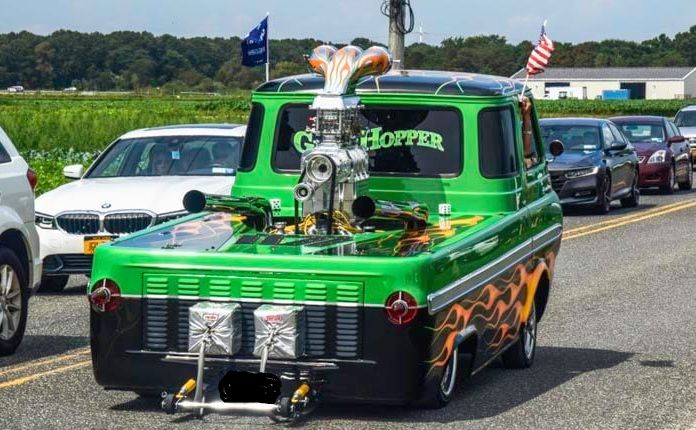
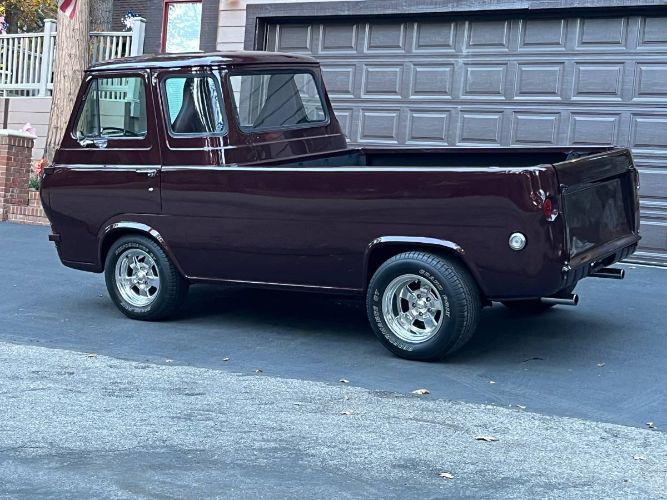
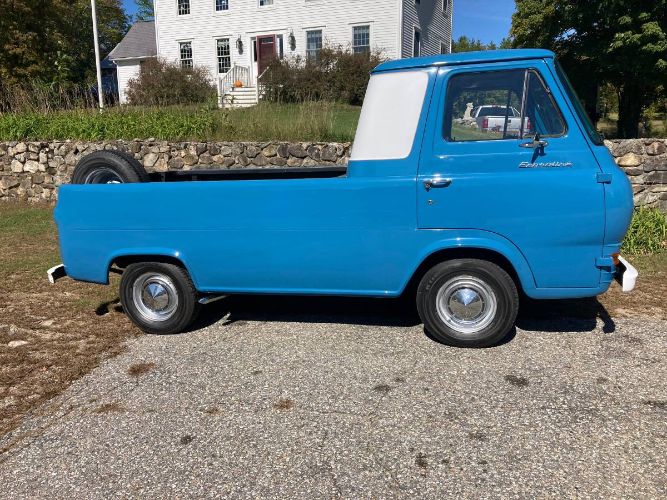
The 1961–1967 Econoline was available as a panel van, a window van, and a pickup (with a short open bed behind the cab). The pickup version was particularly successful as a contractor vehicle — the cab-forward design gave it a usable bed length in an overall footprint shorter than a conventional pickup. Vans of this era were genuinely work vehicles, and many first-gen Econolines accumulated enormous mileage in commercial service.
The collector interest in first-gen Econolines comes from the same nostalgia mechanism that has elevated the VW Bus: these are honest, simple vehicles with a period-correct character that nothing modern replicates. Finding a clean, rust-free first-gen in original condition is increasingly difficult and increasingly valuable.
Second Generation (1968–1974): The Custom Van Era
Ford redesigned the Econoline for 1968, moving to a more conventional layout with the engine under a front doghouse cover inside the cab. The new design was larger, more capable, and more comfortable — but it lost some of the first-gen's minimalist purity. In compensation, it gained a genuine V8 option for the first time (240ci inline-six was standard; 300ci inline-six and 302ci V8 were available), which transformed the van's performance character.
The 1968–1974 Econoline was the van that custom builders adopted most enthusiastically in the 1970s. Side windows, porthole windows, raised roofs, custom paint, shag carpet, and elaborate interior treatments made these vans the mobile living spaces of a generation. Period-correct van customs from this era are legitimate collector vehicles — the good ones represent American folk art from a specific cultural moment.
The Club Wagon Variation
Ford offered a passenger-carrying variant called the Club Wagon alongside the cargo van from 1961 onward. The Club Wagon seated up to 12 passengers and was used extensively for airport shuttles, church groups, and family hauling. Clean Club Wagons are now sought after for conversion to camper use — the passenger configuration means the interior is already designed for human habitation in a way that cargo vans are not.
Browse Ford Econoline listings
 Dealer
 United States
1965 Ford Econoline
 Dealer
United States
Dealer
United States
1963 Ford Econoline
What to Look For
Rust is the primary concern and follows specific patterns: the lower cab area around the front wheel wells, the floor pan (particularly around the engine doghouse cover on second-gen), and the lower body seams. On first-gen models, the cab floor is especially vulnerable to rust from the engine's heat and moisture. Verify the inline-six starts reliably and idles smoothly — carburetor issues are common on unrestored engines. On second-gen V8-equipped vans, check for cracked exhaust manifolds and proper cooling system function. Custom van interiors add no monetary value unless they're period-correct and exceptional quality.Pre-Purchase Checklist
-
Cab Floor Rust (First Gen)
On 1961–1967 models, inspect cab floor around the front engine location — heat and moisture cause accelerated rust here. -
Floor Pan Condition
Check the main floor pan for perforation from underneath and inside. -
Lower Body Seams
Probe lower body seams on both sides — water collects here and causes hidden rust. -
Inline-Six Carburetor
Test cold start and idle stability — carburetor rebuilds are standard maintenance on Falcon-era sixes. -
302ci V8 (if equipped)
Check for rear main seal leaks and cracked exhaust manifolds on V8-equipped second-gen vans. -
Cooling System
Verify the operating temperature stays in the normal range — the compact engine bay can trap heat. -
Custom Interior Assessment
On custom vans, evaluate whether modifications are period-correct or modern — this determines restoration direction. -
Roof Integrity
On raised-roof conversions, inspect the roof seam for leaks and rust.
Common Issues
Lower cab floor rust around the engine on first-gen models. Floor pan perforation from moisture and road salt. Lower body seam rust on both generations. Falcon-derived 144/170ci inline-six carburetor issues on first-gen. Second-gen 302ci V8 rear main seal leaks. Custom van interior modifications that complicate restoration. Roof rust on high-roof conversion vans from leaking roof seals.More Econoline for sale
 Dealer
United States
Dealer
United States
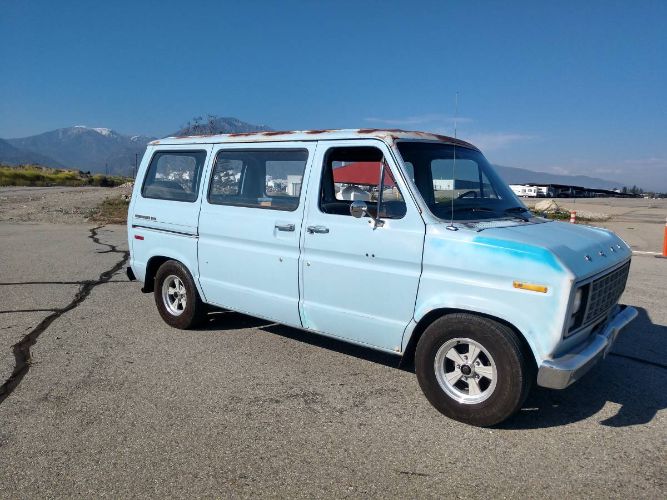
1979 Ford Econoline
 Dealer
United States
Dealer
United States
1966 Ford Econoline
Pricing Guide
1961–1967 first-gen panel van (original): $8,000–$20,000. Clean first-gen: $18,000–$35,000. 1968–1974 second-gen cargo van: $6,000–$15,000. Period-correct custom van (1968–1974, quality build): $15,000–$35,000. Club Wagon passenger van: $8,000–$18,000. V8-equipped second-gen vans command 15–25% premium over six-cylinder equivalents.Fun Facts
The first-generation Econoline's cab-forward design was so effective that it was widely copied — the Dodge A100 and Chevrolet Corvan followed with similar configurations within a year. The Ford Econoline nameplate has survived continuously from 1961 to the present (now branded as the E-Series Transit), making it one of the longest-running nameplate histories in American commercial vehicles. The custom van movement of the 1970s is now recognized as a genuine folk art movement, with the best examples featuring elaborate murals, airbrushed interiors, and craftsmanship that rivals professional coachbuilding.Frequently Asked Questions
Ready to find your Econoline?
Browse 6+ active Ford Econoline listings on Classic Cars Arena.
View Listings →