
Ford F-1 Buyer's Guide (1948–1952)
The Ford F-1 was the half-ton model in Ford's first F-series — the truck that established the template every full-size American pickup has followed since. Clean examples are genuinely rare now, values have climbed steadily, and the customs and hot rod builder community has loved this body since the day it was new.

When Ford rolled out the F-series in 1948, they called it "Built stronger to last longer" — and they weren't wrong. The F-1 was a different kind of truck than anything Ford had built before: purpose-designed for work, but styled like something you'd actually want to drive on a Sunday. I've worked on a lot of these over the years, and what still impresses me is how well the cab holds up when it hasn't been abused. Find one that spent its life in a dry climate and wasn't used as a dump truck, and you've got the foundation for something really special.
The First F-Series
Ford introduced the F-series lineup for the 1948 model year — its first completely new truck design since before World War II. The naming system was straightforward: F-1 (half-ton), F-2 (three-quarter-ton), F-3 (one-ton). The F-1 was the volume seller, the truck that ordinary buyers could afford and farmers, contractors, and businesses could use every day.
The design was a significant departure from Ford's prewar trucks — a proper cab-forward seating position, a wider cab with a flat floor, and styling that integrated the fenders into the body rather than having them as bolt-on appendages. The 1948–1952 run uses the same basic body with progressive refinements each year, making parts relatively interchangeable across the generation.
Engines
The F-1 was available with two engines: the 226 cubic inch inline six ("Mileage Maker Six") and the 239 cubic inch flathead V8. The flathead V8 is the overwhelmingly preferred option — it sounds better, responds to performance modifications, and carries the same hot rod heritage as the flathead in the contemporary passenger cars. The inline six is reliable and plentiful but less desirable to most collectors.
Custom and Hot Rod Heritage
The F-1 body has been a fixture in the custom truck and hot rod world since the 1950s. The cab proportions — wide, low greenhouse, prominent fenders — lend themselves naturally to lowering, smoothing, and engine swaps. A properly lowered and smoothed F-1 with a flathead V8 or small-block Chevy is one of the most classically appealing custom trucks imaginable. The body is simple enough that quality modifications are relatively accessible, and the results when done well are genuinely stunning.
Rust Inspection
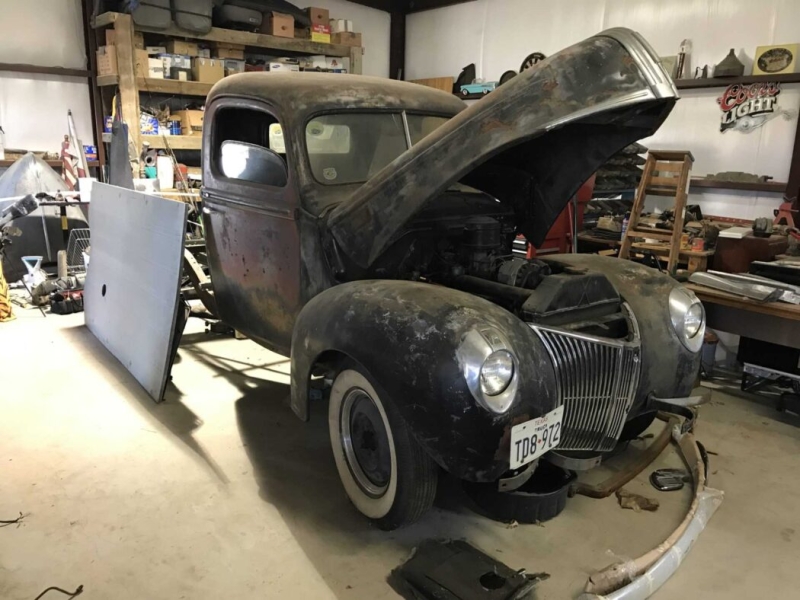
Cab corners are the primary structural rust zone. Running board mounting points at the lower cab are secondary. The floor pans inside the cab — covered by a rubber mat on most trucks — rust from condensation and spilled liquids over decades of use. The bed floor and crossmembers on trucks that were actually used for work are often completely deteriorated. Firewall rust from fluid leaks and engine heat is present on many examples.
| Specification | Detail |
|---|---|
| Payload (F-1) | Half-ton (1,000 lbs) |
| Engines available | 226 ci inline six / 239 ci flathead V8 |
| Flathead V8 output | ~100 hp |
| Wheelbase | 114 inches (short bed) |
| Production years | 1948–1952 (replaced by F-100 in 1953) |
"The F-1 market has moved a lot in the last decade. What used to be a $15,000 truck is now a $30,000 truck if it's clean, and the really nice customs are well past $60,000. The cab corner rust is what separates the projects from the builds — clean cab corners mean you're paying for a truck, not a restoration. I always tell people: pay for the body, not the potential."
— Robert Halloran
Pricing
Driver-quality F-1 with solid body and running flathead: $18,000–$28,000. Show-quality stock restoration: $32,000–$48,000. Quality custom truck (professional lowering, paint, interior): $45,000–$80,000. Award-winning full custom builds exceed $100,000. Project trucks with significant rust but complete bodies: $6,000–$14,000 — but cab corner and floor pan repair costs must be factored in before any project price makes sense.
Browse Ford F-1 listings
 Dealer
 United States
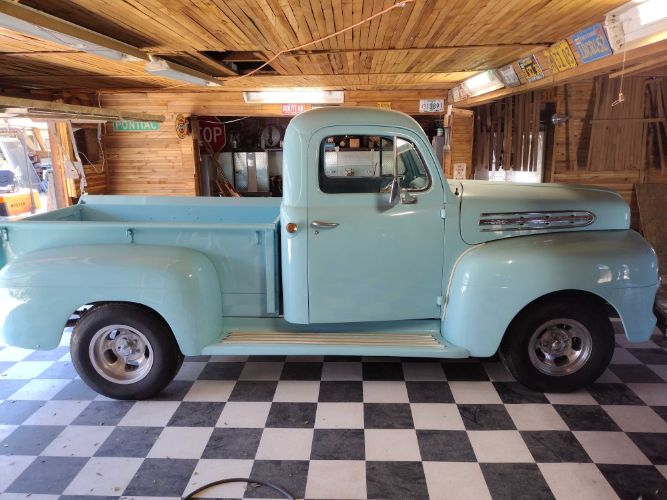
1951 Ford F-1
What to Look For
Cab corners — probe lower rear cab corners from inside and outside. Running board mounting brackets at lower cab. Floor pans inside cab under rubber mat. Bed floor crossmembers — check every crossmember for integrity before costing out a bed floor replacement. Firewall for fluid and heat damage. Verify engine runs before accepting any valuation — a running flathead is worth significantly more than a seized core. Check frame rails under cab for rust at mounting points. Door hinges and alignment — worn hinges indicate high mileage or hard use.Pre-Purchase Checklist
-
Cab corner probe
Probe lower rear cab corners inside and outside — primary structural rust zone -
Running board mounts
Check mounting bracket attachment points at lower cab for rust -
Floor pan condition
Lift rubber mat and probe cab floor pans -
Bed floor crossmembers
Check every crossmember under bed floor — replacement cost depends on how many are good -
Firewall inspection
Check firewall for rust from fluid leaks and heat damage -
Engine cold start
Start from cold — working flathead V8 adds meaningful value -
Flathead head gasket check
Check for white exhaust smoke and oily coolant — inter-passage leak indicator -
Frame rail check
Inspect frame rails under cab at mounting points -
Door hinge alignment
Check door fit and hinge condition — worn hinges indicate hard use
Common Issues
Cab corner rust is the defining issue — the lower rear cab corners rust from packed debris at the cab-to-bed junction. Floor pan deterioration from condensation and spilled fluids over decades. Bed floor and crossmember deterioration on working trucks is nearly universal — expect to replace the bed floor. Flathead V8 head gasket failure between coolant and combustion passages is the classic flathead failure mode — check for white smoke and oily coolant. Running board mounting bracket rust. Door hinge wear on high-mileage examples. Wiring deterioration on 6-volt systems.More F-1 for sale
 Dealer
United States
Dealer
United States
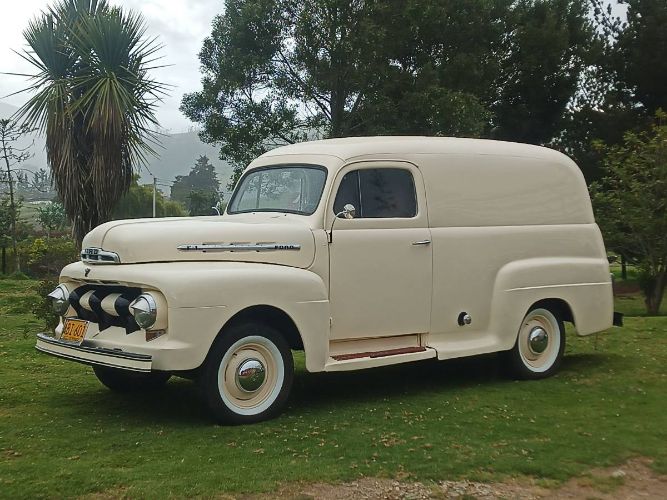
1951 Ford F-1
 Dealer
United States
Dealer
United States
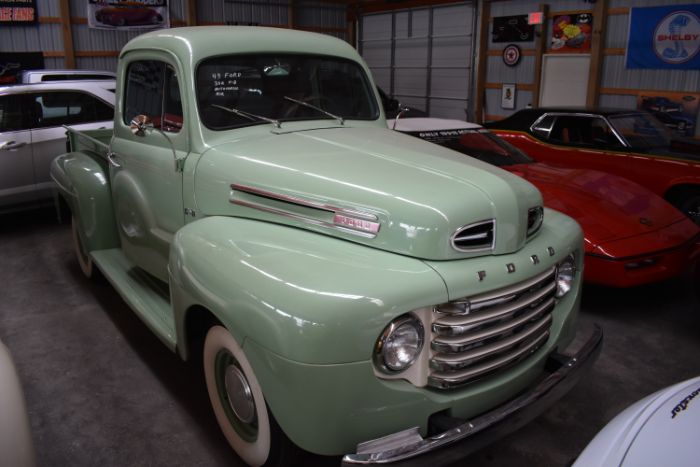
1949 Ford F-1
Pricing Guide
Driver quality with running flathead: $18,000–$28,000. Show stock restoration: $32,000–$48,000. Professional custom: $45,000–$80,000+. Award-winning build: $100,000+. Project with significant rust: $6,000–$14,000. Flathead V8 trucks command 15–20% over inline-six versions at equivalent condition. Cab corner repair runs $2,500–$5,000 at a qualified shop — factor into project pricing.Fun Facts
The F-series nameplate introduced with the F-1 in 1948 is the longest-running continuous model name in American automotive history. Ford's F-150 (direct descendant) has been the best-selling vehicle in the US for over 40 consecutive years. The 1948–1952 F-1 was the first American truck designed from scratch with driver comfort as a primary design objective — previous trucks were built around the engine and cargo, with the driver accommodated as an afterthought.Frequently Asked Questions