
Ford Model B Buyer's Guide (1932–1934)
The Ford Model B is the last four-cylinder Ford before the flathead V8 took over — and the body it shares with the Model 18 is the most iconic hot rod platform in American history. Whether you want an original prewar survivor or the foundation for a traditional build, understanding what you're actually looking at before you buy is the whole game.

People get confused about the "Deuce" and what the Model B actually is, so let me clear it up. In 1932 Ford offered two mechanically different cars in the same body: the Model B with the carry-over four-cylinder, and the Model 18 with the brand new flathead V8. Both are "1932 Fords." The Deuce legend is built on that body — those sweeping fenders, that low roofline, those proportions that work in every body style from three-window coupe to roadster. If you want an original Model B to preserve as a prewar survivor, that's one car. If you want the Deuce body as a hot rod foundation, that's another conversation entirely. Know which one you're buying before you fall in love with the stance.
History: The Last Four and the New V8
Ford introduced the Model B for 1932 as the successor to the wildly successful Model A. It retained the 200.5 cubic inch four-cylinder engine producing approximately 50 horsepower — mechanically evolved from the Model A but clearly a stopgap. Alongside it, Henry Ford unveiled the Model 18 with an all-new 221 cubic inch flathead V8 producing 65 horsepower. Both cars shared the same spectacular new body — lower, wider, more streamlined than any Ford before them.
The V8 was the story of 1932, and most buyers chose it. The Model B sold in smaller numbers and was phased out after 1934 when Ford went all-V8. That production imbalance means original four-cylinder 1932–1934 Fords are less common than V8 versions — a fact that matters to original-car collectors but is irrelevant to the hot rod market, where the body is the asset.
Body Styles
Ford offered the 1932 body in five configurations, each with a distinct collector following:
- Three-window coupe: The quintessential Deuce hot rod body. Clean roofline, dramatic proportions. Highest demand and highest prices.
- Five-window coupe: More practical, slightly less dramatic. Strong hot rod and original market.
- Roadster: Open, no roof, the track roadster archetype. Premium among traditional hot rodders.
- Tudor sedan: Two-door, most common production body. More accessible entry point.
- Fordor sedan: Four-door, less desirable to hot rodders, appreciated by original-car collectors.
Four-Cylinder vs V8 — What You're Actually Buying
Original Model B cars with the four-cylinder are legitimate prewar artifacts. The engine is docile, reliable, and period-correct. If you want a numbers-correct 1932–1934 Ford as a survivor or light restoration, the four-cylinder Model B is your car. Parts support is reasonable through Model A/B specialists.
For hot rod use, most Model B cars have been — or will be — fitted with a flathead V8. This is not a devaluing modification in the rod community; it's expected. A clean Model B body on a properly built frame with a correct flathead is exactly what the Goodguys crowd wants to see. Period-correct flathead builds use the 59AB (1946–1953 Mercury) or 8BA (1949–1953 Ford) displacing 239 cubic inches (the 255 was a Mercury-only version) — the same engines that went into the great lake racers.
What to Inspect
On original-condition cars, the cowl is first. The firewall and floor pans follow. Lower rear quarters at the fender seams are the third critical zone. These cars have been sitting in garages and fields for decades — water intrusion through deteriorated seals is universal. The trunk floor on closed cars pools water through the lid seal.
On hot rod–built examples the inspection shifts: frame integrity and weld quality become the priority, along with the quality of any bodywork done to channel, chop, or section the body. A professionally done chop adds value; a badly executed one subtracts it permanently.
| Model | Engine | Power | Notes |
|---|---|---|---|
| Model B (1932–1934) | 200.5 ci four-cylinder | ~50 hp | Last Ford four-cylinder |
| Model 18 (1932) | 221 ci flathead V8 | 65 hp | Same body, V8 power |
| Model 40 (1933–1934) | 221 ci flathead V8 | 75 hp | Updated V8, same family |
"The Deuce body is the DNA of American hot rodding. Everything starts here. I've been to probably two hundred Goodguys shows and the three-window coupe still stops people cold every time. When you're buying one, the body condition is the whole story — whether you're preserving an original or building on it. The steel is what you're paying for. Don't let anyone sell you a fiberglass car at steel prices."
— Jim Vasquez
Pricing & Market
Original steel 1932–1934 Ford bodies in restorable condition: $15,000–$35,000 for the body alone, depending on style and condition. A complete original car — running four-cylinder, all body panels — trades from $30,000 (driver condition Tudor) to $75,000+ (show-quality three-window coupe). Hot rod–built Deuce coupes with quality flathead or SBC builds: $35,000–$80,000 depending entirely on build quality. Documented, award-winning traditional Deuce builds exceed $100,000. Fiberglass-body builds are sold separately and price significantly lower.
Browse Ford Model B listings
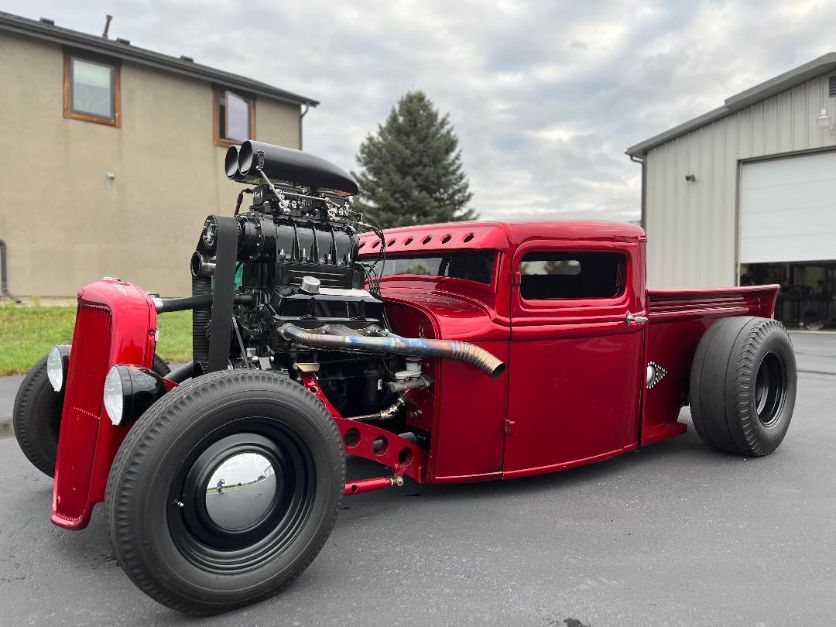 Dealer
 United States
1932 Ford Model B
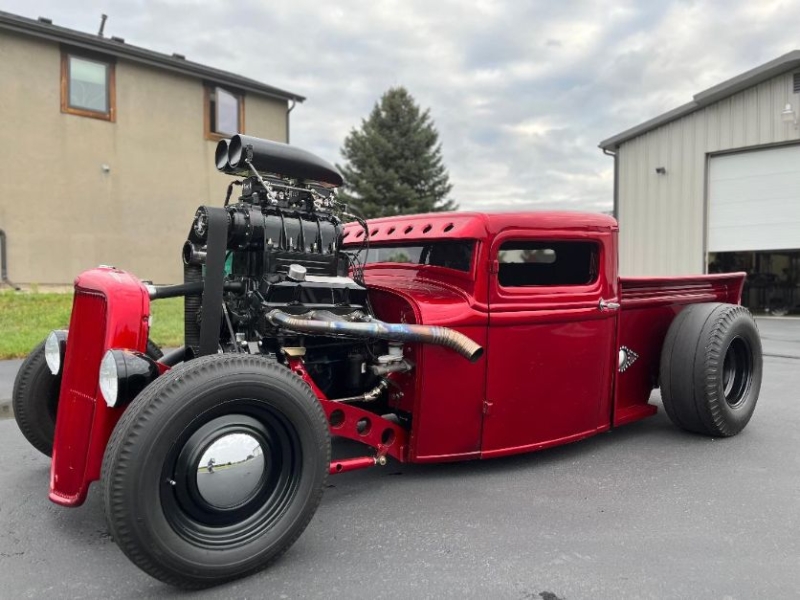 Dealer
United States
Dealer
United States
1932 Ford Model B
What to Look For
Verify steel body vs. fiberglass reproduction — use a magnet on flat panels and tap for hollow sound. Cowl rust at the windshield base is the primary structural failure zone — probe thoroughly. Firewall condition and floor pans. Lower rear quarters at fender seams. Door gap evenness — uneven gaps indicate twisted or repaired body. Frame integrity on any car: look for weld repairs at X-member and front crossmember junctions. On hot rod builds, assess all fabrication quality — frame welds, body work quality on any chop or channel, brake and steering modifications. Verify whether the body is an original steel survivor or has been previously damaged and repaired.Pre-Purchase Checklist
-
Steel vs. fiberglass verification
Use magnet on flat panels — steel attracts, fiberglass does not -
Cowl probe
Probe cowl channel at windshield base for rust penetration -
Firewall and floor pans
Inspect firewall and floor pans for rust-through or repairs -
Lower rear quarters
Check rear quarter-to-fender seams for corrosion -
Door gap evenness
All four door gaps should be even — uneven gaps indicate body damage or twist -
Frame X-member inspection
Look for weld repairs or cracks at X-member and front crossmember -
Hot rod fab quality
Inspect all custom fabrication — motor mounts, suspension mods, brake work -
Chop/channel quality
Assess any body modification for workmanship and filler usage -
Flathead cooling
Verify radiator is sized correctly for V8 — flatheads run hot with undersized cooling -
Trunk floor
Check trunk floor for water damage from deteriorated lid seal
Common Issues
Cowl rust is universal on unrestored examples. Floor pan deterioration from water trapped under original rubber mats. Lower rear quarter rust at the fender-to-body seam. Trunk floor rust from deteriorated lid seals. On V8-swapped cars, verify the engine mount fabrication quality and cooling system adequacy — flathead V8s run warm and require correct radiator sizing. Frame cracks at the X-member junction occur on hard-driven cars. Fiberglass bodies misrepresented as steel is a documented problem in the market — always verify with a magnet. On heavily modified cars, incorrect front-end geometry can cause handling problems; have any custom-built front suspension inspected before purchase.More Model B for sale
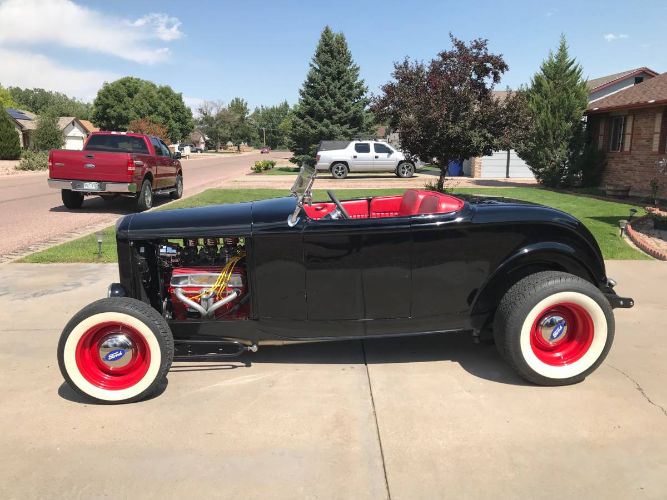 Dealer
United States
Dealer
United States
1932 Ford Model B
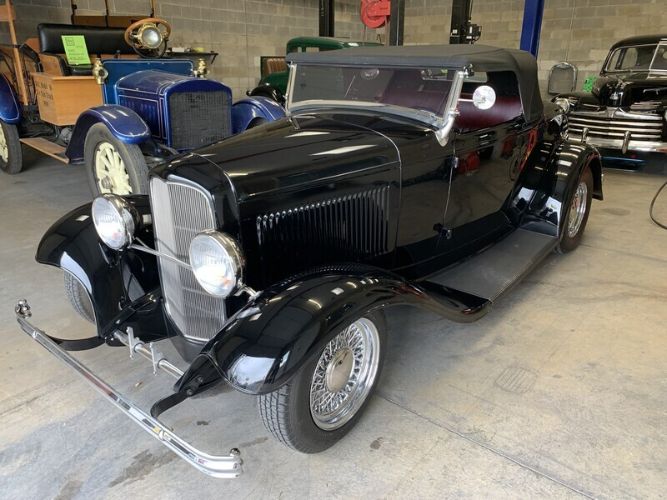 Dealer
United States
Dealer
United States
1932 Ford Model B
Pricing Guide
Original steel body alone (restorable): $15,000–$35,000 depending on body style. Original complete car, driver condition: $30,000–$50,000 (Tudor/Fordor); three-window or roadster driver: $50,000–$75,000. Show-quality original three-window: $80,000–$120,000+. Quality hot rod build on steel body with flathead: $40,000–$80,000. Award-winning documented traditional build: $100,000+. Fiberglass-body hot rod builds price significantly lower — $15,000–$40,000 depending on build quality.Fun Facts
The 1932 Ford body was designed in fewer than 90 days under Henry Ford's direct supervision, reportedly with Henry rejecting multiple proposals before approving the final design. The flathead V8 that debuted in the Model 18 was the first V8 available in a mass-produced American car priced for average buyers — it sold for $460. John Milner's yellow 1932 Deuce coupe in American Graffiti (1973) is widely cited as the most influential single car in hot rod popular culture. The original car still exists.Frequently Asked Questions
Ready to find your Model B?
Browse 6+ active Ford Model B listings on Classic Cars Arena.
View Listings →