
Ford Mustang GT Buyer's Guide (Fox Body, 1982–1993)
The Fox Body Mustang GT is the blue-collar muscle car of the 1980s — light, simple, and with the 5.0 HO under the hood, genuinely fast for its era. Values have moved sharply as the generation that grew up with these cars starts buying them back. A rust-free, unmolested GT is harder to find every year.

I spent a lot of time around these cars in the early 1990s — there were Mustang GTs in every other driveway in my neighborhood. Back then nobody thought about preserving them. They got modified, crashed, raced, and discarded. That's exactly why a clean, original Fox Body GT is harder to find than people expect. The ones that survived are mostly either basket cases or survivors that somebody took care of. The basket cases are everywhere and cheap. The survivors are what you want, and they aren't cheap anymore.
The Fox Body Mustang GT Story
Ford introduced the Fox-platform Mustang in 1979 — lighter and more modern than the Mustang II it replaced, but powered by underwhelming engines through 1981. Everything changed in 1982 when Ford installed the 5.0-liter HO (High Output) V8 producing 157 horsepower. By 1987, sequential fuel injection pushed output to 225 horsepower. The Mustang GT became the definitive American performance car of the decade.
1982–1986: The Carbureted 5.0
The early GT used a four-barrel Holley carburetor on the 5.0 HO, producing 157–210 horsepower depending on year and tune. These are the most mechanically simple Fox Mustangs and are popular among traditionalists who prefer carburetion. The 1982–1983 cars used the T-5 five-speed or automatic; the 1984–1986 cars received progressive upgrades to the suspension and brakes.
1987–1993: Fuel Injection and Peak GT
Ford switched to sequential electronic fuel injection (SEFI) in 1987, pushing the 5.0 HO to 225 horsepower and 300 lb-ft of torque. This generation is the most desirable Fox GT — better drivability, more power, and the peak of the Fox Body's visual evolution with the aero nose and flush headlights. The 1993 model year was the last, before the SN95 platform arrived for 1994.
What to Buy: Hatchback vs Convertible vs Notchback
- Hatchback (3-door): The signature Fox GT body. Most common, most recognizable, most parts availability.
- Convertible: Premium body style — significantly more valuable. Verify the body structure is solid; Fox convertibles flex without intact body bracing.
- Notchback (2-door coupe): Less common than hatchback, lighter weight, preferred by track and drag racers for structural rigidity.
- LX 5.0: Not a GT — the LX had the 5.0 engine in a less-trim body. Often faster due to lighter weight, always cheaper than equivalent GT.
Rust Zones
The cowl is first and most important — the structural ledge under the windshield traps water and rots from inside. Shock towers are the structural second priority — upper strut mounts rust from above and from the engine bay side. Floor pans under the front seats, particularly at the seam where the floor meets the firewall. Lower rear quarters behind the rear wheels. The convertible adds frame rail rust beneath the rockers as a structural failure mode unique to that body style.
| Years | Engine | Power | Induction |
|---|---|---|---|
| 1982–1984 | 5.0 HO 302 | 157–175 hp | 4-barrel carburetor |
| 1985–1986 | 5.0 HO 302 | 210 hp | 4-barrel carburetor |
| 1987–1993 | 5.0 HO 302 | 225 hp | Sequential fuel injection |
"The Fox GT market has moved faster than I expected. Five years ago you could find a clean 1989 GT for $12,000. Those days are over. What's left in that price range now is modified, abused, or rusty — sometimes all three. The cowl and shock towers are what I look at first. If those are clean, you've got a car worth talking about. If they're soft, walk away — the repair is legitimate money and it never comes back in resale."
— Mike Sullivan
Pricing
Driver-quality 1987–1993 GT hatchback: $14,000–$22,000. Show-quality unmodified: $25,000–$38,000. Convertibles add 25–35% at any condition level. The rarest and most valuable variant is the unmodified, low-mileage 1993 GT in original condition — these have exceeded $40,000 at auction. Carbureted 1982–1986 cars trade slightly below equivalent 1987–1993 SEFI cars. An LX 5.0 in equivalent condition will always be 15–25% less than the GT badge.
Browse Ford Mustang GT listings
 Dealer
 United States
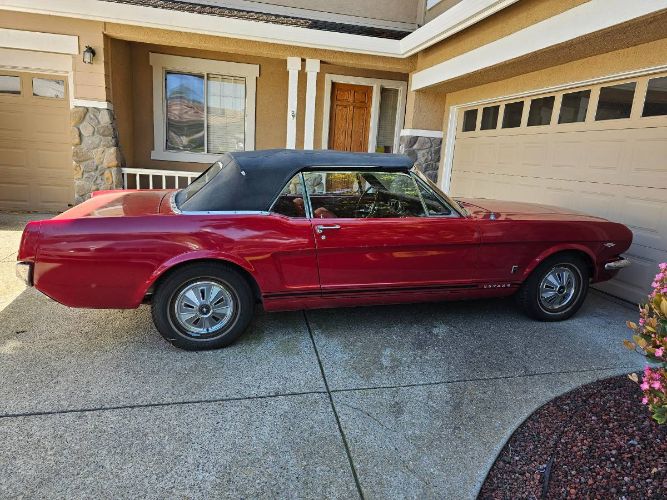
1966 Ford Mustang GT
 Dealer
United States
Dealer
United States
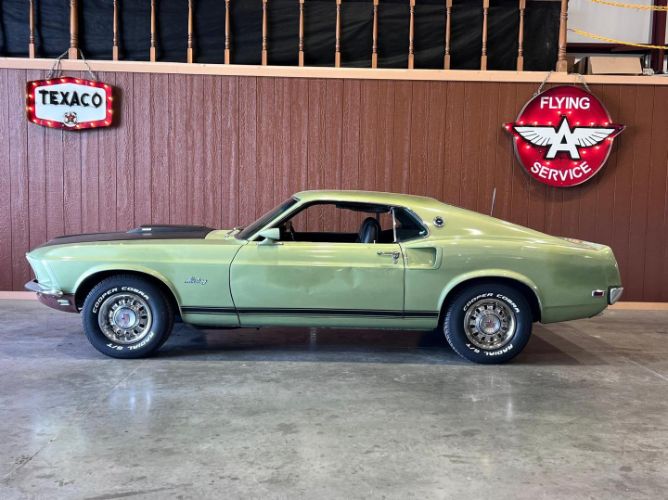
1969 Ford Mustang GT
What to Look For
Cowl ledge under windshield — probe for rust before evaluating anything else. Shock towers in engine bay — stand at front and look down at upper strut mounts for bubbled paint or rust. Floor pans under front seats at firewall seam. Lower rear quarters behind wheels. Convertible frame rails under rockers. Verify 5-speed T-5 shift quality — worn synchros on 2nd and 3rd are common on high-mileage or modified cars. Inspect for modification history: air intake, exhaust, suspension changes. On SEFI cars (1987+): scan for check engine codes if OBD port is accessible. Look for signs of overheating (headgasket): white residue at coolant overflow, oil cap underside condition.Pre-Purchase Checklist
-
Cowl rust probe
Probe ledge under windshield — the primary structural rust zone on Fox Mustangs -
Shock tower inspection
Look down at upper strut mounts from engine bay front — rust here is structural -
Floor pans at firewall
Check seam where floor meets firewall under front seat carpet -
Lower rear quarters
Inspect behind rear wheel openings for rust -
Convertible rocker rails
On convertible: probe rocker area under body for frame rail rust -
T-5 transmission shift
Test 2nd and 3rd gear synchros — grinding = worn synchro rings -
Modification inventory
Document all non-stock parts — assess quality and reversibility -
Cooling system condition
Check coolant color and hose condition — overheating damages head gaskets -
VIN engine code
Confirm position 8 of VIN is "M" for 5.0 HO V8 -
Stock originality check
Note air intake, exhaust, and suspension — all-stock examples command premium
Common Issues
Cowl rust is the primary structural failure mode — water pools under the windshield and rots the structural ledge from inside. Shock tower rust compromises the strut mounting point — a safety issue. T-5 transmission synchronizer failure on 2nd and 3rd is extremely common on any car that has been driven hard. Floor pan rust at the firewall seam. Convertible rocker rust from frame flex and water intrusion. The 5.0 HO head gaskets are reliable but fail when the cooling system is neglected or the engine is heavily modified without upgraded cooling. Nearly every Fox GT has been modified to some degree — hidden modifications that affect reliability are common.More Mustang GT for sale
 Dealer
United States
Dealer
United States
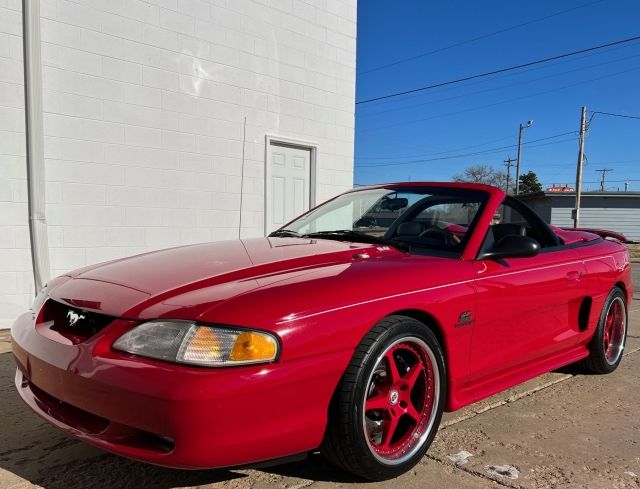
1995 Ford Mustang GT
 Dealer
United States
Dealer
United States
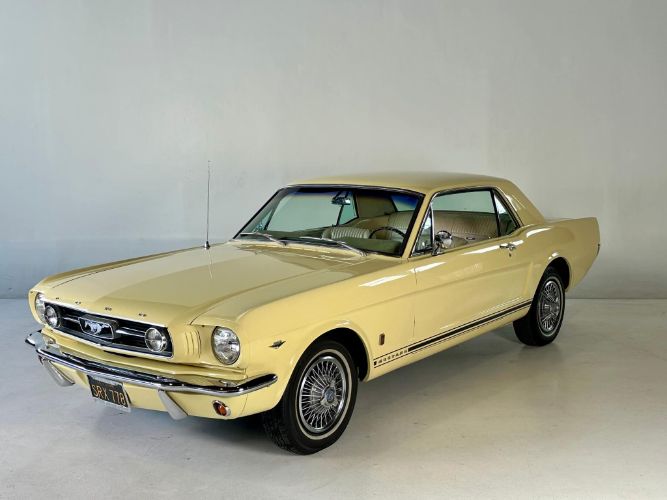
1968 Ford Mustang GT
Pricing Guide
Driver-quality 1987–1993 GT hatchback: $14,000–$22,000. Show quality unmodified: $25,000–$38,000. Low-mileage 1993 GT: $38,000–$48,000+. Convertibles add 25–35% premium. Carbureted 1982–1986 GT: $10,000–$18,000 driver; $20,000–$30,000 show. LX 5.0 trades 15–25% below GT prices. Heavily modified cars price unpredictably — build quality determines whether modifications add or subtract value.Fun Facts
The Fox Body Mustang GT was Car and Driver's 1983 10Best selection. By 1992, the 5.0 Mustang had spawned an aftermarket industry worth an estimated $300 million annually. The Fox platform was also used for the Ford Thunderbird, Lincoln Continental, and Mercury Capri — the Mustang was the performance pin on a very broad platform map. The 5.0 HO engine code appears in the VIN as position eight, the letter "M."Frequently Asked Questions
Ready to find your Mustang GT?
Browse 6+ active Ford Mustang GT listings on Classic Cars Arena.
View Listings →