
Classic GMC Sierra Buyer's Guide
Definitive buyer's guide for classic GMC Sierra 1971-1998. Square-body and OBS generations, frame and bed inspection, small-block and big-block V8 identification, current pricing.

The GMC Sierra is the upmarket twin of the Chevrolet C/K full-size pickup line, sharing platform and mechanicals but with distinctive GMC styling, badging, and interior trim. Across nearly thirty years of classic-era production (1971-1998), the Sierra defined the upper end of GMC truck ownership — particularly in the Sierra Classic, Sierra Grande, and Sierra SLE high-trim variants. The 1973-1987 square-body era is the most actively collected today, with the 1988-1998 OBS (Old Body Style) era following closely behind. Don't buy somebody else's project — the frame and the cab are non-negotiable. Either buy a finished Sierra or buy a clean rust-free truck and build it yourself.
Overview
The Sierra ran for nearly three decades across multiple distinct generations, each with its own buyer profile. The 1971-1972 Action Line cars established the Sierra trim hierarchy. The 1973-1987 square-body era is the breakout collector segment. The 1988-1998 OBS era represents the modern-classic GMC truck. Understanding which Sierra era is yours is the first step toward smart buying.
Generations Worth Knowing
Action Line Era (1971-1972)
The Sierra trim package launched for 1971 as a high-trim option on the GMC C/K pickup line, equivalent to the Chevrolet Cheyenne package. Engine options included the 250 inline-six, 292 inline-six, 307 V8, 350 V8, and 402 big-block. Driver-quality 1971-1972 Sierras run $22,000-$42,000 today.
Square-Body Era (1973-1987)
The 1973 redesign introduced the squared-off body design that defined GM truck styling for the next fourteen years. The Sierra trim hierarchy was: base Custom, mid-trim Sierra, Sierra Grande, Sierra Classic (high-trim with full chrome), and Sierra SLE (luxury with plush interior). The 1981-1987 cars are the most refined square-body Sierras and represent the peak of the era.
OBS Era (1988-1998)
The 1988 redesign brought modernized aerodynamic styling, improved fuel economy, and TBI fuel injection (later replaced by SFI). The 1988-1998 GMC Sierra (and Chevrolet C/K) is now retroactively called "OBS" (Old Body Style) by the enthusiast community. Driver-quality OBS Sierras run $15,000-$32,000.
What to Look For (in person)
Frame and Cab Inspection
The frame and the cab are non-negotiable on any Sierra. Crawl under the truck with a flashlight. Probe the perimeter frame at the body mount points and the rear cross-member. Body mount cushions collapse over time, allowing water to pool above the frame and rot from inside. Cab corner rust is universal on driver-quality square-body Sierras.
Bed Inspection
Lift the bed mat or any bed liner and inspect the bed floor with strong light. Rust through is universal on cars used as actual working trucks. Cars used as cruisers tend to have better-preserved beds. Tailgate hinges and the bed-side seam where the bed wall meets the bed floor are universal failure points.
Engine Verification
Cross-reference the VIN engine code (8th digit of VIN) with the actual block casting and stamping. The most common Sierra engines: 250 inline-six (1971-1984), 292 inline-six (1971-1979), 305 V8 (1976-1998), 350 V8 (1971-1998), 400 V8 (1973-1980), 454 big-block (1973-1998 in heavier-duty trucks). The 350 small-block is the desirable choice for most collector applications.
Pricing Tiers
| Tier | Description | Price Range (2024) |
|---|---|---|
| Driver | 1988-1998 OBS Sierra or 1973-1980 base square-body, decent paint, runs and drives | $15,000-$32,000 |
| Survivor | 1981-1987 Sierra Classic short-bed with original drivetrain, original paint, documented mileage | $28,000-$50,000 |
| Concours | Documented Sierra SLE original-paint short-bed Fleetside, frame-off restoration, recognized show pedigree | $50,000-$95,000+ |
Common Pitfalls
The biggest pitfall in Sierra buying is paying premium money for a truck with hidden frame, cab corner, or bed rust. Demand a thorough underside inspection on a lift before purchase. Don't buy somebody else's project — half-finished restomods with parts in boxes are where most first-time buyers lose money.
The second pitfall is paying Sierra Classic money for a base Sierra with Classic trim added. Verify the cowl tag for original trim level documentation.
"The best advice I can give a first-time GMC Sierra buyer is the same I give for any classic truck purchase: don't buy somebody else's project. The frame and the cab are non-negotiable. Either buy a finished truck where the work is documented and verified, or buy a clean rust-free truck and build it yourself. The middle ground — a half-finished build with parts in boxes — is where most first-time buyers lose serious money in this market."
— Robert Halloran
Final Verdict
The Sierra market rewards documentation, frame integrity, and patience. Square-body Sierras (1973-1987) are blue-chip investments with steady appreciation. OBS Sierras (1988-1998) represent the bargain entry into modern-classic GMC truck ownership. Driver-quality short-beds in either era remain the smart-money entry.
For new buyers, start with a 1988-1998 OBS Sierra short-bed with the 350 V8 and the 4L60E automatic. They're the most refined, parts support is excellent, and the cars serve as comfortable weekend drivers or fair-weather daily drivers. From there, the upgrade path is clear: 1981-1987 Sierra Classic short-bed, then 1973-1980 square-body, then 1971-1972 Action Line, then documented Sierra SLE original-paint cars.
Browse GMC Sierra listings
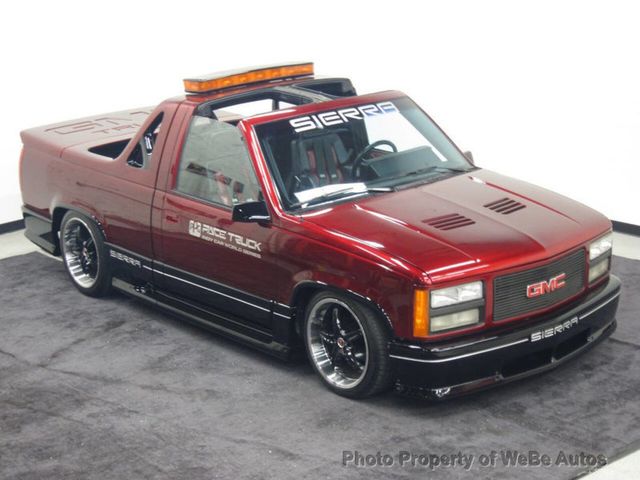 Dealer
 United States
1988 GMC Sierra
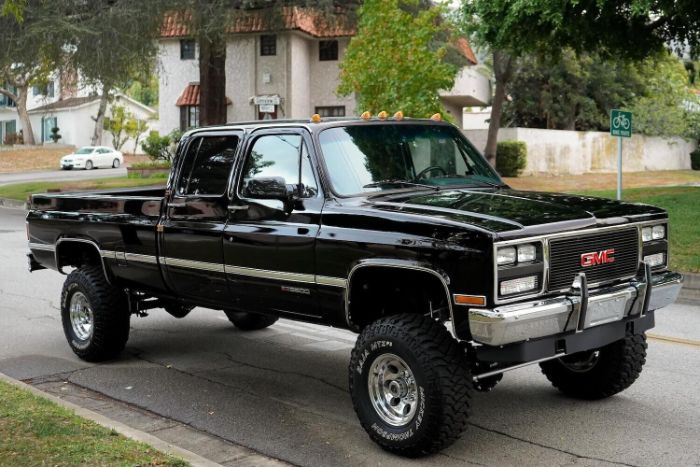 Dealer
United States
Dealer
United States
1990 GMC Sierra
What to Look For
Frame inspection is the first non-negotiable on any Sierra. Crawl under the truck with a flashlight. Probe the perimeter frame at the body mount points, the rear cross-member, and the front horns. Solid steel resists; rotten metal flakes. Frame replacement on a Sierra is $8,000-$18,000 for proper professional work.The frame and the cab are non-negotiable. Cab corner rust is universal on driver-quality square-body Sierras — verify how much before purchase. Cab corners are reproduction parts available for $200-$500 per pair, but installation requires skilled bodywork and proper rust removal. A truck with bondo over rotten cab corners is a 5-year time bomb.
Bed inspection is the second non-negotiable for any pickup. Lift the bed mat or bed liner and inspect the bed floor with strong light. The bed floor on a Sierra is a stamped steel pan that rusts from above (cargo wear) and below (water intrusion). Rust through means $2,000-$5,000 in proper sheet metal repair.
Trim level verification is the third stop. The Sierra trim hierarchy (Sierra, Sierra Grande, Sierra Classic, Sierra SLE) drives significant value differences. Verify the cowl tag for original trim level documentation. Many trucks today have been retrimmed with Sierra Classic chrome and badging — verify the original trim level before paying premium money.
Engine verification by casting numbers is essential. The 250 inline-six (1971-1984), 292 inline-six (1971-1979), 305 V8 (1976-1998), 350 V8 (1971-1998), 400 V8 (1973-1980), and 454 big-block (1973-1998) all have specific casting numbers. Cross-reference the VIN engine code (8th digit of VIN) with the actual block casting number.
For 4WD trucks, test the transfer case engagement on a test drive. Verify the front axle engages and disengages cleanly, the transfer case shifts smoothly, and the manual or automatic locking hubs operate correctly. Failed components on the 4WD system cost real money to repair properly.
Document the truck. Photograph every panel, every frame rail, every body mount, every engine bay component, and every identifying tag/stamp. Build the case before you wire money.
Pre-Purchase Checklist
-
Inspect frame at body mount points
Same chassis as Chevrolet C/K trucks. Body mount cushions collapse. Frame rust = $1,500-$3,500 minimum. -
Lift bed mat and check bed floor
Universal rust point on working trucks. Rust through = $2,000-$5,000 sheet metal repair. -
Examine cab corners from outside and inside
Visible from inside through kick panels. Cab corner rust universal on driver-quality Sierras. -
Pull floor mats and inspect floor pans
Both driver and passenger sides. Floor pans rot from underneath. -
Check cowl seam at windshield base
Where windshield meets firewall. Cowl rust drains into cab and rots dashboard. -
Cross-reference VIN engine code with block casting
8th digit of VIN = engine code. 305, 350, 454 V8 each have specific casting numbers. -
For Sierra Classic and SLE claims, verify trim package
Sierra trim levels add value when documented. Verify cowl tag. -
Test 4WD engagement on test drive
Hubs, transfer case, and 4WD selector should engage cleanly. Failed components cost real money. -
Inspect rear quarter panels and wheel arches
Standard rust zones across all square-body and OBS generations. -
Compression test all eight cylinders
Should read 145-185 PSI uniformly. Variance over 15% = head gasket or worn rings.
Common Issues
GMC Sierra rust patterns mirror Chevrolet C/K patterns since the trucks share platform and bodies. Cab corners, rocker panels, floor pans, cab mount points, lower fenders, and bed floor are universal rust zones. The frame rusts at the rear cross-member, body mount points, and inside boxed frame sections. The 1973-1987 square-body cars are particularly vulnerable to cab corner rust above the rocker panels.For OBS Sierras (1988-1998), rust patterns shift slightly. The rear cab corners (where the cab meets the bed) are the universal failure point on this generation. Tailgate hinges rust through. The cowl seam at the windshield base traps water and rots downward into the cab.
Mechanically, the small-block 305, 350, 400 V8s and the big-block 454 are bulletproof when maintained. The 250 and 292 inline-sixes are similarly durable. Common issues include broken motor mounts on big-block trucks, worn timing chains on tired engines, leaky oil pan and valve cover gaskets, and tired Quadrajet carburetors. The TBI fuel injection (1988+) and SFI (mid-1990s+) are reliable but require periodic service.
The Turbo 350, Turbo 400, 700R4 (later 4L60), and 4L80E automatic transmissions are essentially indestructible when serviced regularly. The Saginaw three-speed and Muncie four-speed manuals are robust. The 8.5-inch and 10.5-inch GM rear axles are durable. Common issues include leaky transmission seals on neglected trucks and worn front axle u-joints on 4WD configurations.
Electrical issues vary by era. Pre-1988 trucks have brittle 30+ year-old wiring. Post-1988 OBS trucks have more sophisticated electrical systems prone to module failures (TBI ECM, body control modules). For 4WD trucks, the transfer case shift motor on later cars commonly fails.
More Sierra for sale
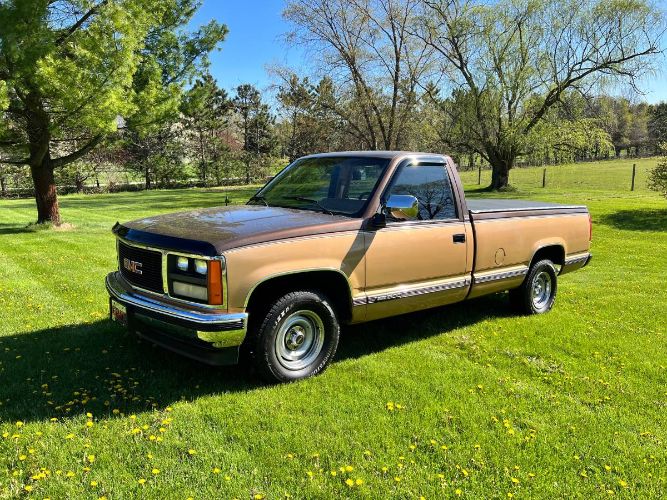 Dealer
United States
Dealer
United States
1988 GMC Sierra
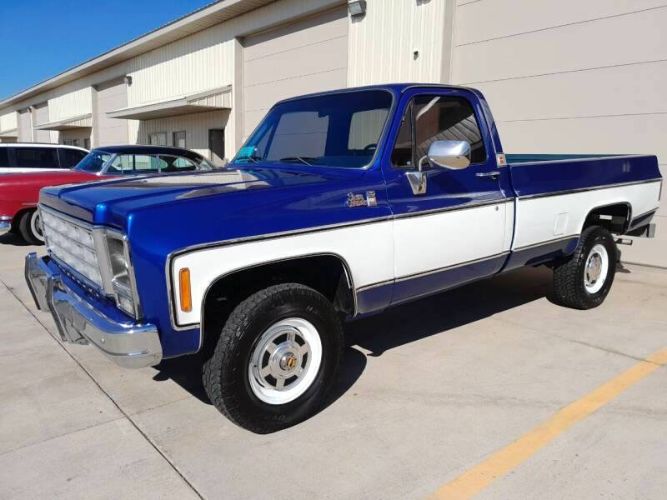 Dealer
United States
Dealer
United States
1980 GMC Sierra
Pricing Guide
1971-1972 Action Line Sierras: driver-quality cars run $22,000-$42,000. The 1972 model year is more desirable than 1971. Restomod 1971-1972 Sierras with LS swap and modern brakes: $42,000-$80,000+. Documented original-paint cars: $35,000-$60,000.1973-1980 first-half square-body Sierras: driver-quality cars run $20,000-$38,000. The 1976-1980 cars (with refined trim) are most desirable. Documented Sierra Classic short-beds from this era: $32,000-$55,000.
1981-1987 second-half square-body Sierras: driver-quality cars run $22,000-$45,000. The 1985-1987 cars with the refined fuel-injected 350 are most desirable. Restomod second-half square-body builds: $50,000-$95,000+. Documented Sierra Classic short-beds: $35,000-$60,000.
1988-1998 OBS Sierras: driver-quality cars run $15,000-$32,000. The 1995-1998 cars with the Vortec 350 are most refined. Documented original-paint, low-mileage OBS Sierras: $30,000-$55,000.
Long-bed Sierras across all eras trade at $5,000-$10,000 discount versus equivalent short-beds. Stepside-bed Sierras trade at modest premium over Fleetside-bed cars due to distinctive styling.
4WD Sierras command 15-25% premium over equivalent 2WD trucks. Crew-cab Sierras (rare in early years, more common in OBS era) command 10-20% premium for working applications, less for collector applications.
Project Sierras start around $8,000-$18,000 across most generations. Stripped roller candidates: $3,500-$8,000. Either buy a finished truck or buy a clean rust-free truck and build it yourself.
Fun Facts
The Sierra trim hierarchy was deliberately positioned upmarket from Chevrolet to differentiate GMC in the GM truck lineup. While Chevrolet pickups offered Custom, Cheyenne, Cheyenne Super, and Silverado trim levels, GMC offered base, Sierra, Sierra Grande, Sierra Classic, and Sierra SLE — with each step up adding more chrome trim, plusher interior, and additional standard equipment. The Sierra Classic in particular was notable for its full chrome exterior trim, woodgrain dashboard, and luxury interior options.The 1973-1987 square-body era saw the longest single-platform truck production run in GM history at fourteen model years. The platform was originally scheduled to be replaced for 1985 but was extended through 1987 due to development delays on the all-new 1988 GMT400 platform. This extended production created a vast surviving population of square-body Sierras that supports the active collector market today.
The 1988-1998 OBS Sierra was originally introduced as the GMT400 platform, marketed alongside the Chevrolet C/K. The "OBS" (Old Body Style) nickname didn't exist when the trucks were new — it was coined by the enthusiast community in the 2010s when this generation entered the collector market and needed a distinguishing name from the newer 1999+ GMT800 trucks. The OBS era is now actively collected, with documented original-paint examples appreciating dramatically since 2018.
Frequently Asked Questions
Ready to find your Sierra?
Browse 6+ active GMC Sierra listings on Classic Cars Arena.
View Listings →