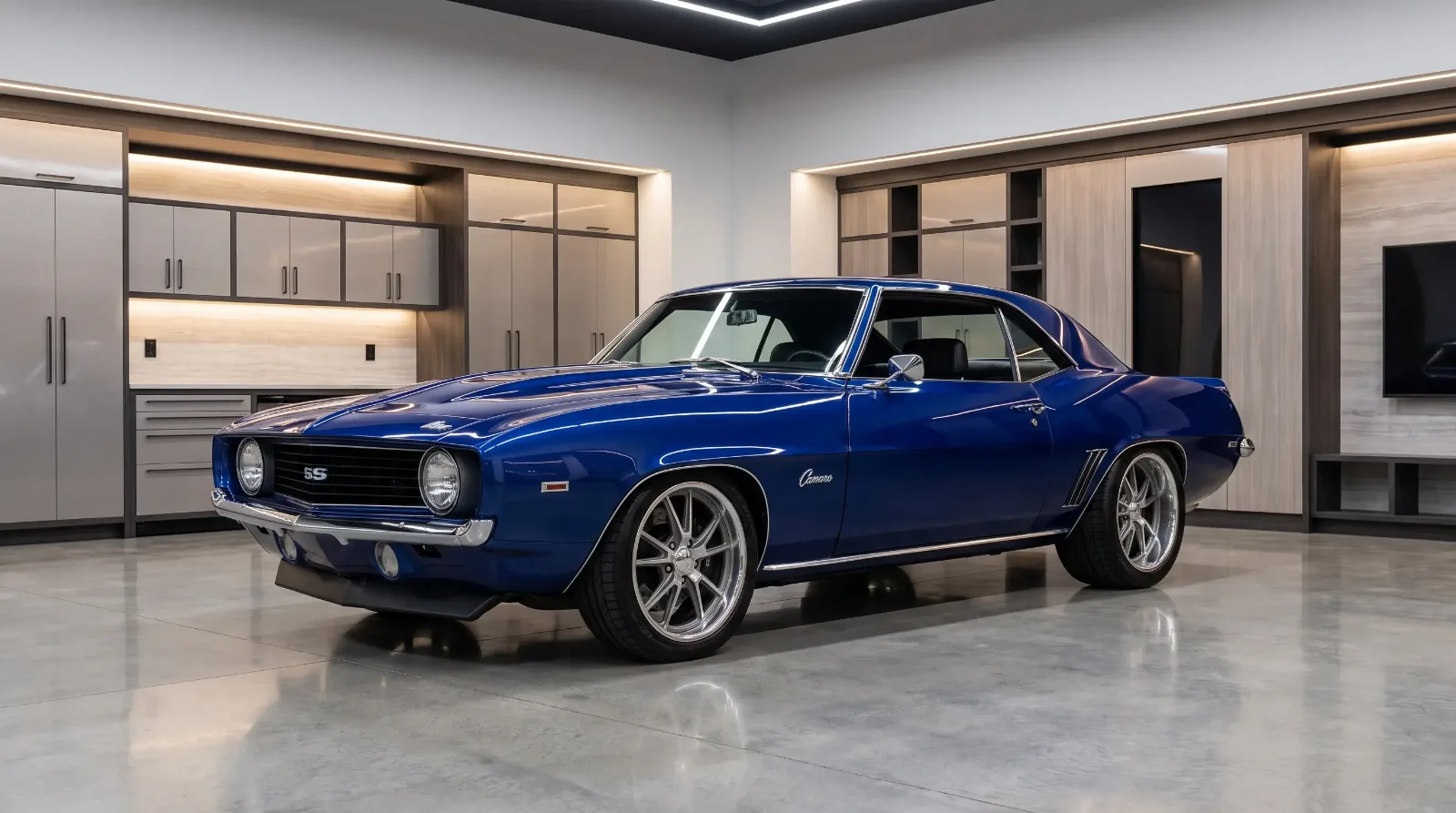
The phrase "frame-off restoration" carries a lot of weight in the classic car world, and it is often applied loosely to cars that were not restored to that standard. Understanding exactly what each approach involves, what it costs in real terms, and what level of result each produces is essential before you commit your Camaro to either path. This guide distinguishes between the two approaches clearly and gives you the information you need to make an honest decision about which path fits your goals and your budget.
What frame-off restoration actually means
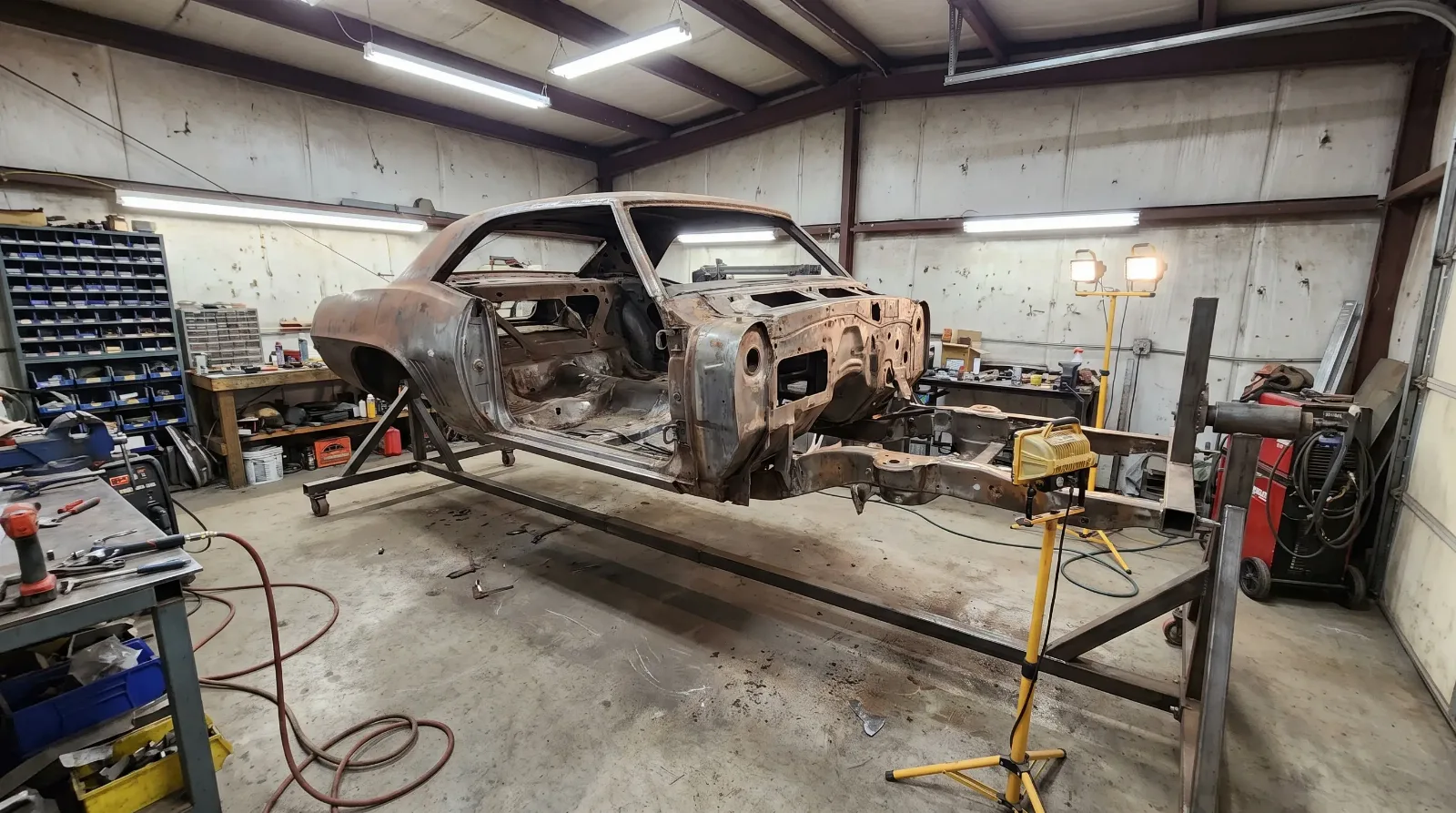
A true frame-off restoration on a first-gen Camaro means separating the body from the front subframe, removing the drivetrain completely, stripping every component to its individual parts, restoring or replacing each part, and reassembling the car from scratch. The front subframe of a first-gen Camaro is a separate bolt-on unit, which makes the operation more straightforward than on fully unitized cars: the front clip unbolt from the firewall forward, and the body can be placed on a rotisserie while the subframe is cleaned, blasted, and painted separately.
Frame-off is appropriate for cars that are being prepared for high-level concours judging, for cars with severe structural rust that requires access to the underside of the body for repair, and for owners who want the satisfaction of knowing every nut and bolt on the car has been inspected and addressed. It is the most thorough approach and the most expensive and time-consuming one by a significant margin.
Our Camaro restoration guide covers the overall project scope and helps frame where the restoration path decision fits in the sequence.
The history of the Camaro's engineering and how it informed its repairability is part of our longer Chevrolet Camaro history feature.
Frame-on restoration: scope and honest limitations
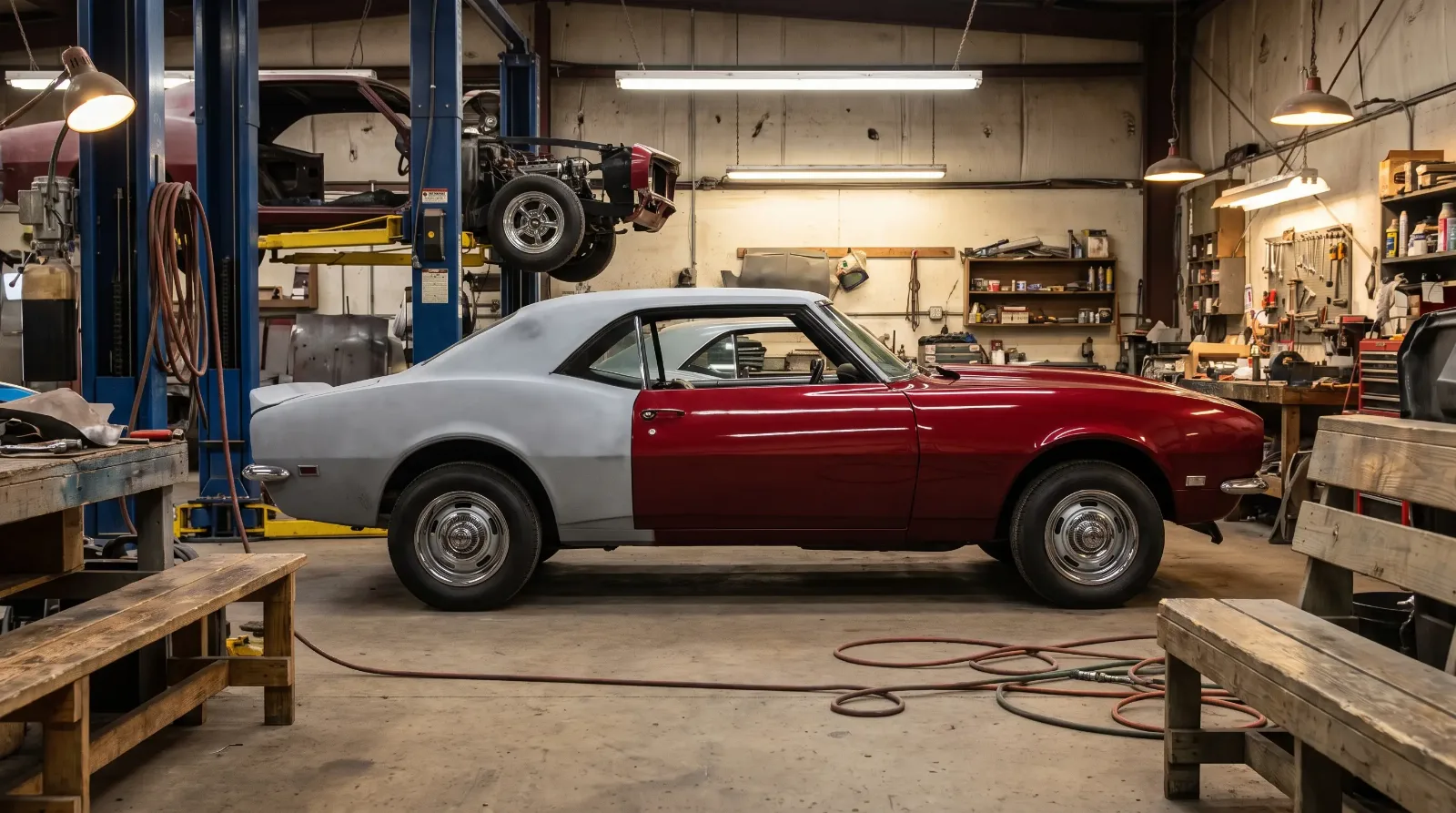
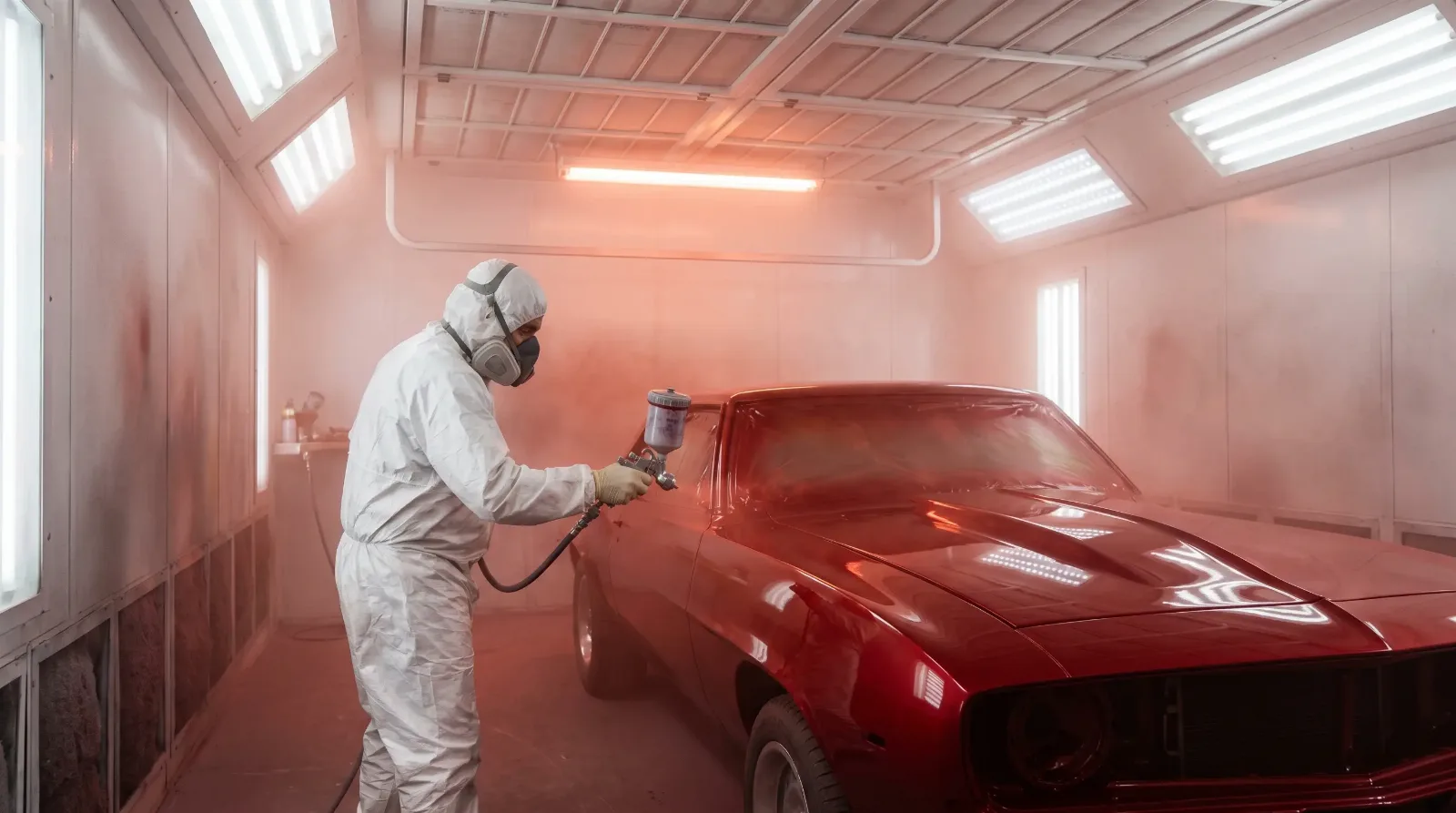
A frame-on restoration addresses all visible and accessible components without separating the body from the subframe. Engine and transmission come out. The interior is stripped completely. Body panels are repaired or replaced. Paint is stripped and refinished. But the underside of the car, the subframe mounting points, and the areas hidden by the body structure remain in place and are cleaned, painted, and addressed in situ.
For cars with solid structure and no significant underside rust, frame-on produces an excellent result. A well-executed frame-on restoration on a clean-bodied Camaro is indistinguishable from a frame-off car to most observers and to many judges at regional shows. The limitation appears at the highest levels of concours judging, where underside presentation is scored closely, and in cars with hidden structural rust that cannot be addressed without body separation.
Cost comparison: what each path actually costs
Restoration costs vary enormously based on geography, shop rates, parts choices, and the starting condition of the car. The figures below are presented as broad relative tiers rather than precise quotes, because professional shop rates vary widely by region, shop reputation, and the starting condition of the car; always get written estimates from shops in your area:
| Cost category | Frame-on (professional) | Frame-off (professional) |
|---|---|---|
| Labor (total) | The single largest cost; substantial | Roughly double-or-more the frame-on labor |
| Body and paint | Major cost center | Higher, with full underside refinishing |
| Mechanical (engine, trans, suspension) | Moderate to high, depends on rebuild depth | Higher, with everything addressed |
| Interior | Moderate; similar either path | Moderate; similar either path |
| Additional disassembly/reassembly | Included above | A meaningful added cost unique to frame-off |
DIY work dramatically changes these numbers but does not change the ratio: a frame-off project performed by an owner working in their own shop still costs significantly more in parts, consumables, and time than a frame-on project on the same car. The additional cost comes from the extended disassembly and reassembly time and from the fact that every component is accessible and therefore every component tends to get addressed.
"I ask every customer the same question before we decide on a path: where are you planning to show this car, and how long are you keeping it? A driver that goes to local shows does not need a frame-off. A car destined for Bloomington Gold or a Concours d'Elegance does. Be honest with yourself about which one this is, because the wrong choice costs you money without buying you anything you actually want."
— Mike Sullivan
Structural rust and when it forces the decision
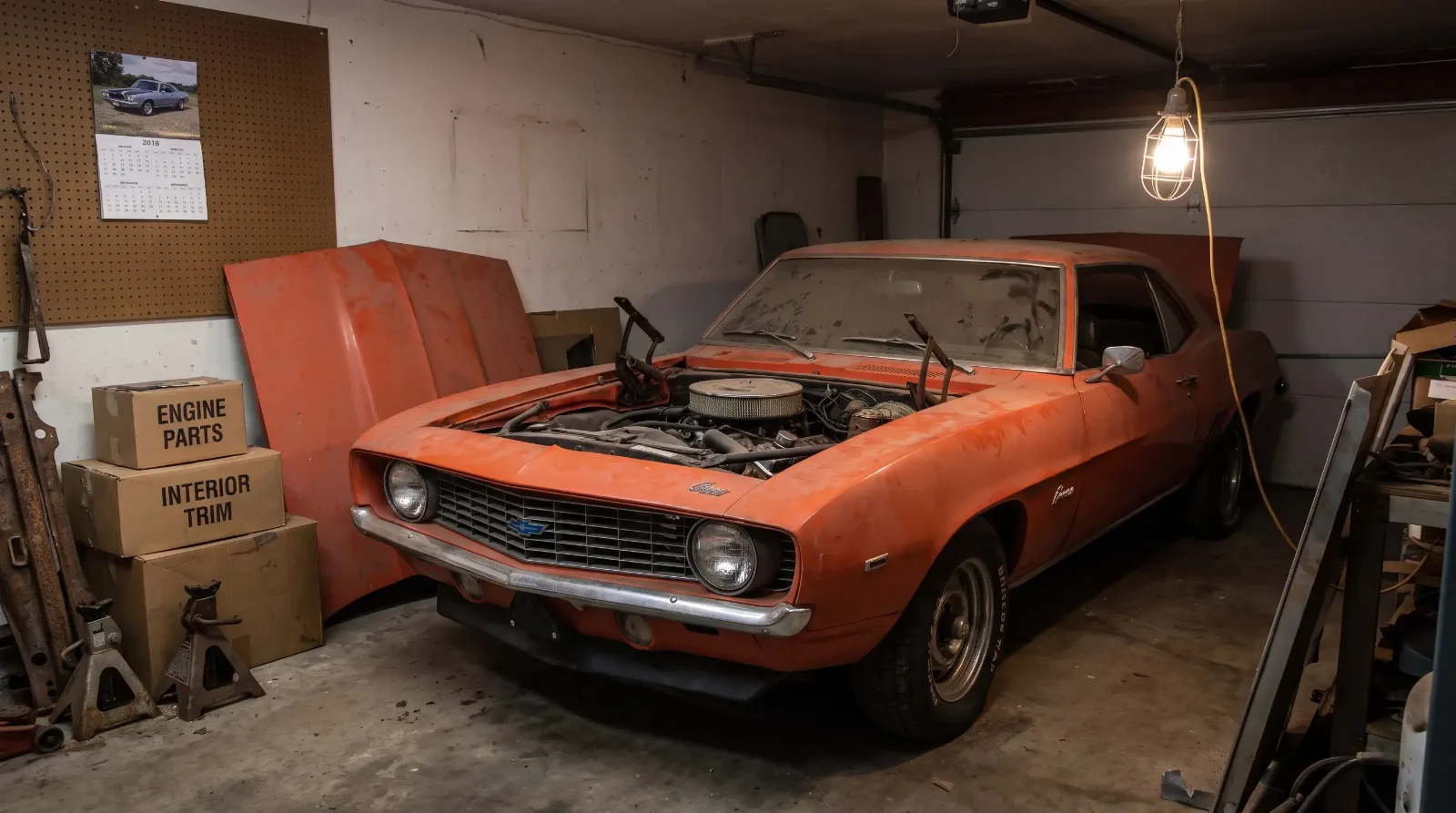
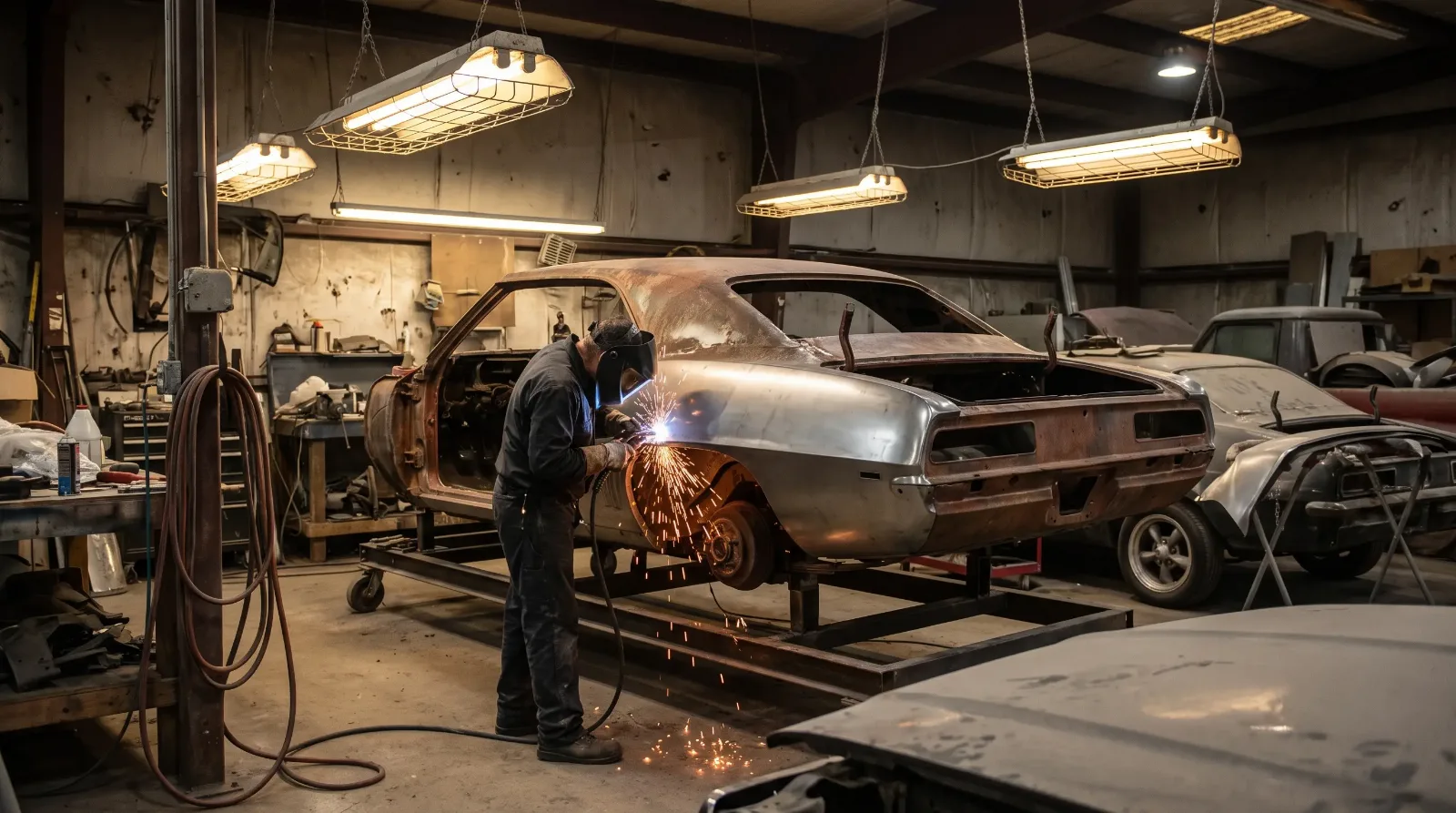
Sometimes the restoration path is not a choice but a requirement. If the car has severe rust in the cowl cavity, the torque box areas, or the rear frame rail sections behind the rear wheel, addressing those properly often requires body separation or at minimum lifting the body to create access for welding and grinding. A shop that tells you serious structural rust in hidden areas can be addressed frame-on without quality compromise is not giving you straight information.
Have a thorough inspection performed before committing to either path. A competent inspection puts the car on a lift, removes the wheels, probes the structural areas, and gives you a written assessment of what is found. This costs money, but it is the only way to make an informed restoration path decision on a car you have not disassembled before.
DIY frame-off: realistic requirements
A first-gen Camaro camaro frame off restoration performed by a skilled DIY builder requires a rotisserie or a means of safely supporting the body shell during subframe separation and underside work, a MIG welder and the experience to use it on structural panels, and the space and timeline to hold the project through what is commonly a multi-year effort for a thorough frame-off build. The tools alone represent a significant investment if you do not already own them.
If you are committed to the DIY path and the project is complex, consider how the time investment compares to your actual timeline, budget, and goals. For a realistic look at the time dimension, read our guide on how long a classic Camaro restoration really takes.
Sources and notes
Production figures, engine specifications, codes, and dates in this article are cross-referenced from established Camaro references, period documentation, and owner registries. Where sources differ, the most commonly cited value is used. Cost figures are indicative and vary by supplier, region, and condition.