
Classic Jeep CJ-5 Buyer's Guide
Complete buyer's guide for the Jeep CJ-5 (1954–1983). Generation breakdown by era, frame and tub inspection, drivetrain identification, and current market values for stock and modified examples.

The Jeep CJ-5 is the original American off-road icon — a direct descendant of the World War II Willys Jeep, refined for civilian use and sold continuously from 1954 to 1983. In nearly thirty years of production, the CJ-5 barely changed in concept: a short wheelbase, a rugged ladder frame, a solid front axle, and enough ground clearance to go where no sensible person had been before. Today clean CJ-5s are legitimately collectible, and the market for sorted originals is stronger than it has ever been.
History & Generations
Early CJ-5 (1954–1971)
The CJ-5 launched in 1954, replacing the CJ-3B with a slightly longer wheelbase (81 inches) and a rounded hood profile derived from the M38A1 military Jeep. Early CJ-5s were powered by Kaiser's "Hurricane" F-head four-cylinder — 72 horsepower, tremendously torquey at low RPM, and almost indestructible. The Buick-sourced 225 cubic inch V6 became available in 1966, and the 304 AMC V8 arrived in 1972, transforming the CJ-5 into a genuinely capable trail machine with highway manners. Early CJ-5s with the F-head four are the most original and the most collected by purists.
AMC Era (1972–1983)
American Motors Corporation took over Jeep in 1970, and the AMC influence showed up in the drivetrain by 1972. The 232 and 258 AMC inline-six became the standard engine and the 304 V8 the performance option. The AMC-era CJ-5 is the most numerous in the current market, the most parts-available, and the most practical for regular use. The 1976–1983 trucks are the late-production sweet spot: better brakes, better electrical systems, and the most developed version of the platform.
What to Inspect
The CJ-5 uses a separate body-on-frame construction, which means rust affects both the steel body tub and the ladder frame independently. The frame rails and crossmembers rust from road exposure and water trapping. The body tub rusts at the floor, the lower cowl panels, and the rear corners. Many surviving CJ-5s have had both frame and tub work — know what you're buying.
| Engine | Years | Notes |
|---|---|---|
| Hurricane F-head 134 I4 | 1954–1971 | Original. 72 hp. Bulletproof, torquey, slow. Purist favourite. |
| Buick 225 V6 | 1966–1971 | More power, same character. Odd firing order but reliable. |
| AMC 232 / 258 I6 | 1972–1983 | The practical choice. Strong, efficient, parts everywhere. |
| AMC 304 V8 | 1972–1981 | The performance option. More power, more heat, more thirst. |
"A CJ-5 that's been properly trail-used is a different machine from one that's been beaten on trails by somebody who didn't know what they were doing. Look at the axle housing, look at the frame rails, look at the skid plates. A truck with careful use and regular maintenance tells a completely different story from one that got stuffed in a ditch and winched out six times. The Jeep doesn't lie."
— Robert Halloran
Market Outlook
The CJ-5 market has strengthened considerably since 2018, tracking the broader classic 4x4 surge. Early F-head four-cylinder trucks in sorted original condition: $18,000–$35,000. AMC-era CJ-5s in clean stock condition: $15,000–$30,000. Professionally restored examples with correct matching-era equipment: $35,000–$55,000. Modified trail rigs — lifted, locked, with aftermarket bumpers — trade at wide ranges depending on build quality and documentation. Stock-original CJ-5s are increasingly rare and command steady premiums over equivalent modified trucks.
Browse Jeep CJ-5 listings
 Dealer
 United States
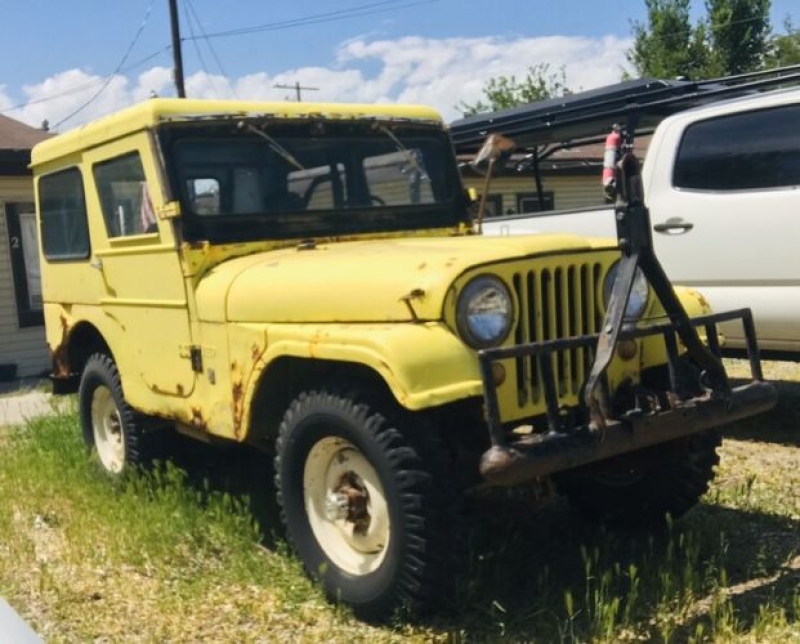
1967 Jeep CJ-5
 Dealer
United States
Dealer
United States
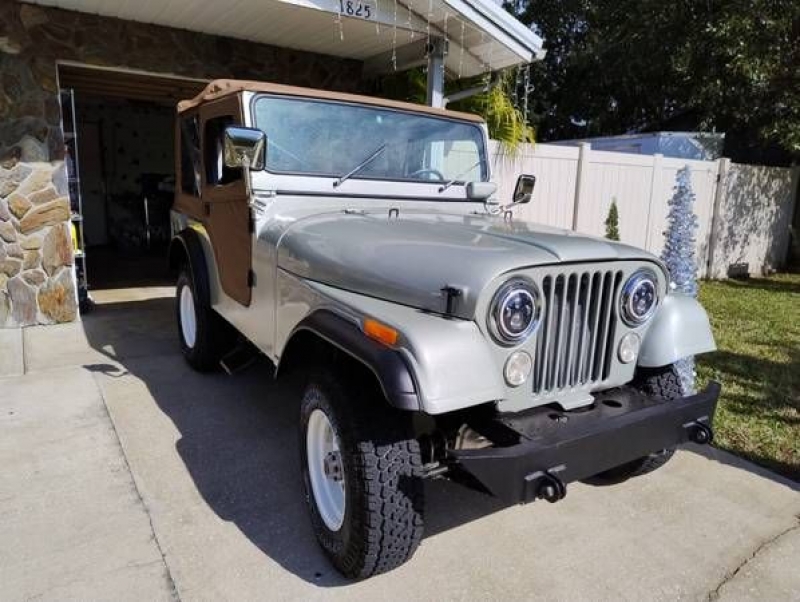
1972 Jeep CJ-5
What to Look For
Frame first. The ladder frame on a CJ-5 is the foundation of everything. Inspect every frame rail with a flashlight, probe suspicious areas with a screwdriver. Pay special attention to the body mount points and the front and rear crossmembers.Body tub second. Is it steel or fiberglass? Steel original tubs rust but are correct for value purposes. Fiberglass tubs are practical but reduce collector value. Inspect the steel tub floor from both above and below.
Drivetrain third. The front Dana 30 and rear Dana 44 (or Dana 35 on some years) are the 4WD system. Test both front and rear locking and listen for differential noise. Bent axle housings from trail use are the most common hidden problem.
Pre-Purchase Checklist
-
Inspect frame rails at body mount points
Primary rust concentration zone. Use flashlight and screwdriver. Soft metal at mount points is a structural concern. -
Check body tub floor and lower cowl
Steel tub floors rust through from below. Lower cowl panels rust from water ingress at windshield. Fiberglass tub = rust eliminated but value reduced for purists. -
Test front Dana 30 axle for play
Grab front wheel at 9 and 3 o'clock, rock firmly. Any play = worn wheel bearings or damaged axle housing from trail use. -
Check for bent or cracked axle housing
Trail use commonly bends the front and rear axle housings. Sight down the axle — any curve indicates damage. -
Verify transfer case engagement
Both high-range and low-range 4WD must engage cleanly. Transfer case that slips out = rebuild required. -
Identify engine and verify condition
F-head four, AMC six, or AMC V8? Compression test all cylinders. Should read within 10% across all cylinders. -
Check steering box and tie rods
CJ-5 steering is inherently imprecise. Excessive play beyond normal (more than 3 inches at wheel) means worn box. -
Inspect rollbar mounting points
Rollbar bolts to the body tub. Check mounting flanges for cracks or rust-through on both tub and frame. -
Test brakes — drum all around (pre-1977)
Drum brakes on all four corners. Pedal should be firm. Any pull to one side = stuck cylinder. -
Document with photos before purchase
Frame rails, tub floor, axle housings, engine, transfer case, every body panel.
Common Issues
Rust affects both the body tub and the frame on CJ-5s. The frame rails rust at body mount points and at crossmembers — these are structural issues. The body tub rusts at the floor, lower cowl, and rear corners.The Hurricane F-head four-cylinder is long-lived but slow and parts for it are becoming harder to source. AMC inline-sixes and V8s are robust — the 258 is the most reliable engine in the lineup.
Trail use causes specific damage: bent axle housings (front and rear), cracked differential covers, stripped skid plate mounting threads, and worn U-joints are all common on trucks with serious off-road history. These are identifiable on inspection — and should all factor into price negotiation.
The CJ-5's short wheelbase (81 inches) makes it inherently tippy. If the truck has been lifted without a corresponding suspension geometry correction, it's more unstable than stock. Always ask about lift kit installation history.
More CJ-5 for sale
 Dealer
United States
Dealer
United States
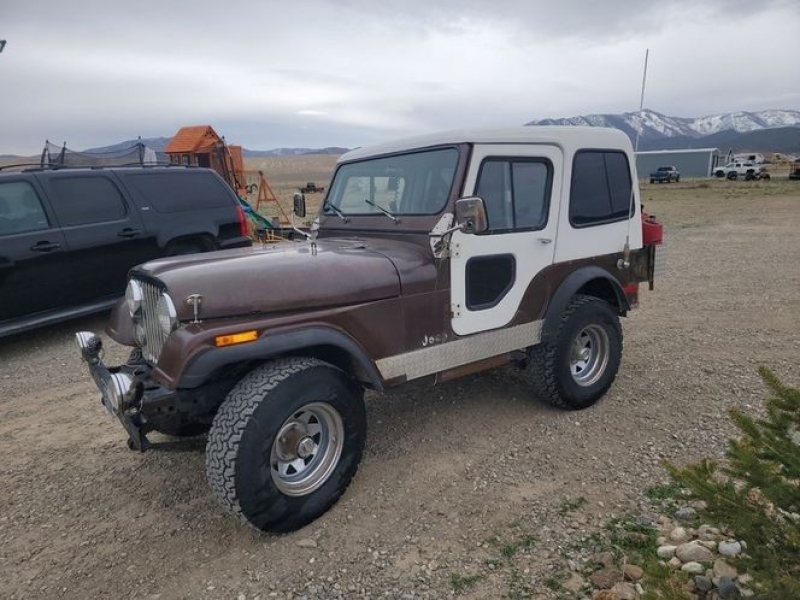
1977 Jeep CJ-5
 Dealer
United States
Dealer
United States
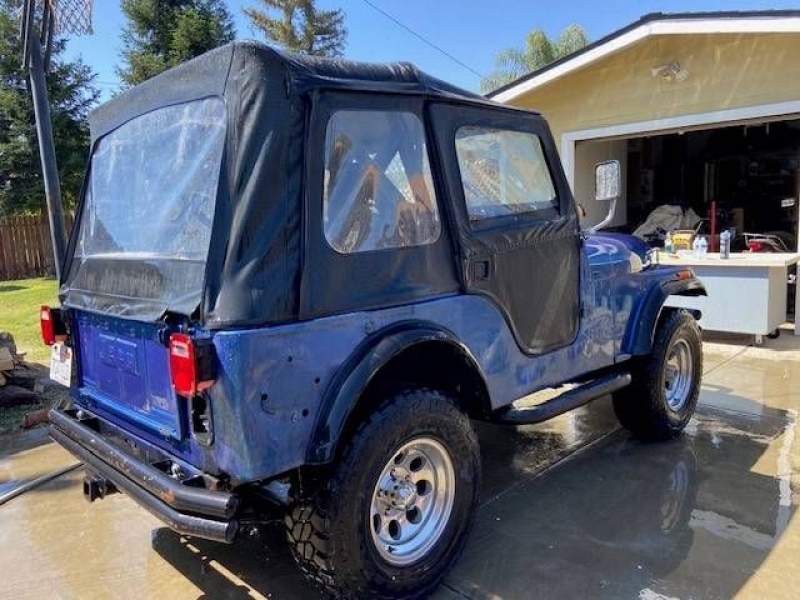
1980 Jeep CJ-5
Pricing Guide
Early CJ-5 with Hurricane four-cylinder in clean original condition: $18,000–$35,000. AMC-era CJ-5 (1972–1983) in sorted stock condition: $15,000–$28,000. Professional restorations to correct stock specification: $35,000–$55,000.Modified trail rigs with lift kits, aftermarket bumpers, and lockers: $10,000–$25,000 depending on quality — the modifications rarely add value and often reduce it for non-trail buyers.
Early F-head four-cylinder trucks in concours-original condition are approaching $40,000–$55,000 as supply shrinks.
Fun Facts
The CJ-5's 81-inch wheelbase was derived directly from the M38A1 military Jeep. The M38A1 was the Korean War-era military vehicle; the CJ-5 was its civilian equivalent, using the same basic dimensions and the same front suspension geometry.Kaiser Jeep, which owned the brand from 1953 to 1970, built CJ-5s alongside military M151 Jeeps at the same Toledo, Ohio factory — meaning civilian and military Jeeps literally came off the same assembly line for over a decade.
Frequently Asked Questions