
Classic Lincoln Continental Buyer's Guide
Definitive buyer's guide for classic Lincoln Continental (1940–1979). Covers the original 1940–1948 pre-war model, the iconic 1961–1969 suicide-door generation, and the 1970s full-size era — with inspection priorities and current valuations.

The Lincoln Continental is one of the few American automobiles that achieved genuine design immortality — not once but twice. The 1940–1948 original defined the American luxury car of its era; the 1961–1969 generation with its iconic reverse-opening rear doors defined it again for a generation that included heads of state and Hollywood royalty. Between those two high-water marks and after them, the Continental name carried Lincoln's flagship ambitions with varying degrees of success. Buying a Continental today requires knowing which generation you're actually after — they differ more than the shared nameplate suggests.
Generations Worth Knowing
The Original Continental (1940–1948)
The first Lincoln Continental emerged from a personal project commissioned by Edsel Ford, who asked designer E. T. "Bob" Gregorie to create a customised Lincoln-Zephyr for his own use in 1939. The car attracted such attention that Ford authorised limited production for 1940. The original Continental — with its long hood, short deck, and continental spare tyre mounted on the rear — is one of the most beautiful American cars of the 20th century. Only about 5,322 were produced across six model years (1940 to 1942 and 1946 to 1948), making it a genuine rarity.
Continental Mark II (1956–1957)
Ford Motor Company revived the Continental name for 1956 as a separate marque — not a Lincoln, but a Continental. The Mark II was hand-built at a dedicated factory, priced above the Cadillac Eldorado, and targeted at buyers for whom the Cadillac felt too common. It is one of the rarest and most refined American cars of the 1950s, with only 3,012 produced across two years. The 368 cubic inch Lincoln V8 was hand-fitted to each car; tolerances were considerably tighter than production-line standards. Mark II values have appreciated significantly and the best examples now approach six figures.
The Suicide-Door Continental (1961–1969)
The 1961 Lincoln Continental is the generation that most collectors mean when they say "Continental." Designed by Elwood Engel, it represents one of the cleanest and most restrained American luxury car designs of the postwar era — a remarkable achievement in a period when Detroit's design vocabulary tended toward excess. The reverse-hinged rear doors (popularly called "suicide doors") were a technical tour de force, requiring precise engineering to seal properly and open safely. Four-door convertibles were offered from 1961 to 1967 — one of the rarest production body styles in American automotive history. The 1961–1969 Continental is the most collected generation and the benchmark against which all others are measured.
Later Continentals (1970–1979)
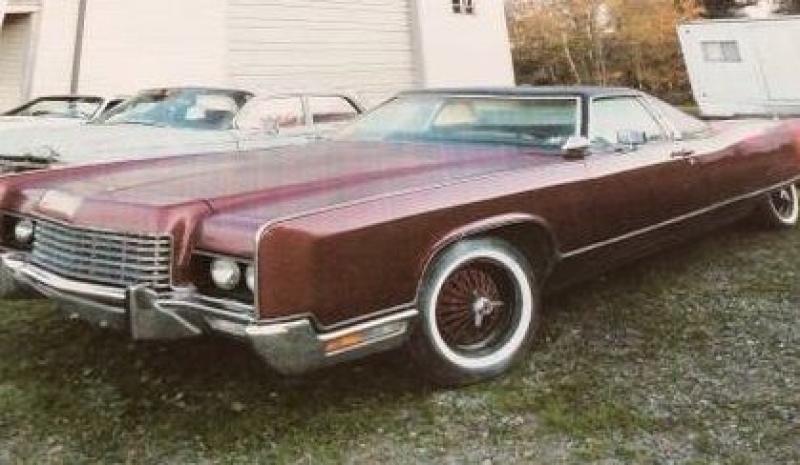
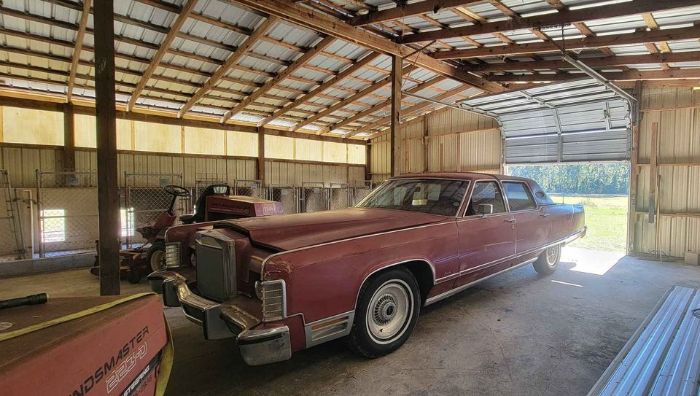
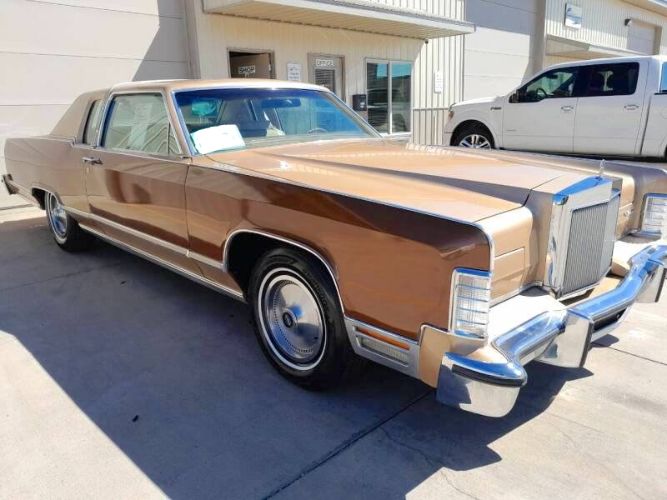
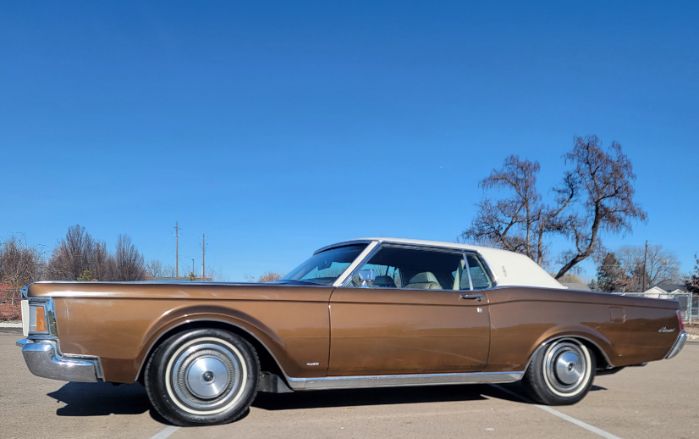
The 1970–1979 Continental grew larger, heavier, and more conventional — moving away from the disciplined elegance of the 1961–1969 generation toward the soft, chrome-laden luxury of the era. These cars are practical, comfortable, and often very well-equipped, but they lack the design intensity of the earlier generation. Values are correspondingly modest — the 1970–1979 Continental is the entry-level point into the nameplate for buyers interested in driving a large American luxury car rather than collecting a significant design artefact.
| Generation | Years | Engine | Collector Status |
|---|---|---|---|
| Original Continental | 1940–1948 | 292 / 305 Lincoln V12 | Museum-quality, high values |
| Continental Mark II | 1956–1957 | 368 Lincoln V8 | Hand-built rarity, appreciating |
| Suicide-door Continental | 1961–1969 | 430 / 462 / 460 Lincoln V8 | Peak collectibility, strong demand |
| Later Continental | 1970–1979 | 460 Lincoln V8 | Entry-level, driver-quality values |
"The 1961 Continental is one of those rare moments in American design where restraint produced something more powerful than excess. Elwood Engel was working against the prevailing aesthetic of his era — and he was right. The clean flanks, the thin pillars, the reverse-opening rear doors: these decisions look more correct with each passing decade. From a concours judging perspective, the 1964–1965 sedan represents the generation at its most refined."
— Sarah Whitfield
Market Outlook
The 1961–1969 Continental four-door sedan market has strengthened in the last five years, with clean driver-quality examples now at $22,000–$42,000 and professionally restored cars at $55,000–$85,000. Convertibles (1961–1967) command $45,000–$90,000 for driver-quality examples, with concours restorations approaching $120,000. The 1940–1948 original is increasingly rare in documented condition: $70,000–$140,000 for the finest survivors. The Mark II has moved decisively into six-figure territory for correct, documented examples. The post-1970 Continental remains affordable: $8,000–$18,000 for clean drivers.
Browse Lincoln Continental listings
 Premium
Dealer
Premium
Dealer
 United States
1971 Lincoln Continental
 Dealer
United States
Dealer
United States
1977 Lincoln Continental
What to Look For
Generation clarity first. Know which Continental you're evaluating — the 1940–1948 original, the 1956–1957 Mark II, the 1961–1969 suicide-door, or the 1970–1979 later car. Each has different values, different parts availability, and different inspection priorities.Rear door mechanism on 1961–1969 cars: this is the most critical inspection point specific to this generation. Open and close both rear doors fully. They should open and close with smooth, positive action, seal flush against the B-pillar, and latch securely. Any slop, binding, or poor seal indicates worn hinges or springs.
Original colour and trim documentation. The trim tag in the driver's door jamb lists the paint code, interior code, and production date. Cross-reference with any available build records. For 1961–1969 cars, original medium-metallic colours (Midnight Blue Metallic, Black, Corinthian White) are the most desirable.
Pre-Purchase Checklist
-
Inspect rear door hinges and latches (1961–1969)
Reverse-opening rear doors have unique hinge and latch mechanisms. Check alignment, seal condition, and hinge pivot wear. Parts are available but expensive. -
Check lower rear quarters for rust
Primary rust zone on 1961–1969 cars. Complex panel geometry makes repair expensive. Inspect with magnet and flashlight. -
Verify rear window seal condition
Water ingress at rear window is common. Check for water staining inside the rear shelf and boot area. -
Test convertible top mechanism (if applicable)
Four-door convertible top mechanisms are complex. Test full cycle — up and down — multiple times. Specialist-only repairs if anything fails. -
Check Lincoln V8 compression and oil condition
All cylinders should read within 10% of each other. Milky oil = head gasket. These are large-displacement engines — rebuilds are expensive. -
Test all power accessories
Power windows, power seats, power locks, air conditioning — these cars were heavily optioned. Multiple failures indicate electrical system neglect. -
Verify body panel gaps and alignment
Continental panel gaps should be even and consistent. Uneven gaps indicate accident repair or improper restoration. -
Inspect floor pans and trunk floor
Water ingress through window seals and body seams rots the floor from above. Inspect with carpet removed. -
Check original colour and interior documentation
Verify original colour against the trim tag in the door jamb. Factory colour and matching interior add 15–30% to value. -
Document with photos before purchase
Every panel, door gaps, rear door mechanism, engine bay, interior, and all identifying tags.
Common Issues
The 1961–1969 Continental has specific rust patterns: lower rear quarter panels, around the rear window opening, and floor pans from window seal failures are the primary concerns. The complex body geometry makes panel replacement expensive — budget accordingly.The reverse-opening rear door mechanism is unique to this generation. Worn hinge pivots, fatigued torsion springs, and deteriorated seals are common. These parts are available through Continental registries and specialist suppliers but are not inexpensive.
The large-displacement Lincoln V8 engines (430, 462, 460) are fundamentally robust but their cooling systems need attention on high-mileage examples. The 460 in particular benefits from a thermostat upgrade and fresh coolant. The automatic transmissions are generally long-lived when serviced.
Electrical systems on all generations from 1961–1969 have aged in ways consistent with any 55+-year-old vehicle. Power window motors, door lock solenoids, and the instrument cluster lighting are all common failure points.
More Continental for sale
 Dealer
United States
Dealer
United States
1978 Lincoln Continental
 Dealer
United States
Dealer
United States
1970 Lincoln Continental
Pricing Guide
Original 1940–1948 Continental: $70,000–$140,000 for correctly documented survivors in good condition. The finest concours examples approach $200,000.Mark II (1956–1957): $55,000–$110,000 for correctly documented examples in good condition. Concours-quality Mark IIs with known ownership history: $95,000–$140,000.
1961–1969 four-door sedan: $22,000–$42,000 for driver-quality examples; $55,000–$85,000 for professional restorations. Convertibles: $45,000–$90,000 driver quality; $100,000–$130,000 concours.
1970–1979 Continental: $8,000–$18,000 for clean driver-quality examples. Values are stable rather than appreciating for this generation.
Fun Facts
President John F. Kennedy was riding in a 1961 Lincoln Continental when he was assassinated in Dallas on November 22, 1963. The car — SS-100-X — was subsequently rebuilt with a permanent hardtop and remained in presidential service until 1977. It is now displayed at the Henry Ford Museum in Dearborn, Michigan.The 1956–1957 Continental Mark II was priced at $9,695 — roughly double the cost of a Cadillac Eldorado in the same year, and the most expensive American production car of its era.
Frequently Asked Questions
Ready to find your Continental?
Browse 6+ active Lincoln Continental listings on Classic Cars Arena.
View Listings →