
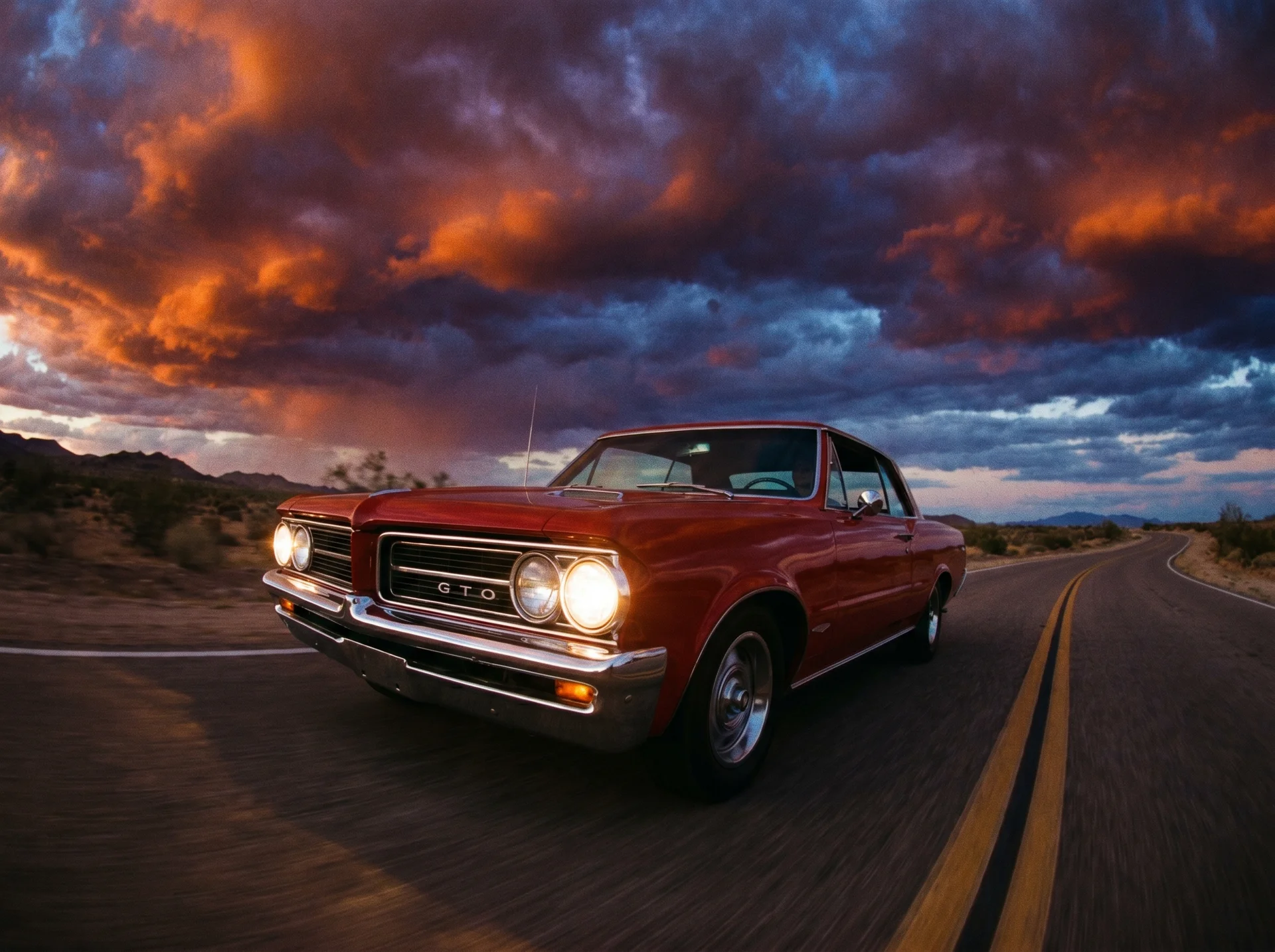
The summer of 1964 was a turning point in American automotive history. Pontiac, then fighting for relevance in the mid-size segment, quietly introduced an option package on its Tempest LeMans that would change everything. The package — RPO 242, better known as the GTO — dropped Pontiac's 389 cubic-inch V8 into a body originally designed for a much smaller engine. What followed wasn't just a successful car launch. It was the birth of a category.
What Made the 1964 Pontiac GTO Different From Every Other Car?
In 1964, the U.S. car market offered buyers a stark choice: economy compacts or expensive sports cars. The performance gap between them — affordable, domestic, genuinely fast — was empty. The GTO option package filled it. For a modest premium over a base Tempest LeMans, a buyer received a 389 cid V8, dual exhaust, heavy-duty suspension, and transmission options no competitor could match at the price.
The automotive press recognized it immediately. Within weeks of reaching dealerships, it had become the most talked-about new model in America. Pontiac announced production targets of 5,000 units. The market had other ideas.
The Forbidden Option: How DeLorean Beat GM's Rules
General Motors maintained a strict policy in 1963: no division could install an engine larger than 330 cubic inches in a mid-size car. The rule existed to prevent inter-division horsepower escalation between GM divisions. John DeLorean, Pontiac's chief engineer, routed around it by packaging the 389 as an option on the standard Tempest LeMans rather than a standalone model. GM's accountants approved it. The lawyers didn't flag it.
DeLorean understood that GM executives would veto a purpose-built performance model outright. But an option package was just a parts decision. By the time anyone in authority grasped how well it was selling, canceling it would have meant turning away tens of thousands of paid orders. The GTO started the trend that Detroit would spend the rest of the decade chasing.
What Engine Did the 1964 GTO Have?
The GTO option package was built around Pontiac's 389 cubic-inch V8 engine, offered in two states of tune. The standard configuration used a single 4-barrel carburetor producing 325 horsepower, with hydraulic lifters, a compression ratio of 10.75:1, and dual exhaust as standard equipment. This version covered everyday driving without demanding premium fuel on every fill-up.
The high-output Tri-Power variant replaced the single four-barrel with three two-barrel carburetors, pushing output to 348 bhp. The outer two carburetors opened only under heavy throttle, giving the engine reasonable manners around town but brutal acceleration when pushed. Both versions used the same cid V8 block, the same gasket-sealed architecture, and the same rear wheels and axle layout. The difference was in how urgently they responded when the driver asked for everything.
Beyond the engine itself, the GTO option package included heavy-duty suspension, a three-speed manual transmission as standard, and an extensive option list: four-speed transmission, automatic transmission, power steering, power brakes, tachometer, metallic brakes, limited-slip differential, and bucket seats with front seats finished in Morrokide vinyl.
How Much Did a Pontiac GTO Cost in 1964?
The GTO was never a standalone model — it was option package RPO 242 added to a Tempest LeMans. The base Tempest LeMans started at around $2,500. The GTO option package itself added $295.90, bringing the starting price to approximately $2,800 before any additional options. A fully optioned GTO with four-speed transmission, Tri-Power engine, limited-slip differential, and power accessories could reach $3,500 or more — still well below the cost of any imported sports car offering comparable straight-line performance.
For context, a Ferrari 250 GTO — the car whose name DeLorean borrowed — cost around $18,000 in the same period. Pontiac's GTO delivered a fraction of the Ferrari's refinement and none of its racing pedigree, but it went just as fast in a straight line for one-sixth the price. That value equation was exactly what Pontiac announced to a market that was ready for it.
What Did the Car and Driver Road Test Prove?
The Car and Driver road test of the 1964 GTO remains one of the most consequential pieces of automotive journalism ever published. The magazine staged their test car — a Royal Pontiac–prepared example from Royal Oak, Michigan — against a Ferrari GTO. The result made national news and permanently established the car's performance credentials.
Royal Pontiac's mechanics extracted maximum output through street-legal preparation: optimized ignition timing, recalibrated carburetor jetting, attention to brake linings, and a suspension setup dialed for straight-line stability. The car and driver review clocked the test car at figures that crossed 100 miles per hour in the quarter-mile. The car and driver review made national news. For a domestic car at that price, those numbers were extraordinary — and Pontiac's street racing reputation became permanent from that moment forward.
What Were the Real Performance Numbers?
Period testing confirmed 0–60 in under 6 seconds for the Tri-Power car with a four-speed transmission, and quarter-mile times in the low 14s. Top speed was documented at 115 mph under controlled conditions. The 348 bhp engine's redline and the car's GT character were repeatedly noted by period testers across multiple publications.
The standard 4-barrel version was slightly slower but returned better fuel economy and was noticeably easier to manage on the highway. Both versions showed some understeer — the front-heavy weight distribution from the big-block motor was a known trade-off — but the heavy-duty suspension option reduced it meaningfully. For a car built on a family Tempest platform, the performance numbers genuinely startled anyone coming from a sports car background.
How Did the GTO Change the American Car Market?
Pontiac built 32,450 GTOs in 1964 against a projected 5,000. By 1966, production topped 96,000, and every Detroit manufacturer had fielded a competitor. Ford built the Fairlane 427. Chrysler responded with the 440-powered Coronet. Chevrolet upgraded the Chevelle SS to match. The musclecar segment that GTO's success created absorbed enormous investment across the entire industry.
The ripple effects extended to imported cars, which had been gaining ground on economy and handling. American muscle demonstrated that the mass market wanted rear wheels spinning and V8 engine noise, not European refinement — and domestic manufacturers could deliver it at a fraction of the imported price. GM divisions that had avoided direct performance competition found themselves forced to respond. General Motors, which had tried to prevent inter-division engine escalation, lifted the 330 cid restriction entirely by 1966. The policy had been rendered irrelevant by market reality.
Was the 1964 Pontiac GTO the First Muscle Car?
The honest answer is: it depends on the definition. Cars with large engines in mid-size bodies existed before 1964 — the Chrysler 300, the Studebaker Golden Hawk, and early high-performance Pontiacs all predate the GTO. What the 1964 Pontiac Tempest–based car did differently was make high performance accessible at a mainstream price point, in a package ordinary buyers could walk into a dealership and order off the options sheet.
Most automotive historians credit the GTO as the car that defined the muscle car formula: mid-size body, big-block V8, affordable price, available to anyone. By that definition — which is the one that matters to the market — the 1964 GTO was first. Everything that followed, from the Chevelle SS 396 to the Plymouth Road Runner, was a response to the standard tempest it set. Pontiac's chief engineer didn't just build a fast car. He built the template.
How Much Is a 1964 Pontiac GTO Worth Today?
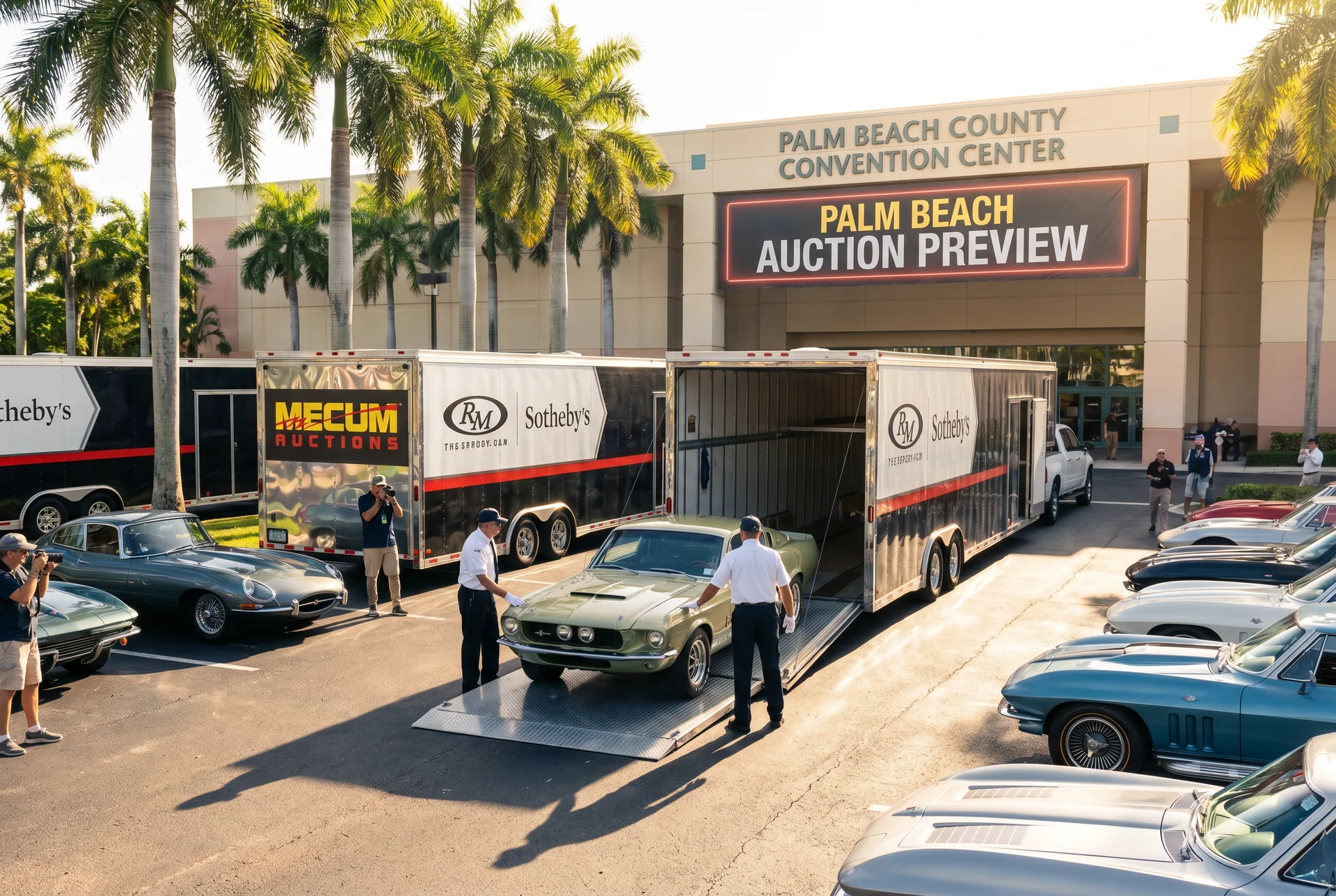
Clean, numbers-matching 1964 GTOs are consistently among the strongest performers at muscle car auctions. Tri-Power cars with documented provenance routinely bring $60,000 to $90,000. Four-barrel standards with correct-color bodies and matching drivetrains sell in the $45,000–$65,000 range depending on condition. Convertibles command 30 to 40 percent over a comparable hardtop.
The 1964-specific details that matter to serious collectors: the body-colored dash, the Morrokide interior, and the correct date-coded 389 block. PHS (Pontiac Historical Services) documentation confirming numbers-matching status sells faster and at the top of comparable ranges. The GTO's desirability makes cloning worthwhile — verify rear axle ratio stamps, date codes, and VIN tags before bidding. The Ferrari 250 GTO connection that inspired the name adds a layer of collector mythology that keeps demand strong even when the broader muscle car market softens.
Key Facts to Remember
- The 1964 Pontiac GTO was option package RPO 242 on the Tempest LeMans — a workaround to GM's 330 cid engine limit, priced at $295.90 over the base car
- Two engine choices: 325 hp with 4-barrel carburetor, or 348 horsepower Tri-Power with three two-barrel carburetors
- The Car and Driver road test — using a Royal Pontiac–prepped car from Royal Oak — made GTO's performance reputation national news
- Options included four-speed transmission, automatic, power steering, power brakes, tachometer, metallic brakes, limited-slip differential, and bucket seats
- Quarter-mile in the low 14s at 100+ mph — top speed 115 mph for the Tri-Power variant
- Pontiac projected 5,000 units for 1964; actual production was 32,450 — one of the most underestimated launches in American automotive history
- Numbers-matching 1964 GTOs with PHS documentation are consistently among the strongest performers at collector auctions today