
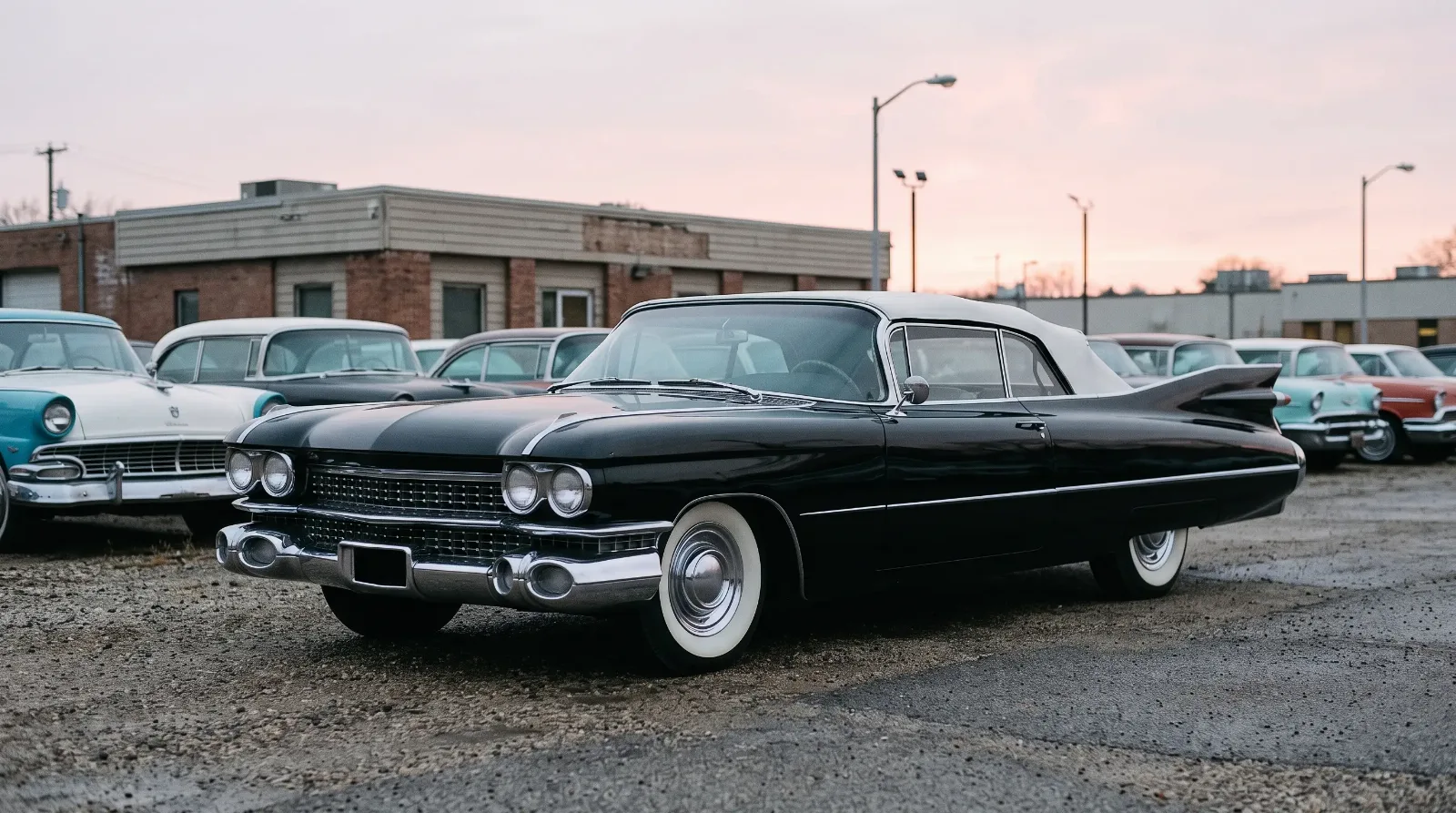
I've parked and retrieved the same 1968 Pontiac Firebird from winter storage fifteen times. In the first few years, I made most of the common mistakes. The car spent one spring with a seized rear brake caliper, one spring with a carburetor that had varnished jets, and one very bad spring with a rodent nest in the air filter housing that I won't describe in detail. The checklist I follow now has been revised by experience. Here it is.
Ownership & Lifestyle
7 min read
How to Store Your Classic Car for Winter: The Complete Guide
Proper winter storage isn't just parking the car in a garage. What you do in the weeks before storage determines what you find in the spring.
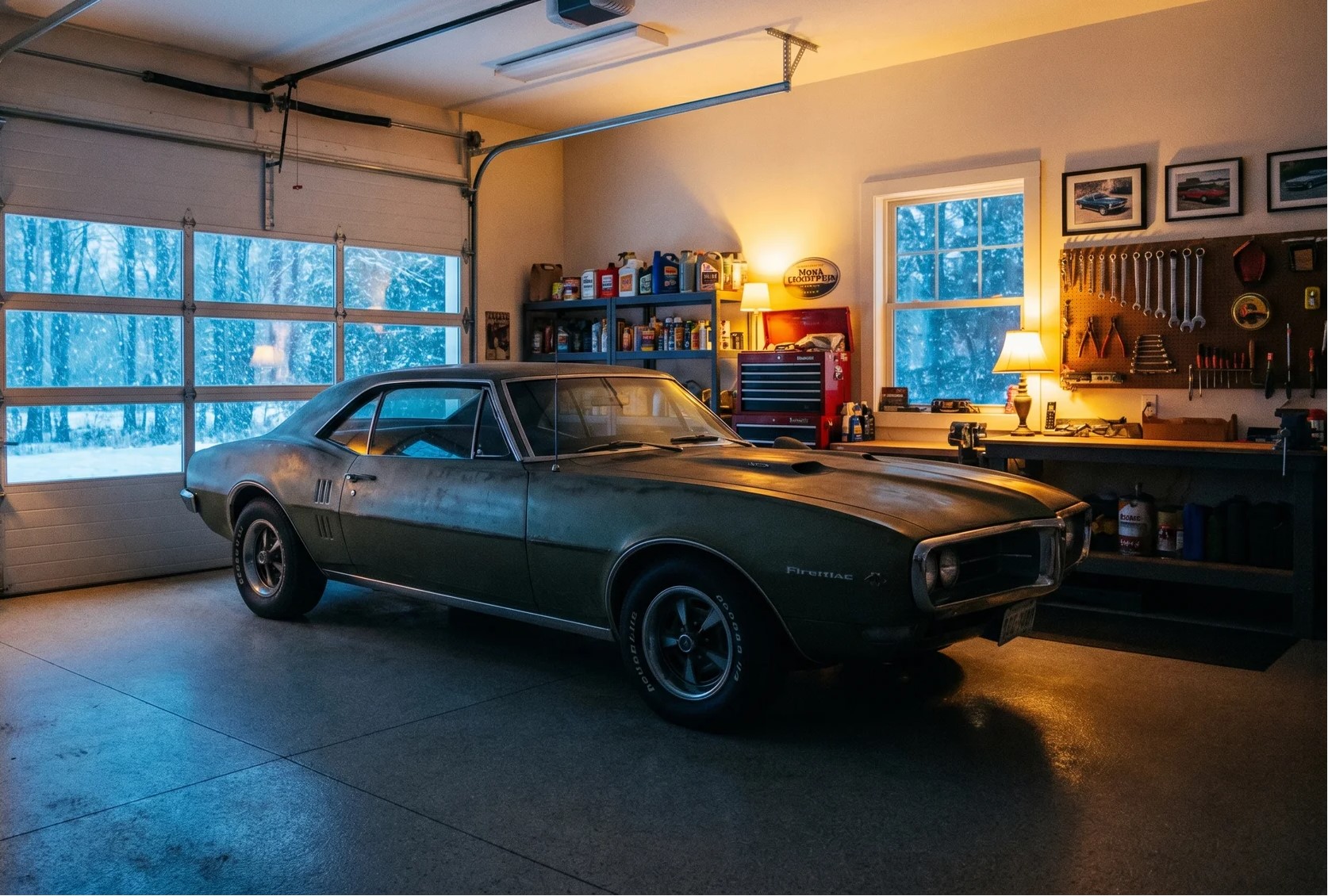
Timing: When to Store
The conventional advice is to store when temperatures consistently drop below 40°F at night. The more practical guide is to store when you've finished driving it for the season, don't leave it sitting with winter approaching and tell yourself you'll take it out one more time. One more time often means one more problem to deal with in the spring.
Six Weeks Before Storage
Address any known mechanical issues. Brake squeal, oil weeps, cooling system irregularities, these are minor nuisances in driving season. Sitting for five months makes them worse. A brake caliper that's sticking in October will be seized in April.
Change the oil. Used engine oil contains combustion byproducts, acids, and moisture that will sit against internal engine surfaces for the duration of storage. Fresh oil provides a protective film. Change the filter too, and run the engine for ten minutes after the change to circulate the fresh oil through all galleries.
The Week of Storage
Fill the fuel tank and add fuel stabilizer. A full tank minimizes the air space where condensation forms. Fuel stabilizer, Sta-Bil or equivalent, prevents varnish formation in the carburetor circuits and fuel lines over months of storage. Run the engine for ten minutes after adding stabilizer to ensure it's circulated through the entire fuel system, including the carb bowls.
Inflate the tires to the maximum recommended pressure. Tires develop flat spots over winter storage, especially on cars sitting on concrete. Maximum inflation minimizes flat-spotting. Check tire pressure in the spring before driving.
Wash and wax the car thoroughly, then park it without covers on the paint. Clay bar if the paint has texture. Apply a quality carnauba wax. The wax layer protects the paint from UV damage (even in storage, ambient light matters) and from airborne contaminants. Let the wax fully cure before covering.
Leave the windows cracked slightly. Air circulation inside the car prevents mold and mildew on the interior. One inch of window gap is sufficient. If you're in a facility with temperature control, this matters less; in an unheated garage or barn, it matters considerably.
Plug the exhaust pipe with a rag or purpose-made plug. Rodents enter cars through the exhaust pipe. They find the air filter housing, the cabin air paths, and the wiring harness. A simple cotton rag in each tailpipe stops this. Don't forget to remove them in the spring before starting.
Battery Management
Disconnect the negative battery terminal and connect a maintenance charger (Battery Tender or similar) to keep the battery at optimal charge through storage. A completely discharged lead-acid battery that sits dead for months sustains internal damage and won't hold its full capacity afterward. The maintenance charger pays for itself the first time it saves you from a new battery purchase.
Rodent Prevention (Non-Negotiable)
Stuffed animals, dryer sheets, peppermint oil, electronic ultrasonic repellers: I've tried all of them. What actually works: seal all entry points (exhaust, air filter intake, cabin ventilation), and place snap traps along the garage walls. Not inside the car, snap traps can damage interiors if triggered. Along the walls, where mice run.
The Spring Restart Checklist
Before starting: remove all plugs from exhaust and intakes. Check under the hood for rodent nests, look especially in the air filter housing, around the battery, and in any wire harness conduits. Check tire pressure. Reconnect the battery. Check fluid levels (oil, coolant, brake fluid). Look for any new leaks under the car.
Start the car and let it warm up fully before driving. Check the brakes, apply firm pressure before moving, to confirm all four corners are releasing. Take the first drive gently. The car has been sitting. So have you.
Have a
Classic Car
for Sale?
Reach thousands of serious classic car collectors across the US.
Sell It Here →
Selling a classic? Here's how: sell my classic car
Are You a Classic Car Dealer?
List your full inventory and connect with targeted classic car buyers.
Join as a Dealer →

About the author
Patrick Walsh
Automotive journalist covering classic car shows, events, and the enthusiast community across North America.
More in Ownership & Lifestyle
Comments (8)
J
Jimmy Borowski
5 months ago
Question: what's the recommendation for a climate-controlled storage unit vs. a standard unheated garage? Worth the price difference?
H
Hank Weaver
5 months ago
The rodent note is absolutely real. Lost about $2,000 in wiring harness to mice one winter when I forgot to plug the exhaust and intakes. They nested in the air filter housing and chewed half the vacuum lines.
R
Rick Fontaine
5 months ago
Battery tender is non-negotiable. I've killed two batteries over the years by leaving them disconnected in cold storage without a maintainer. New batteries are $150-$200. The tender is a one-time purchase.
D
Don Metzger
5 months ago
Climate control matters most for interiors. Vinyl and rubber tolerate temperature swings but not prolonged humidity. If you're in a humid climate, climate control is worth it. Arizona — less critical.
T
Tony Marchetti
4 months ago
The insurance section is worth a separate article. A lot of people reach claim time before realizing agreed value coverage is completely different from what they bought.
S
Sal Giordano
4 months ago
Market for these has been stable longer than I expected. Thought prices would soften after the last run-up. They've held.
G
Gary Tompkins
3 months ago
Numbers-matching obsession is real. I get it. But a driver-quality example at a reasonable price has its own appeal that gets overlooked.
P
Pete Nakamura
3 months ago
The insurance section is worth a separate article. A lot of people reach claim time before realizing agreed value coverage is completely different from what they bought.