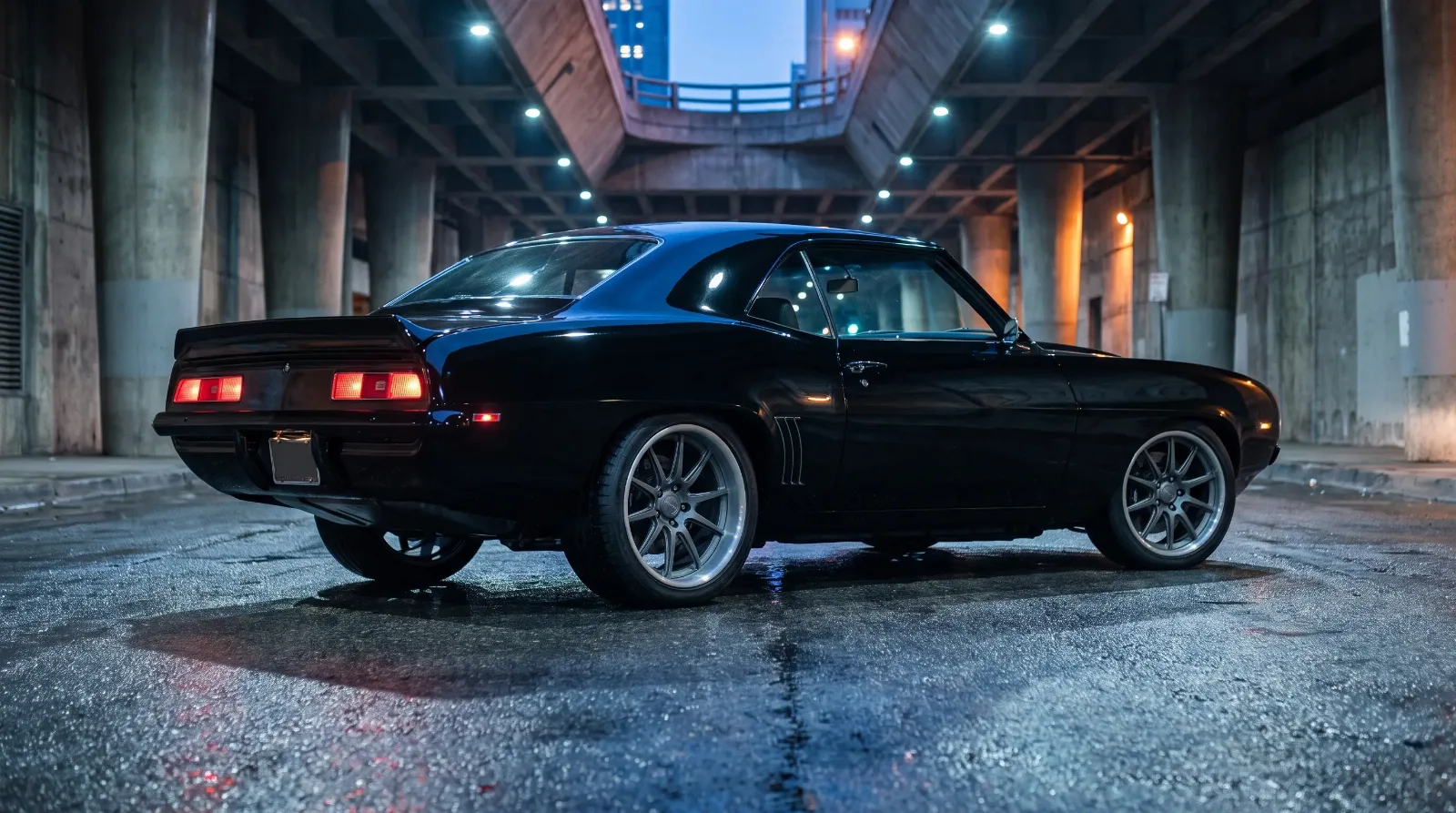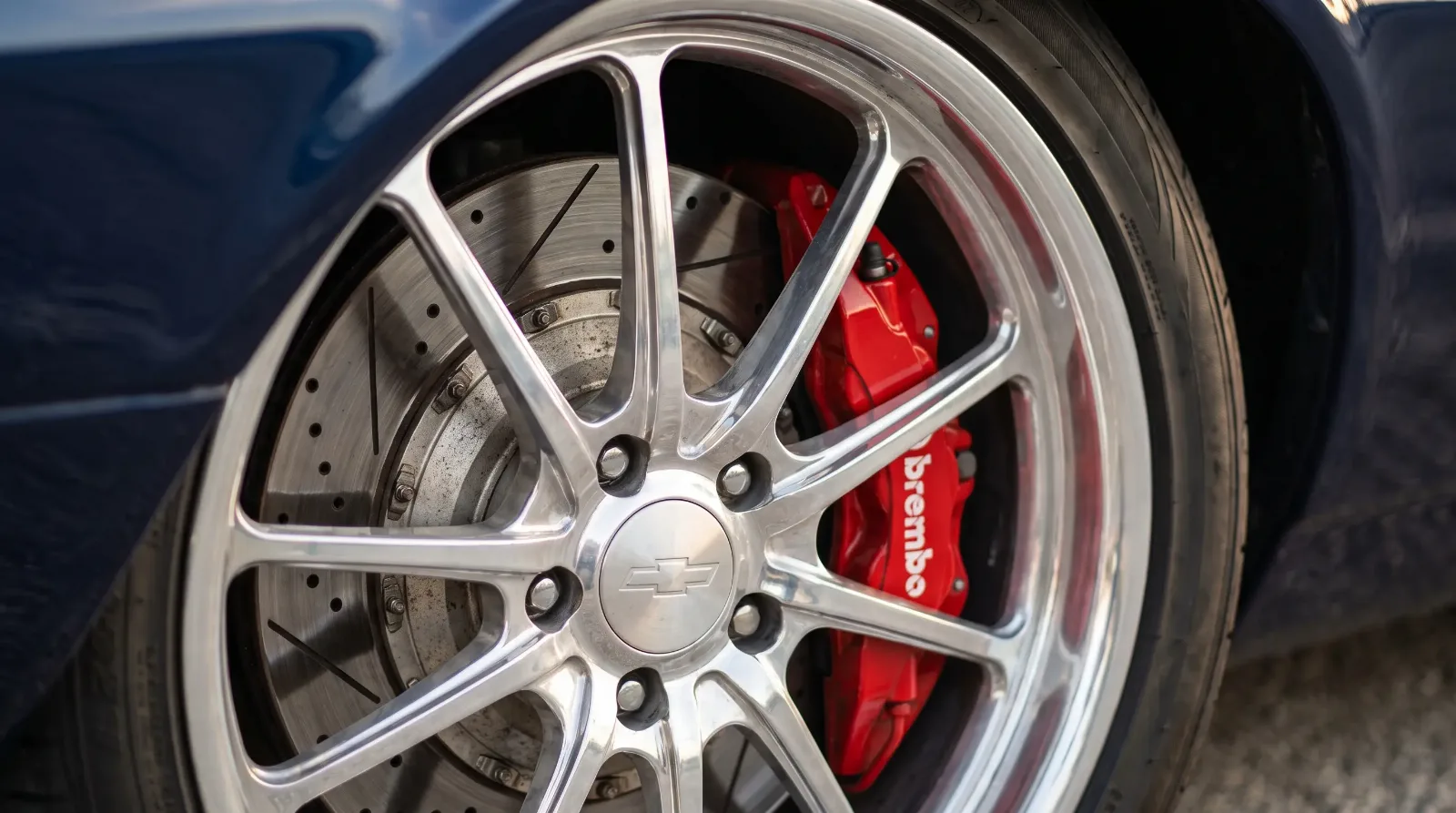

What is wrong with the factory suspension?
The first-generation Camaro left the factory with a front subframe design borrowed from the Nova, a single-leaf rear spring arrangement on base cars, and rubber bushings throughout that were never designed for sustained lateral loads. The result is a car that rolls heavily in corners, has vague steering return, and hops under hard acceleration. For a Sunday driver this is manageable. For any car you want to push on a twisty road or an autocross course, it is a starting problem that compounds with every other upgrade you add.
The good news is that the aftermarket has had 50 years to solve this. Bolt-in front subframe upgrades, tubular control arms, coilover conversions, and modern sway bar kits all fit without cutting the floor. Your total budget for a street-focused handling package runs anywhere from a few thousand to high single-digit thousands of dollars depending on component quality. For a track-prepped car, that number grows quickly.
Before choosing components, read the broader context on restomod and pro-touring builds to understand how suspension choices interact with wheel, tire, and brake decisions.
Front subframe and control arm upgrades
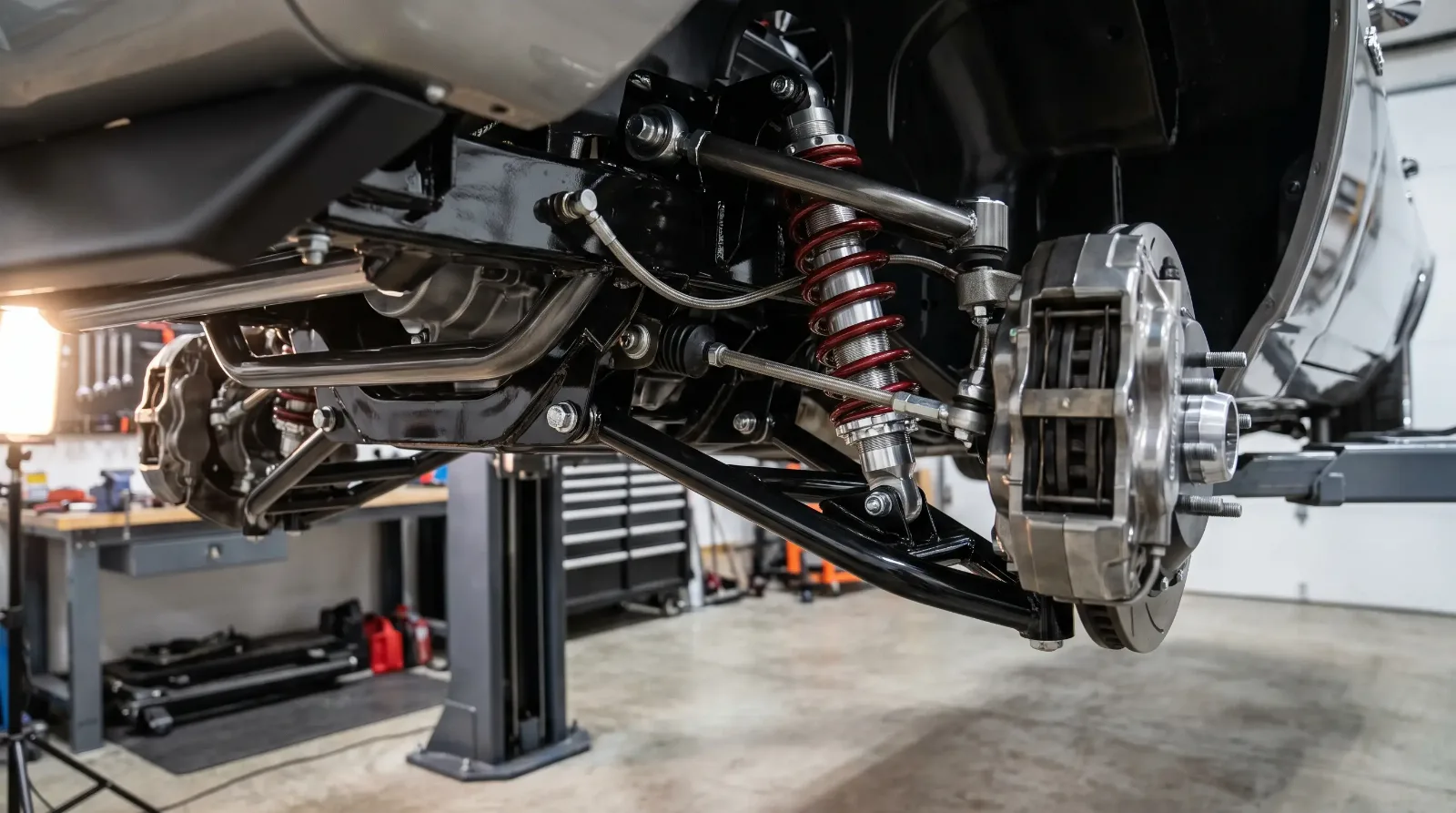
Global West, Hotchkis, and Detroit Speed all produce tubular upper and lower control arms for the first-gen Camaro that correct the factory geometry. The factory design has a high roll center and poor camber curve under compression. Tubular lower control arms from Hotchkis with relocated ball joint positions drop the roll center and improve camber gain through travel. A set of tubular uppers and lowers runs roughly one thousand dollars, give or take depending on brand and whether they include polyurethane or Delrin bushings.
Detroit Speed sells a complete bolt-in front subframe called the Aluma-Frame that replaces the entire factory unit with CNC-machined aluminum. It relocates the rack-and-pinion mount, corrects geometry, and sheds around 40 pounds. The price is significant at several thousand dollars for the subframe alone, but for a serious build it eliminates subframe flex and gives you a clean baseline for alignment.
- Hotchkis tubular control arms: roughly six to nine hundred dollars
- Global West tubular arms with proper geometry: around one thousand dollars
- Detroit Speed Aluma-Frame: several thousand dollars
- Delrin bushings over polyurethane for track use: higher NVH, much better control
Coilover conversion: front and rear
The factory front uses a coil spring over the shock in the upper control arm pocket. Converting to a threaded coilover body lets you adjust ride height without changing spring rates by swapping spacers. QA1, Viking Performance, and RideTech all make direct-fit coilover kits for the first-gen. QA1's double-adjustable front kit starts around a thousand dollars and allows independent compression and rebound tuning.
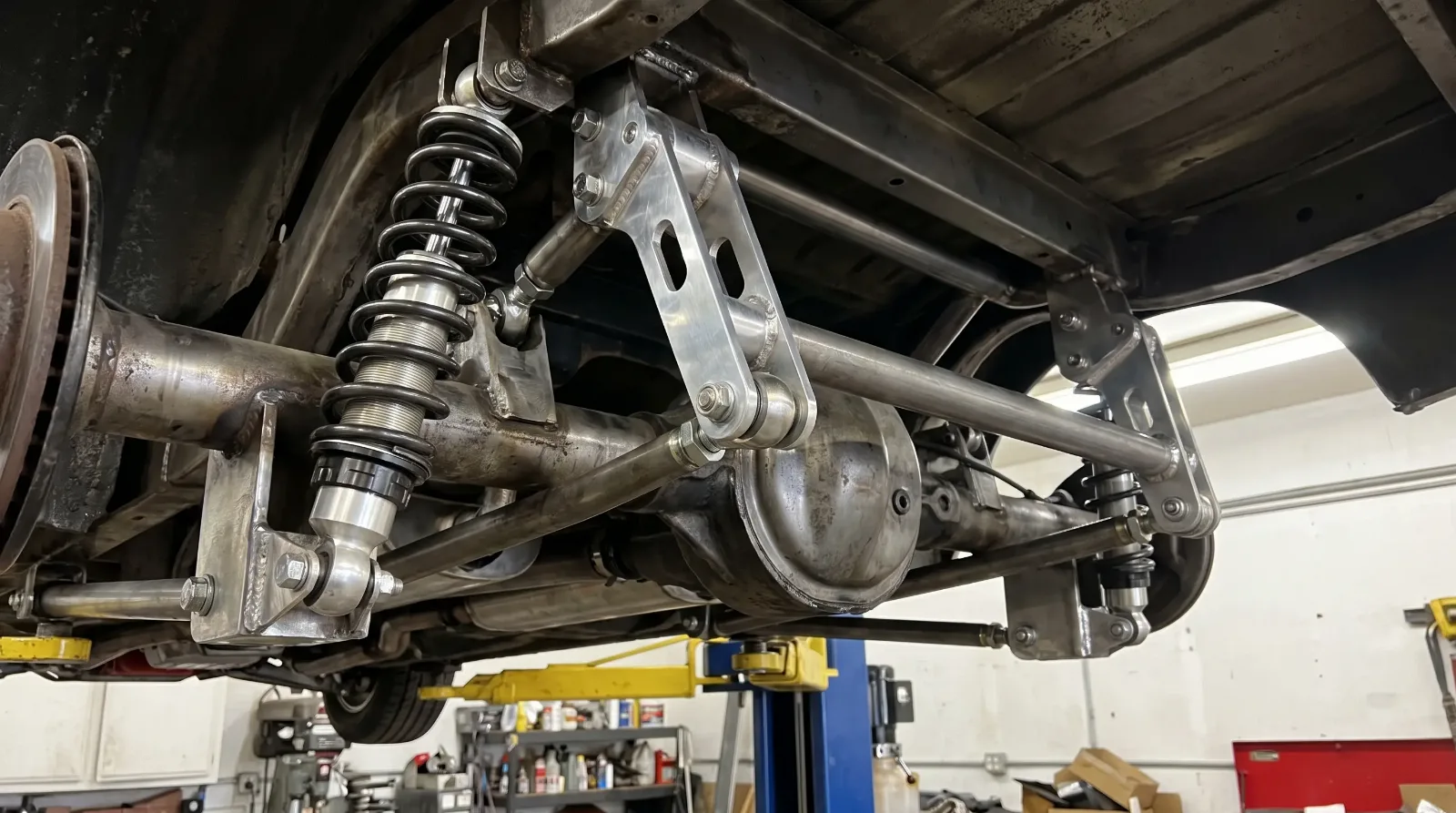
The rear is where things get interesting. A leaf-spring rear limits your alignment options and rear suspension travel. A coilover rear conversion requires either a torque-arm or four-link arrangement to locate the axle. RideTech's StrongArm system uses coilovers with a torque arm and panhard rod for a few thousand dollars installed on the factory framerails with no cutting. For a more complete solution, see our guide on four-link and coilover conversions for a first-gen Camaro.
"Guys always ask me which upgrade makes the biggest difference. Every time, it is sway bars and coilovers together. Neither alone gives you the flat cornering you are chasing. Both together and the car feels like a different animal."
-- Mike Sullivan
Sway bars, alignment specs, and anti-roll geometry
Factory front sway bars on most first-gens were 11/16-inch to 7/8-inch diameter. Hotchkis and Hellwig both sell 1-1/8-inch or 1-1/4-inch front bars that bolt to the factory end link locations. A front bar upgrade alone costs a couple hundred dollars and is one of the best dollar-for-dollar handling improvements on these cars. Pair it with a 7/8-inch or 15/16-inch rear bar for neutral balance.
Alignment targets for a street-driven pro-touring first-gen: front camber -1.0 to -1.5 degrees, caster 5.0 to 7.0 degrees, zero toe. For autocross, push camber to -2.0 to -2.5 degrees and reduce caster slightly. You will need an alignment shop with a four-wheel aligner that can measure the rear axle squareness after any rear suspension work.
Steering upgrade: manual rack or power assist?
The factory recirculating ball steering box can be rebuilt and tightened, but its inherent slop never fully goes away. Most pro-touring builders switch to a rack-and-pinion unit. Flaming River, Unisteer, and Global West all offer rack kits that bolt to the factory subframe. A manual rack kit runs roughly six to nine hundred dollars. Power rack kits add an electric power assist unit or a remote hydraulic pump for one to two thousand dollars. The steering rack ties directly to the front suspension geometry, so plan both upgrades together.
| Component | Entry Level | Pro-Touring | Track |
|---|---|---|---|
| Front control arms | Poly-bushed factory style | Tubular with Delrin | Tubular with spherical |
| Front bar | 7/8 in stock | 1-1/8 in Hotchkis | 1-1/4 in adjustable |
| Front shocks | Bilstein B6 | QA1 single-adj | QA1 double-adj |
| Rear suspension | Leaf with mono-leaf | Torque arm + coilover | Four-link + coilover |
Sources and notes
Production figures, engine specifications, codes, and dates in this article are cross-referenced from established Camaro references, period documentation, and owner registries. Where sources differ, the most commonly cited value is used. Cost figures are indicative and vary by supplier, region, and condition.