
Classic Mercedes-Benz 450 SL Buyer's Guide
Definitive buyer's guide for the Mercedes-Benz 450 SL (R107) 1973-1980. Rust hotspots, M117 V8 maintenance, hardtop roof storage, and current market pricing for survivors and restorations.

The Mercedes-Benz 450 SL is the highest-volume variant of the legendary R107 SL platform, which ran from 1971 through 1989 — the longest production run of any Mercedes-Benz body style ever. Built with the over-engineered standards that defined Stuttgart in its golden era, the 450 SL combined the 4.5L V8 with the unmistakable convertible roadster silhouette and a build quality that has allowed many of these cars to survive in remarkable condition fifty years on. For collectors entering the SL market today, the 450 SL represents the most accessible entry into proper R107 ownership — and the smart-money buy when patience and proper inspection guide the purchase decision.
Overview
The 450 SL is the highest-volume variant of the legendary R107 platform, which served as the Mercedes-Benz two-seat sport convertible from 1971 through 1989 — eighteen production years and the longest-running body style in Mercedes-Benz history. The 450 SL designation specifically applies to US-market cars from 1973 through 1980, powered by the 4.5L M117 V8. Among the marque registries, the early 450 SL cars (1973-1976) are increasingly collected for their over-engineered build quality and the unmistakable R107 silhouette that has aged remarkably well.
Generations Worth Knowing
Early R107 (1973-1975)
The launch era of the 450 SL in the US market. Federal 5-mph bumper regulations took effect for the 1973 model year, and Mercedes-Benz responded by designing unique reinforced bumpers for US-market cars that distinguish them from European-spec cars (which retained slimmer original bumpers throughout production). Early 450 SLs paired the M117 V8 with the 3-speed automatic transmission. Interior trim, instrument design, and dashboard layout are pure 1970s — classic Mercedes engineering aesthetic.
Mid R107 (1976-1977)
The 1976-1977 model years brought interior refinements, updated climate control, and slightly revised emissions equipment. The 1977 model year introduced the more sophisticated 4-speed automatic transmission, replacing the original 3-speed. From a driving standpoint, the 1977-1979 cars represent the optimum combination of original 450 SL character with the refined drivetrain.
Late 450 SL (1978-1980)
The 1978-1980 cars saw further emissions tightening and slightly reduced engine output. The 1980 model year is the final year of the 450 SL designation in US markets — federal fuel economy regulations forced Mercedes-Benz to switch to the smaller-displacement 380 SL (3.8L V8) for 1981. Late 450 SL cars are dramatically cheaper than early-era cars but offer comparable driving character with slightly improved emissions integration.
What to Look For (in person)
Data Card Verification
Before any in-person inspection, request the Mercedes-Benz Classic Center Data Card from the seller (or order it yourself for $80-$150 from the Mercedes-Benz Classic Center in Long Beach, California). The Data Card confirms the original specification: chassis number, engine number, paint code, interior code, options, and delivery destination. For any 450 SL priced over $30,000, the Data Card is recommended documentation.
Structural Rust Inspection
Lift the car on a hoist or jack stands and inspect the jacking points first — these four steel-reinforced points are critical structural elements that commonly rust through. Inspect the rear quarter panels with strong light and a magnet. Lift the trunk mat and inspect the trunk floor and spare tire well. Inspect the windshield surround at the cowl from inside the cabin — rust here causes water leaks that rot the dashboard wood and electrical components.
Mechanical Audit
The M117 4.5L V8 should idle smoothly at 700-800 rpm, run cleanly through the rev range to redline, and produce no smoke at any operating condition. Cold-start blue smoke that clears after 30 seconds is normal (valve stem seal seepage); continuous blue smoke indicates worn rings or guides. Compression should be 145-180 PSI uniformly across all eight cylinders.
Pricing Tiers
| Tier | Description | Price Range (2024) |
|---|---|---|
| Driver | 1977-1980 450 SL with both tops, decent paint, original interior with wear, runs and drives | $20,000-$35,000 |
| Survivor | 1973-1976 450 SL with original paint, hardtop, Data Card, documented mileage | $30,000-$55,000 |
| Concours | Documented original-paint, sub-30,000-mile, two-owner car with all original equipment, frame-off restoration | $60,000-$95,000+ |
Common Pitfalls
The biggest pitfall in 450 SL buying is paying premium money for a car with hidden structural rust. The unibody construction means rust isn't merely cosmetic — proper repair on an R107 with significant structural rust runs $15,000-$35,000 in body work alone. Demand a thorough underside inspection on a lift before purchase.
The second pitfall is climate control system failure. The R107 vacuum-actuated climate control system is exceptionally complex by 1970s standards, and 50-year-old vacuum lines and rubber actuators fail expensively. Cars with non-functioning climate systems often look fine on a test drive but will require $2,500-$5,000 in proper specialist repair.
"From a concours judging perspective, the unrestored survivor in original livery with both original tops and the Mercedes-Benz Classic Center Data Card is consistently preferable to the freshly-restored car of unknown provenance. The market premium for documented matching-numbers cars with original paint is real — $15,000 or more on a typical 450 SL — and it pays to spend the $150 on a Data Card before negotiating final price. The Mercedes-Benz archives don't lie."
— Sarah Whitfield
Final Verdict
The 450 SL market rewards documentation, structural integrity, and patience. Early 1973-1976 cars are the most desirable era and have appreciated steadily for the past five years. Late 1977-1980 cars represent the smart-money entry into R107 ownership at $22,000-$35,000 for solid drivers. The market continues to favor documented original-paint, low-mileage cars with both tops and complete service records.
For new buyers, start with a 1977-1979 450 SL with both tops, complete service history, and the Data Card. They're the most usable R107 — refined 4-speed automatic, mature emissions integration, and dramatically more affordable than equivalent early-1970s cars. From there, the upgrade path is clear: 1975-1976 450 SL, then 1973-1974 early 450 SL, then European-spec imported cars. Patience and Data Card verification beat impulse buys every time in this market.
Browse Mercedes-Benz 450 SL listings
 Dealer
 United States
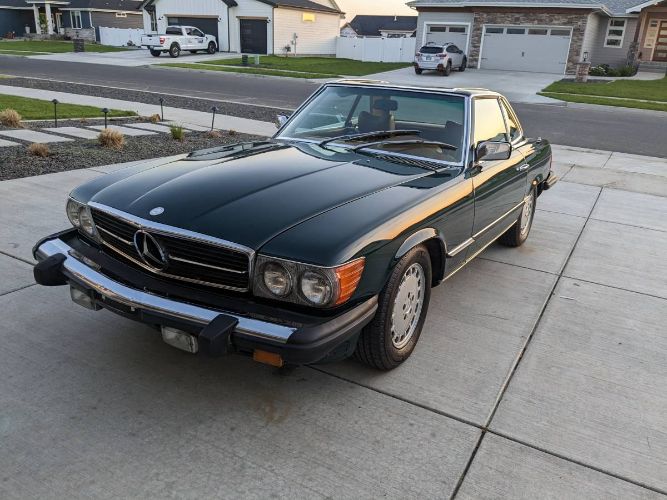
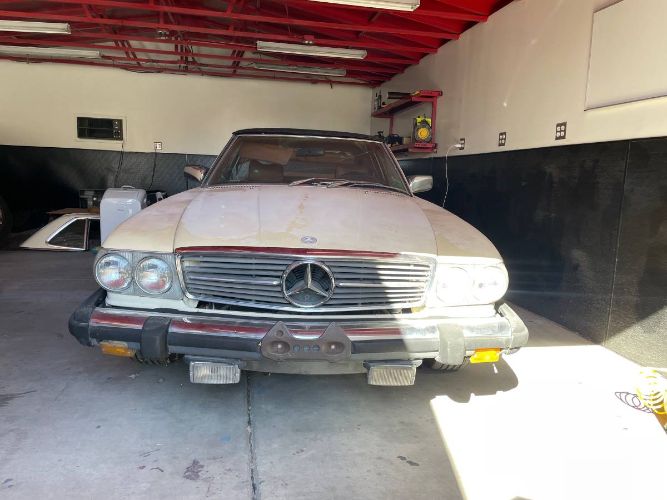
1977 Mercedes-Benz 450 SL
 Dealer
United States
Dealer
United States
1976 Mercedes-Benz 450 SL
What to Look For
The Mercedes-Benz Classic Center (in Long Beach, California) maintains original production records and can issue a Data Card ($80-$150) confirming the original specification of any 450 SL: chassis number, engine number, paint code, interior code, options, and delivery destination. For any 450 SL priced over $30,000, the Data Card is recommended documentation.Rust inspection is the first non-negotiable. Lift the car on a hoist or use jack stands and inspect the jacking points (the four steel reinforced points where the factory jack attaches). Inspect the rear quarter panels with strong light and a magnet — body filler over rust is universal on driver-quality cars. Lift the trunk mat and inspect the trunk floor and the spare tire well. Inspect the windshield surround at the cowl from inside the cabin — rust here causes water leaks that rot the dashboard.
Engine and transmission verification: the M117 V8 engine number is stamped on a flat pad on the driver-side of the block (passenger side on RHD cars). The transmission number is on a tag attached to the case. Cross-reference both against the Data Card.
Hardtop condition is unique to R107 ownership. The 450 SL came standard with both a soft top (cloth convertible top) and a removable hardtop (steel structure with rear glass). The hardtop is critical to winter weather use and adds 10-15% value when present and original. Verify the hardtop fits properly, the rear glass is original (Sigla glass with date code), and the headliner inside the hardtop is intact.
Electrical audit: test every gauge, every switch, every climate function. The R107 climate control system is notoriously complex — vacuum-actuated heater valves, electrically-actuated mode doors, and a two-zone temperature regulation that fails expensively. Budget $1,500-$3,500 for proper climate system service on any car older than 40 years.
Pre-Purchase Checklist
-
Order Mercedes-Benz Classic Center Data Card ($80-$150)
Available from MB Classic Center via chassis number. Confirms original engine, color, options, delivery destination. -
Verify both soft top and hardtop present
Original matching-numbers hardtop adds 10-15% value. Cars missing hardtop are dramatically less desirable. -
Inspect jacking points under rocker panels
Four steel-reinforced points. Critical structural rust point. Rust here = $2,500-$6,000 repair. -
Magnet test rear quarter panels
Body filler is non-magnetic. Driver-quality cars universally have filler — verify how much before purchase. -
Lift trunk mat and inspect trunk floor
Trunk floor and spare tire well rot from underneath. Standard rust point on neglected cars. -
Inspect windshield surround at cowl
From inside cabin. Rust here causes water leaks that rot dashboard wood and electrical components. -
Test all climate control functions
Heat, A/C, defrost, mode selector. Vacuum-actuated system fails expensively. $2,500-$5,000 for proper repair. -
Check rear suspension subframe bushings
From underneath. Collapsed bushings cause launch clunking. $1,500-$3,000 to replace properly. -
Compression test all eight cylinders
M117 V8 should read 145-180 PSI uniformly. Variance >15% = head gasket or worn rings. -
Verify K-Jetronic fuel injection function
Bosch mechanical injection works well when serviced. Failed fuel distributor = $2,500-$4,500 to replace.
Common Issues
R107 rust follows predictable patterns. The jacking points (under the rocker panels at front and rear), the rear quarter panels (lower section behind the rear wheels), the trunk floor, the front fender behind the front wheels, the windshield surround at the cowl, and the rear wheel arches are all standard rust zones. The unibody construction means rust here isn't merely cosmetic — proper repair requires careful welding and is expensive.Mechanically, the M117 4.5L V8 is among the most over-engineered V8s Mercedes ever produced. Cast iron block, aluminum heads, mechanical Bosch K-Jetronic fuel injection, and timing chain (not belt) for primary drive. The engine commonly exceeds 250,000 miles when properly serviced. Common issues include timing chain stretch (replace at 100,000-150,000 mile intervals), valve stem seal leaks (causing morning oil-burn smoke), and Bosch K-Jet fuel distributor failures ($2,500-$4,500 to replace properly).
The 3-speed automatic (1973-1976) and 4-speed automatic (1977-1980) are both robust but require regular fluid changes. The rear suspension subframe bushings collapse over time and cause clunking on launch — a $1,500-$3,000 repair. Vacuum systems control everything from door locks to climate to throttle linkage, and 50-year-old vacuum lines crack everywhere — budget $800-$2,000 for complete vacuum line replacement on any neglected car.
More 450 SL for sale
 Dealer
United States
Dealer
United States
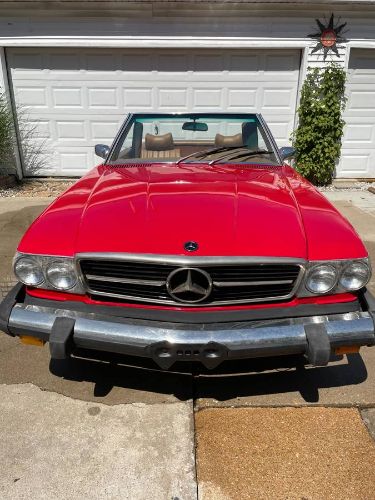
1975 Mercedes-Benz 450 SL
 Dealer
United States
Dealer
United States
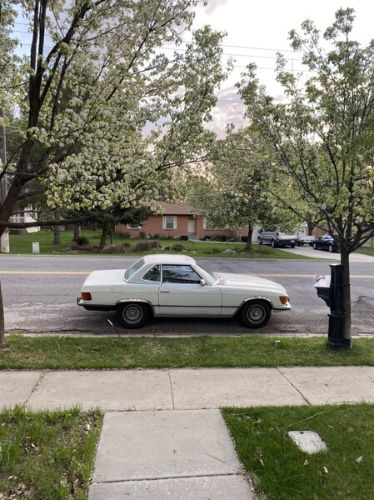
1973 Mercedes-Benz 450 SL
Pricing Guide
1973-1976 450 SL cars (early R107) are the most desirable era. Driver-quality 1973-1975 cars run $22,000-$38,000. 1973 was the federalized launch year and US-market cars from this period have unique 5-mph bumpers in less-attractive forms. 1975-1976 cars with refined interior trim are the sweet spot at $25,000-$42,000 for solid drivers.1977-1980 450 SL cars saw the introduction of the more sophisticated 4-speed automatic (1977+) and updated emissions equipment that slightly reduced output. Driver-quality cars from this era run $20,000-$35,000. The 1980 model year is the final year of the 450 SL designation in US markets — the 1981 cars switched to the 380 SL (3.8L V8) due to federal fuel-economy regulations.
Documented original-paint, low-mileage, two-owner cars are now bringing significant premium pricing. Concours-grade restored 1973-1975 450 SLs trade for $45,000-$75,000. Documented sub-30,000-mile original cars in time-warp condition: $55,000-$95,000.
Project cars (running but rough) start around $8,000-$15,000. Stripped roller candidates can be had for $3,500-$8,000, but rust restoration on an R107 typically runs $15,000-$35,000 in body and structural repair alone before paint. Buy finished cars from competent specialists.
Fun Facts
The R107 SL platform launched in 1971 and ran continuously through 1989 — eighteen production years and over 237,000 units across all variants (350 SL, 380 SL, 420 SL, 450 SL, 500 SL, 560 SL). It is the single longest production run of any Mercedes-Benz body style ever produced.The 1973 launch year of the 450 SL in the US market was specifically designed to comply with the new 5-mph bumper regulations (FMVSS 215) that took effect for 1973 model year vehicles. Mercedes-Benz designed unique reinforced bumpers for US-market R107 cars that distinguish them visually from European-market "Euro-spec" cars (which retained the slimmer original bumpers throughout the production run).
The M117 V8 engine that powered the 450 SL was developed as Mercedes-Benz's first all-new V8 since the 1968 introduction of the M116 (3.5L V8). The M117 architecture (4.5L initially, growing to 5.6L in late R107 cars) remained in production through 1991, powering everything from the 450 SEL 6.9 super-sedan to the 560 SEC coupe and eventually the 500 E sport sedan developed jointly with Porsche.
Frequently Asked Questions
Ready to find your 450 SL?
Browse 6+ active Mercedes-Benz 450 SL listings on Classic Cars Arena.
View Listings →