
Classic MG MGB Buyer's Guide (1962–1980)
The MGB is the best-selling British sports car of all time — affordable to buy, rewarding to drive, and supported by the deepest parts network of any classic import. Knowing which years to avoid saves you from an expensive restoration before you ever turn a wheel.

I came to the MGB through the back door — as a Datsun person who kept borrowing a friend's roadster for weekend runs up the coast. What struck me wasn't the horsepower (there isn't much) but the engineering integrity: a proper monocoque structure, all-synchromesh gearbox, independent front suspension, and a remarkably well-sorted chassis for a car designed in 1960. More than half a million MGBs were sold over eighteen years, which means parts availability is exceptional and the community is enormous. It also means the market is flooded with cars that have been poorly maintained, badly restored, or modified in ways that hurt both performance and value. Buying right requires knowing exactly what to look for.
History & Generations
BMC introduced the MGB in 1962 as a replacement for the MGA, using a new monocoque body structure rather than the outgoing body-on-frame design. The 1,798 cc B-Series inline-four produced 95 horsepower in early tune — modest by American standards but adequate in a car weighing barely 2,100 pounds. The result was a genuinely engaging sports car with enough sophistication for long-distance touring.
Mark I (1962–1967): The Purist's Choice
Early cars featured a pull-handle interior door mechanism, a three-bearing crankshaft engine (replaced by a smoother five-bearing unit in 1964), and chrome bumpers that define the MGB's classic look. The 1962–1967 cars are the most sought-after by purists and the most expensive in equivalent condition. The 1965 introduction of the five-bearing crankshaft was a genuine mechanical improvement — prioritize 1965-and-later if mechanical reliability matters more than absolute originality.
1968–1974: The Sweet Spot
Federalized for U.S. emissions and safety regulations, these cars gained energy-absorbing bumper overriders and a recalibrated engine. Power dropped slightly but the cars remained engaging. This is the era with the best balance of driving character, parts availability, and price — the largest population of surviving MGBs comes from this period.
1975–1980: Rubber Bumper Era
To meet U.S. 5-mph bumper impact standards, BL fitted large polyurethane bumpers and raised the ride height by 1.5 inches to meet headlight height regulations. The result visually compromised the car and worsened handling. Power was also down. Rubber-bumper cars are worth 20–30% less than chrome-bumper equivalents in the same condition. Many have been converted back to chrome bumpers — a common and acceptable modification that restores the appearance but does not add value as a "restoration."
Years to Target
- 1965–1967: Five-bearing engine, chrome bumpers, pre-emissions — the purist ideal. Highest prices but justified.
- 1968–1972: Best value among chrome-bumper cars; large production numbers mean good parts supply and competitive pricing.
- 1973–1974: Last chrome-bumper years; slightly softer tune but still engaging.
- Avoid for daily driving: 1975–1980 rubber-bumper cars unless price reflects the condition significantly — the raised ride height and reduced power require effort to correct.
- MGB GT (1965–1980): The fastback coupe is chronically undervalued relative to the roadster — same mechanicals, more practical, better long-distance car.
What to Look For in Person
Rust is the defining issue on any MGB. The sills are structural in a monocoque car — check them first by pressing firmly along the lower edge. A sill that flexes noticeably or sounds hollow indicates severe internal corrosion. Proper sill replacement on an MGB costs $1,500–$3,000 per side at a qualified shop. The floor pans rust at the front corners where they meet the bulkhead, and at the rear footwells. Check from underneath as well as from inside.
The front inner wings (fenders) trap mud above the front suspension turrets and rust from inside — push your hand into the wheel arch and feel above the suspension mount. Softness or flexing here indicates structural repair that will affect geometry. The boot (trunk) floor and the area around the spare tire well are common rust areas but not structural.
On the mechanical side, the B-Series engine is robust and long-lived when maintained. Start from cold: it should idle within 30 seconds and settle into a smooth 800 rpm idle. Blue smoke at startup indicates valve guide wear; persistent blue smoke on the overrun indicates worn piston rings. Either is manageable — a B-Series rebuild is straightforward and inexpensive — but factor the cost. Check the gearbox for smooth shifts through all four gears and, if equipped, verify overdrive engagement at speed.
| Spec | Details |
|---|---|
| Engine | 1,798 cc BMC B-Series inline-four |
| Power (early) | 95 hp @ 5,400 rpm (1962–1967) |
| Power (late) | 62.5 hp @ 4,800 rpm (1975–1980, US-spec) |
| Transmission | 4-speed all-synchromesh; optional Laycock overdrive |
| Suspension (front) | Independent wishbone, coil springs |
| Suspension (rear) | Live axle, semi-elliptic leaf springs |
| Curb weight | approx. 2,030–2,190 lbs |
| Production | 523,836 units (1962–1980) |
"I've inspected MGBs at every price point, and the pattern is consistent: the ones that look the most presentable from ten feet away are often the ones that have been painted over the most problems. Get underneath every single one. The sills, the floor corners, the inner wings above the suspension turrets — those are where the money is hiding. A car that's honest about its rust is a far better starting point than one that's been detailed to conceal it."
— Emily Chen
Market Outlook
The MGB market is stable and broad, with excellent liquidity at the lower end — there are enough cars and enough buyers that a fair deal is always achievable. Chrome-bumper roadsters in driver condition trade at $12,000–$18,000. Show-quality chrome-bumper cars in concours condition reach $28,000–$40,000 for the best early examples. Rubber-bumper cars are priced at a consistent discount: driver condition $7,000–$11,000, excellent $16,000–$22,000.
The MGB GT (coupe) remains undervalued relative to the roadster — a GT in equivalent condition typically sells for 15–25% less despite sharing all mechanicals and offering more practicality. For buyers who prioritize driving over show-field status, the GT represents the market's best value proposition in British classics at this price point.
Browse MG MGB listings
 Dealer
 United States
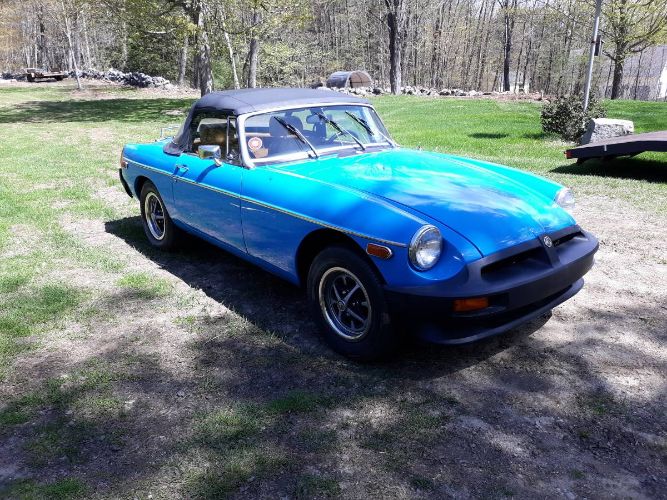
1976 MG MGB
 Dealer
United States
Dealer
United States
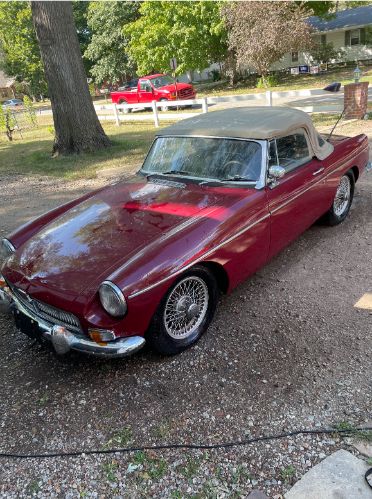
1968 MG MGB
What to Look For
Press firmly along both sills — the structural backbone of a monocoque MGB. Any flex, softness, or hollow sound indicates internal corrosion requiring major structural repair. Inspect floor pans from underneath, checking particularly the front corners at the bulkhead and rear footwells. Push your hand into the front wheel arches above the suspension turrets and feel for softness — inner wing rust here affects suspension geometry and is expensive to correct properly. Check the battery box area (under the rear seat on roadsters) for acid damage and corrosion. On chrome-bumper cars, verify the overriders are original — replacements are available but correct originals add value. Test overdrive if fitted: should engage smoothly at highway speed with a noticeable drop in engine revs. Check the wiring under the dashboard for improvised repairs — a consistent harness is important for fire safety on British cars of this era. Inspect the convertible top frame on roadsters for broken bows and correct folding action.Pre-Purchase Checklist
-
Sill structural test
Press firmly along both sills — any flex or softness indicates structural corrosion -
Floor pan inspection
Check from underneath; assess front corners at bulkhead and rear footwells -
Inner wing rust
Feel above front suspension turrets inside wheel arch for softness or holes -
Engine cold start
Should idle within 30 seconds; watch for blue smoke at startup (valve guides) -
Overdrive function
Test engagement at highway speed if fitted — should engage smoothly with rpm drop -
Wiring inspection
Check under dashboard for improvised repairs or non-standard wiring -
Boot (trunk) floor
Lift spare tire and inspect floor and spare well for rust -
Gearbox shifting
All four gears should engage cleanly without crunch or hesitation -
Temperature gauge
Drive to full operating temp — should stabilize around 80–90°C and hold steady -
Chrome bumper originality
Verify bumpers, overriders, and trim are period-correct for the model year -
Battery box condition
Check battery box under rear seat for acid damage and corrosion -
Hood / top frame
Test convertible top operation; inspect bows for breaks and weatherstrip condition
Common Issues
Sill rust is the primary structural concern and the MGB's most common serious problem. Because the sill is load-bearing in a unibody car, a rusted sill means the entire body lacks rigidity — doors will sag, gaps will open, and the car is genuinely unsafe to drive hard. Floor pan rust at the front corners and rear footwells is nearly universal on cars that have seen wet-climate use and is manageable but requires honest assessment of extent. Inner wing rust above the front suspension turrets is a more serious structural issue that affects geometry and alignment. The B-Series engine has an inherent tendency to run warm, and overheating — usually from thermostat failure or a clogged radiator — causes head gasket failure over time. British Leyland electrical systems of this era used a single-wire earth return through the chassis, which corrodes progressively; poor earths cause all manner of intermittent faults. The original Lucas electrical components have a deserved reputation for unreliability that can be addressed with modern relays and improved earthing.More MGB for sale
 Dealer
United States
Dealer
United States
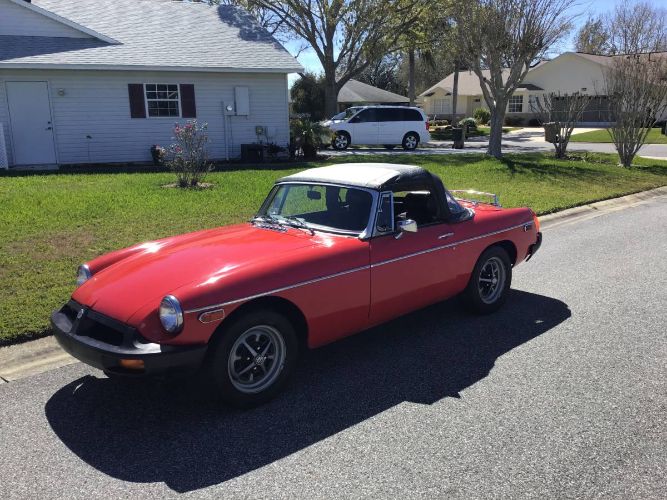
1976 MG MGB
 Dealer
United States
Dealer
United States
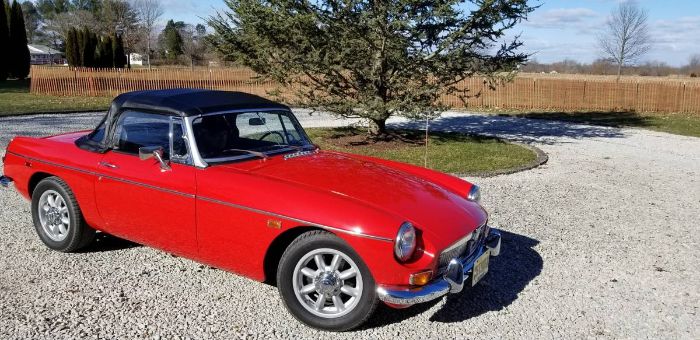
1969 MG MGB
Pricing Guide
Chrome-bumper MGB roadsters (1962–1974) in driver condition trade at $12,000–$18,000; restored show-quality examples reach $28,000–$42,000 for the best early cars. The price premium for pre-1965 three-bearing engine cars is significant among purists — add 20–30% for correct early cars. Rubber-bumper cars (1975–1980) trade at a consistent 20–30% discount: drivers at $7,000–$11,000, excellent condition at $16,000–$22,000. MGB GTs (coupes) sell for 15–25% less than equivalent roadsters in the same condition — the best value in the segment. Project cars — running but rough — are available in the $3,500–$7,000 range and represent good value given parts availability. Beware "restored" cars with high asking prices and no documentation; a professional respray on a rusty car is common in this market.Fun Facts
The MGB was in continuous production for eighteen years, making it one of the longest production runs of any sports car in history up to that point. Over half of all MGBs built were exported to North America, which is why U.S.-spec parts are the most common and least expensive to source worldwide. The MGB GT coupe was styled with input from the great Italian design house Pininfarina. When production ended in 1980, workers at the Abingdon factory staged a sit-in protest — the closure of MG's historic home factory was considered a national automotive tragedy in Britain.Frequently Asked Questions