
Classic Plymouth Belvedere Buyer's Guide
Definitive buyer's guide for classic Plymouth Belvedere 1954-1970. Generation breakdown, B-body authentication, GTX and Satellite trim verification, current pricing.

The Plymouth Belvedere launched for 1954 as Plymouth's mid-trim full-size sedan, and across seventeen years of production became the foundation of multiple legendary muscle-car variants. The 1962 Belvedere Max Wedge (with the 413 cubic inch cross-ram dual-quad V8) was Chrysler's NHRA Super Stock homologation special. The 1965-1967 Belvedere Satellite became the high-trim performance variant. From 1968-1970, the Belvedere served as the foundation chassis for the legendary Plymouth Road Runner. The Belvedere nameplate was discontinued after 1970 in favor of the Satellite (which became a stand-alone model line). For collectors entering Mopar B-body ownership today, the Belvedere offers exceptional value — particularly the 1965-1970 cars that share platform and drivetrains with the more famous Road Runner and GTX. This guide covers what every buyer should verify before paying premium money for any Belvedere variant.
Overview
The Belvedere ran for seventeen years across multiple platform generations. The 1954-1958 cars are the post-war full-size era. The 1959-1961 cars introduced the Forward Look styling. The 1962-1964 cars are the early B-body era with Max Wedge variants. The 1965-1970 cars are the modern B-body era — peak Belvedere production with Satellite trim and Road Runner derivative.
Generations Worth Knowing
Pre-B-Body Era (1954-1961)
The original full-size Belvedere. The 1955-1957 Forward Look styling (with dramatic tail fins) is increasingly collected. Engine options included the 230 inline-six (base) through various V8s. The 1957 Belvedere is widely considered the most attractive of the early Belvederes. Driver-quality 1954-1961 cars run $18,000-$45,000 depending on body style and condition.
Early B-Body Era (1962-1964)
The 1962 redesign moved the Belvedere to the new B-body platform. The 1962 Belvedere Max Wedge (with the 413 cubic inch cross-ram dual-quad V8 producing 410-420 hp) was Chrysler's NHRA Super Stock homologation special. Driver-quality 1962-1964 Belvederes run $22,000-$45,000. Documented Max Wedge cars: $80,000-$200,000+.
Modern B-Body Era (1965-1970)
The 1965 redesign brought modern proportions and the most popular Belvedere production years. Trim levels: Belvedere I (base), Belvedere II (mid-trim), Satellite (high-trim performance). Engine options spanned from the 318 V8 through the 383 Magnum, 440 4-barrel, 440 Six Pack, and 426 Hemi. The 1968 launch of the Road Runner shared Belvedere platform — both cars used identical drivetrains and structural components.
What to Look For (in person)
Trim Level Verification
Verify the body style code on the cowl tag. Belvedere I, Belvedere II, and Satellite trim levels have different value trajectories. The Satellite Sport (high-performance variant) commands modest premium over equivalent Belvedere II cars.
Fender Tag and Broadcast Sheet
For 1968-1970 Belvederes, verify the fender tag (riveted to driver-side inner fender) for original options. The broadcast sheet (paper build sheet) is commonly hidden under rear seat, in front seat bottom springs, behind rear seat back panel, or in the heater box.
Pricing Tiers
| Tier | Description | Price Range (2024) |
|---|---|---|
| Driver | 1965-1970 Belvedere I or II with 318/383 V8, decent paint, runs and drives | $18,000-$38,000 |
| Survivor | 1968-1970 Satellite or Belvedere Road Runner-platform with original drivetrain, fender tag, broadcast sheet | $32,000-$60,000 |
| Concours | Documented Hemi Belvedere or 1962 Max Wedge, frame-off restoration, Galen Govier verified | $95,000-$240,000+ |
Common Pitfalls
The biggest pitfall in Belvedere buying is paying premium money for a base Belvedere with Satellite or Road Runner trim added. Verify cowl tag and fender tag for original trim level documentation.
The second pitfall is paying Hemi or Max Wedge money for a clone with re-stamped engine. Specialist authentication is mandatory for any high-end claim.
"Belvederes share platform and drivetrains with the more famous Road Runner and GTX cars. The market premium for a documented Hemi Belvedere versus a base Belvedere with Hemi swap is $100,000+ — and that's real money worth verifying. The fender tag, broadcast sheet, and Galen Govier authentication don't lie. For collectors looking for B-body muscle at attainable pricing, well-equipped Belvedere II and Satellite cars represent excellent value."
— Mike Sullivan
Final Verdict
The Belvedere market rewards documentation and patience. Documented Hemi Belvederes and Max Wedge cars are blue-chip B-body investments. Driver-quality 1965-1970 Belvedere II and Satellite cars represent the smart-money entry into Mopar B-body ownership at significantly less cost than equivalent Road Runner or GTX cars.
For new buyers, start with a 1965-1968 Belvedere II hardtop with the 318 or 383 V8 and the Torqueflite automatic. They're affordable, parts support is excellent, and the cars share drivetrains with much more expensive Road Runner and GTX models. From there, the upgrade path is clear: Satellite, then Satellite Sport, then 440 Six Pack, then Hemi or Max Wedge.
Browse Plymouth Belvedere listings
 Dealer
 United States
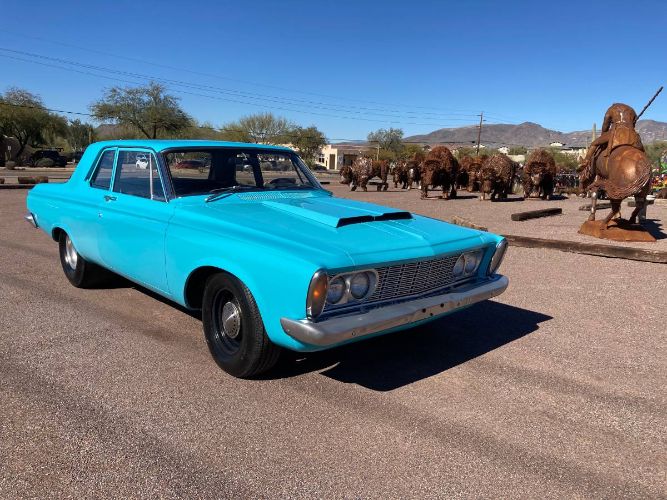
1963 Plymouth Belvedere
 Dealer
United States
Dealer
United States
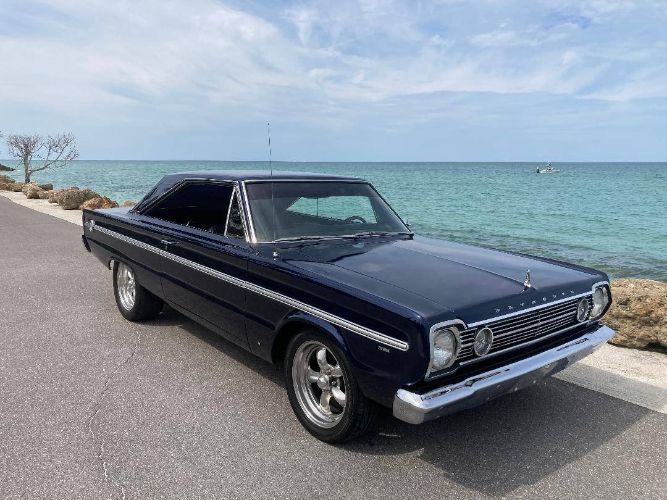
1966 Plymouth Belvedere
What to Look For
Trim level verification is the first stop. Belvedere I (base), Belvedere II (mid-trim), Satellite (high-trim), and Satellite Sport (performance) trim levels drive significant value differences. Verify the body style code on the cowl tag.Fender tag verification (1968-1970 cars) is the second stop. The fender tag is a coded plate listing all factory-installed options. Original 1968-1970 tags use specific dome-headed rivets and stamping fonts.
For Hemi Belvedere claims, the fifth digit of the VIN must be "R" (Hemi engine code). The fender tag must show the Hemi engine code and appropriate option codes. The engine block must have the matching partial VIN. Galen Govier inspection ($200-$500) is mandatory for any Hemi claim priced over $80,000.
For 1962 Max Wedge claims, demand specialist authentication. The Max Wedge 413 V8 has unique casting numbers, special heads (cross-ram intake), and specific stamping codes. Re-stamped 413 blocks are well-documented forgeries.
Body alignment is the third non-negotiable for B-body cars. Push down on each corner and watch the doors. Door movement relative to the body indicates chassis flex damage.
Document the car. Photograph every panel, every cowl tag, every fender tag, every chassis number stamping, every engine bay component, and every identifying tag.
Pre-Purchase Checklist
-
Verify body style code on cowl tag
Belvedere was offered in many body styles. Verify trim level — Belvedere I, II, GTX, Satellite each different. -
Cross-reference VIN engine code
5th digit of VIN identifies engine. 318, 383, 426 Hemi, 440 each have specific casting numbers. -
Inspect fender tag for premium-trim claims
GTX, Satellite Sport, and high-performance variants documented via fender tag option codes. -
Locate broadcast sheet
Check under rear seat, in front seat bottom springs, behind rear seat back panel, in heater box. -
For Hemi claims, demand Galen Govier inspection
$200-$500 specialist inspection mandatory for any Hemi claim priced over $80,000. -
Inspect B-body unibody at torsion bar mounts
Front torsion bar mounts and rear leaf spring mounts are critical structural areas. -
For 1955-1957 cars, verify Forward Look styling
Distinctive 1955-1957 Plymouth styling. Original undamaged sheet metal adds 10-15% value. -
Magnet test rear quarters and trunk drop-offs
Body filler is non-magnetic. -
Check rear window channel rust on hardtops
Water trapped under rear glass invisible until removed. -
Compression test all eight cylinders
Should read 145-185 PSI uniformly. Hemi cars run 165-195 PSI.
Common Issues
Belvedere rust patterns vary by generation. The 1954-1961 cars rust at the lower body panels, rear quarter panels, rocker panels, floor pans, trunk pan, and cowl seam. The 1962-1970 B-body cars rust at the lower fenders, rear quarter panels, trunk pan, trunk drop-offs, rear frame rails, floor pans, and the rear window channel on hardtop coupes.Mechanically, Mopar engines from the Belvedere era are bulletproof when maintained. The slant-six (1962-1970), 318 V8, 383 V8, 440 V8, and 426 Hemi are all robust. The 426 Hemi requires specialist setup. The Max Wedge 413 (1962) is a high-performance solid-lifter engine requiring specific knowledge to maintain. Common issues include broken motor mounts on big-block cars, worn timing chains, leaky valve covers and oil pan gaskets, and tired carburetor settings.
The Torqueflite 727 automatic transmission is essentially indestructible. The A833 four-speed manual is robust. The 8.75-inch and Dana 60 rear axles are strong.
The B-body unibody is structurally lighter than competitors of the same era and prone to flex damage on hard-driven cars. Push down on each corner and watch the doors. Front torsion bar mounting points and rear leaf spring mounting points are critical structural areas.
Electrical issues are universal classic-car concerns. Original wiring is brittle 50+ years on. Voltage regulators on 1970-1972 cars commonly fail.
More Belvedere for sale
 Dealer
United States
Dealer
United States
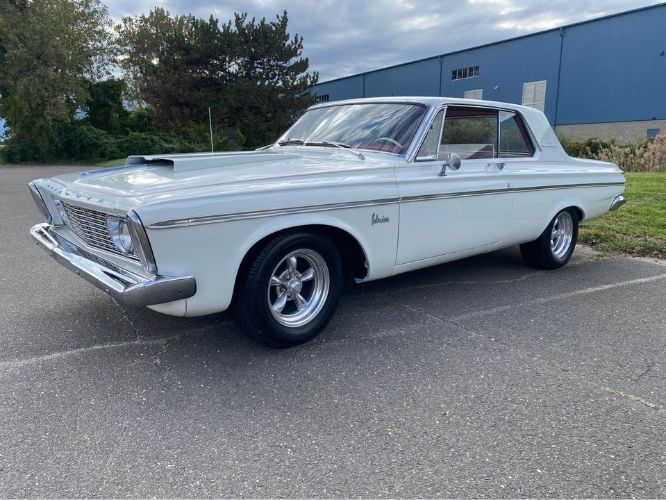
1963 Plymouth Belvedere
 Dealer
United States
Dealer
United States
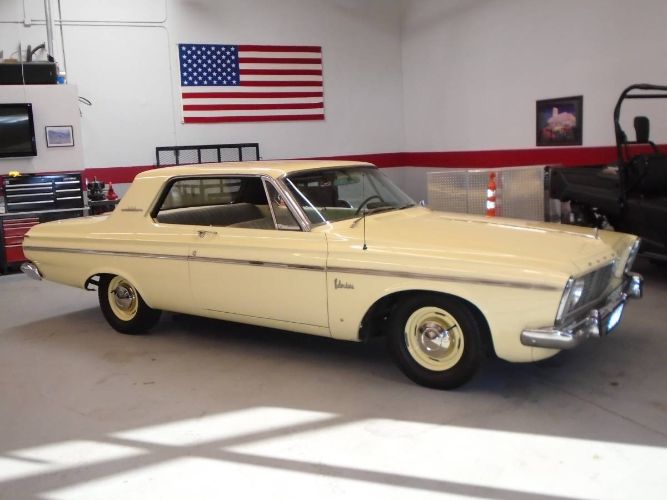
1963 Plymouth Belvedere
Pricing Guide
1954-1958 first-generation Belvederes: driver-quality cars run $18,000-$35,000. The 1957 Forward Look styling cars are most desirable. Documented original-paint cars: $30,000-$55,000.1959-1961 fin-era Belvederes: driver-quality cars run $20,000-$45,000. Convertible cars command 25-35% premium over equivalent hardtops.
1962-1964 early B-body Belvederes: driver-quality cars run $22,000-$45,000. Documented 1962 Max Wedge cars: $80,000-$200,000+. The 1962 Belvedere is the most desirable year of this era.
1965-1967 modern B-body Belvederes: driver-quality 318/383 cars run $20,000-$42,000. Belvedere Satellite Sport: $25,000-$48,000. Documented Hemi cars (rare in Belvedere): $150,000-$280,000+.
1968-1970 Belvederes: driver-quality 318/383 cars run $22,000-$45,000. Satellite Sport with 383 Magnum: $30,000-$55,000. Belvedere Road Runner-platform cars (1968-1970, technically a Belvedere trim): see Road Runner pricing. Documented Hemi Belvederes (1968 only): $200,000-$400,000+.
Convertible Belvederes (1965-1970 only) command 25-40% premium over equivalent hardtops.
Project Belvederes start around $10,000-$20,000 across most generations. Stripped roller candidates: $5,000-$12,000.
Fun Facts
The Belvedere name was used by Plymouth from 1954 through 1970, making it among the longest-running Plymouth nameplates of the era. The name derives from "belvedere" — Italian for "beautiful view" — chosen by Plymouth's product planners to evoke premium automotive elegance. Plymouth marketed the Belvedere as the upscale variant of the basic Plaza/Cambridge full-size sedans, positioning it above base trim with modest standard equipment upgrades.The 1957 Plymouth Belvedere convertible was used as the time capsule vehicle for the 1957 Tulsa Centennial. The car was buried in a concrete vault on the Tulsa County Courthouse grounds, sealed with sample 1957 consumer products and a barrel of gasoline, scheduled for unsealing in 2007 to commemorate Oklahoma's 100th statehood anniversary. The vault sustained water damage during burial, and when opened in 2007, the 1957 Belvedere was found severely rusted and non-functional. The historical significance drove dramatic media coverage but the actual physical car was beyond restoration.
The 1968 introduction of the Plymouth Road Runner used the Belvedere B-body chassis as its foundation. From 1968 through 1970, the Road Runner was technically a Belvedere trim variant rather than a stand-alone model — featuring the same body shell, frame, and structural components as the Belvedere I, II, and Satellite cars but with unique exterior trim and the 383 Magnum V8 standard. The Road Runner became a stand-alone model for 1971, and the Belvedere nameplate was discontinued after 1970 production. For collectors today, well-equipped 1968-1970 Belvedere II and Satellite cars represent attainable B-body Mopar muscle ownership at significantly less cost than equivalent Road Runner or GTX cars.
Frequently Asked Questions
Ready to find your Belvedere?
Browse 6+ active Plymouth Belvedere listings on Classic Cars Arena.
View Listings →