
Classic Plymouth Road Runner Buyer's Guide
Definitive buyer's guide for classic Plymouth Road Runner 1968-1980. B-body authentication, fender tag verification, Hemi and 440 Six Pack identification, current pricing.

The Plymouth Road Runner launched for the 1968 model year as Chrysler's budget muscle car — minimal trim, basic interior, but serious performance equipment under the hood. Plymouth licensed the Road Runner cartoon character from Warner Bros. for $50,000 and used the bird's "Beep-Beep" sound as the actual horn on early cars. Across thirteen years of classic-era production (1968-1980), the Road Runner became one of the most iconic Mopar B-body muscle cars ever produced — particularly the 1970-only Superbird (the NASCAR homologation special with the 19-inch nose cone and 24-inch tall rear wing). The 1968-1971 Road Runners are the muscle-era icons; the 1973-1975 cars represent the bargain entry into B-body Road Runner ownership today. This guide covers what every buyer should verify before paying premium money for any Road Runner variant.
Overview
The Road Runner ran for thirteen years across multiple platform generations. The 1968-1970 cars are the original B-body muscle icons. The 1970 Superbird is the legendary NASCAR homologation special. The 1971-1975 cars saw federal emissions tighten significantly. The 1975-1980 cars on the smaller F-body Volaré platform represent the budget entry into Road Runner ownership today.
Generations Worth Knowing
First Generation (1968-1970)
The original. Plymouth's budget muscle car launched at $2,896 — dramatically less than the equivalent GTX. Engine options included the 383 Magnum V8 (standard), 440 4-barrel, 440 Six Pack, and 426 Hemi. The 1968 launch year included the famous "Beep-Beep" horn that mimicked the Road Runner cartoon character. Driver-quality 1968-1970 Road Runners run $35,000-$70,000.
1970 Superbird
The Superbird is a 1970-only homologation special built to qualify the Plymouth for NASCAR racing. Only 1,920 Superbirds were produced. Distinctive features: 19-inch fiberglass nose cone, 24-inch tall rear wing, vinyl roof (mandatory), unique aerodynamic body modifications. Engine options: 440 4-barrel (1,069 cars), 440 Six Pack (716 cars), 426 Hemi (135 cars). Documented Superbirds command $300,000-$1.5M+.
Second Generation (1971-1974)
The 1971 redesign brought "fuselage" body styling. Engine options remained robust through 1971 but federal emissions de-tuning began for 1972. The 1971 Road Runner GTX (with the 440 Six Pack) is the most desirable second-generation variant. Driver-quality cars run $32,000-$60,000.
Final Generation (1975-1980)
The 1975-1980 Road Runners moved to the smaller F-body Volaré platform — a complete platform change that effectively ended the muscle-era Road Runner. Driver-quality cars run $14,000-$28,000.
What to Look For (in person)
Fender Tag and Broadcast Sheet
The fender tag (riveted aluminum plate on the driver-side inner fender) is the primary documentation for any Mopar B-body. Coded entries identify engine, transmission, axle ratio, paint, interior, and dozens of options. Original tags use specific dome-headed rivets. The broadcast sheet (paper build sheet) is commonly hidden under the rear seat, in front seat bottom springs, behind rear seat back panel, or in the heater box.
Engine Verification
The fifth digit of the VIN identifies the engine. Cross-reference against the engine block partial VIN. The codes that matter most: H=383 4V (1968-1971 Road Runner), L=383 Magnum, U=440 4V, V=440 Six Pack, R=426 Hemi.
Pricing Tiers
| Tier | Description | Price Range (2024) |
|---|---|---|
| Driver | 1975-1980 F-body Road Runner or 1973-1974 B-body, decent paint, runs and drives | $14,000-$32,000 |
| Survivor | 1968-1971 Road Runner with original drivetrain, fender tag and broadcast sheet, original paint | $45,000-$80,000 |
| Concours | Documented Hemi Road Runner or 1970 Superbird, frame-off restoration, Galen Govier verified | $140,000-$1.5M+ |
Common Pitfalls
The biggest pitfall in Road Runner buying is paying premium money for a base Belvedere or Satellite with Road Runner trim added. Verify the fender tag, broadcast sheet, VIN, and engine partial VIN agree.
The second pitfall is paying Hemi money for a 440 with re-stamped block. Specialist authentication is mandatory for any Hemi claim priced over $200,000.
"The Road Runner market has the same forgery concerns as every other premium Mopar B-body. Re-stamped fender tags, Hemi engines from non-Road-Runner donor cars, and outright fabricated Superbirds are all well-documented in the market. Spend the $200-$500 on a Galen Govier inspection before you spend $200,000+ on a Hemi Road Runner. The fender tag and the broadcast sheet don't lie when authenticated by a recognized Mopar expert."
— Mike Sullivan
Final Verdict
The Road Runner market rewards documentation and patience. Hemi, 440 Six Pack, and Superbird cars with fender tags, broadcast sheets, and Galen Govier verification trade like art. Driver-quality 1973-1975 Road Runners remain the smart-money entry into B-body ownership.
For new buyers, start with a 1973-1975 B-body Road Runner with the 318 or 360 V8. They're the most affordable proper Road Runner, parts support is excellent, and the cars represent honest collector entry into Mopar muscle ownership. From there, the upgrade path is clear: 1971-1972 B-body, then 1968-1970 B-body, then 440 Six Pack, then Hemi or Superbird.
Browse Plymouth Road Runner listings
 Dealer
 United States
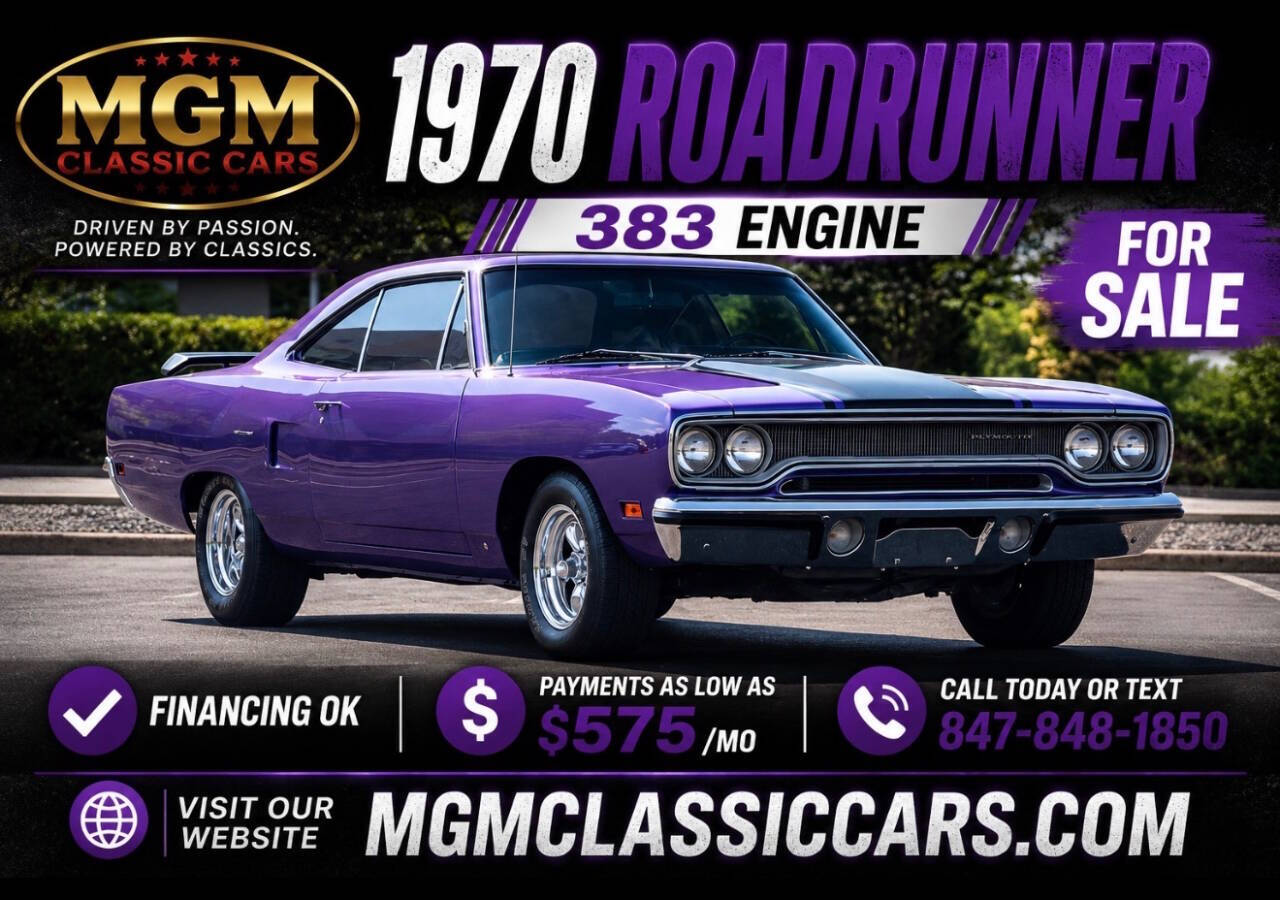
1970 Plymouth Road Runner
 Dealer
United States
Dealer
United States
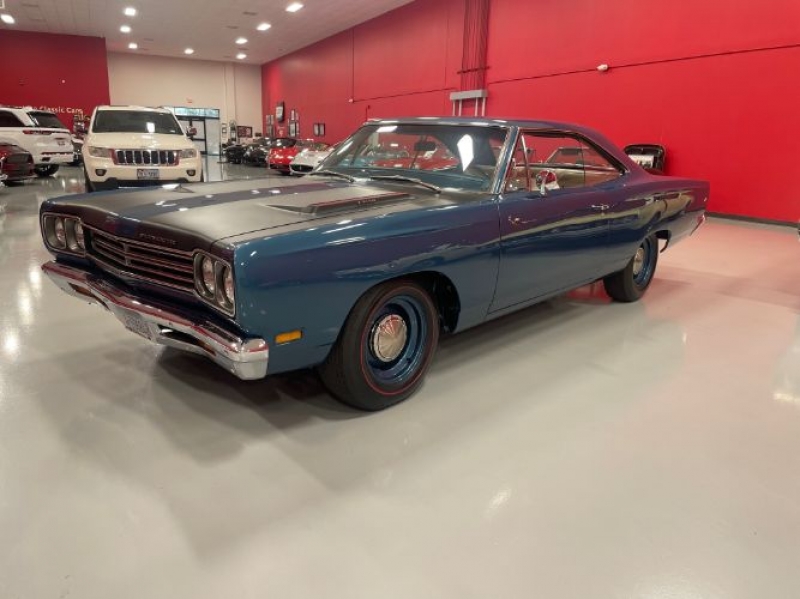
1969 Plymouth Road Runner
What to Look For
Fender tag and broadcast sheet are the gold-standard authentication for any Mopar B-body. The fender tag is a coded plate listing all factory-installed options. Original 1968-1974 tags use dome-headed rivets and specific stamping fonts.For Road Runner claims, verify the Road Runner-specific RPO codes on the fender tag. The 5th digit of the VIN identifies the engine code: H=383 4V, L=383 Magnum, U=440 4V, V=440 Six Pack, R=426 Hemi. Cross-reference all three (VIN, fender tag, engine block partial VIN).
For Hemi Road Runner claims, demand Galen Govier inspection ($200-$500). The Hemi engine has unique casting numbers, special engine mounts, and specific stamping codes. Re-stamped 440 blocks are well-documented forgeries.
For 1970 Superbird claims, verify against the international Superbird registry. Only 1,920 cars were produced — every chassis number is documented. The Superbird package included specific equipment: 19-inch fiberglass nose cone, 24-inch tall rear wing, vinyl roof (mandatory), aerodynamic body modifications. Documented Superbird cars must have all original equipment present and verified.
For 1968 cars, verify the original "Beep-Beep" horn. Original 1968 Road Runner horns mimicked the cartoon character's sound and add value when present and original.
Body alignment is the second non-negotiable for B-body cars. Push down on each corner and watch the doors. Door movement relative to the body indicates chassis flex damage.
Document the car. Photograph every panel, every fender tag, every chassis number stamping, every engine bay component, and every identifying tag.
Pre-Purchase Checklist
-
Inspect fender tag rivets and stamping style
Original 1968-1974 tags use dome-headed rivets. Re-stamps are common fraud vectors. -
Locate and verify broadcast sheet
Check under rear seat, inside front seat bottom springs, behind rear seat back panel, in heater box. -
Verify VIN engine code matches block partial VIN
5th digit of VIN identifies engine. Block partial VIN stamped on front pad. -
Get Galen Govier inspection for $80K+ cars
Recognized Mopar authentication expert. $200-$500 inspection mandatory for Hemi and 440 Six Pack claims. -
For Superbird claims (1970), demand specialist authentication
Only 1,920 Superbirds built. Every chassis documented in marque registry. -
Inspect B-body unibody at torsion bar mounts
Front torsion bar mounts and rear leaf spring mounts are critical structural areas. -
Magnet test rear quarters and trunk drop-offs
Body filler is non-magnetic. -
Verify 1968 horn (the actual Beep-Beep horn)
Original 1968 cars came with a special "Beep-Beep" horn that mimicked the Road Runner cartoon character. -
Check rear window channel rust on hardtops
Water gets trapped under rear glass. Invisible rust until glass removed. -
Compression test all eight cylinders
Should read 145-185 PSI uniformly. Hemi cars run 165-195 PSI.
Common Issues
Road Runner rust patterns follow the Mopar B-body convention. The 1968-1974 cars rust at the lower fenders, rear quarter panels, trunk pan, trunk drop-offs, rear frame rails, floor pans, rocker panels, and the rear window channel on hardtop coupes. The 1975-1980 F-body cars rust at the front strut towers, lower quarter panels, floor pans, and rear shock towers.Mechanically, the Mopar 383 Magnum, 440 4-barrel, 440 Six Pack, and 426 Hemi big-block V8s are bulletproof when maintained. The 426 Hemi requires specialist setup. The A727 Torqueflite automatic and A833 four-speed manual transmissions are essentially indestructible. The 8.75-inch rear axle is strong; the Dana 60 (in 426 Hemi and 440 Six Pack cars) is even stronger.
The B-body unibody is structurally lighter than competitors of the same era and prone to flex damage on hard-driven cars. Push down on each corner and watch the doors. Front torsion bar mounting points and rear leaf spring mounting points are critical structural areas.
Electrical issues are universal classic-car concerns. Original wiring is brittle 50+ years on. Voltage regulators on 1970-1972 cars commonly fail. Ammeter wiring on dashboards has caused fires in some cars — always check the back of the gauge cluster for heat damage.
For 1968 cars, the original "Beep-Beep" horn is increasingly difficult to source if damaged. Reproduction horns are available but sound slightly different from originals.
More Road Runner for sale
 Dealer
United States
Dealer
United States
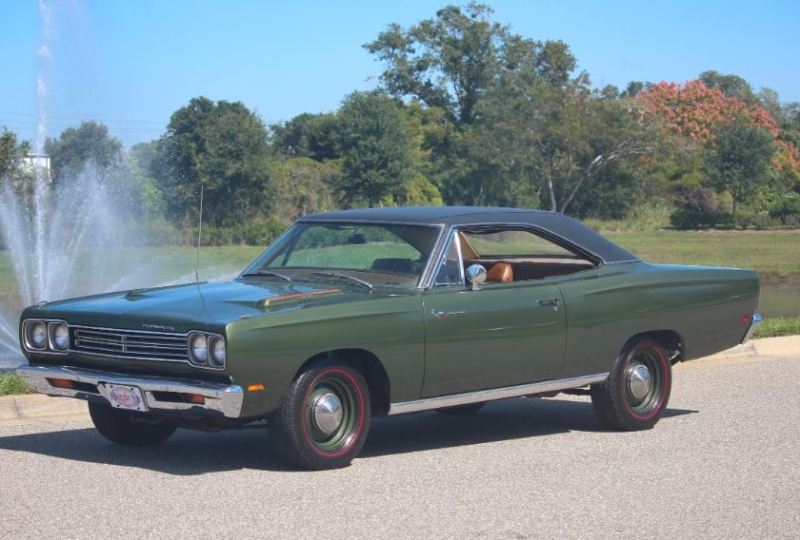
1969 Plymouth Road Runner
 Dealer
United States
Dealer
United States
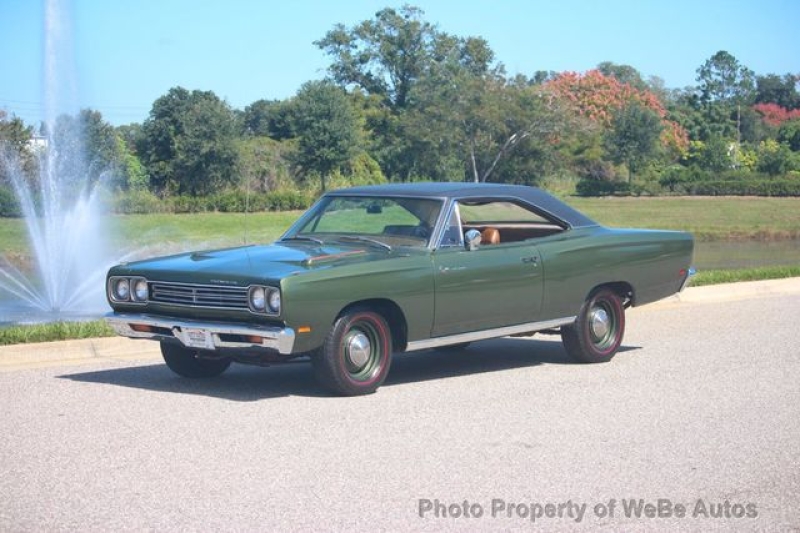
1969 Plymouth Road Runner
Pricing Guide
1968 Road Runner: driver-quality 383 cars run $35,000-$60,000. Documented original-paint, low-mileage cars: $55,000-$95,000. The 1968 Hemi Road Runner (only 1,019 built) commands $200,000-$450,000+ documented.1969 Road Runner: driver-quality 383 cars run $35,000-$65,000. The 1969 Road Runner with the 440 Six Pack: $55,000-$120,000 documented. The 1969 Hemi Road Runner: $250,000-$500,000+.
1970 Road Runner (regular hardtop or convertible): driver-quality 383 cars run $40,000-$70,000. 440 Six Pack: $70,000-$140,000. Hemi: $300,000-$650,000+ for documented numbers-matching cars.
1970 Superbird: driver-quality 440 4-barrel cars run $200,000-$400,000. 440 Six Pack: $300,000-$650,000. Hemi: $700,000-$1.5M+ for documented numbers-matching cars.
1971-1972 second-generation Road Runner: driver-quality 383/400 cars run $32,000-$55,000. 1971 440 Six Pack GTX: $80,000-$160,000.
1973-1974 second-generation Road Runner (post-Hemi era): driver-quality 318/360 cars run $25,000-$45,000.
1975-1980 F-body Road Runner: driver-quality cars run $14,000-$28,000. The 1975 final B-body Road Runner is more desirable than later F-body cars.
Convertible Road Runners (1969-1971 only) command 30-50% premium over equivalent hardtops. The 1970 Hemi convertible (only 4 built) is the rarest factory Road Runner ever produced.
Project Road Runners start around $20,000-$40,000 for B-body cars. Stripped roller candidates: $10,000-$22,000.
Fun Facts
The Plymouth Road Runner was conceived in 1967 by Plymouth product planner Jack Smith as a deliberately-stripped budget muscle car — the goal was to undercut the GTO and other premium muscle cars by hundreds of dollars. The original 1968 Road Runner launched at $2,896 versus the GTO's $3,253 — a $357 difference that was significant in 1968. Buyers responded enthusiastically: the Road Runner sold over 44,000 units in its launch year, dramatically exceeding Plymouth's sales projections.Plymouth licensed the Road Runner cartoon character from Warner Bros. for approximately $50,000 — a then-significant marketing investment. Chrysler engineers spent considerable time tuning the special "Beep-Beep" horn to mimic the cartoon character's sound exactly. Original 1968 horns are increasingly collected by enthusiasts and add 5-10% value to documented original cars.
The 1970 Superbird was developed specifically to lure NASCAR star Richard Petty back to Plymouth from Ford (where Petty had moved for 1969). The car's aerodynamic modifications were extreme — 19-inch fiberglass nose cone, 24-inch tall rear wing — but they made the Superbird capable of 200+ mph on superspeedways. Petty drove the Superbird in 1970 NASCAR competition and won 18 races. Federal regulations required Plymouth to build a minimum number of street-legal Superbirds for homologation; the 1,920 production figure dramatically exceeded the minimum requirement and represents one of the few times Plymouth built more "homologation specials" than NASCAR rules required.
Frequently Asked Questions
Ready to find your Road Runner?
Browse 6+ active Plymouth Road Runner listings on Classic Cars Arena.
View Listings →