
Classic Pontiac Catalina Buyer's Guide
Expert buyer's guide to the Pontiac Catalina 1950–1981. Super Duty 421 identification, PHS documentation, B-body rust inspection, and market pricing from entry driver to racing provenance.

The Pontiac Catalina occupies a fascinating position in the collector market: it was Pontiac's entry-level full-size car, yet its lighter weight and wide availability with the division's most powerful engines made it the platform of choice for performance buyers who wanted maximum speed at minimum cost. The 1961–1963 Super Duty Catalinas — built for NASCAR and drag racing with aluminum body panels and the 421 Super Duty engine — are among the most significant factory performance cars in American automotive history. Below them are hundreds of thousands of honest, durable, and undervalued full-size Pontiacs that the market has largely overlooked in favor of GTOs and Firebirds.
History & Generations
The Catalina name first appeared in 1950 as a hardtop body style designation before becoming a model in its own right for 1959. As Pontiac's base full-size car, the Catalina benefited from the division's performance renaissance under chief engineer Semon "Bunkie" Knudsen — the same program that produced the GTO. The Catalina was the lightest full-size Pontiac, which made it the performance buyer's weapon of choice throughout the early 1960s.
Wide-Track Era (1959–1964)
The most collectible years. Pontiac's wide-track handling advantage was genuine — the wider stance provided better cornering than any competitor at the price. The 1961–1963 Super Duty cars are legends: factory-built race cars with aluminum bumpers, aluminum front body panels, and the 421 Super Duty engine making up to 405 horsepower. Only 175 Super Duty Pontiacs were built across all models in 1962; a documented example is a museum-grade car.
Performance Transition (1965–1970)
The mid-decade Catalinas grew larger and gained more luxury content while the GTO absorbed the performance spotlight. Available with the 428 HO and 421 engines, these are undervalued full-size muscle cars. A 1966 Catalina 2+2 with the 421 is a legitimate performance car at one-fifth the price of an equivalent GTO.
Final Generations (1971–1981)
Downsizing in 1971 and again in 1977 produced increasingly luxury-focused cars. These make excellent affordable drivers but have minimal collector premium above clean used car prices.
Years to Look For
- 1962–1963 Super Duty: Museum-grade performance history. Full documentation from PHS (Pontiac Historical Society) is mandatory.
- 1961–1964 421 cars: The wide-track performance era. Lighter than later cars, strong engines, distinctive styling.
- 1966–1967 2+2: The performance-optioned Catalina. 421 and 428 engines in a bucket-seat sport coupe configuration.
- 1959–1960: The original wide-track Catalina. Distinctive tri-tone styling, affordable, and increasingly appreciated.
What to Look For In Person
The Pontiac B-body full-size frame is a ladder-frame design with body-on-frame construction — meaning rust affects body panels and floor sections but the frame itself can be inspected separately. Crawl under the car and look at the frame rails for rust perforations, particularly at the body mount points. Check the rockers and lower quarters for filler. Inspect the trunk floor, which rusts universally on unprotected cars.
| Engine | Years | Horsepower | Notes |
|---|---|---|---|
| 389 V8 | 1959–1966 | 215–330 hp | Standard big-block, various carb setups |
| 421 V8 | 1961–1966 | 320–405 hp | Performance option; Super Duty at 405 hp |
| 428 V8 | 1967–1969 | 360–376 hp | 428 HO the top performance option |
| 455 V8 | 1970–1976 | 300–370 hp | Final big-block generation |
"The Catalina is the car that serious Pontiac buyers know about and the general public has forgotten. A documented 421 Catalina from 1963 is historically more significant than most GTOs — it was a factory drag car before the GTO existed. The market hasn't caught up to that yet, which means there are still deals to be found. For now."
— Mike Sullivan
Market Outlook
Entry-level post-1965 Catalina driver: $8,000–$18,000. Performance-optioned 421/428 cars: $20,000–$38,000. 2+2 models with documentation: $30,000–$50,000. Wide-track 1959–1964 base cars: $12,000–$28,000. Super Duty documented examples: $80,000–$150,000+. Values across the non-Super Duty range remain modest relative to equivalent GTO or Firebird money — the large-format Pontiac market is underappreciated.
Browse Pontiac Catalina listings
 Dealer
 United States
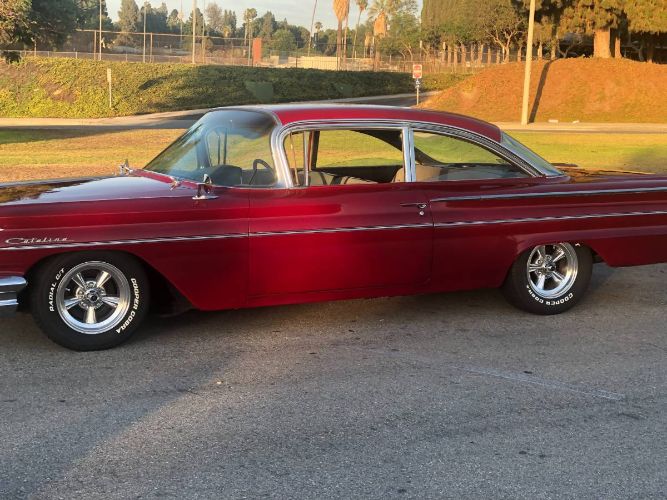
1960 Pontiac Catalina
 Dealer
United States
Dealer
United States
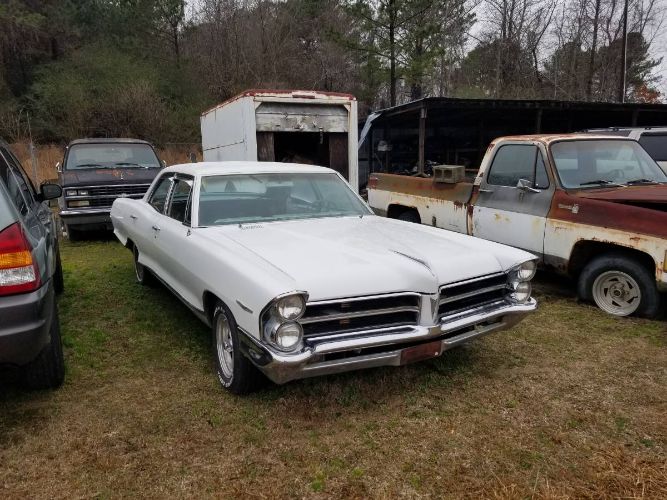
1965 Pontiac Catalina
What to Look For
Order a PHS documentation certificate before any purchase involving a performance-option premium — PHS verifies original engine and option codes from factory records. Check the lower front door hinge pillar from inside the door opening for structural rust — this is the B-body Pontiac's first rust point. Inspect rear lower quarters and the area behind the wheel opening for filler. On Super Duty cars, verify aluminum front panels with a magnet. Crawl under the car and check the frame rails at the body mount points for rust perforations. Inspect the trunk floor and rear frame crossmembers. Verify engine casting numbers on big-block cars.Pre-Purchase Checklist
-
PHS Documentation
Order a PHS (Pontiac Historical Society) certificate before paying any performance premium. PHS confirms original engine, transmission, and options from factory production records. -
Door Hinge Pillar Check
Check the lower front door hinge pillar from inside the door opening for rust. This is the B-body Pontiac's first structural rust zone and is commonly missed. -
Engine Casting Numbers
Read and verify the engine casting numbers against the claimed displacement and year. Cross-reference against PHS documentation on high-value cars. -
Super Duty Panel Verification
On Super Duty claims, verify aluminum front body panels with a magnet. Aluminum is non-magnetic; any magnetic front panel is not original Super Duty spec. -
Frame Rail Inspection
Crawl under the car and inspect frame rails at body mount points for rust perforations. Body-on-frame construction means the frame can be evaluated separately from the body. -
Rear Quarter Rust
Check rear lower quarters and behind the wheel opening with a magnet. B-body Pontiac rust here is common and can extend into the trunk floor. -
Trunk Floor
Lift the trunk mat and inspect the trunk floor and spare tire well. Trunk floor rot is near-universal on unprotected Catalinas. -
Cooling System Condition
Check coolant color and condition. Look for white residue at valve cover seams indicating head gasket issues from past overheating on big-block cars. -
Rocker Panel Condition
Inspect rocker panels with a magnet for filler. Lower rocker rot is common and can extend into the floor pan at the door sill. -
VIN Plate Integrity
Verify the VIN plate on the dashboard and the partial VIN stamped on the engine pad. Mismatched numbers indicate an engine swap.
Common Issues
Door hinge pillar rust (lower front door area) is the primary structural rust concern on B-body Pontiacs — it is hidden inside the door opening and commonly ignored until severe. Rear lower quarter and wheel well rust is cosmetically addressable but often extends into the trunk floor. Trunk floor rot is near-universal on unprotected cars. Big-block cooling system issues lead to warped cylinder heads on neglected examples — check coolant condition and look for white residue at the valve cover seams. Pontiac 389/421/428 engine casting numbers are well-documented; verify them against PHS records on any premium car.More Catalina for sale
 Dealer
United States
Dealer
United States
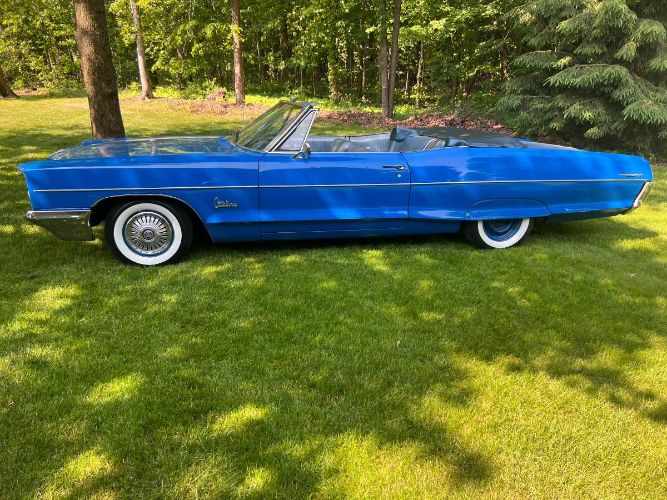
1966 Pontiac Catalina
 Dealer
United States
Dealer
United States
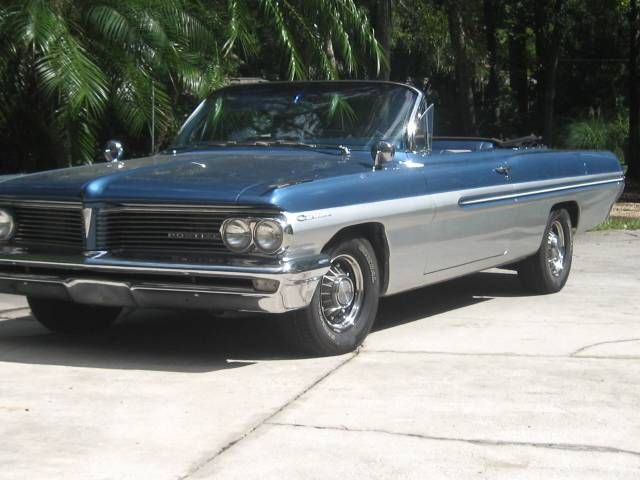
1962 Pontiac Catalina
Pricing Guide
Post-1965 Catalina driver: $8,000–$18,000. 421/428 performance cars with documentation: $20,000–$38,000. 2+2 models documented: $30,000–$50,000. Wide-track 1959–1964: $12,000–$28,000. Super Duty documented examples: $80,000–$150,000+. PHS documentation adds 20–40% to any performance car's value by confirming factory authenticity. Deduct 25–35% for any car lacking a verifiable paper trail on claimed performance options.Fun Facts
Pontiac's wide-track stance — introduced on the 1959 Catalina — placed the wheels at the outer edges of the fenders rather than centered in the wheelwell. This genuine engineering innovation improved handling and became the cornerstone of Pontiac's performance brand identity for the next decade. The 1963 Super Duty drag racing program was personally approved by GM president John Gordon before the AMA racing ban pressure ended factory racing involvement.Frequently Asked Questions
Ready to find your Catalina?
Browse 6+ active Pontiac Catalina listings on Classic Cars Arena.
View Listings →