
Pontiac Bonneville Buyer's Guide
The Pontiac Bonneville started as the fastest American production car of 1957 and evolved into the Wide-Track performance flagship that defined Pontiac's golden era — a full-size car that combined genuine V8 performance with the luxury appointments that buyers at this price point expected.

Mike Sullivan here. In 1957, Pontiac produced exactly 630 Bonnevilles — a fuel-injected convertible that was, at $5,100, the most expensive American car outside of Cadillac and Lincoln, and the fastest American production car of the year. That's where the Bonneville name started: as a performance statement, not a luxury statement. The name honored Bonneville Salt Flats, where Pontiac racing cars had set records, and the car's specifications backed the association.
From that 630-unit performance car origin, the Bonneville grew into Pontiac's flagship for the Wide-Track era — the car that sat above the GTO in the lineup, that carried the biggest engines, that had the most lavish interiors. The 1965–1970 Bonneville with the 428ci or 455ci is a serious performance luxury car that deserves more collector attention than it currently gets.
The 1957 Original: A Performance Statement
Pontiac built the first Bonneville as a direct challenge to the performance establishment. The 1957 Bonneville convertible was one of the few American production cars offered with fuel injection that year (a Rochester mechanical system) and the only Pontiac so equipped. The 347ci engine with fuel injection produced 315 horsepower, giving the Bonneville a power output that contemporary tests confirmed was competitive with anything sold in America that year.
Only 630 first-year Bonnevilles were built, all convertibles, all fuel-injected. These are the most historically significant and most valuable Bonnevilles in the collector market. Authenticity verification through the Pontiac-Oakland Club International is essential before paying any 1957 premium.
The Wide-Track Era: 1959–1964
Bunkie Knudsen's "Wide-Track" philosophy arrived in 1959 — a wider stance, lower center of gravity, and the visual expression of performance that became Pontiac's brand identity for the next decade. The 1959 Bonneville was the Wide-Track flagship: lower, wider, with the split grille that became the definitive Pontiac visual element.
Engine Options 1959–1970
| Engine | Displacement | Output | Years |
|---|---|---|---|
| Tempest V8 | 389ci | 260–348 hp | 1959–1966 |
| Tri-Power 389ci | 389ci | 330–348 hp | 1961–1966 |
| HO 389ci | 389ci | 338 hp | 1964–1966 |
| 428ci V8 | 428ci | 360–376 hp | 1967–1969 |
| 455ci V8 | 455ci | 360–370 hp | 1970–1976 |
The 1961–1966 Tri-Power carburetor option — three 2-barrel Rochester carburetors on a shared intake — is the signature Pontiac performance setup of the era. All three carbs must function correctly and be properly synchronized for the characteristic Tri-Power throttle response. Documented Tri-Power cars command meaningful premiums over single-carb equivalents.
The Performance Flagship: 1965–1970
The 1965–1970 Bonneville represents the car at its most complete — the Wide-Track philosophy fully developed, the full-size Pontiac platform at its best, and the 428ci and later 455ci V8 providing more than adequate performance for a luxury car of this weight. These are the Bonnevilles that the GTO buyers drove when they needed four doors and a proper back seat.
The 1969–1970 428ci Bonneville is the target for performance buyers. The 360–376 horsepower rating for the 428 was genuine, and the combination of a well-sorted full-size platform with this engine makes for a car that surprises people who expect a luxury cruiser and find something that can embarrass smaller cars at a stoplight.
"The Bonneville gets overlooked because it's positioned between the GTO legend and the Cadillac prestige, and it doesn't slot neatly into either category. But that's what makes it interesting. A 1969 Bonneville 428 convertible is a legitimate performance car with a legitimate luxury pedigree, and it trades at fractions of what a comparable car from Ford's or GM's prestige divisions commands. The market will figure this out."
— Mike Sullivan
Browse Pontiac Bonneville listings
 Dealer
 United States
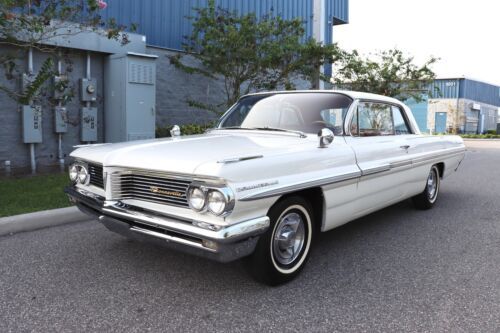
1962 Pontiac Bonneville
 Dealer
United States
Dealer
United States
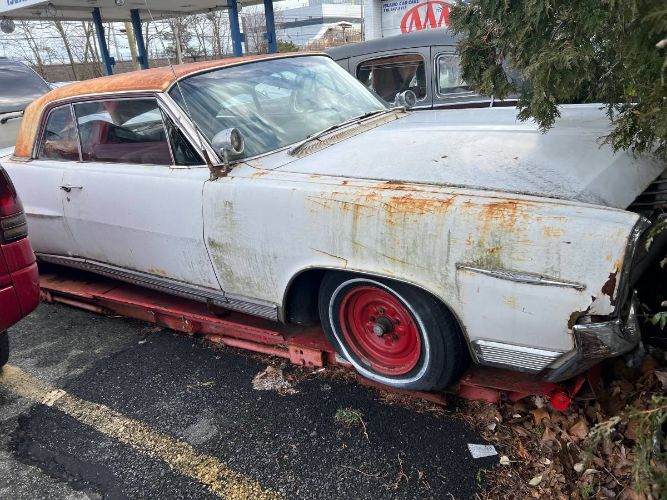
1964 Pontiac Bonneville
What to Look For
Lower rear quarter panels are the primary rust location on any Bonneville — probe thoroughly, especially on salt-belt cars. The rear floor pan is the secondary concern. On Tri-Power cars, verify all three Rochester 2-barrel carburetors are original — a transplanted single-carb setup or incorrect carbs reduce value significantly. Verify the 428ci or 455ci engine doesn't have excessive oil consumption; a compression test reveals the engine's real condition. The TH400 or TH350 automatic transmission should shift cleanly through all ranges. On 1957 fuel-injected cars, the Rochester FI system must be verified by a specialist — complete, functioning original FI on a 1957 Bonneville is a significant value element.Pre-Purchase Checklist
-
Lower Rear Quarter Rust
Probe lower rear quarters thoroughly — the most common structural failure on all Bonnevilles. -
Rear Floor Pan
Inspect trunk and rear floor from underneath and inside. -
Tri-Power Verification
On Tri-Power cars, verify all three carbs are original Rochester 2-barrels and properly synchronized. -
Engine Compression
Compression test on 428ci or 455ci — confirms ring condition and rules out head issues. -
Transmission Function
Test TH400 or TH350 through all ranges — smooth shifts with no slipping. -
1957 FI System
On 1957 cars, have the Rochester fuel injection system verified by a specialist — completeness and function are critical to value. -
Convertible Top (if applicable)
Test top mechanism and hydraulics — inspect frame for rust and the rear tub for water damage. -
Power Accessories
Test all power windows and seat — circuit failures are common age-related issues.
Common Issues
Lower rear quarter panel rust — universal on northern cars. Rear floor pan rust. Tri-Power carburetor synchronization issues — all three carbs must be properly tuned. 428ci and 455ci oil consumption from worn valve stem seals on unrestored high-mileage examples. TH400 band adjustment on high-mileage cars. Power window circuit failures. 1957 Rochester fuel injection system — correct function and completeness are increasingly rare. Convertible top hydraulic seal failures and mechanism rust.More Bonneville for sale
 Dealer
United States
Dealer
United States
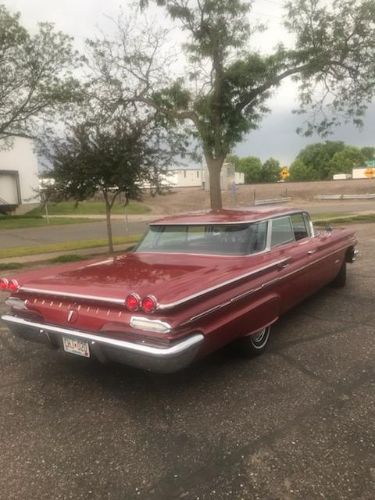
1960 Pontiac Bonneville
 Dealer
United States
Dealer
United States
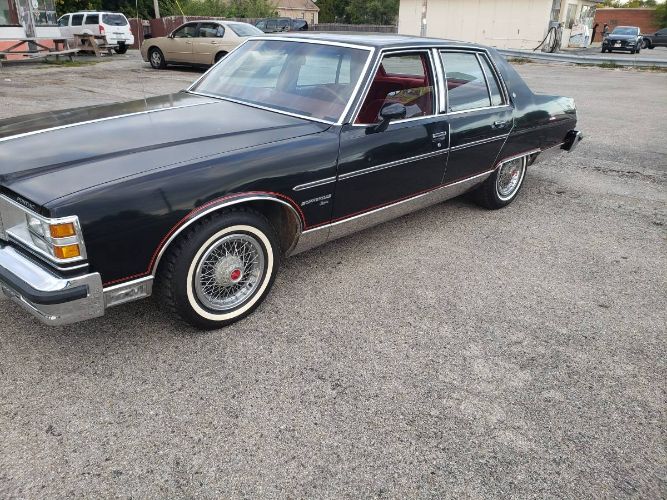
1970 Pontiac Bonneville
Pricing Guide
1957 Bonneville convertible (original FI, documented): $80,000–$160,000+. 1959–1964 Bonneville (driver): $12,000–$28,000. 1961–1966 Tri-Power Bonneville: $18,000–$40,000. 1965–1969 Bonneville 428ci (convertible): $28,000–$60,000. 1965–1969 Bonneville 428ci (hardtop): $14,000–$32,000. 1970 Bonneville 455ci: $12,000–$26,000. Convertibles premium 40–60% over equivalent hardtops in all years.Fun Facts
The 1957 Pontiac Bonneville was named for the Bonneville Salt Flats in Utah, where Pontiac-sponsored racing cars had set records in the 1950s. It was the only full-size American car with standard factory fuel injection that year, and at about $5,782 it was priced above the Cadillac DeVille convertible. Pontiac's "Wide-Track" slogan coined in 1959 described an actual engineering change: the track was widened by approximately 5 inches, lowering the center of gravity and improving handling, and became one of the most effective automotive marketing campaigns of the era.Frequently Asked Questions
Ready to find your Bonneville?
Browse 6+ active Pontiac Bonneville listings on Classic Cars Arena.
View Listings →