
Classic Pontiac GTO Buyer's Guide
Definitive buyer's guide for classic Pontiac GTO 1964-1974. PHS Documentation essentials, Ram Air engine identification, frame inspection, and current market pricing for Tri-Power and Judge cars.

The 1964 Pontiac GTO is the car most historians credit with creating the muscle-car era — a mid-size Tempest with a 389 V8 stuffed under the hood, sold to a generation of young buyers who wanted big-car power in an intermediate-car body. For ten model years (1964-1974) the GTO defined American performance, and today the documented original Tri-Power and Ram Air cars represent the most concentrated value in the entire muscle-car market. This guide covers what separates the legitimate GTOs from the LeMans clones, and what every buyer should verify before wiring money.
Overview
The Pontiac GTO is the car most automotive historians credit with launching the American muscle-car era. By dropping a 389 V8 into the mid-size Tempest body in 1964, John DeLorean's team created a template that every American manufacturer would copy within three years: take an intermediate platform, install the largest available V8, market it to young buyers. The GTO sold 32,450 units in its first year and forced GM to lift its corporate ban on engines larger than 330 cubic inches in intermediate cars. Today, documented original GTOs represent some of the most concentrated value in the muscle-car market.
Generations Worth Knowing
Tempest Era (1964-1967)
The original GTOs were technically Tempest LeMans models with the GTO option package (code 242). The 1964-1965 cars are the simplest and the most historically important — Tri-Power 389 V8 (three two-barrel carburetors), four-speed manual or two-speed automatic, perimeter frame, lightweight by 1960s muscle-car standards (3,400 lbs). The 1966-1967 redesign added Coke-bottle styling and made the GTO a stand-alone model line in 1968.
Stand-Alone GTO (1968-1972)
The 1968 redesign brought the Endura front bumper (a body-color rubber-and-urethane front end designed to absorb low-speed impacts), hidden headlights as an option, and a sharper, more sculpted body. The 1969 Judge package — introduced mid-year as a deliberate counter to the Plymouth Road Runner — became the most desirable GTO variant of the era. The 1970 redesign brought the 455 V8 as an option, but the 400 with the Ram Air III or Ram Air IV remained the performance flagship.
Federalization Era (1971-1974)
The 1971-1972 cars are the last true high-performance GTOs. The 455 HO (310 net horsepower, 455 gross) was the most powerful engine offered. From 1973 forward, federal emissions and 5-mph bumpers neutered the performance: the 1973 was a Colonnade body with reduced engine outputs, and the 1974 GTO was based on the compact Ventura platform with a 350 V8 — a sad end to a once-mighty nameplate.
What to Look For (in person)
PHS Documentation First
Before any in-person inspection, request the PHS Documentation Report from the seller. Pontiac Historic Services ($50-$80) provides Pontiac's original production records: original engine code, transmission code, axle ratio, paint code, interior code, build date, and shipping date. For any GTO priced over $45,000, PHS documentation is mandatory. Without it, treat all premium-trim claims (Tri-Power, Ram Air, Judge, HO) as clone candidates.
Frame and Body Mount Inspection
The GM A-body perimeter frame is the structural foundation of every GTO 1964-1972. The frame rusts at the rear body mount points (where the body sits on rubber bushings that collapse over 50+ years), at the kick-up behind the front wheels, and inside the boxed sections under the rear seat. Probe with a flashlight and screwdriver. Body mount replacement is $1,500-$3,500 if the frame is solid; full frame replacement is $8,000-$15,000.
Engine Verification
Every Pontiac V8 has a casting number on the back of the block (driver's side, near the bell housing) and a stamping on the front of the block (just below the cylinder head, on a flat pad). The casting number identifies the engine generation; the stamping (a two-letter code on 1968-and-later cars) identifies the specific engine type. Cross-reference both against the PHS report. The most desirable codes are WT/YS (Ram Air III), WW/YZ (Ram Air IV), and WX (455 HO 1971-1972).
Pricing Tiers
| Tier | Description | Price Range (2024) |
|---|---|---|
| Driver | 1968-1972 GTO with 400 four-barrel, decent paint, original interior with wear, runs and drives | $32,000-$55,000 |
| Survivor | 1965-1967 Tri-Power or 1971-1972 455 HO, original paint, documented mileage, PHS verified | $60,000-$110,000 |
| Concours | Documented Judge / Ram Air IV / 1964 Tri-Power, frame-off restoration, MCACN-grade | $120,000-$300,000+ |
Common Pitfalls
The biggest pitfall in GTO buying is paying GTO money for a LeMans clone. Probably 40% of cars listed as 1968-1972 GTOs are actually base LeMans models with GTO emblems and a 400 swapped in. The PHS report instantly resolves this — if the seller refuses to provide PHS documentation or claims the report is "unavailable," walk away.
The second pitfall is frame rust hidden under fresh undercoating. A car with bright fresh undercoating on the underside is almost always hiding rust repairs or active rust. Demand to see the car as-is before any cosmetic work, or insist on a thorough underside inspection on a lift.
"I've inspected dozens of supposedly real Judges over the years, and I'd say maybe half of them are clones. The PHS report doesn't lie — if the original engine code says YS Ram Air III and the seller is telling you it's a Ram Air IV, the seller is either lying or doesn't know what he has. Spend the $80 on PHS before you spend $80,000 on a car. The market premium for a documented Judge versus a clone with the same drivetrain is $50,000 or more, and that's real money worth verifying."
— Mike Sullivan
Final Verdict
The GTO market rewards documentation above all else. PHS-verified Tri-Power, Judge, Ram Air IV, and 455 HO cars trade like art and have appreciated steadily for two decades. Driver-quality 1968-1972 cars with the standard 400 four-barrel remain the smart-money entry point at $35,000-$55,000 — they offer the full muscle-car experience without the documentation paranoia of premium-trim cars.
For new buyers, start with a 1968-1970 hardtop with the 400 four-barrel and the Turbo 400 automatic. They're the most numerous, the easiest to find parts for, and the most forgiving for first-time muscle-car ownership. From there, the upgrade path is clear: 1971-1972 455 HO, then 1969-1970 Judge, then Ram Air IV cars, then 1964 Tri-Power survivors. Patience and PHS documentation beat impulse buys every time in this market.
Browse Pontiac GTO listings
 Dealer
 United States
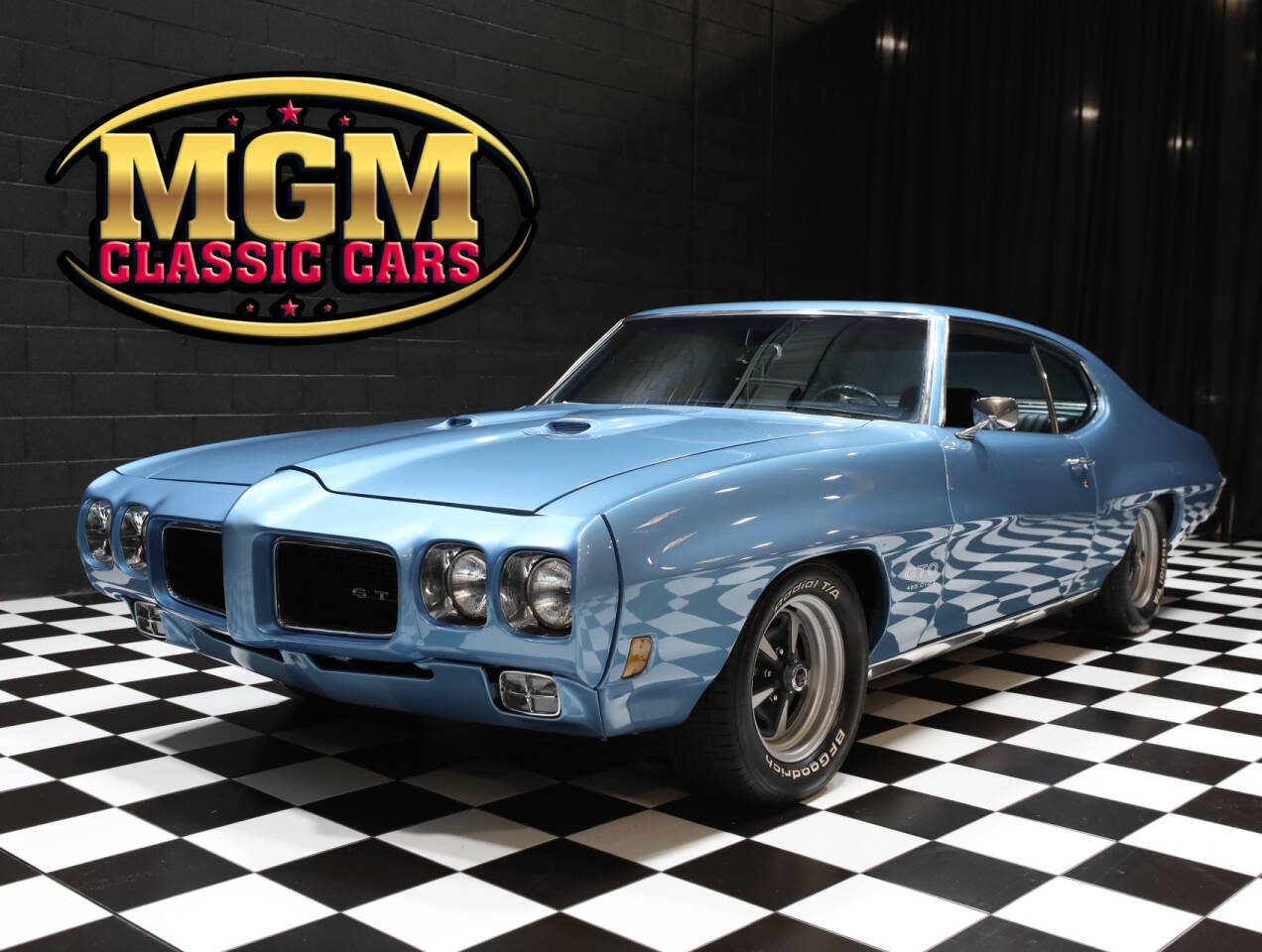
1970 Pontiac GTO
What to Look For
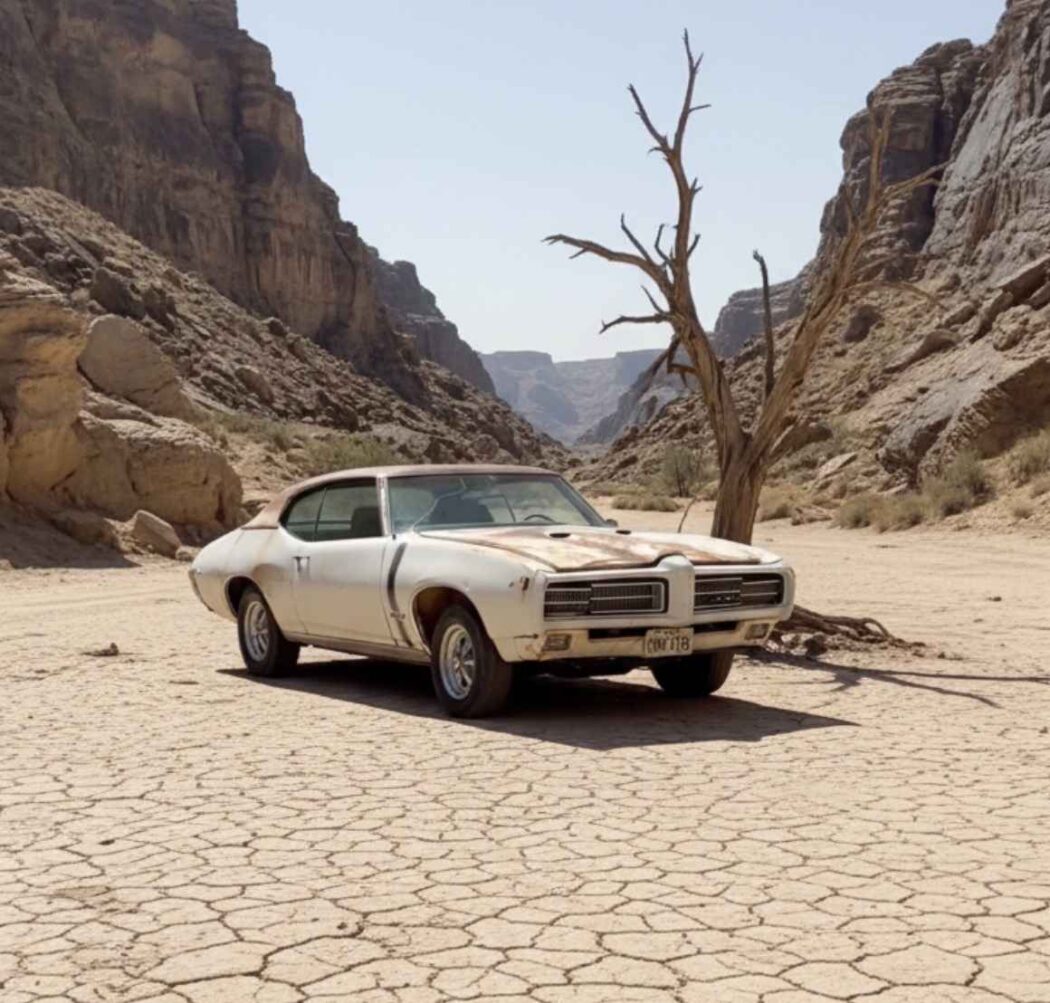
PHS Documentation is the gold-standard verification for any GTO claimed as Tri-Power, Ram Air, Judge, or HO. Pontiac Historic Services (PHS) sells $50-$80 reports based on Pontiac's original production records — the report tells you exactly what equipment the car was originally ordered with, when it was built, where it was shipped, and what dealer received it. No competent GTO collector buys a premium-trim car without PHS documentation.For the 1964-1967 cars, verify the GTO option code on the dataplate (cowl tag riveted to the firewall under the hood). The 1965-1967 cars use codes 242 (GTO option on Tempest) — pre-1968 GTOs were technically Tempest LeMans models with the GTO option. The 1968-1974 cars are stand-alone GTO models with their own VIN prefix.
Engine identification by casting numbers and stamping is essential. The 389 (1964-1966), 400 (1967-1970, 1972-1974), 421/428 (rare), and 455 (1970-1973) all have distinct casting numbers. The Ram Air III (codes WT/YS), Ram Air IV (codes WW/YZ), and HO 455 cars (code WX, 1971-1972) carry significant premiums when documented original.
Frame inspection is the second non-negotiable. Crawl under the car with a flashlight. Probe the frame rails at the rear body mount points and at the kick-up behind the front wheels. The body mount bushings are commonly collapsed on 50+ year-old cars, and the frame above the bushings rusts from water pooling. Replacement is $2,000-$5,000 per side if needed.
Pre-Purchase Checklist
-
Order PHS Documentation Report ($50-$80)
Pontiac Historic Services. Confirms original engine, trans, axle, options, paint. Mandatory for any premium-trim claim. -
Verify GTO option code on cowl tag
1964-1967: code 242. 1968-1974: GTO body code in dataplate. Cross-reference with VIN and PHS report. -
Read engine casting numbers and stamping
Casting on back of block; two-letter code stamped on front pad below cylinder head. Cross-reference with PHS. -
Inspect frame at rear body mount points
Body mount bushings collapse and water pools above. Frame rust here = $1,500-$3,500 repair minimum. -
Probe perimeter frame at front kick-up
Behind front wheels. Solid steel resists; rotten metal flakes. Common rust point on salt-belt cars. -
Check trunk drop-offs and rear quarters
Magnet test for filler. Lift trunk mat to inspect drop-offs and rear pan. -
Verify Hood Tach functionality (1969-1972)
Optional Hood Tach commonly fails. Reproduction units don't always read accurately. Cosmetic concern. -
Test all electrical and vacuum-actuated headlights
Hidden headlights (1968-1969) commonly fail. Cracked vacuum lines drop lights at speed. -
Compression test all eight cylinders
Should read 145-185 PSI uniformly. Variance >15% between cylinders = head gasket or ring problem. -
Drive at least 30 minutes on highway
Listen for differential whine, transmission slip, brake pulsation, steering wander. Watch for overheating.
Common Issues
GTO rust follows the GM A-body pattern: lower rear quarters, trunk drop-offs, frame rails (especially under the rear seat where the body mounts to the frame), floor pans, cowl seam, and lower fenders ahead of the doors. The 1964-1967 cars (perimeter frame) hide rust in boxed sections of the frame; the 1968-1972 cars (also perimeter frame) add rust at the rear frame kick-up where the body mount bushings collapse and water pools.Mechanically, the Pontiac V8 family (326, 389, 400, 421, 428, 455) is bulletproof when maintained but suffers from oil leaks at the timing cover, valve covers, and rear main seal. The Muncie M20/M21/M22 four-speeds are robust; the Turbo 350 and Turbo 400 automatics are equally durable. The Pontiac 8.2-inch and 10-bolt rear ends are weaker than the Ford 9-inch — broken stub axles are a known issue on hard-launched cars.
Electrical issues are the universal classic-car concerns plus one Pontiac-specific issue: the Hood Tach (1969-1972 optional) commonly fails or is no longer functional. Replacement units are reproduction-only and don't always read accurately. Vacuum-operated headlights on the 1968-1969 GTO models commonly fail — the rubber vacuum lines crack at 50+ years old, and the headlights drop at speed.
More GTO for sale
 Dealer
United States
Dealer
United States
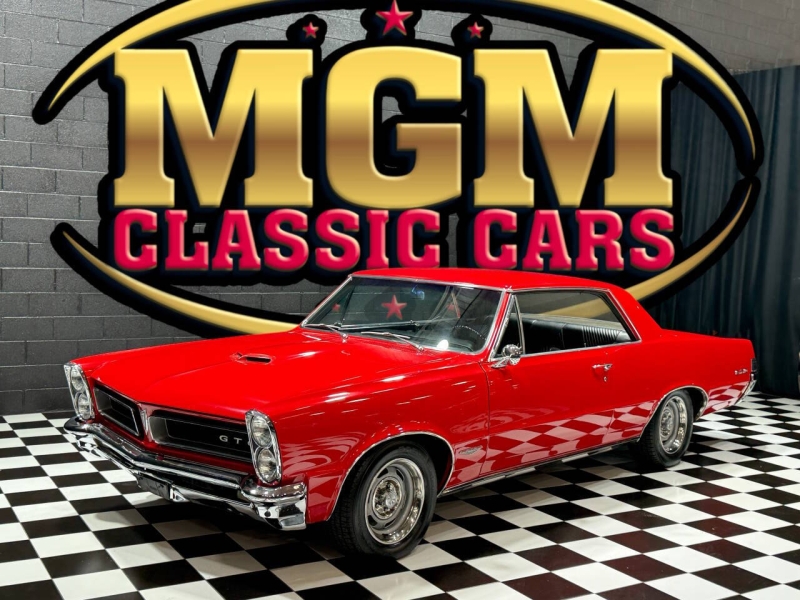
1965 Pontiac GTO
 Dealer
United States
Dealer
United States
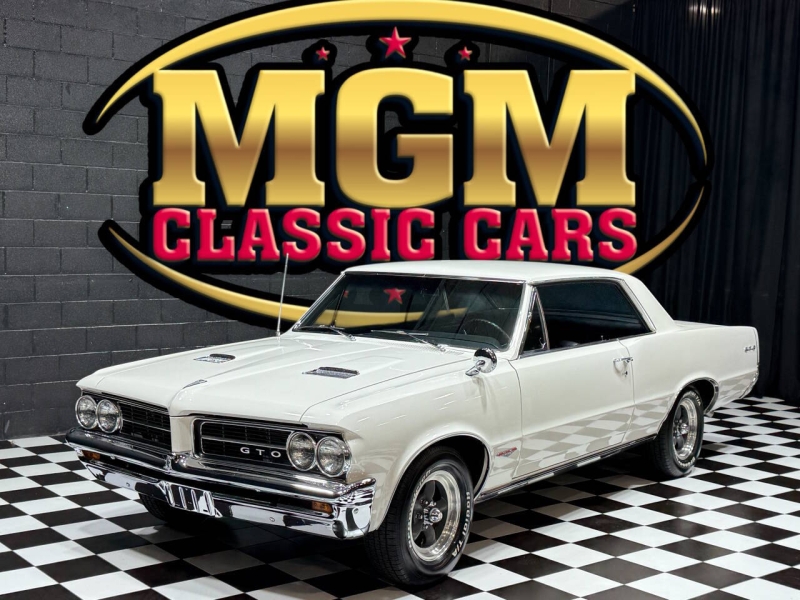
1964 Pontiac GTO
Pricing Guide
1964 GTO Tri-Power cars (the original year) trade for $55,000-$110,000 depending on body style and condition. Convertibles command 25-35% premium over equivalent hardtops. 1965-1966 Tri-Power cars are similar money: $50,000-$95,000 for documented drivers, $110,000-$180,000 for concours-grade restorations.The 1969 Judge package (introduced mid-year as the cheap-and-loud counter to the Plymouth Road Runner) is the most desirable single GTO variant. Documented Judge cars with the Ram Air III or Ram Air IV engine run $80,000-$220,000 depending on body style and equipment. The 1971 Judge convertible (only 17 built with the 455 HO) is $300,000-$500,000+ territory at auction.
Driver-quality 1968-1970 GTOs with the 400 and the four-speed run $45,000-$75,000 today. The 1971-1972 cars (455 HO era, before federal emissions de-tuning) are bargain entry points at $35,000-$60,000 for solid drivers. The 1974 final-year cars (Ventura-based, with the 350 V8) are the value play — clean drivers run $22,000-$38,000.
Project cars (running but rough) start around $15,000-$25,000 for 1968-1972 cars. Stripped roller candidates are $8,000-$15,000 — but rust restoration on a perimeter-frame A-body runs $25,000-$50,000 in body and frame work alone.
Fun Facts
John DeLorean and his team developed the GTO in 1963 by dropping a 389 V8 into a Tempest body, in deliberate violation of GM's corporate policy banning intermediate cars from carrying engines larger than 330 cubic inches. DeLorean's team made the GTO a Tempest "option package" (code 242) rather than a stand-alone model to slip past GM's policy review committee. The car was approved before management caught on, and once it became a sales hit (32,450 units in 1964), GM was forced to lift the engine-size ban — opening the floodgates for Chevelle SS, Buick GS, and Olds 442.The GTO name was borrowed from the Ferrari 250 GTO, much to Enzo Ferrari's reported displeasure. "GTO" stands for Gran Turismo Omologato — a homologation classification for cars eligible to compete in FIA grand-touring racing. Pontiac never raced the GTO in FIA events.
The 1969 Judge package was originally conceived as a low-trim, hardcore-performance counter to the Plymouth Road Runner — it was supposed to be the cheap, no-frills version of the GTO. By 1971, the Judge had become the high-trim flagship of the GTO line, with bigger engines, more interior options, and significantly higher pricing.
Frequently Asked Questions
Ready to find your GTO?
Browse 6+ active Pontiac GTO listings on Classic Cars Arena.
View Listings →