
How do I decode a classic Ford F-100 VIN?

Decoding a classic Ford truck VIN is straightforward once you know which era's format you're working with. The VIN tells part of the story; the cab data plate tells the rest. For any truck with claimed special equipment or a performance engine, both documents need to agree.
Pre-1965 VIN Format (Short Format)
1948–1964 F-100 trucks used a short format typically 8–9 characters. Example: F10YA12345
- F = Ford truck
- 10 = F-100 (F-250 would be F25)
- Y = model year (varies by chart)
- A = assembly plant (A = Atlanta, F = Dearborn, etc.)
- 12345 = sequence number
1965–1980 VIN Format (11 Characters)
Example: F10YNB12345
- F10 = F-100
- Y = model year (Y=1964 through sequential letters)
- N = engine code (N = 360 FE, Z = 390, etc.)
- B = assembly plant
- 12345 = sequence
The Cab Data Plate Is the Real Document
The door jamb data plate is the factory build record for F-series trucks. It lists: axle ratio, transmission code, paint code (with the DSO — district sales office — and any special order codes), and spring codes. For a claimed Ranger or Explorer trim package, the data plate must show the correct trim codes. For a claimed 390 or 428 truck, the engine code in the data plate must match. Without the data plate, you're taking the seller's word.
Engine Stamp Verification
Ford big-block FE engines carry a date-coded partial VIN stamp on the block. The stamp is on the left front of the block near the oil filter. Cross-reference the partial VIN against the door data plate to confirm the engine was originally installed. A matching stamp is the difference between a numbers-matching truck and an engine-swapped clone.
Browse current listings
 Dealer
 United States
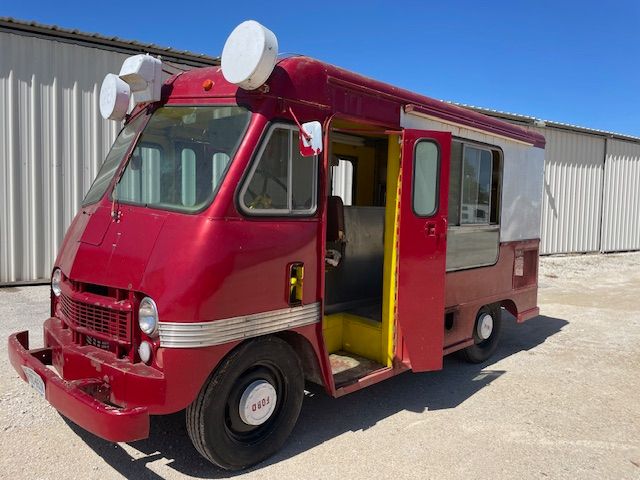
1961 Ford F-100
 Dealer
United States
Dealer
United States
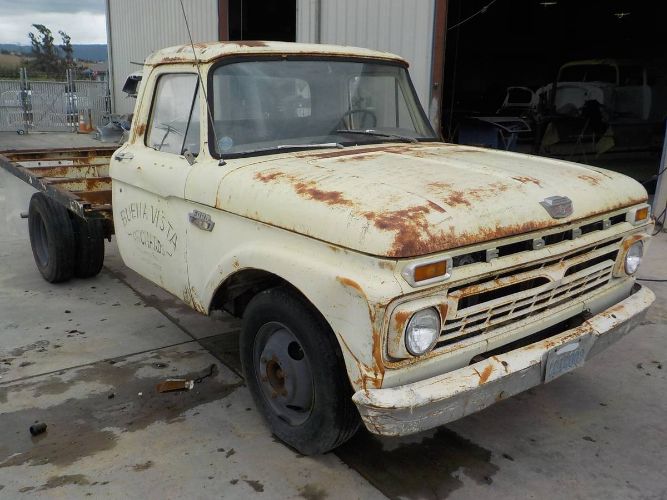
1959 Ford F-100
 Dealer
United States
Dealer
United States
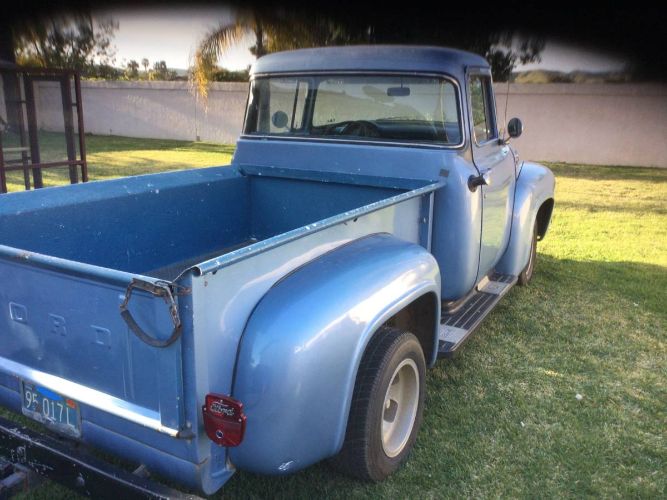
1956 Ford F-100
 Dealer
United States
Dealer
United States
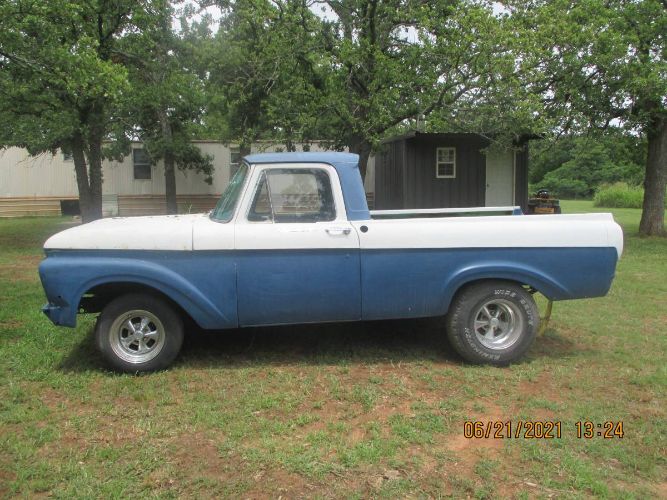
1962 Ford F-100
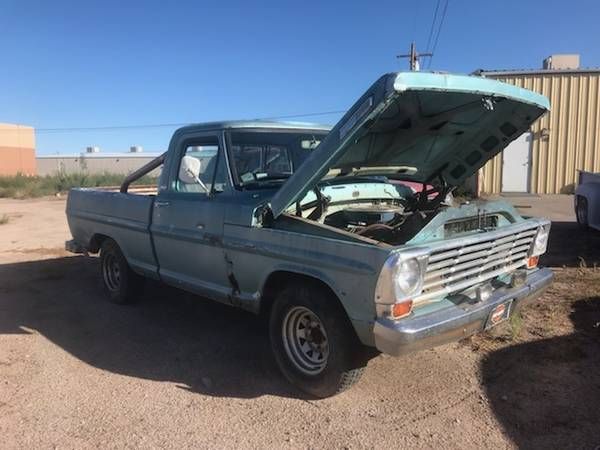 Dealer
United States
Dealer
United States
1972 Ford F-100
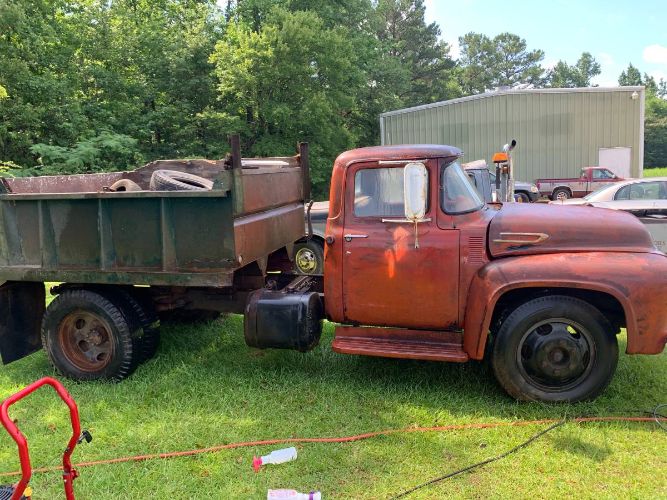 Dealer
United States
Dealer
United States