
What is the Ford 427 High Riser engine?

I've worked on Ford FE engines my entire career, and the High Riser is the version that separates the serious collectors from the casual admirers. Ford built these engines with one purpose: to win on the NASCAR superspeedways where Daytona and Talladega were decided at wide-open throttle for hours. Everything about the High Riser package reflects that engineering brief.
What Makes the High Riser Different
The FE-series 427 came in three intake manifold configurations, each representing a more aggressive stage of development:
- Low Riser: Standard port height, dual 4-barrel carburetors, 410–425 hp — the street-usable version
- Medium Riser: Raised ports, twin Holley 4-barrels, 425 hp — NASCAR-legal general configuration
- High Riser: Maximum raised ports, cross-bolted main bearing caps, twin Holley 715 cfm carbs, 425 hp (rated) / 500+ hp actual — purpose-built superspeedway configuration
The High Riser's intake port centerlines are raised 7/16 inch above the standard 427 — the difference appears subtle but creates a dramatically more efficient intake path at high RPM. At sustained superspeedway speeds, this airflow improvement is the difference between winning and losing.
Street vs Race Specification
The street-specification High Riser — as installed in 1963–1965 Galaxies, Fairlanes, and a handful of other Ford products — was mechanically similar to the race specification but de-tuned for pump gasoline and general road use. Key differences: street cars used a single 4-barrel rather than dual carburetors in many configurations, and compression was reduced from the race engine's 13.5:1 to 12.0:1. Even de-tuned, these are sophisticated, high-maintenance engines that require premium fuel and careful carburetion to deliver their full output.
Authentication
Ford's VIN does not directly encode the specific manifold type — a 427-equipped Galaxie is a 427-equipped Galaxie in the VIN. The critical authentication documents are the Marti Report (the definitive Ford production record available through the Marti Auto Works database) and the engine casting codes. The High Riser intake manifold carries specific Ford casting numbers: C3AE-9425-E for the dual-carburetor version. Verify the casting number against the Marti Report specification before any High Riser transaction.
2026 Values
A documented, numbers-matching 1963–1965 Galaxie 500 with a High Riser 427 trades at $65,000–$120,000 in excellent condition — a premium of 50–80% over equivalent 427 Low Riser or 390 cars. The 1963 Galaxie in particular carries the direct NASCAR pedigree of the championship year and commands the highest values.
"The High Riser 427 is Ford muscle at its most uncompromised — an engine built to win on superspeedways that was briefly available in a street car. The market premium is real and legitimate."
— Mike Sullivan
Browse current listings
 Dealer
 United States
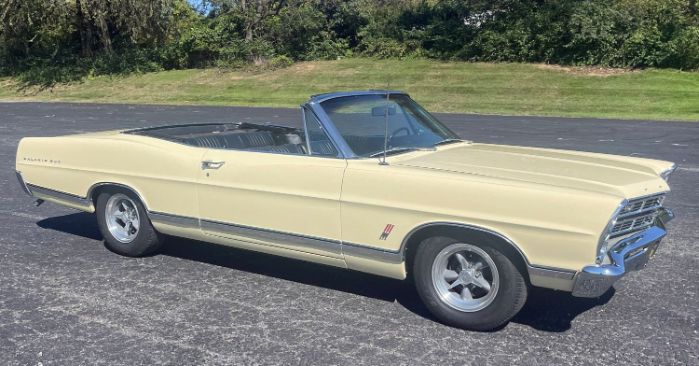
1962 Ford Galaxie
 Dealer
United States
Dealer
United States
1967 Ford Galaxie
 Dealer
United States
Dealer
United States
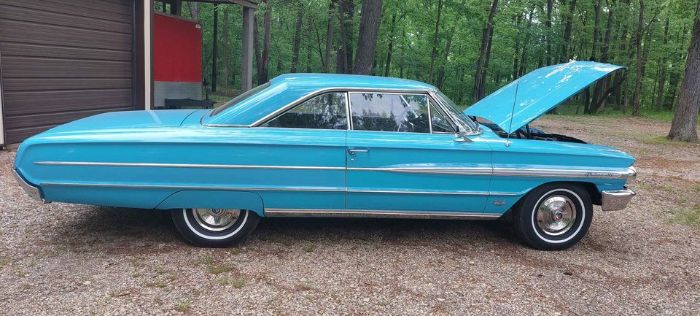
1964 Ford Galaxie
 Dealer
United States
Dealer
United States
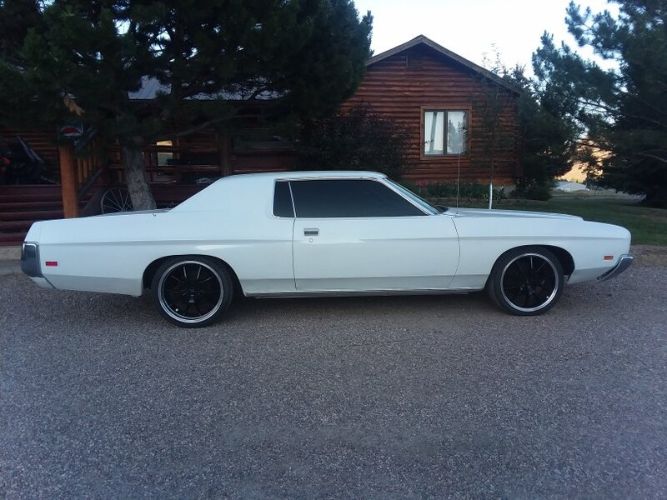
1972 Ford Galaxie
 Dealer
United States
Dealer
United States
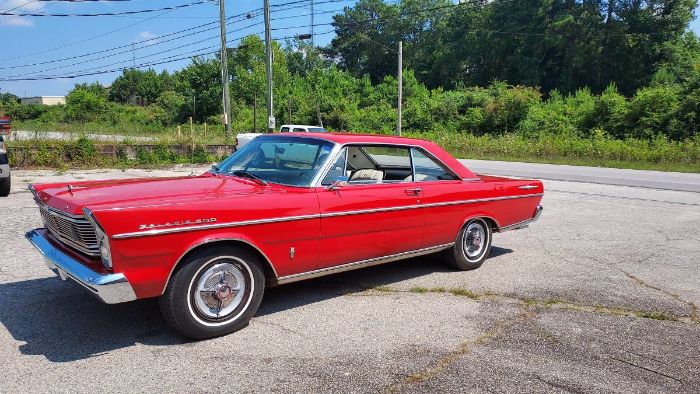
1965 Ford Galaxie
 Dealer
United States
Dealer
United States