
Chevrolet Apache Buyer's Guide
The Chevrolet Apache was the marketing name for the light-duty Chevy pickup from 1958 to 1961 — four short years that produced some of the most beautiful American truck designs ever made, with clean styling that has only appreciated with time.

Robert Halloran here. The Apache gets overshadowed by the 1967–1972 trucks in the classic Chevy truck conversation, but that's a market misjudgment rather than an aesthetic one. The 1958–1961 Apache — the light-duty designation in Chevy's "Task Force" naming scheme — is among the best-proportioned American trucks ever built. The dual headlights, the clean hood, the balanced cab and bed relationship: these are trucks that look right from every angle.
The Apache name specifically covered the half-ton and three-quarter-ton Task Force trucks in 1958–1961. Before 1958, Chevy used a different naming system; after 1961, they dropped the Apache/Viking/Spartan marketing names and went back to the standard C/K designation. That four-year window produced a unique truck with its own devoted following.
What Makes the Apache Special
Chevrolet introduced the "Task Force" truck design in 1955 — a clean-sheet redesign that brought the Chevy pickup into the modern era with a wraparound windshield, a lower hood line, and a cab design that prioritized driver comfort. The 1955–1957 trucks were immediately successful, but the 1958 update that brought dual headlights is the version that most collectors find most visually compelling.
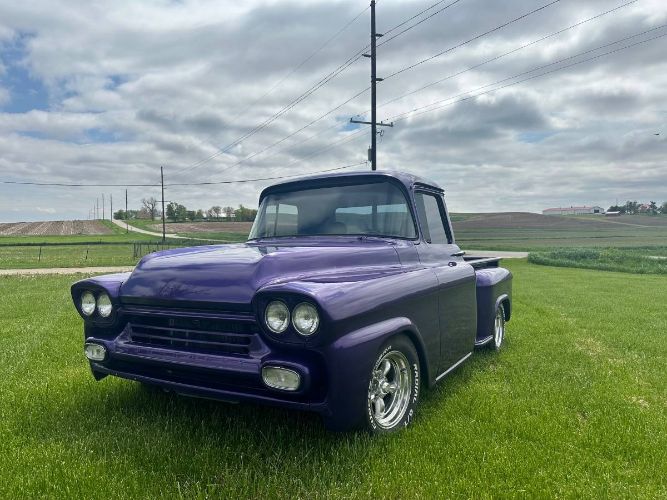
The dual headlights changed the front-end character completely. Where the 1955–1957 trucks had a single headlight on each side, the 1958 Apache arranged four lights in a horizontal row that gave the truck a wider, more confident face. Combined with the clean hood and the minimal chrome of the Task Force design, the result is a truck with a timeless quality that predates the chrome excess of the 1959 and 1960 Fleetside redesigns.
Stepside vs. Fleetside
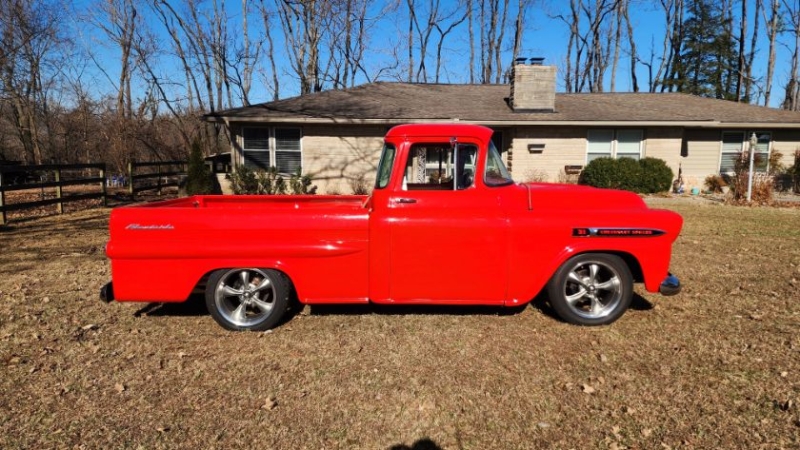
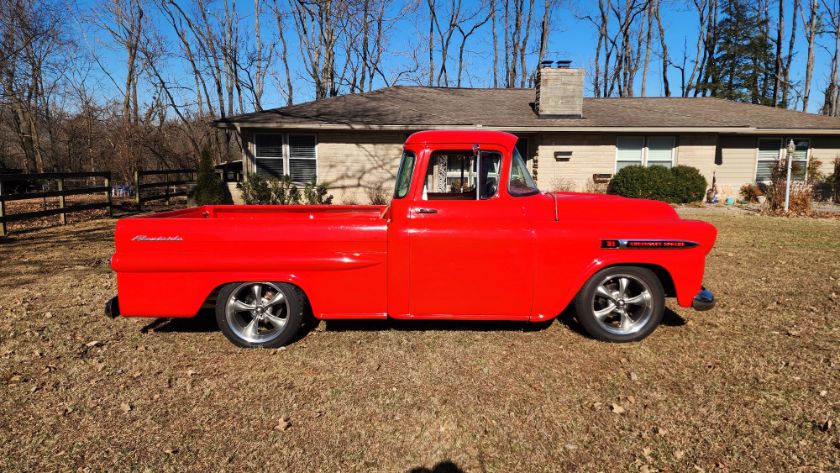
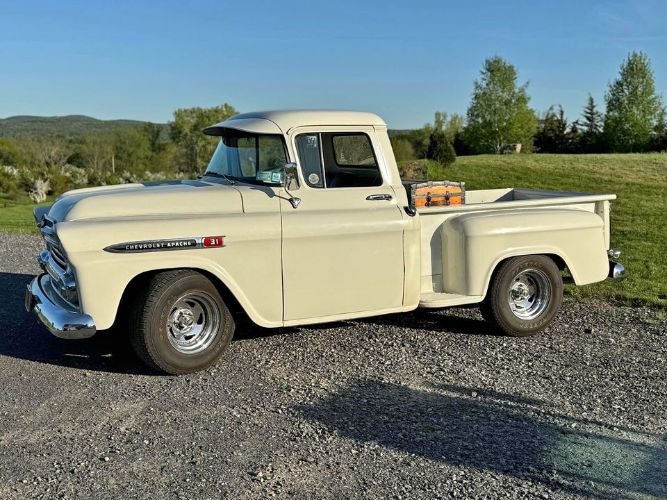
The 1958–1961 Chevrolet pickup was available in two bed configurations. The Stepside (sometimes called "Fenderside") retained the separate fender-and-running-board bed design from the 1955–1957 trucks, which was the traditional look and remains the more popular collector configuration. The Fleetside — introduced with smooth, slab-sided fenders that matched the cab width — was the modern alternative that most working buyers chose for its wider, more usable bed.
Both are correct and both are collectible. The Stepside commands a premium today because its traditional proportions read as more "classic truck" to casual observers, but the Fleetside is actually the more historically significant design — it was a major styling innovation when introduced and influenced truck design for the following decades. A clean Fleetside in original condition is increasingly hard to find, as many have been modified.
Engines and Mechanicals
The 1958–1961 Apache was available with Chevrolet's 235ci "Thriftmaster" inline-six and the 283ci small-block V8 — the same engine that was transforming the Corvette and Chevrolet passenger car lineup during this period. The 283 in a Task Force Apache is a genuinely enjoyable engine combination: the small-block's willingness to rev combined with the truck's light weight (by modern standards) creates a driving experience that surprises people.
The four-speed synchromesh manual and the Hydra-Matic automatic were both available, with the manual being the more common choice in working-truck applications. Finding a clean Apache with a 283 and a four-speed is the combination most collectors want, though the inline-six trucks have their own appeal for buyers focused on originality and economy.
The Cameo and the Collector Market
The Cameo Carrier — a luxury Stepside truck with a special smooth fiberglass bed — was available from 1955 through 1958 and represents the most collectible single variant in the Task Force lineup. Only about 1,500 1958 Cameos were produced, making them genuinely rare. If you encounter a claimed Cameo, verify the fiberglass bed and specific trim details carefully — the premium is significant and verification is important.
Browse Chevrolet Apache listings
 Dealer
 United States
1959 Chevrolet Apache
 Dealer
United States
Dealer
United States
1959 Chevrolet Apache
What to Look For
Rust inspection is the top priority: cab corners (extremely common), floor pans, and the lower rear cab area where the cab meets the bed. On Stepside trucks, inspect the running board support brackets for rust perforation. On Fleetside trucks, check the smooth bed sides carefully — dents in the flat panels are expensive to repair. Verify the small-block 283 runs cleanly without excessive oil consumption. On claimed Cameo variants, verify the fiberglass bed is original and complete.Pre-Purchase Checklist
-
Cab Corner Rust
Probe cab corners thoroughly — nearly universal on untreated trucks, expensive to repair correctly. -
Floor Pan Condition
Inspect from underneath and inside for perforation. -
Running Boards (Stepside)
On Stepside trucks, check running board support brackets for rust-through. -
Fleetside Bed Panels
On Fleetside trucks, inspect smooth bed sides for dents — flat panel repair is expensive. -
Engine Condition
Test 283ci V8 for oil consumption and smooth idle — a cold-start blue smoke test covers both. -
Drivetrain Verification
Confirm engine type and transmission match via build tag for accurate valuation. -
Cameo Bed (if applicable)
On claimed Cameo trucks, verify fiberglass bed authenticity and inspect for cracks at mounting points. -
4WD Engagement
On 4WD trucks, test both 4-high and 4-low engagement — smooth operation with no grinding.
Common Issues
Cab corner rust is universal on untreated examples — budget for repair or accept patched corners. Floor pan perforation. Stepside running board bracket corrosion. 235ci inline-six oil consumption from worn valve seals on unrestored examples. Hydra-Matic fluid leaks. Fleetside bed panel dents from working use. Cameo fiberglass bed cracks at mounting points.More Apache for sale
 Dealer
United States
Dealer
United States
1959 Chevrolet Apache
 Dealer
United States
Dealer
United States
1959 Chevrolet Apache
Pricing Guide
1958–1961 Apache Stepside six-cylinder: $14,000–$28,000. Apache Stepside V8: $22,000–$45,000. Apache Fleetside: $12,000–$24,000 (slight discount to Stepside). 4WD Apache variants: $22,000–$50,000+. 1958 Cameo Carrier: $35,000–$75,000 for genuine documented examples. Rust-free Sun Belt trucks command a 20–35% premium.Fun Facts
The Apache name was part of Chevrolet's 1958 marketing scheme using Native American names for different truck classes: Apache (light duty), Viking (medium duty), and Spartan (heavy duty). The naming was dropped after 1961 but the Apache name has outlasted the others in collector memory. The 1955–1959 Chevrolet trucks are often called "Advance Design" or "Task Force" trucks interchangeably — "Task Force" was Chevy's marketing name; "Apache" was the subdesignation applied in 1958–1961.Frequently Asked Questions
Ready to find your Apache?
Browse 6+ active Chevrolet Apache listings on Classic Cars Arena.
View Listings →