
Classic Chevrolet Corvette Buyer's Guide
Complete buyer's guide for classic Chevrolet Corvette C1, C2 and C3 (1953-1982). Birdcage rust, frame inspection, engine code identification, and current market pricing for split-windows, L88s and LT-1s.

The Chevrolet Corvette has been America's sports car for over seventy years, but the classic Corvette market splits into three distinct generations, each with its own buyer profile and its own pitfalls. The C1 (1953-1962), C2 mid-year (1963-1967), and C3 shark (1968-1982) cover three decades of evolution from solid-axle straight-six convertibles to small-block legends to LT-1-powered chrome-bumper cars. Knowing which Corvette is yours — and what it actually is versus what the seller claims — is the difference between a sound investment and an expensive lesson.
Overview
The classic Corvette market splits into three distinct buyer profiles. C1 buyers are typically pre-war and immediate-postwar collectors who appreciate the solid-axle simplicity and the 1950s Americana aesthetic. C2 buyers are the blue-chip muscle-car investors — these cars trade like art, with documented L71 and L88 examples now in the high six-figures. C3 buyers are the largest population by far, with a market that ranges from $15,000 driver-quality 1974 small-blocks up to $100,000+ documented LT-1s. Each generation has its own pitfalls, and knowing which Corvette you're shopping is the first step toward avoiding expensive surprises.
Generations Worth Knowing
C1 (1953-1962): Solid-Axle Era
The original. The 1953 launch year used the Blue Flame inline-six paired with a Powerglide automatic — slow, but visually iconic. The V8 arrived for 1955 (the 265, then the 283 for 1957). The 1957 fuel-injected "fuelie" cars are the C1 high-water mark — $140,000-$280,000 for documented examples. The 1962 model is uniquely transitional: it has the C1 body but the C2 engine (the new 327) and was a one-year-only design.
C2 (1963-1967): Mid-Year Era
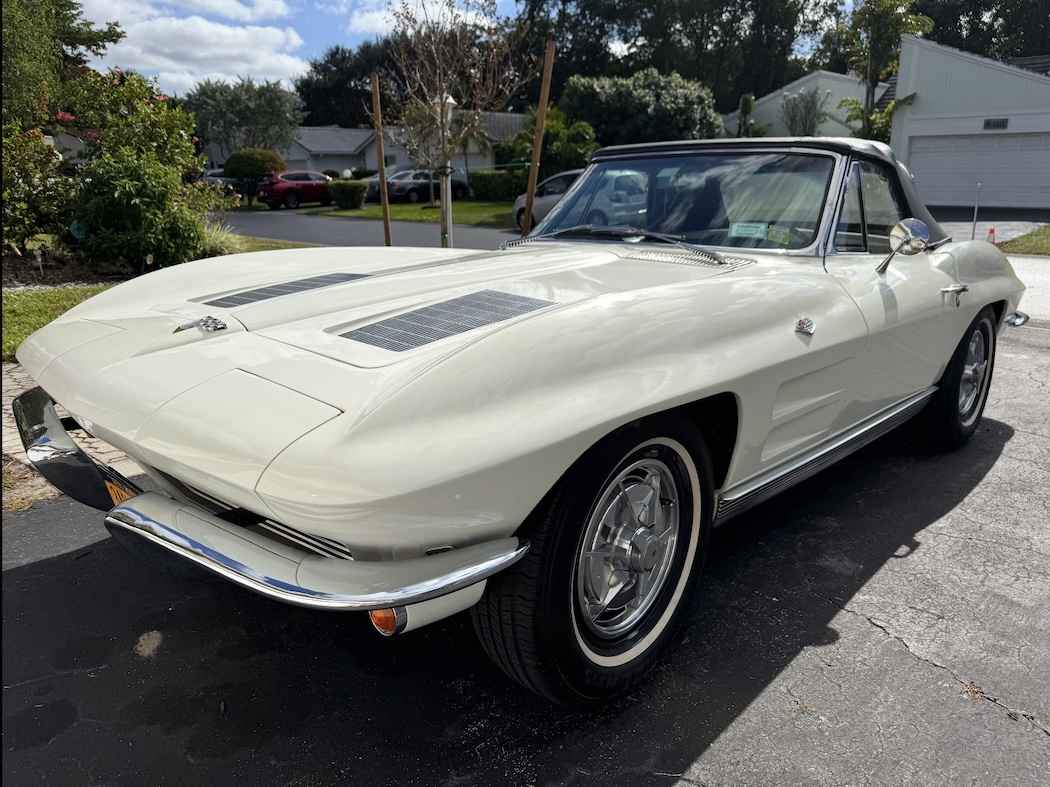
The icon. Bill Mitchell's Stingray styling, the IRS rear suspension, and the introduction of the big-block Mark IV 396 (1965) and 427 (1966+) made the C2 the most fully-developed Corvette of the classic era. Five model years; perhaps the most concentrated valuation market in the entire American collector car space. Documented L71, L72, and L88 cars are now consistently breaking auction records.
C3 (1968-1982): Shark Era
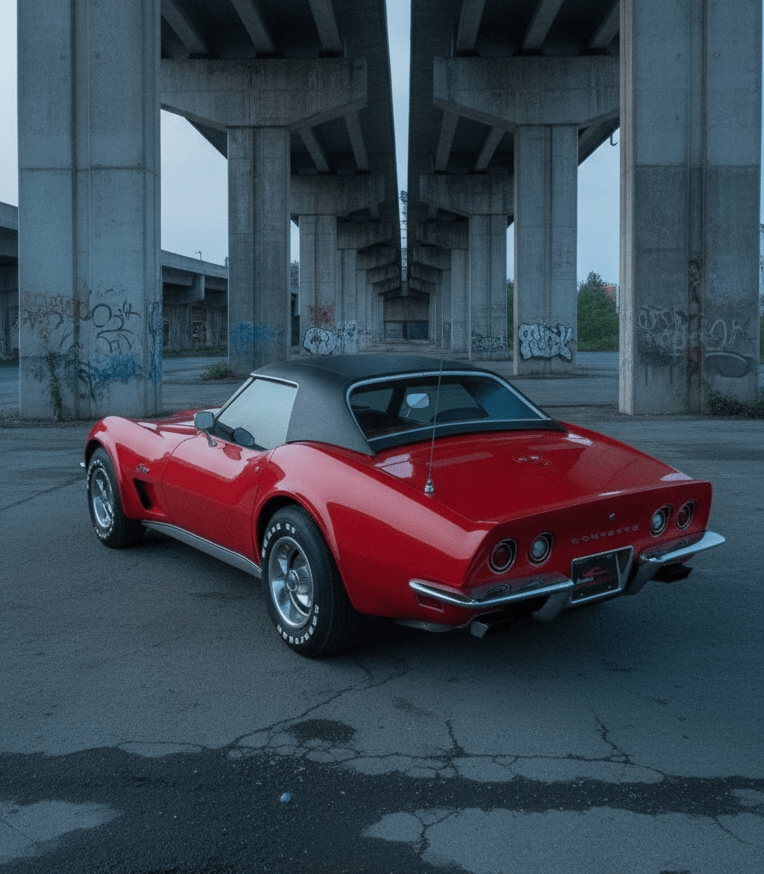
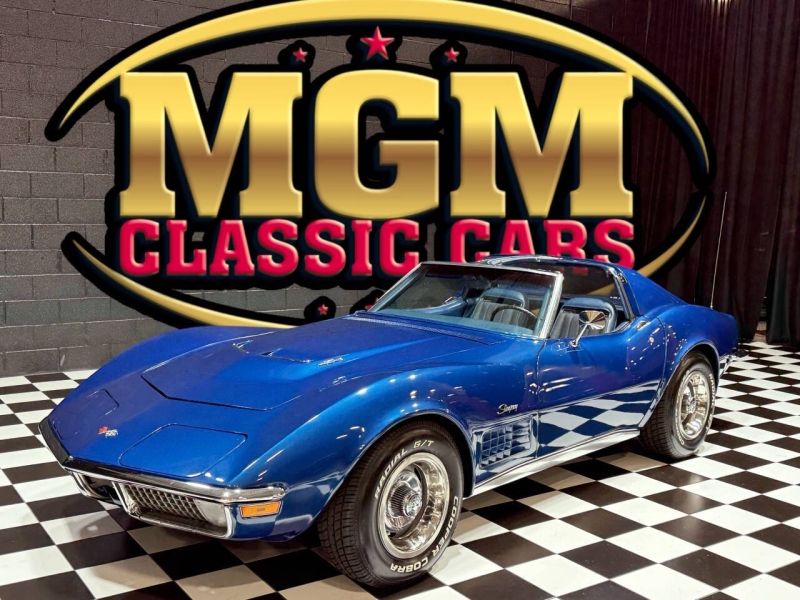
The C3 ran for fifteen model years — the longest single Corvette generation. The early chrome-bumper cars (1968-1972) are the most desirable, with the 1970-1972 LT-1 cars representing the high-water mark. From 1973 forward, federal emissions and 5-mph bumper regulations took the steam out of Corvette performance, but the cars stayed in production through 1982 — building enthusiast loyalty and creating a massive pool of project cars and parts cars at attainable prices.
What to Look For (in person)
Birdcage Inspection (C2 and C3)
The birdcage is the steel skeleton beneath the fiberglass body. Pull the door panels and inspect the inner door frames. Lift the carpet at the windshield base and inspect the cowl. On coupes, lift the headliner if practical and look at the roof structure. Perforation in any of these areas is structural and expensive — $8,000-$25,000 to repair properly.
Frame Inspection
C1 cars use a boxed steel ladder frame; C2 and C3 use an X-frame. Both rot in salt-belt climates. Probe the frame with a screwdriver at the kick-up behind the front wheels, the rear suspension mounting points, and the rear cross-member. Solid steel resists; rotten metal flakes. Frame replacement is a serious undertaking — budget $15,000-$30,000 for proper professional work.
Tank Sticker Verification
The tank sticker is the original factory build sheet glued to the inside top of the gas tank during assembly. For any Corvette priced over $60,000, demand to see the tank sticker. The codes on the sticker tell you exactly what options the car was originally equipped with, when it was built, and what the original engine and transmission were. Forgeries exist — verify questionable stickers with NCRS (National Corvette Restorers Society) judges before purchase.
Mechanical Audit
For Big Blocks, listen for valvetrain noise on cold start — solid-lifter cars (L72, L78, L88, ZL1) have characteristic ticking that should subside with oil pressure. Check for blue smoke at startup (worn valve seals) or constant blue smoke (worn rings). Compression should be 145-185 PSI uniformly. The Muncie M21 close-ratio four-speed and the M22 Rock Crusher are robust; the Powerglide and Turbo 400 automatics are equally durable. Differential whine on deceleration indicates worn pinion bearings — a $1,500-$3,000 repair.
Pricing Tiers
| Tier | Description | Price Range (2024) |
|---|---|---|
| Driver | 1974-1977 C3 small-block, decent paint, original interior with wear, runs and drives | $15,000-$28,000 |
| Survivor | 1968-1972 C3 small-block or 1958-1962 C1 V8, original paint, documented mileage | $45,000-$85,000 |
| Concours | Documented L71, L88, ZL1, fuelie, or split-window with tank sticker, frame-off restoration | $140,000-$2.5M+ |
Common Pitfalls
The single biggest pitfall is paying premium money for a car without tank-sticker documentation. The C2 and C3 markets are full of clones — base 327 cars wearing L71 emblems, base 350s claiming to be LT-1s. Without the tank sticker, the NCRS Shipping Data Report, and a verified VIN match, treat all premium-trim claims as clones.
The second pitfall is fiberglass damage hidden under fresh paint. Fiberglass cracks don't repair like steel — improper repairs telegraph through paint within 12-24 months. A car with fresh respray on a poor body is a 5-year time bomb. Demand to see the car under raking light from multiple angles, or insist on a body inspection by a Corvette specialist.
"The Corvette market is uniquely full of cloned cars and forged tank stickers. I've seen $80,000 deals fall apart at the last minute when an NCRS judge looked at the tank sticker and pointed out that the option codes don't match the build date. The premium for a documented numbers-matching Corvette is real — $30,000 to $50,000 on a typical L71 versus a clone — and it pays to spend the $50 on an NCRS Shipping Data Report rather than chase a deal that turns out to be too good to be true."
— Mike Sullivan
Final Verdict
The Corvette market rewards patience and documentation. The blue-chip cars (split-window coupes, fuelie C1s, L71 and L88 C2s, LT-1 C3s) have appreciated steadily for three decades and continue to. Driver-quality C3 small-blocks remain the smart-money entry point — $22,000-$35,000 buys a solid usable classic with parts everywhere and a clear upgrade path.
For new buyers, start with a 1973-1977 C3 small-block. They're the most affordable, the parts support is exceptional, and the cars are forgiving for first-time classic car ownership. From there, the upgrade path is clear: 1970-1972 LT-1 small-block, then 1965-1967 C2 small-block, then C2 big-block, then the rare-air documented specials. Patience and documentation beat impulse buys every time in this market.
Browse Chevrolet Corvette listings

What to Look For
VIN authentication is the first stop. The C1 and C2 cars used the dashboard VIN plate; the C3 added the windshield-pillar VIN starting in 1968. Cross-reference the VIN against the trim tag (riveted to the body brace under the glovebox or on the firewall depending on year) and against the engine block partial VIN. Big Block cars (1965+ 396, 1966+ 427, 1970+ 454) and Z06/L88/ZL1 specials must have all numbers matching to claim premium prices.For C2 and C3 cars, inspect the birdcage. Pull the door panels and look at the inner door structure. Lift the carpet at the windshield base and look at the inner cowl. Pull the headliner if practical and look at the roof structure on coupes. Surface rust is acceptable; perforation is structural and expensive to repair.
For any high-dollar Corvette claim — L71 427/435, L88, ZL1, Z06, LT-1 — demand the original tank sticker (the build sheet that was glued to the inside top of the gas tank). Tank stickers are the gold standard for verification. Cross-reference the tank sticker codes against the VIN and the engine block partial VIN.
Fiberglass condition is uniquely Corvette. Look for stress cracks at the body mount points, around the headlight buckets, and at the rear panel where the bumpers attach. Surface gel-coat cracks are cosmetic; deeper structural cracks indicate impact damage or chassis flex.
Pre-Purchase Checklist
-
Verify dashboard VIN against trim tag and engine partial VIN
All three must agree. Engine partial VIN is on driver-side block deck near cylinder head. -
Demand original tank sticker for any car over $60K
Glued inside top of gas tank. Lists all original options. Gold standard for premium Corvette verification. -
Order NCRS Shipping Data Report ($50)
Available from National Corvette Restorers Society. Confirms original equipment from GM records. -
Inspect birdcage at door frames and cowl
Pull door panels, lift carpet at windshield base. Perforation = $8,000-$25,000 structural repair. -
Probe frame at kick-up and rear cross-member
Solid steel resists; rotten metal flakes. Frame replacement is $15,000-$30,000 if needed. -
Examine fiberglass under raking light
Stress cracks at body mounts, headlight buckets, rear panel. Deep cracks = impact damage or chassis flex. -
Check T-top seals and headliner (C3)
Water staining indicates failed seals. Leaks rot birdcage from inside. -
Verify Big Block valvetrain on cold start
Solid-lifter L72/L78/L88/ZL1 should tick and subside with oil pressure. Continuous noise = valve adjustment or worn lifters. -
Compression test all eight cylinders
Should read 145-185 PSI uniformly across the bank. Variance >15% = head gasket or ring problem. -
Test all electrical and pop-up headlights (C3)
Vacuum-actuated headlights commonly fail. Hidden leaks in vacuum lines drop the lights at speed.
Common Issues
Corvette "birdcage" rust is the structural killer for C2 and C3 cars. The birdcage is the steel inner structure that supports the fiberglass body — windshield frame, A-pillars, doglegs, and roof. When the birdcage rots, the body flexes, glass cracks, and door alignment goes off. Birdcage repair on a C2 or C3 is $8,000-$25,000 depending on extent.Frame rust on C1 (boxed steel) and C3 (X-frame) Corvettes is the second major concern. The kickup behind the front wheels, the rear suspension mounting points, and the rear cross-member all rot in salt-belt cars. Probe the frame with a screwdriver — solid steel resists, rotten metal flakes.
Mechanical issues vary by generation. C1s commonly have weak Powerglide automatics and tired solid-lifter 283 fuelies. C2s have strong drivetrains but the leaf-spring rear suspension wears bushings and the differential carriers crack. C3s suffer from sloppy T-tops that leak, failing radiators, and worn front coil springs that sag the front end. The L88 cars (1967-1969) had aluminum heads that crack from heat cycling — a deal-breaker if not previously addressed.
More Corvette for sale
Pricing Guide
C1 (1953-1962) Corvettes range from $45,000 for solid 1958-1962 driver-quality 283 V8 cars up to $300,000+ for documented 1957-1962 fuelie cars in concours condition. The 1953 launch year (only 300 built) is a special case — documented original 1953s sell for $200,000-$400,000.C2 (1963-1967) is the most coveted Corvette generation. The 1963 split-window coupe is the icon — $95,000-$200,000 for drivers and survivors, $300,000+ for documented L84 fuelie cars. 1965-1967 396/427 Big Blocks are $85,000-$180,000 for drivers, with documented L71 Tri-Power cars at $140,000-$280,000. The 1967 L88 is the holy grail — only 20 were built — and documented examples bring $2.5M-$5M at auction.
C3 (1968-1982) is the bargain entry to Corvette ownership. Driver-quality 1968-1972 small-blocks run $22,000-$42,000. The 1970-1972 LT-1 (small-block, solid-lifter, 350-360 hp) is the underrated gem at $45,000-$85,000 for documented numbers-matching cars. 1973-1977 cars are the bargain era at $15,000-$28,000. 1978 silver anniversary and 1982 Collector Edition cars trade for $22,000-$35,000.
Fun Facts
The Corvette name was suggested by GM PR director Myron Scott — named after the small, fast warship class. GM trademarked "Corvette" in May 1953, just one month before the car's June launch.The 1963 split-window coupe was a Bill Mitchell design that survived for only one model year. Zora Arkus-Duntov, the Corvette's chief engineer, hated the split window because it killed rearward visibility, and he successfully lobbied to remove it for the 1964 model year. The one-year-only design is now the most iconic Corvette body style ever produced.
Only 20 L88 Corvettes were built for 1967, and Chevrolet deliberately under-rated the engine at 430 horsepower to keep insurance companies off the buyer's back. The L88 actually produced approximately 540 horsepower in road-going trim and was conceived purely as a homologation special for road racing — Chevrolet refused to install a heater, radio, or AM/FM in any L88, telling buyers to special-order them at the dealer if they actually wanted comfort features.
Frequently Asked Questions
Ready to find your Corvette?
Browse 6+ active Chevrolet Corvette listings on Classic Cars Arena.
View Listings →