
Classic Chevrolet Camaro Buyer's Guide
Everything you need to know about buying a classic Chevrolet Camaro — from 1967-1969 first-generation icons to the third-gen IROC era. VIN authentication, common rust hotspots, engine identification, and current market pricing.

The Chevrolet Camaro launched in September 1966 as Chevy's direct response to the Ford Mustang, and for over five decades it has defined American performance for an entire generation of enthusiasts. Whether you're hunting a numbers-matching first-generation Z/28, a survivor split-bumper second-gen, or a clean third-gen IROC-Z, the Camaro buyer's market is deep, varied, and full of pitfalls for the unprepared.
History & Generations
The Camaro has lived through six distinct generations across more than fifty years of production. Each has its own buyer profile, its own pitfalls, and its own market dynamics.
First Generation (1967-1969)
The original. Built on GM's F-body platform shared with the Pontiac Firebird, the 1967-1969 Camaro is the most collectible and the most counterfeited classic Chevy on the market. The 1967 launched with a 230 cubic inch six-cylinder as base, but the SS package with the 350 V8 was the first car to wear the "SS" badge in Camaro history. The 1969 model year is the most desirable, with its distinctive split-grille front end, sharper body lines, and the legendary Z/28, SS396, ZL1, and Yenko variants.
Second Generation (1970-1981)
Longer, lower, wider. The 1970-1973 "split-bumper" cars are the most desirable of this generation, with the 1970 Z/28 LT-1 (with the solid-lifter 350) being the standout collector piece. From 1974 forward, federal emissions and 5-mph bumper regulations took the steam out of the Camaro — but the cars stayed in production through 1981, building enthusiast loyalty and creating a vast supply of project cars and parts cars at attainable prices today.
Third Generation (1982-1992)
The Z28 returned in 1982 as the performance flagship of a completely new platform. The 1985 IROC-Z was the iconic mid-decade halo car, named for the International Race of Champions series. By 1990, the Camaro had earned credibility back: the 1LE option and the 1991 Z28 1LE were genuine track-day cars. Third-gens are now actively collected — the IROC-Z especially.
Fourth Through Sixth Generations (1993-2024)
The 1993-2002 fourth-gen brought the LT1 and LS1 small blocks. The fifth-gen relaunch (2010-2015) and sixth-gen (2016-present) are still modern enough to be daily drivers, with select trims (1LE, ZL1, Z/28) entering performance-collector territory.
Years to Look For
Not every Camaro year is created equal. From a buyer's perspective, three eras define the smart-money zones:
- 1967 SS396 / Z/28: The original, with limited production and pure design intent. Z/28s are particularly rare from this year — only 602 were built.
- 1969 in any high-performance trim: The peak of first-gen styling and powertrain options. Numbers-matching documented cars only — the marketplace is full of clones.
- 1970-1973 Z/28 with the LT-1 350: Last of the high-compression performance cars before the post-1973 emissions wave. Thirty-four years of appreciation and still climbing.
Documentation You Should Demand
For any Camaro priced above $30,000, especially Z/28s and SS variants, the buyer should require documentation. Without it, you're essentially buying a clone or a tribute, and the price should reflect that.
| Document | Why it Matters |
|---|---|
| Build sheet | Confirms factory original equipment, options, paint, and trim. Often found above the gas tank, behind the rear seat, or under the carpet. |
| Cowl tag (intact) | Shows production date, plant code, body style, paint code, and trim code. A re-stamped or replaced cowl tag is a red flag. |
| Engine block partial VIN | Original drivetrain. Must match the dashboard VIN. Stamped on the block deck, driver's side, near the head. |
| Original window sticker (rare) | Holy grail. Adds 15-25% premium when present and original. Forgeries exist — verify with marque experts. |
| Service records | Continuous ownership history reduces uncertainty. Multiple owners with gaps = inspect carefully. |
"I've inspected hundreds of supposedly numbers-matching Camaros over the years. Maybe one in three actually has the original engine and transmission still in it. The market premium for a real numbers-matching car is real — $20,000 or more on a 1969 Z/28 — and it pays to find an honest one rather than chase a deal that turns out to be too good to be true."
— Mike Sullivan
Market Outlook
First-generation Camaro values have appreciated roughly 8-12% annually over the last decade for documented, numbers-matching examples. Driver-quality cars have moved in step with the broader classic muscle market — generally up, with year-to-year variability tied to auction-season visibility. Second-gen Z/28 LT-1 cars saw a sharp jump in 2018-2020 as collectors increasingly recognized them as the last truly raw performance Camaros.
For new buyers, second and third-generation cars represent the smart-money entry point. A clean 1973 Z/28 LT-1 driver at $45,000 is dramatically more affordable than a comparable 1969 Z/28, and the appreciation curve looks similar in shape if more compressed in time. Third-gen IROC-Zs and 1LE cars are still in their appreciation window — clean low-mileage examples are projected to continue moving north for the next 5-10 years.
Browse Chevrolet Camaro listings
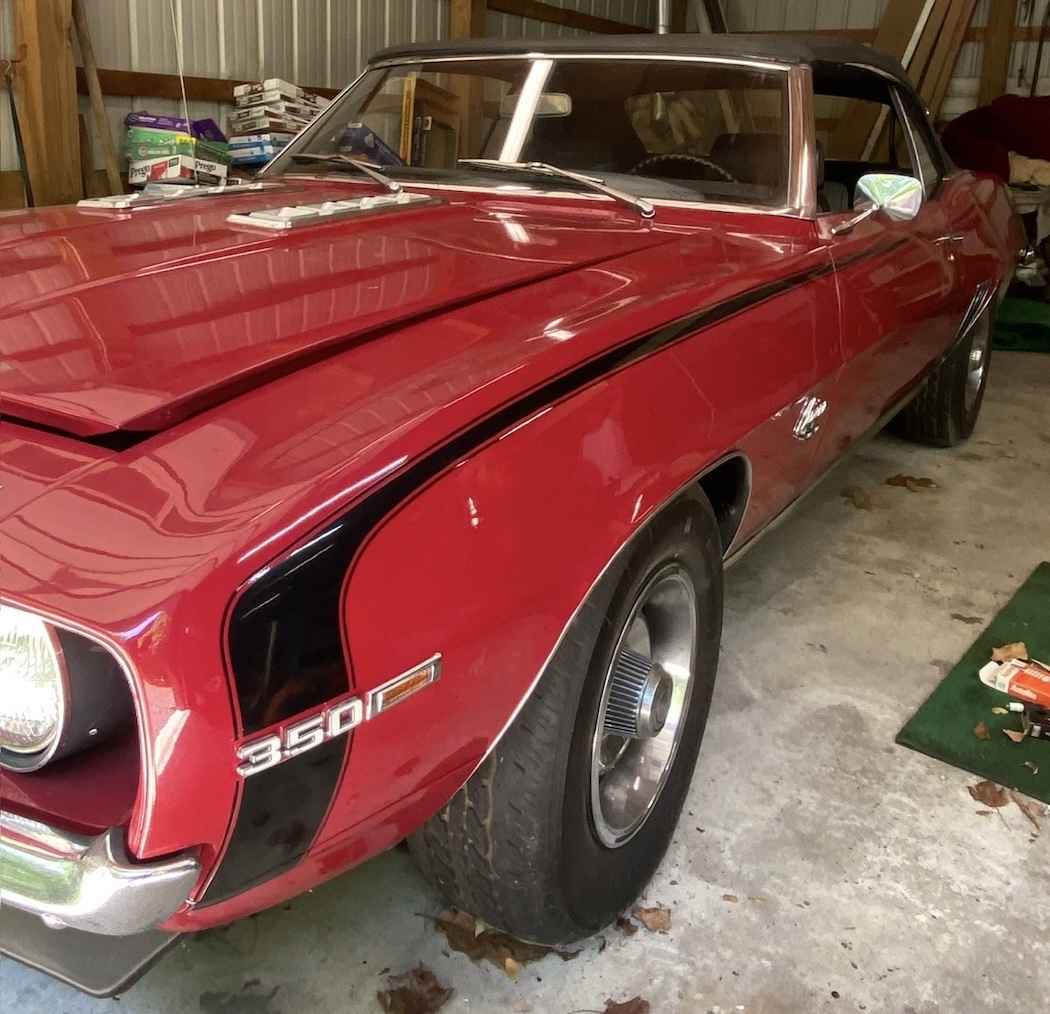
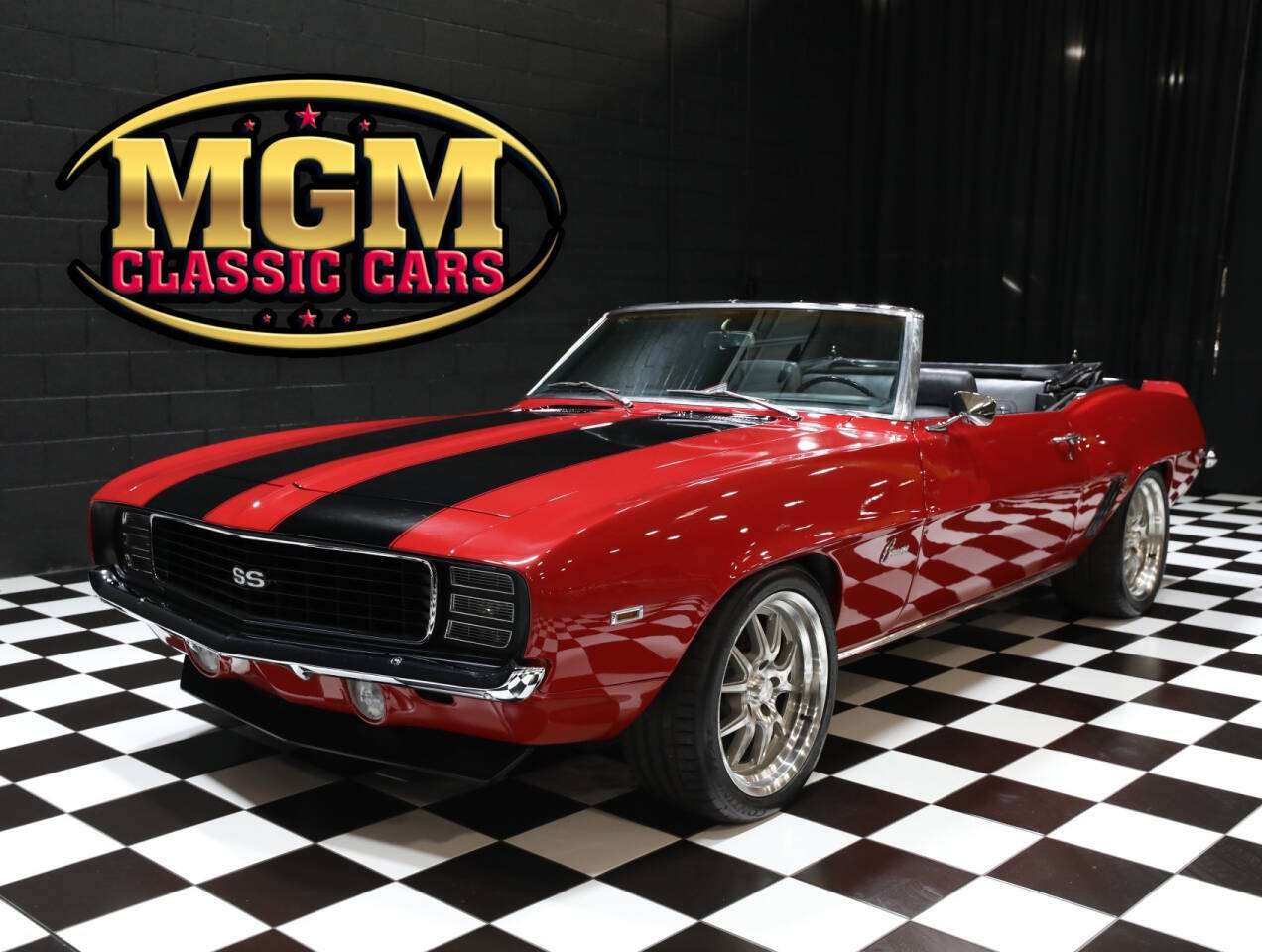
What to Look For
Always start with the VIN. The first character tells you the country, the third tells you the model line, and the eighth (on 1972-and-later cars) tells you the engine. Cross-reference the VIN against the cowl tag and the trim tag — mismatches mean somebody swapped a body or a clip.For first-gen cars especially, find the partial VIN stamped on the engine block (driver's side, near the head, on Big Blocks) and on the transmission. Original drivetrains can add $15,000-$30,000 to a Z/28 or SS valuation versus a date-coded replacement.
Look closely at the rocker panels, lower quarter panels, and the rear wheel arches with a strong magnet. Body filler is non-magnetic. If the magnet doesn't stick, you've got Bondo — and that's the cheap fix being hidden, not the expensive metal repair.
Pre-Purchase Checklist
-
Verify VIN against cowl tag and build sheet
Cross-reference all three for matching production date, paint, trim, and option codes. Mismatched cowl tag = body swap. -
Check engine block partial VIN
Stamped on driver-side block deck near cylinder head. Must match dashboard VIN for "numbers matching" claim. -
Inspect rear window channel and trunk pan
Rust here is hidden but ruins structural integrity. Pop the rear seat and look at the rear window inner channel. -
Magnet test rocker panels and quarters
Body filler is non-magnetic. If the magnet doesn't stick, the panel has been filled — meaning underlying rust. -
Verify Z/28 RPO code on cowl tag
Genuine Z/28s carry the "Z28" code. Without it, the car is a clone, regardless of badging. -
Inspect 12-bolt rear end (first-gen)
Z/28s and SS396s used the 12-bolt. Check for original gear ratio code stamped on axle housing. -
Check transmission stamp and ratio
Muncie M21 close-ratio four-speed in Z/28s. Stamping on the side of the case identifies original. -
Examine motor mounts and frame rails
Big-block cars are notorious for breaking motor mounts. Look for cracked rubber, lifted engines, or aftermarket safety chains. -
Test drive on highway and parking lot
Listen for differential whine, transmission slip, brake pulsation, steering wander. Drive at least 20 minutes. -
Document with HD photos before purchase
Photo every panel, every stamp, every sticker. Document VIN, cowl tag, engine, transmission, rear axle. Build the case before you wire money.
Common Issues
Rust is the silent killer of every Camaro generation. First-gen cars (1967-69) hide rust under the rear window, in the trunk pan, around the rear wheel arches, and at the cowl seam where the windshield meets the firewall. Second-gen cars (1970-81) are notorious for rotten quarters, rocker panels, and floor pans — many cars on the market have been patched poorly or filled with body filler.Mechanical issues vary by generation. First-gens commonly suffer from worn 12-bolt rear ends, leaky Muncie transmission seals, and broken motor mounts (a Big Block specialty). Second-gens add tired steering boxes, crumbling vacuum lines, and EGR issues post-1972. Third-gens (1982-1992) are plagued by failing TPI sensors, sloppy T-tops that leak, and worn front coil-over-shock units on the IROC-Z.
More Camaro for sale
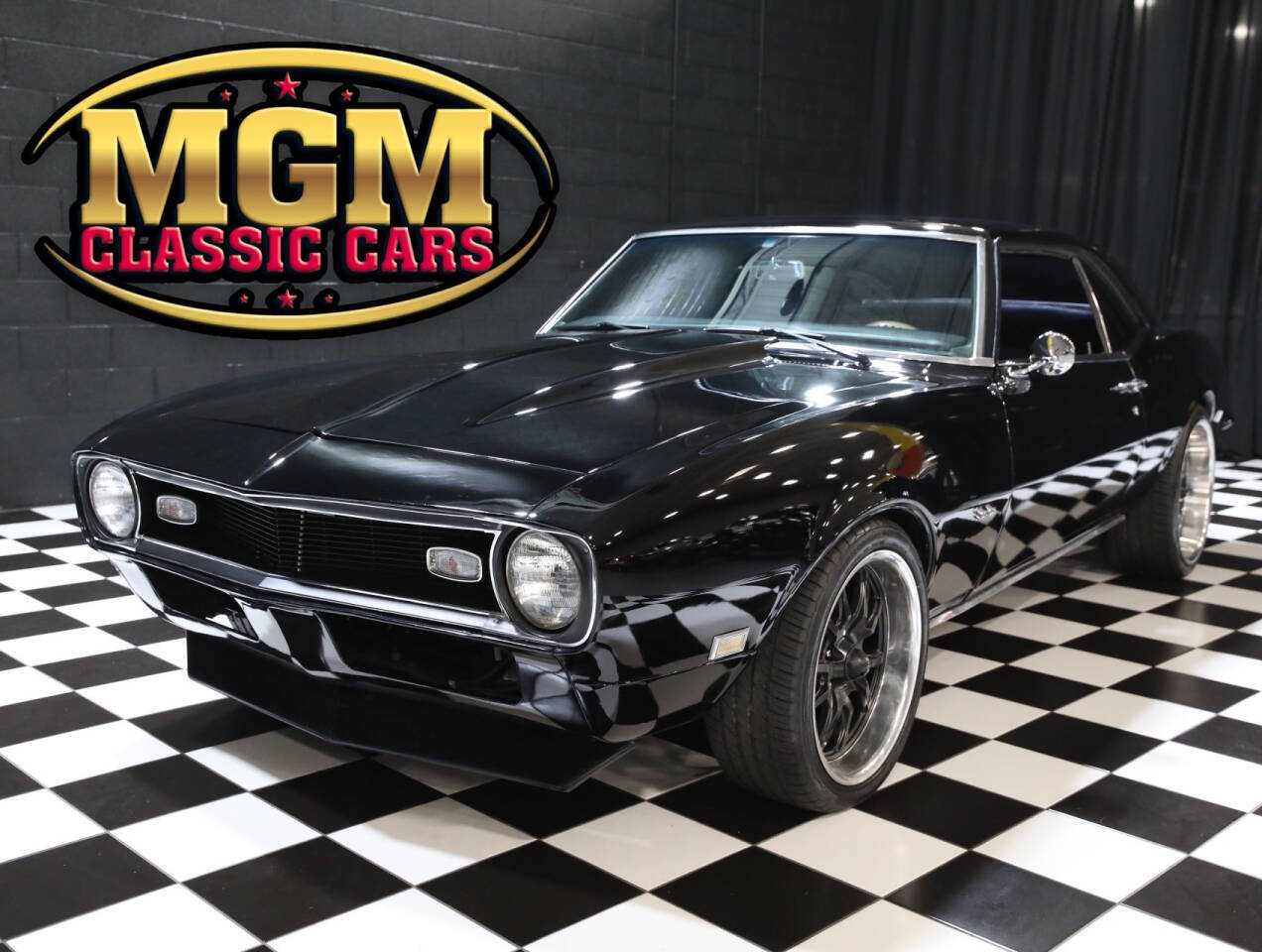 Dealer
 United States
1968 Chevrolet Camaro
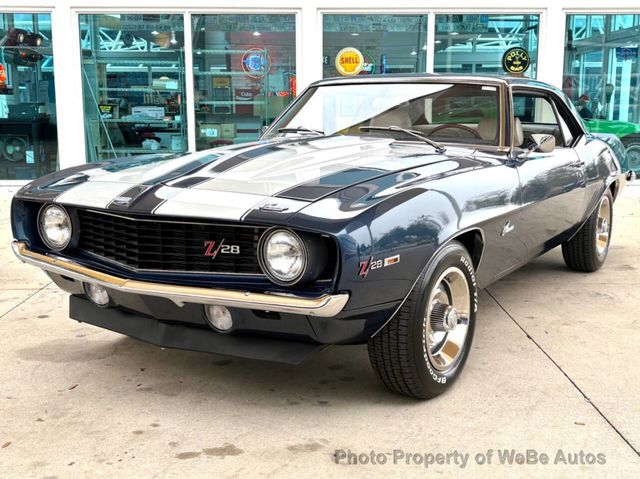 Dealer
United States
Dealer
United States
1969 Chevrolet Camaro
Pricing Guide
First-generation Camaros (1967-1969) are the gold standard. A driver-quality 1969 SS396 in good condition runs $55,000-$85,000 today. Z/28 prices range from $60,000 for a clean driver up to $200,000+ for documented, numbers-matching, low-mileage examples. Base 1967-1968 small-block coupes start around $28,000 for project cars, $45,000-$65,000 for nice drivers.Second-generation cars (1970-1981) have appreciated significantly in the last decade. 1970 Z/28 LT-1 cars are the high-water mark at $60,000-$120,000. Split-bumper 1970-1973 base coupes run $25,000-$45,000. Mid-second-gen cars (1974-1977) are the bargain entry point, often available for $15,000-$30,000 for solid drivers.
Third-generation IROC-Zs (1985-1990) have entered serious collector territory. Clean L98 IROC-Zs sell for $18,000-$35,000, with low-mileage 1LE and B4C cars commanding $45,000+.
Fun Facts
The original 1969 Z/28 was conceived purely to homologate the Camaro for SCCA Trans-Am racing — the 302 V8 (a destroked 327) was built specifically because Trans-Am rules required engines under 305 cubic inches.The Mustang outsold the Camaro throughout the entire first generation. The Camaro did not outsell the Mustang until 1977, during the second generation.
Only 69 ZL1 Camaros were built in 1969 — they were essentially a factory drag racing special with an all-aluminum 427 big block, and they cost more than a new Corvette. A documented original ZL1 sold at Mecum's Indianapolis auction in 2018 for $1.05 million.
Frequently Asked Questions
Ready to find your Camaro?
Browse 6+ active Chevrolet Camaro listings on Classic Cars Arena.
View Listings →