
Classic Chevrolet Chevelle Buyer's Guide
Definitive buyer's guide for classic Chevrolet Chevelle 1964-1977. SS variants, COPO and LS6 authentication, A-body frame inspection, engine code verification, current market pricing.

The Chevrolet Chevelle launched in 1964 as Chevrolet's mid-size A-body entry, and within two years it had become the foundation of one of the most successful muscle-car lineages in American automotive history. The 1970 LS6 SS454 Chevelle remains the high-water mark of factory muscle-car horsepower from the entire era — a rating of 450 horsepower from a stock 454 that put GM's Chevelle definitively at the top of the 1970 muscle-car hierarchy. Across fourteen model years (1964-1977), the Chevelle market is one of the deepest and most active segments in the entire American collector hobby — with documented original SS454 cars commanding six-figure money and clean driver-quality cars remaining attainable. This guide covers what every buyer should verify before paying premium money for any Chevelle SS variant.
Overview
The Chevelle ran for fourteen model years across three distinct platform generations, and each era has its own buyer profile and its own collector trajectory. The first generation (1964-1967) introduced the Chevelle nameplate and the legendary Z16 SS396. The second generation (1968-1972) is the muscle-car icon era — peak performance with the LS6 SS454. The third generation (1973-1977) shifted to the Colonnade body style and represents the bargain segment of Chevelle ownership today.
Generations Worth Knowing
First Generation (1964-1967)
The launch era. Chevrolet's mid-size A-body Chevelle competed with the Pontiac Tempest GTO and the Ford Fairlane. Engine options ranged from the base 194 cubic inch inline-six up to the 396 V8 (introduced mid-1965 in the rare Z16 SS396). The 1965 Z16 SS396 (only 200 built) is the rarest desirable Chevelle and commands six-figure money. 1966-1967 SS396 cars are more numerous but still desirable.
Second Generation (1968-1972)
The icon era. The 1968 redesign brought sharper styling, longer hood / shorter deck proportions, and the first Endura front bumper option. The 1970 LS6 SS454 represents the high-water mark of factory muscle-car horsepower (450 hp gross). Documented numbers-matching LS6 cars now trade for $120,000-$450,000+ depending on body style and equipment.
Third Generation (1973-1977)
The Colonnade era. The 1973 redesign brought taller, less-attractive bumpers, federally-mandated 5-mph impact absorbers, and emissions-restricted engines. The SS package continued through 1973 with the SS454, then was discontinued for 1974 onward. 1973-1977 Chevelles remain the bargain entry into the nameplate at $15,000-$28,000 for solid drivers.
What to Look For (in person)
SS Authentication
For 1964-1969 cars, verify the SS option code on the cowl tag (riveted to the firewall under the hood). For 1970-1972 cars, the SS was a stand-alone model designation — verify the second character of the VIN. PHS Documentation ($50-$80) confirms original equipment from GM records. Without PHS documentation, treat all SS claims as clones — which is fine if priced as such, but not at SS money.
Engine Verification
The two-letter stamp code on the front of the block (just below the cylinder head, on a flat pad) identifies the specific engine type. The most desirable codes: KL/KK (1969 SS396/375 hp), CRV/CRW (1970 LS6 SS454/450 hp), CSU (1970-1971 LS5 SS454/360 hp). Cross-reference against the casting number on the back of the block and against the PHS report.
Frame Inspection
The Chevelle perimeter frame rusts at the body mount points and at the front kick-up. Crawl under the car with a flashlight and probe with a screwdriver. Body mount replacement is $1,500-$3,500 if the frame is solid; full frame replacement is $8,000-$15,000.
Pricing Tiers
| Tier | Description | Price Range (2024) |
|---|---|---|
| Driver | 1968-1972 base Chevelle 350 V8 or 1973-1977 Colonnade, decent paint, original interior with wear | $22,000-$40,000 |
| Survivor | 1968-1969 SS396 or 1971-1972 SS454, documented PHS, original drivetrain | $55,000-$95,000 |
| Concours | Documented 1970 LS6 SS454 or 1965 Z16 SS396, frame-off restoration, MCACN-grade | $120,000-$450,000+ |
Common Pitfalls
The biggest pitfall in Chevelle buying is paying SS money for a Malibu clone. Probably 50% of cars listed as SS Chevelles in any auction or classified are actually base Malibu cars with SS emblems and trim added. The PHS report instantly resolves this — if the seller refuses to provide PHS documentation, walk away.
The second pitfall is re-stamped engine blocks on LS6 and Z16 claims. Specialist authentication is mandatory for any car priced over $120,000. Forgeries with cloned cowl tags and re-stamped blocks are well-documented in the muscle-car market.
"I've inspected dozens of supposedly real LS6 SS454 Chevelles over the years, and I'd say maybe one in three has the genuine CRV or CRW engine stamping that matches the PHS documentation. The market premium for a documented LS6 versus a clone with the same drivetrain is $80,000 or more, and that's real money worth verifying. Spend the $80 on PHS before you spend $200,000 on the car. The factory records don't lie, and re-stamped blocks always reveal themselves to specialist eyes eventually."
— Mike Sullivan
Final Verdict
The Chevelle market rewards documentation, frame integrity, and patience. Documented SS396, SS454, LS6, and Z16 cars are blue-chip investments with steady appreciation curves. Driver-quality base Chevelles remain the smart-money entry at $22,000-$40,000. 1973-1977 Colonnade cars are the bargain segment with strong appreciation potential.
For new buyers, start with a 1968-1972 base Chevelle Malibu with the 350 small-block and the Turbo 350 automatic. They're the most numerous, the easiest to find parts for, and the most forgiving for first-time muscle-car ownership. From there, the upgrade path is clear: 1971-1972 SS454, then 1968-1969 SS396, then 1970 SS454, then LS6 or Z16 documented cars. Patience and PHS documentation beat impulse buys every time in this market.
Browse Chevrolet Chevelle listings
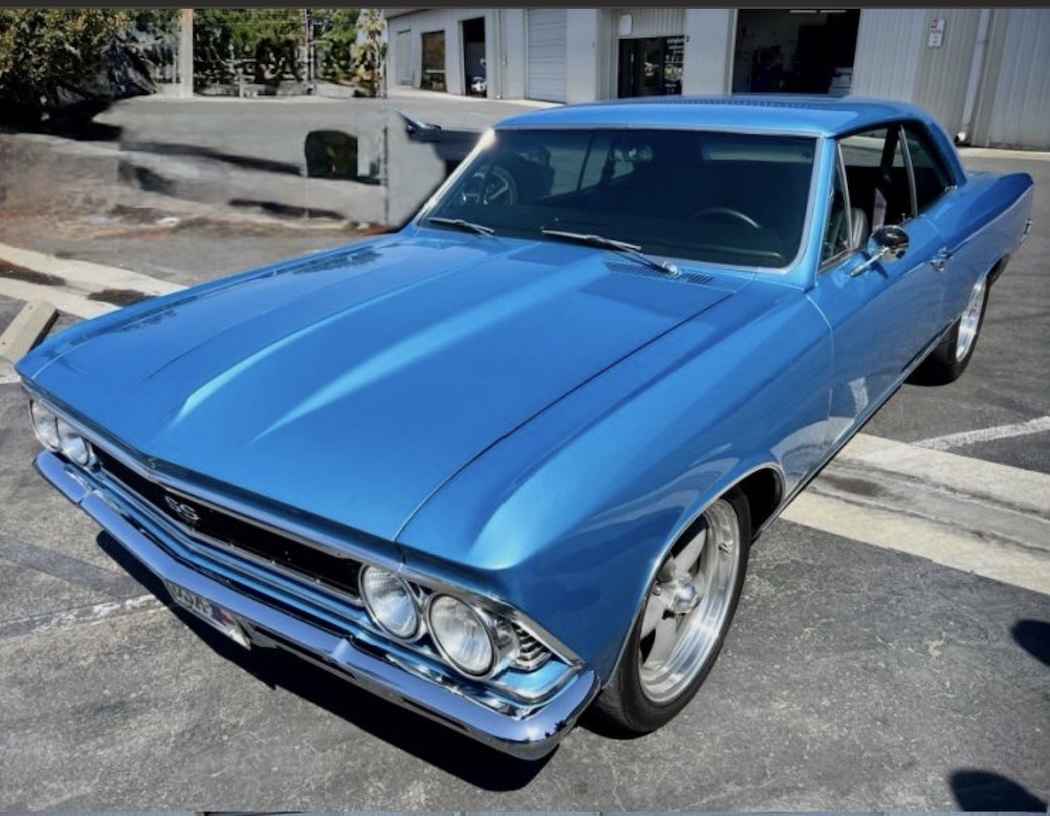
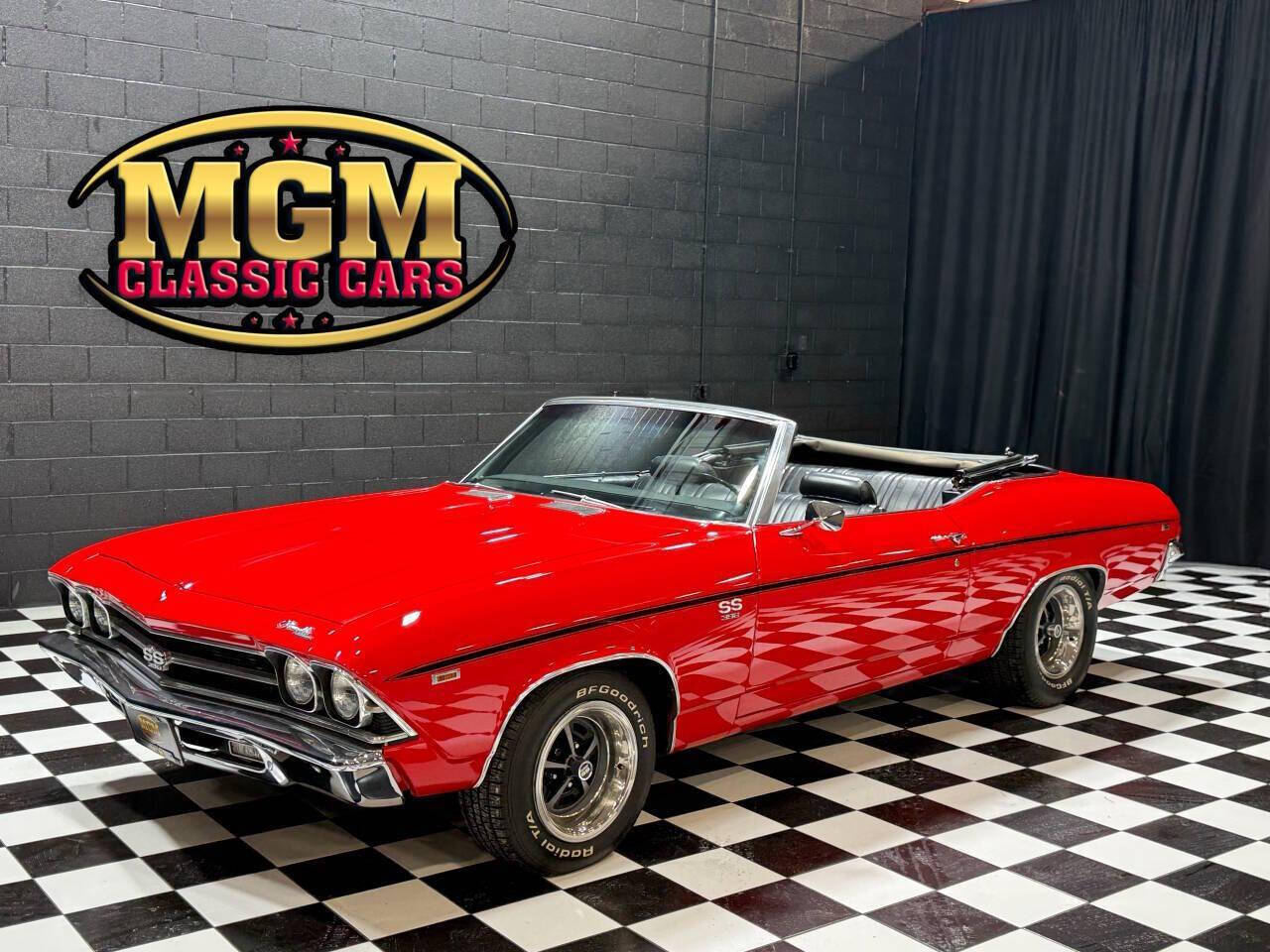
What to Look For
PHS Documentation is the gold-standard verification for any Chevelle SS claim. PHS (Pontiac Historic Services) is misnamed — they actually maintain documentation for Chevrolet, Pontiac, Buick, and Oldsmobile A-body cars. The PHS Documentation Report ($50-$80) confirms the original equipment of the car: engine code, transmission code, axle ratio, paint code, options, and dealer destination. For any Chevelle SS priced over $45,000, PHS documentation is mandatory.For 1964-1969 cars, verify the SS option code on the cowl tag. The 1965-1969 SS cars used specific RPO codes (Z16 for the 1965 SS396, L78 for the 1966-1969 396/375 hp). For 1970-1972 cars, the SS package was an actual model designation — the second character of the VIN identifies the body style and the engine code is in the fifth digit.
Engine verification by casting numbers and stamping is essential. The 396 (casting 3855961, 3902406, others), 402 (casting 3963512), and 454 (casting 3963512, 3999289) big-blocks all have specific casting numbers that verify originality. The two-letter stamp code on the front of the block (just below the cylinder head, on a flat pad) identifies the specific engine type. The most desirable codes are KL/KK (1969 SS396/375 hp), CRV/CRW (1970 LS6 SS454/450 hp), and CSU (1970-1971 LS5 SS454/360 hp).
Frame inspection is the second non-negotiable. Crawl under the car with a flashlight. Probe the perimeter frame at the rear body mount points and at the front kick-up. Body mount bushings collapse over 50+ years and water pools above them, rotting the frame from inside the boxed sections. Replacement is $2,000-$5,000 per side if needed.
For LS6 SS454 claims (1970 only), demand specialist authentication. The genuine LS6 has the CRV (manual transmission) or CRW (automatic transmission) engine stamping, the COPO-route documentation, and specific build sheet entries. Forgeries exist with re-stamped blocks and cloned cowl tags.
Pre-Purchase Checklist
-
Order PHS Documentation Report ($50-$80)
Pontiac Historic Services maintains Chevy A-body records too. Confirms original engine, trans, axle, options. -
Verify SS option code on cowl tag
1964-1969: RPO code in cowl tag. 1970-1972: SS is stand-alone model — verify VIN body code. -
Read engine stamp code (front pad below head)
KL/KK = 1969 SS396/375. CRV/CRW = 1970 LS6 SS454/450. CSU = 1970-1971 LS5 SS454/360. -
Cross-reference engine casting number
Casting on back of block. 396 (3855961, 3902406), 402 (3963512), 454 (3963512, 3999289). -
For LS6/Z16 claims, demand specialist authentication
Re-stamped blocks and cloned cowl tags are well-documented forgeries. $200-$500 specialist inspection mandatory. -
Inspect perimeter frame at body mount points
Body mount bushings collapse and water pools above. Frame rust here = $1,500-$3,500 repair minimum. -
Probe frame at front kick-up
Behind front wheels. Solid steel resists; rotten metal flakes. -
Check trunk drop-offs and rear quarters
Magnet test for filler. Lift trunk mat to inspect drop-offs and rear pan. -
Verify 12-bolt rear end (SS cars)
SS Chevelles use 12-bolt; base cars use 10-bolt. Check casting and verify gear ratio against PHS report. -
Compression test all eight cylinders
Should read 145-185 PSI uniformly. Variance >15% = head gasket or worn rings.
Common Issues
Chevelle rust follows the GM A-body pattern: lower rear quarters, trunk drop-offs, frame rails (especially under the rear seat where the body mounts to the frame), floor pans, cowl seam, lower fenders ahead of the doors, and rear window channels on coupes. The 1964-1967 cars use a perimeter frame; the 1968-1972 cars use the same basic perimeter frame with revisions. Both rust at the body mount points and at the rear frame kick-up where the body mount bushings collapse and water pools.Mechanically, the small-block 327 (1964-1968), 350 (1969-1977), and the big-block 396 (1965-1969), 402 (1970-1972), and 454 (1970-1973) V8s are all bulletproof when maintained. Common issues include worn timing chain on tired engines, leaky oil pan and valve cover gaskets, broken motor mounts (a Big Block specialty), and tired Quadrajet or Holley carburetors. The Muncie M20/M21/M22 four-speeds are robust; the Powerglide, Turbo 350, and Turbo 400 automatics are equally durable.
The Chevelle's 12-bolt rear end (Chevelle SS-specific) is strong; the 10-bolt (base cars) is weaker but still durable. Differential whine on deceleration indicates worn pinion bearings — $1,500-$2,800 to repair properly.
Electrical issues are universal classic-car concerns: brittle 50+ year-old wiring, failed voltage regulators, worn ignition switches, and failed cowl tag retainer rivets. Many cars have been restored with reproduction wiring; verify the harness routing and connector quality before purchase.
More Chevelle for sale
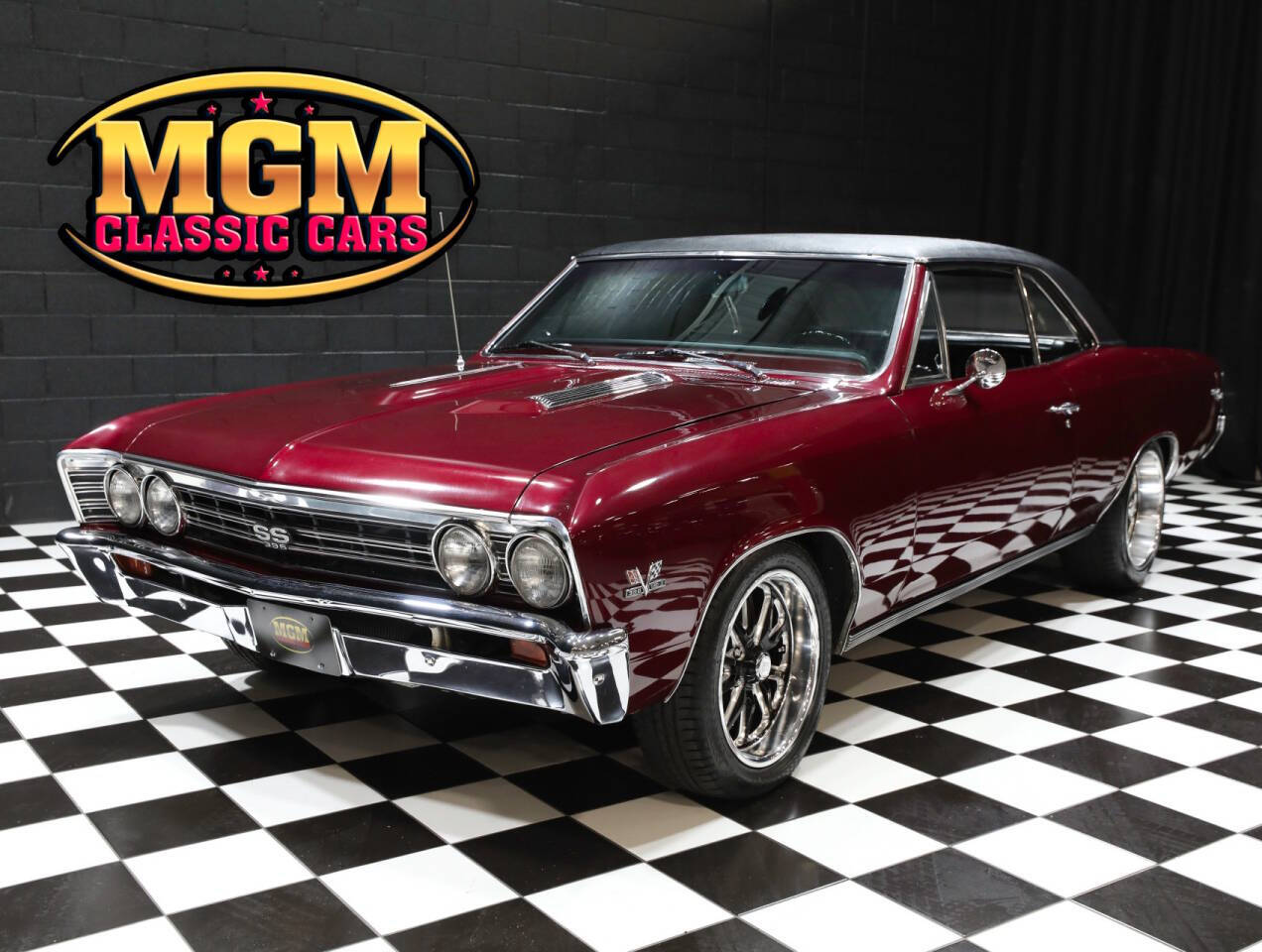 Dealer
 United States
1967 Chevrolet Chevelle
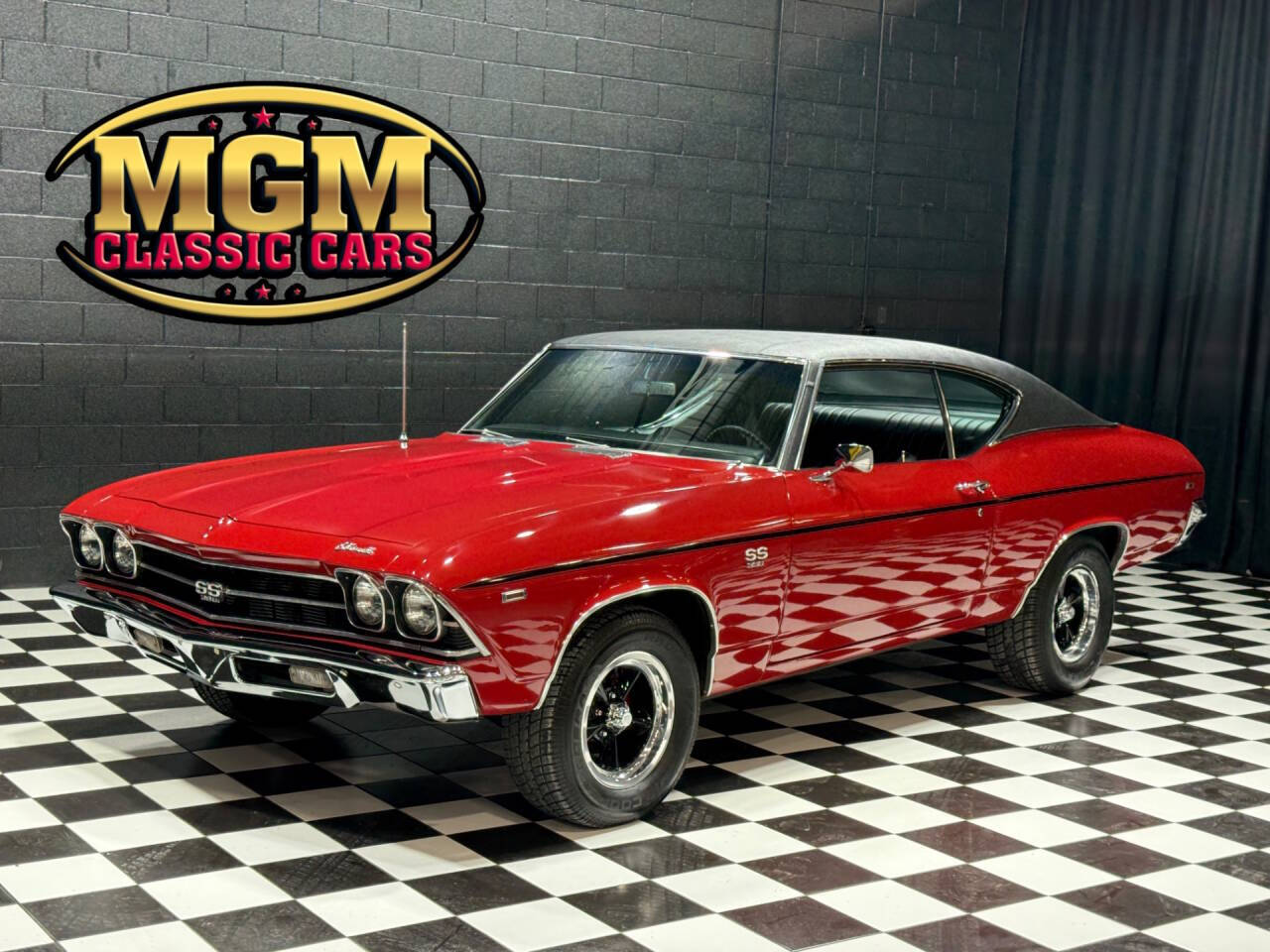 Dealer
United States
Dealer
United States
1969 Chevrolet Chevelle
Pricing Guide
Base Chevelles (1964-1977) remain the bargain entry into A-body ownership. Driver-quality 1964-1967 base cars run $22,000-$40,000. 1968-1972 base cars (the most popular era for cosmetic restomod builds) run $25,000-$45,000. 1973-1977 Colonnade-body Chevelles are dramatically cheaper — $15,000-$28,000 for solid drivers.SS Chevelle pricing varies dramatically by year and engine. 1965 SS396 Z16 (the rare launch-year SS396, only 200 built): $95,000-$220,000+ for documented examples. 1966-1967 SS396 cars: driver-quality $45,000-$75,000, documented L78 SS396/375 hp $80,000-$140,000. 1968-1969 SS396: driver-quality $50,000-$85,000, documented L78 cars $95,000-$160,000.
1970 SS454 cars are the high-water mark. LS5 SS454/360 hp: driver-quality $70,000-$120,000. LS6 SS454/450 hp: $120,000-$280,000+ for documented numbers-matching cars. The 1970 LS6 SS454 convertible (rarer than the hardtop) is $220,000-$450,000+ for documented examples.
1971-1972 SS454 cars have appreciated dramatically since 2018. Driver-quality 1971 SS454/365 hp: $55,000-$95,000. Documented 1972 SS454 cars: $60,000-$120,000. The 1971-1972 cars represent the smart-money entry into SS454 ownership.
Project cars (running but rough) start around $15,000-$28,000 for base Chevelles and $30,000-$60,000 for SS variants. Stripped roller candidates: $8,000-$18,000 for base cars, $20,000-$40,000 for SS variants.
Fun Facts
The 1965 Z16 SS396 was Chevrolet's launch of the 396 cubic inch big-block in the Chevelle, and only 200 cars were built — making them among the rarest production muscle cars ever produced. The Z16 package included the 375-horsepower L37 396 V8, four-speed manual transmission, heavy-duty suspension, special wheels, and unique trim. Documented Z16 cars now command $95,000-$220,000+ depending on condition, and require specialist authentication through the National Z16 Registry.The 1970 LS6 SS454 was the high-water mark of factory muscle-car horsepower from the entire era. The LS6's 450-horsepower rating (gross horsepower) was the highest factory rating Chevrolet ever applied to a passenger-car engine through that point in history. Only 4,475 LS6 cars were built across 1970 production (hardtops, convertibles, and El Caminos combined). Documented numbers-matching LS6 cars now trade for $120,000-$450,000+ depending on body style and equipment.
The Chevelle was discontinued after the 1977 model year, replaced by the Malibu nameplate that had originally been a Chevelle trim level. Total Chevelle production across 14 model years exceeded 5.7 million units, making it among the most successful mid-size GM nameplates of the era.
Frequently Asked Questions
Ready to find your Chevelle?
Browse 6+ active Chevrolet Chevelle listings on Classic Cars Arena.
View Listings →