
Classic Chevrolet Impala Buyer's Guide
Definitive buyer's guide for classic Chevrolet Impala 1958-1985. SS authentication, 409 and 427 V8 verification, frame and body inspection, current market pricing for survivors and concours examples.

The Chevrolet Impala launched in 1958 as the top-trim Bel Air variant and quickly became the most popular full-size American car of the 1960s and 1970s. Across nearly thirty years of classic-era production (1958-1985), the Impala defined American full-size motoring — from the iconic 1958 launch year, through the legendary 1961-1964 SS bubble-tops, the muscle-era 1965-1970 SS427 and SS396 cars, the personal-luxury 1971-1976 generation, and the downsized 1977-1985 cars. The 1962-1964 SS409 Impalas remain among the most desirable factory drag racing cars ever produced. Whether you're hunting a documented 1963 SS409, a clean 1969 SS427, or a survivor 1977 Impala four-door, knowing what separates a documented original from a Biscayne or Bel Air dressed up with Impala trim is the difference between an honest investment and an expensive lesson.
Overview
The Impala ran for 27 years across six distinct platform generations during the classic era (1958-1985), and each era has its own buyer profile and its own collector trajectory. The 1958 launch year is increasingly collected. The 1959-1960 "bat-wing" cars are the styling extravagance of the Impala line. The 1961-1964 bubble-top and SS409 cars are the muscle-car icons. The 1965-1970 perimeter-frame era brought the SS427. The 1971-1976 personal-luxury cars represent the smart-money entry. And the 1977-1985 downsized cars remain the bargain segment.
Generations Worth Knowing
X-Frame Era (1958-1964)
The original. X-frame chassis with stamped steel floor pan supporting the body without separate frame reinforcement at the cabin floor. The 1958 launch year introduced the Impala name as a Bel Air trim variant; 1959 made the Impala its own model line. Engine options spanned from the 235 inline-six base through the 348/409 W-block big-blocks. The 1962-1964 SS409 cars are the most desirable variants — $220,000-$450,000+ for documented numbers-matching examples.
Perimeter Frame Era (1965-1970)
The 1965 redesign moved the Impala to the new B-body perimeter frame chassis shared with the Caprice. Engine options included the 327 small-block (base V8), the 396 big-block (introduced mid-1965), the 427 big-block (1966+), and the 454 big-block (1970 only on Impala). The 1965-1969 SS package was the high-trim performance variant. Driver-quality SS cars from this era run $35,000-$75,000.
Personal Luxury Era (1971-1976)
The 1971 redesign brought formal personal-luxury styling and dramatic increase in size and weight. SS package was discontinued for 1970 and replaced by the Custom Coupe trim package. The 1971-1972 Custom Coupes are the most desirable era. Convertibles continued through 1975 (final convertible year for the full-size Chevrolet). Driver-quality cars run $18,000-$38,000.
Downsized Era (1977-1985)
The 1977 redesign downsized the Impala dramatically — over 800 pounds lighter and several inches shorter than the 1976 cars. The downsizing was widely praised by automotive journalists and brought significant fuel economy improvements. 1977-1985 Impalas remain the bargain entry into the nameplate at $12,000-$28,000 for driver-quality cars.
What to Look For (in person)
SS Authentication
For 1961-1969 cars, verify the SS option code on the cowl tag. A GM dealer build sheet or documented order confirmation, where available, confirms original equipment. Without documented provenance, treat all SS claims as base Biscayne or Bel Air clones — fine if priced as such, but not at SS money.
Frame Inspection
For 1958-1964 X-frame cars, crawl under and probe the X-member at the body mount points and front kick-up. For 1965-1976 perimeter-frame cars, probe the perimeter frame at the same body mount points. Body mount replacement is $1,500-$3,500 if frame is solid; full frame replacement is $8,000-$15,000.
Engine Verification
The two-letter stamp code on the front of the block (just below the cylinder head, on a flat pad) identifies the specific engine type. Cross-reference against the casting number on the back of the block and against the engine suffix code on the front pad. The most desirable codes for SS Impalas are the 409 codes (1962-1965) and the 427 codes (1966-1969).
Pricing Tiers
| Tier | Description | Price Range (2024) |
|---|---|---|
| Driver | 1971-1985 Impala or 1965-1970 base hardtop, decent paint, runs and drives, light cosmetic wear | $15,000-$35,000 |
| Survivor | 1958-1964 hardtop or 1965-1969 SS396/SS427 with documented provenance, original drivetrain | $45,000-$95,000 |
| Concours | Documented 1962-1964 SS409 bubble-top or 1969 SS427, frame-off restoration, MCACN-grade | $140,000-$450,000+ |
Common Pitfalls
The biggest pitfall in Impala buying is paying SS money for a Biscayne or Bel Air clone. Probably 50% of cars listed as SS Impalas in any auction or classified are actually base full-size Chevrolets with SS emblems and trim added. A matching cowl tag and engine stampings instantly resolve this.
The second pitfall is X-frame rust hidden under fresh undercoating. A 1958-1964 Impala with bright fresh undercoating on the X-member is almost always hiding frame rust or active rust. Demand to see the car as-is before any cosmetic work, or insist on a thorough underside inspection on a lift.
"I've inspected dozens of supposedly real SS409 Impalas over the years, and I'd say maybe one in three has the genuine engine stamping that matches the documented build. The market premium for a documented SS409 bubble-top versus a clone with the same drivetrain is $80,000 or more, and that's real money worth verifying. Spend the money on specialist authentication before you spend $200,000 on the car. Factory records and block stampings don't lie, and re-stamped blocks always reveal themselves to specialist eyes eventually."
— Mike Sullivan
Final Verdict
The Impala market rewards documentation, frame integrity, and patience. SS409 and SS427 cars are blue-chip investments with steady appreciation curves. 1958 launch-year cars and 1959-1960 bat-wing cars represent strong appreciation potential. 1971-1976 personal-luxury cars are the smart-money entry into mid-era Impala ownership. 1977-1985 downsized cars remain the bargain segment.
For new buyers, start with a 1965-1970 base Impala hardtop with the 327 small-block and the Powerglide automatic. They're the most numerous, the easiest to find parts for, and the most forgiving for first-time muscle-car ownership. From there, the upgrade path is clear: 1971-1976 personal-luxury, then 1965-1969 SS, then 1958-1960 bat-wing, then 1962-1964 SS409. Patience and documented provenance beat impulse buys every time in this market.
Browse Chevrolet Impala listings
 Dealer
 United States
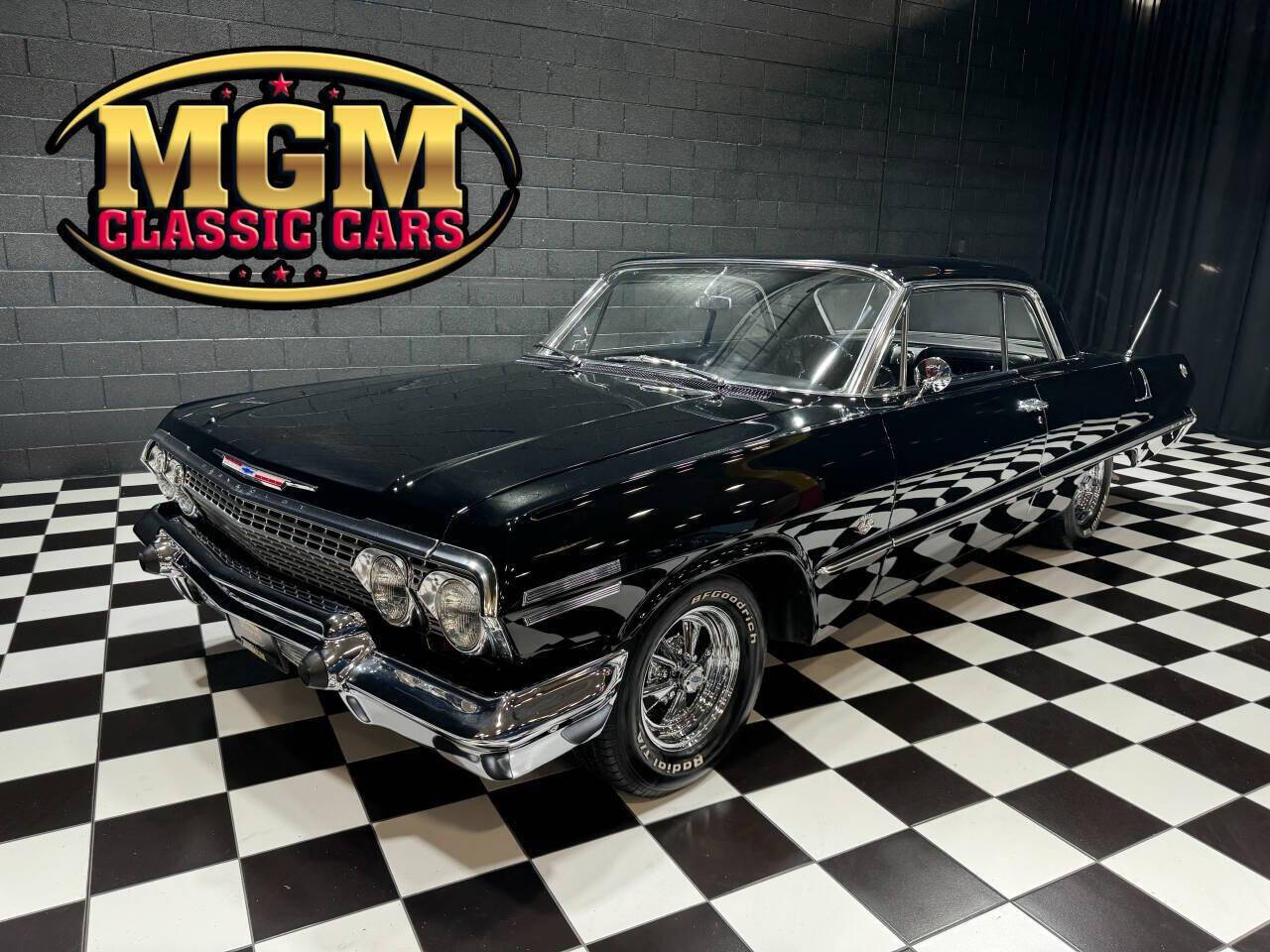
1963 Chevrolet Impala
 Dealer
United States
Dealer
United States
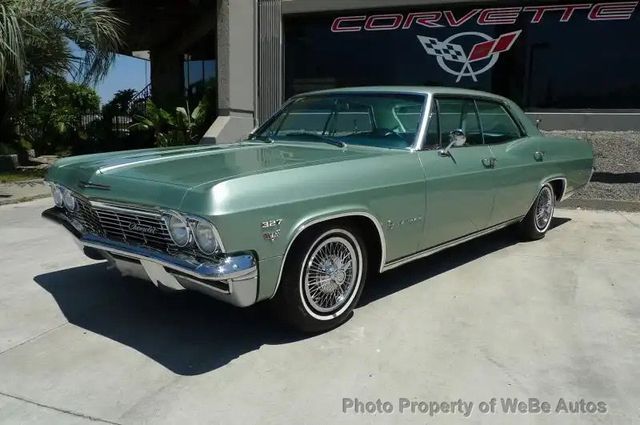
1965 Chevrolet Impala
What to Look For
SS authentication is the first non-negotiable for any Impala SS claim. The 1961-1969 SS package was the high-trim performance variant and is the most cloned trim level in the Impala market. A GM build sheet or documented order confirmation, where available, confirms original engine code, transmission code, axle ratio, paint, options, and dealer destination for 1958-1969 cars. Without documented provenance, treat all SS claims as base Impala or Biscayne clones — fine if priced as such, but not at SS money.For 1962-1965 SS409 and 1965 SS396 cars, demand specialist authentication. The 409 and 396 big-blocks each have specific casting numbers and stamping codes that verify originality. Re-stamped blocks and cloned cowl tags are well-documented forgeries in the muscle-car market — the market premium for a documented SS409 versus a clone with the same drivetrain is $50,000+ on a 1962 bubble-top.
Frame inspection is the second non-negotiable. For 1958-1964 X-frame cars, crawl under and probe the X-member at the body mount points and the front kick-up. For 1965-1976 perimeter-frame cars, probe the perimeter frame at the same body mount points. Body mount bushings collapse over 50+ years and water pools above them, rotting the frame from inside the boxed sections. Replacement is $2,500-$5,500 per side if needed.
Body and trim verification: many cars sold today as Impalas are actually base Biscaynes or mid-trim Bel Airs with Impala emblems and trim added. The cowl tag (riveted to the firewall) lists the body style code that identifies the original trim level. Cross-reference against the dashboard VIN and the trim tag.
For convertibles, inspect the top mechanism and the rear corners where the top mounts to the body. Top mechanism repair is expensive — $1,500-$3,500 for proper specialist work on the vacuum or electric actuator system.
Pre-Purchase Checklist
-
Obtain build sheet or documented provenance for SS claims
PHS (Pontiac Historic Services) does not cover full-size Chevrolet B-body Impalas. For Impala SS authentication, seek a GM build sheet, dealer order records, or specialist authentication. -
Verify cowl tag body code matches Impala trim
Many Biscayne and Bel Air cars have been retrimmed as Impalas. Cowl tag body code is the only reliable verification. -
For SS claims, verify SS option code on cowl tag
1961-1969 SS cars used specific RPO codes. Cross-reference with the VIN and cowl tag. -
Read engine stamp code (front pad below head)
Two-letter code identifies specific engine type. Cross-reference with the casting number and engine suffix code. -
For SS409/SS427 claims, demand specialist authentication
Re-stamped blocks and cloned cowl tags are well-documented forgeries. $200-$500 specialist inspection mandatory. -
Inspect X-frame (1958-1964) at body mounts
X-member rusts at body mount points and front kick-up. Same issues as Tri-Five Bel Air X-frame. -
Inspect perimeter frame (1965-1976) at body mounts
Body mount cushions collapse and water pools above. Frame rust here = $1,500-$3,500 minimum repair. -
Check trunk pan and rear quarter rust
Lift trunk mat. Standard rust zones across all generations. -
Test convertible top mechanism if applicable
Vacuum-actuated (early) or electric (later) top systems commonly fail. $1,500-$3,500 to repair properly. -
Compression test all eight cylinders
Should read 145-185 PSI uniformly. Variance >15% = head gasket or worn rings.
Common Issues
Impala rust patterns vary by generation but follow predictable patterns. The 1958-1964 cars (X-frame era) rust at the body mount points and at the kick-up behind the front wheels — same X-frame issues as Tri-Five Bel Airs. The 1965-1970 cars (perimeter frame era) rust at body mount points, rear cross-member, and inside boxed frame sections.Body rust hits the lower rear quarters (especially behind the rear wheels), the rocker panels, the floor pans, the trunk pan, the lower fenders ahead of the doors, and the cowl seam. Convertibles add structural concerns at the rear corners where the top mechanism mounts. The 1958-1964 cars are particularly vulnerable to floor pan rust due to the X-frame design — the floor pans are stamped steel that supports the body without separate frame reinforcement at the cabin floor.
Mechanically, the Impala used the full range of Chevrolet engines from the 235 inline-six (early cars) through the 348/409 W-block big-blocks (1958-1965), the 396/402/427/454 big-blocks (1965-1976), and the small-block 283/327/350 V8s. Common issues include broken motor mounts on big-block cars, worn timing chain on tired engines, leaky oil pan and valve cover gaskets, and tired Quadrajet or Holley carburetors. The Powerglide, Turbo 350, and Turbo 400 automatics are essentially indestructible.
Electrical issues are universal classic-car concerns. The original wiring harnesses are 50+ years old and prone to chafing. Convertible top motors (vacuum-operated on early cars, electric on later cars) commonly fail and require specialist repair.
More Impala for sale
 Dealer
United States
Dealer
United States
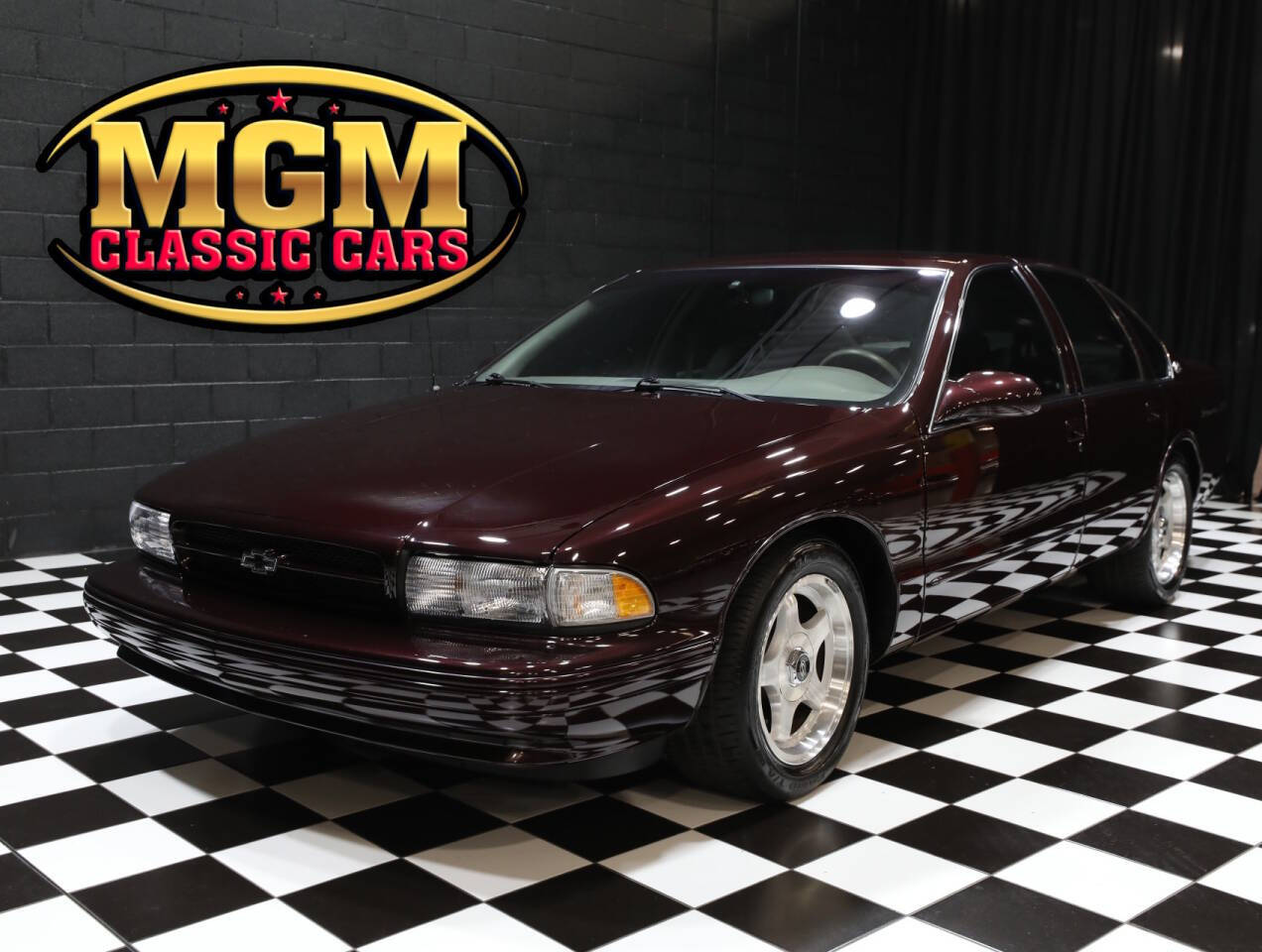
1996 Chevrolet Impala
 Dealer
United States
Dealer
United States
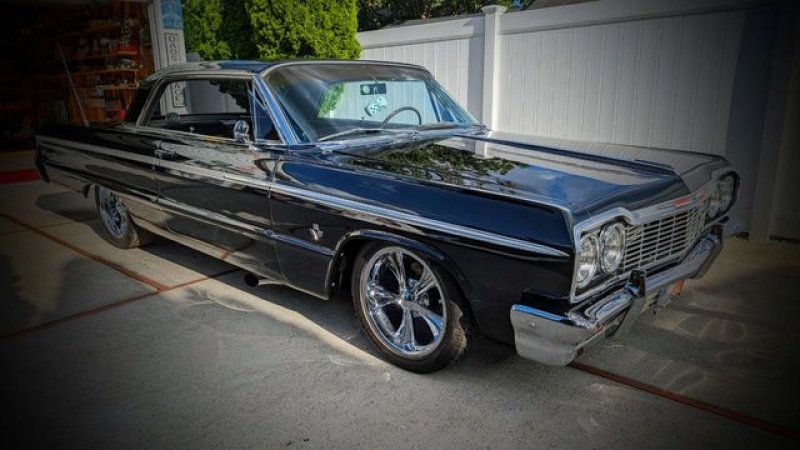
1964 Chevrolet Impala
Pricing Guide
1958 Impala (the launch year) is increasingly desirable. Driver-quality cars run $35,000-$65,000 today. Convertibles add $10,000-$18,000 to equivalent hardtop pricing. The 1958 Impala was Chevrolet's top trim level that year, not an SS — the Super Sport (SS) designation was introduced for 1961, making the 1961 Impala SS the first SS-badged Chevrolet. Documented original-paint 1958 Impala cars: $70,000-$130,000+.1959-1960 "bat-wing" Impalas (with the dramatic horizontal fins) are increasingly collected. Driver-quality cars run $28,000-$55,000. The 1959 model is more desirable than 1960. Convertibles command 25-35% premium over equivalent hardtops.
1961-1964 SS Impalas (the bubble-top era) are the muscle-car icons. Driver-quality cars run $32,000-$65,000. SS409 cars: documented driver-quality $70,000-$140,000, concours-grade $160,000-$320,000+. The 1962 SS409 "bubble-top" is the holy grail of this era — $220,000-$450,000+ for documented numbers-matching cars.
1965-1969 SS Impalas: driver-quality cars run $35,000-$75,000. SS396: $55,000-$110,000 documented. SS427: $70,000-$160,000 documented. The 1969 SS427 was the final year of the SS package on the Impala — strong appreciation potential.
1971-1976 personal-luxury Impalas: driver-quality cars run $18,000-$38,000. The 1971-1972 Custom Coupes are the most desirable era. Convertibles (1971-1975 only): $28,000-$55,000 for driver-quality cars.
1977-1985 downsized Impalas: $12,000-$28,000 for driver-quality cars. The 1985 final-year Impalas are the bargain entry into nameplate ownership. The 1994-1996 Impala SS (modern era) is a separate market — not classic-era.
Project Impalas start around $15,000-$30,000 across most generations. Stripped roller candidates: $5,000-$15,000.
Fun Facts
The Impala name was suggested by GM stylist Clare MacKichan and chosen for its association with speed and grace — the African impala is a small antelope known for its leaping agility. The Impala emblem has remained essentially unchanged across all production generations, with the leaping antelope figure appearing on every Impala from 1958 through modern production.The 1962 Chevrolet Impala SS409 was Chevrolet's serious attempt at NHRA Super Stock dominance. The 409 cubic inch "W-block" big-block produced 380 hp (single four-barrel) or 409 hp (dual four-barrel), and the SS409 became the song subject of the Beach Boys' 1962 hit "409." Documented original SS409 dual-four-barrel cars now command $160,000-$450,000+ at auction, making them among the most valuable production Chevrolets of the early 1960s.
The 1959 Impala's distinctive "bat-wing" rear fins are the largest tail fins ever produced on any American car. The fins extend nearly five feet wide at their broadest point and were Chevrolet's response to the contemporary Cadillac and Chrysler tail fin extravagances. The 1960 model significantly reduced the fin proportions, and by 1961 the Impala had moved to a more restrained styling language.
Frequently Asked Questions
Ready to find your Impala?
Browse 6+ active Chevrolet Impala listings on Classic Cars Arena.
View Listings →