
Chevrolet Biscayne Buyer's Guide
The Chevrolet Biscayne was the base-trim B-body that drag racers and performance buyers loved precisely because it had everything the muscle cars had under the hood and nothing they didn't need in the cabin. The original sleeper car.

Mike Sullivan here, and I want to talk about something the car hobby doesn't discuss enough: the performance value of the stripper. The Chevrolet Biscayne was Chevrolet's base-trim full-size car from 1958 through 1972 — fewer chrome pieces than the Bel Air, less interior finesse than the Impala, and a price tag that put it in reach of buyers who wanted real-world transportation rather than a rolling showroom piece.
The Biscayne's role in performance history comes from one simple fact: the engine options were identical to the Impala's. The buyer who ordered a Biscayne two-door with the available big-block V8 got the same mechanical package as the Impala SS buyer but paid less for the car, which meant they had more money for performance modifications. Drag racers understood this calculus immediately, and the Biscayne became the B-body of choice for the performance-oriented buyer who didn't care about chrome trim.
The Base Trim Advantage
The Biscayne's position at the bottom of the Chevrolet full-size hierarchy was its greatest performance asset. It was lighter than the Impala and Bel Air by virtue of having less chrome, simpler trim, and fewer standard features. A Biscayne two-door sedan weighed roughly 50–75 pounds less than an equivalent Impala — not a dramatic difference, but meaningful at the drag strip where every pound matters.
More practically, the Biscayne's lower base price meant the performance buyer could allocate more budget to the engine and transmission options that actually mattered. A Biscayne with the 409ci or 427ci big-block was a genuine performance machine that cost hundreds less than an equivalent Impala SS and drove identically once you were past 30 mph.
Design Generations
The Biscayne covered three major design periods in its production run. The 1958–1960 cars used the full-width horizontal styling that defined late-1950s American design — longer, lower, and wider than anything that preceded them. The 1958 Biscayne specifically was part of a complete redesign that represented the peak of the chrome-and-fins aesthetic.
The 1961–1964 generation was more refined: the fins were reduced, the body became cleaner and more proportionate, and the overall quality improved. This is the era of the 409ci W-engine Biscayne, which makes these years particularly collectible for performance-focused buyers who want the big-block without paying the Impala premium.
The 1965–1972 generation brought the larger B-body platform with more modern styling. The 1965–1966 cars are particularly handsome — longer, lower, and more European-influenced than the chrome excess of the early years. The 1967–1969 styling that followed is somewhat polarizing but offers available big-block power in a package that's more comfortable to live with than the sharp-edged earlier cars.
Finding a Performance Biscayne
The irony of the Biscayne's performance history is that finding a documented big-block example requires the same verification work as a more prestigious Impala SS. The trim tag and broadcast sheet tell the story — a Biscayne with a documented 409 or 427 is worth significantly more than a six-cylinder fleet example. Many people don't realize they should verify, which means mispricings exist in the market for buyers who know what to look for.
The other opportunity is the 1965–1969 Biscayne with the 396 or 427ci big-block — these are more capable performers than many buyers appreciate, and they're priced well below equivalent Impalas and dramatically below Chevelle SS equivalents. If you want big-block Chevrolet performance without paying the SS premium, the Biscayne is the honest man's answer.
Browse Chevrolet Biscayne listings
 Dealer
 United States
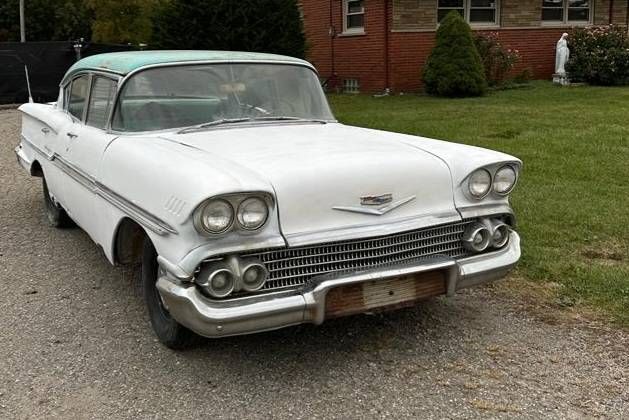
1958 Chevrolet Biscayne
 Dealer
United States
Dealer
United States
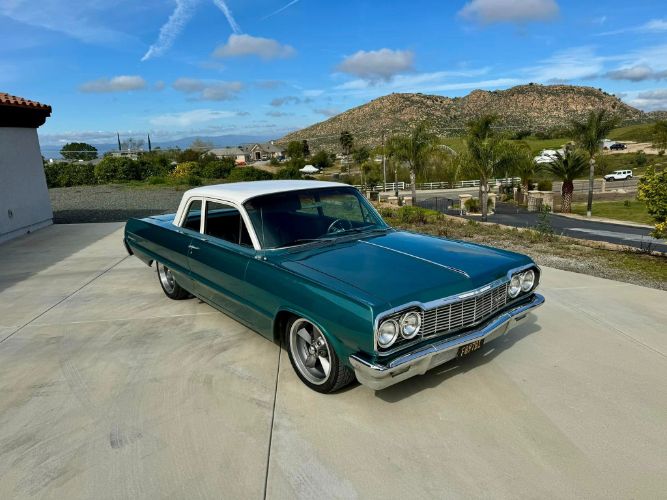
1964 Chevrolet Biscayne
What to Look For
Verify engine options via the trim tag — the same documentation standards apply as for any full-size Chevrolet. Check the cowl area, lower rear quarters, and trunk floor for rust — the B-body platform rusts in identical locations to the Impala. On 1958–1960 examples, inspect the rear fin area and trunk lid for rust, which accumulates in the horizontal trim joints. Verify the two-door sedan body (most desirable for performance buyers) vs. the more common four-door. On claimed 409 or 427 cars, verify engine casting numbers.Pre-Purchase Checklist
-
Trim Tag Verification
Decode the trim tag for engine and transmission options — same process as any B-body Chevrolet. -
Cowl Rust
Inspect cowl area at base of windshield — structural rust here is expensive on the unibody platform. -
Fin Area Rust (1958–1960)
Check rear fin horizontal joints where water accumulates — common on the finned early cars. -
Trunk Floor
Probe trunk floor around spare tire well — rust perforation is common. -
Engine Casting Numbers
On 409 or 427 cars, verify block casting numbers against documented references. -
Body Style
Confirm two-door vs four-door — two-door Biscaynes command premium for performance applications. -
Transmission Condition
Test automatic transmission for smooth shifts — Powerglide or Turbo-Hydramatic rebuilds run $1,200–$2,000.
Common Issues
Same structural rust issues as all B-body Chevrolets: cowl area, lower quarter panels, trunk floor. Rear fin area rust on 1958–1960 cars from water accumulation in horizontal chrome trim. Fleet-car histories with deferred maintenance on working examples. 409 W-engine parts availability slightly more limited than the later Mark IV big-blocks. Worn Turbo-Hydramatic or Powerglide automatic transmissions on high-mileage cars.More Biscayne for sale
 Dealer
United States
Dealer
United States
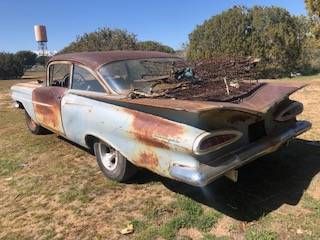
1959 Chevrolet Biscayne
 Dealer
United States
Dealer
United States
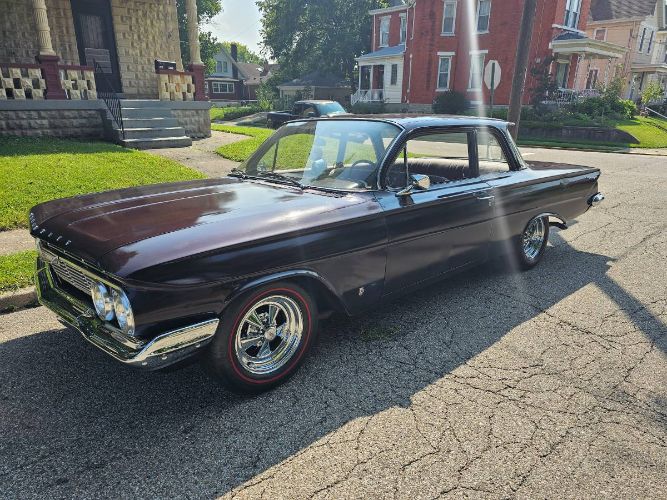
1961 Chevrolet Biscayne
Pricing Guide
1958–1960 Biscayne two-door: $8,000–$18,000. 1961–1964 with inline-six: $5,000–$12,000. 1961–1964 documented 409ci: $22,000–$45,000. 1965–1969 with 396/427ci: $18,000–$38,000. Six-cylinder Biscaynes: $4,000–$10,000. Value proposition: big-block Biscaynes typically sell for 25–40% less than equivalent Impala SS examples.Fun Facts
The Biscayne name was chosen to evoke the glamorous Biscayne Bay area of Miami — an irony given that the Biscayne was positioned as the no-frills fleet car of the Chevrolet lineup. NHRA drag racers specifically sought out Biscaynes because the lighter trim weight gave them a legal weight advantage over more heavily optioned Impalas. A Biscayne with a big-block was the original "Q-ship" — the unassuming exterior that could embarrass purpose-built sports cars.Frequently Asked Questions
Ready to find your Biscayne?
Browse 6+ active Chevrolet Biscayne listings on Classic Cars Arena.
View Listings →