Chevrolet Chevelle SS Buyer's Guide
The Chevrolet Chevelle SS is the gold standard of the American muscle car era — a mid-size platform that took on every engine Chevrolet made, from the 396 to the legendary LS6 454, and produced some of the fastest, most purpose-built factory street machines ever sold.

Mike Sullivan here. The Chevelle SS needs no introduction, but it does need honest context: this is one of the most desirable muscle cars in the market, which means it's also one of the most heavily cloned. Understanding what you're buying — and paying for — requires more homework on a Chevelle SS than on almost any other classic. Get it right, and you've got one of the great American performance machines. Get it wrong, and you've paid a premium for a base Malibu with SS emblems bolted on.
The SS package ran from 1964 through 1972 on the A-body Chevelle platform. Each year produced something meaningful, but the 1969–1972 era is where the market concentrates. The LS6 454 of 1970 is widely considered the most powerful muscle car engine ever offered in a factory car, and a correct, documented LS6 Chevelle is the holy grail for serious collectors.
The SS Package: What It Actually Meant
The SS (Super Sport) designation on a Chevelle was a performance package, not a distinct model. A Chevelle SS was a Malibu (or Chevelle 300 in early years) with specific suspension upgrades, a hood-mounted tachometer option, special badging, and — critically — access to the high-performance engine options that weren't available on the standard Malibu. This matters enormously for buyers: a Chevelle without SS designation cannot be a factory SS regardless of how many SS badges are added.
The documentation that matters most is the broadcast sheet (sometimes found under the carpet) and the VIN/trim tag combination. The VIN code identifies the body style; the trim tag documents the options installed at the factory. A legitimate SS Chevelle will have an SS option code (the "Z25" or "Z15" codes depending on year) documented on the trim tag. Without this documentation, any claimed SS should be priced as a base Malibu.
1964–1967: The Early SS Years
The first-generation Chevelle SS (1964–1967) used the 115-inch wheelbase A-body platform and was available with a range of engines from the 250ci inline-six through the 325-horsepower 396ci big-block. The 1966–1967 SS 396 is the most collectible of this generation — the 396ci big-block gave the mid-size Chevelle legitimate muscle car credentials at a price point that embarrassed the competition.
These earlier cars are somewhat overlooked compared to the 1969–1972 peak years, which creates value opportunities for buyers who appreciate the cleaner styling of the 1966–1967 cars. The 1967 SS 396 with a four-speed manual is a more focused, rewarding driving experience than many people expect from a 55-year-old muscle car.
1968–1972: The Peak Years
The 1968 Chevelle received a complete redesign that produced one of the most beautiful American cars of the era. The Coke-bottle body, the long hood, and the balanced proportions created a platform that looked fast at a standstill. The SS 396 continued as the performance leader, but 1969 brought the real news: the 375-horsepower L78 396 and, for 1970, the earth-shattering 454ci LS6.
The 1970 LS6 Chevelle is officially rated at 450 horsepower — though Chevrolet's official ratings were conservative, and most contemporary estimates placed actual output at 490–510 horsepower. A 1970 LS6 Chevelle ran the quarter mile in the low 13-second range, making it faster than most race-prepped cars of the period. These cars are extraordinarily valuable today — documented examples sell for $200,000–$400,000+, and the clone problem is severe.
The Clone Problem in Detail
The Chevelle SS clone problem deserves its own section. Because the base Malibu shares the same body, VIN prefix, and most mechanical components with the SS, building a convincing clone is relatively straightforward. The components that differentiate an SS — the hood, the badging, the specific suspension — are all available from the aftermarket. An expert can build a visually correct SS clone for $15,000–$25,000 in parts, then sell it as an SS for $40,000–$80,000 or more.
The defense against clones is documentation: the trim tag, the broadcast sheet, the specific date codes on high-performance engines and transmissions. A GM A-body specialist should decode any significant purchase before money changes hands. This is not optional on any car claimed to be an SS 396 or SS 454 — it's the only way to know what you're buying.
Browse Chevrolet Chevelle SS listings
What to Look For
The trim tag and broadcast sheet are the primary verification documents — decode these before paying any SS premium. Inspect the trim tag (located inside the driver's door or door jamb depending on year) for the SS option code. Verify engine code matches claimed displacement — 396 and 454 engine blocks have specific casting numbers that can be verified. Check the cowl area, trunk floor, and lower quarter panels for rust — these are the structural weak points on the unibody A-body. Verify the frame rails (front subframe perimeter frame) aren't cracked at the body mounts.Pre-Purchase Checklist
-
Trim Tag Verification
Photograph and decode the trim tag — verify SS option code is present before paying any performance premium. -
Engine Casting Numbers
Record the engine block casting number and suffix code — verify against documented 396/454 casting references. -
Broadcast Sheet
Check under the carpet for the broadcast sheet — its presence and matching content confirms factory build. -
Cowl Rust
Inspect the cowl area at the base of the windshield — rust here is structural and expensive to repair correctly. -
Lower Quarter Panels
Probe lower rear quarters behind the wheels — probe with a pick, not just visual inspection. -
Trunk Floor
Check the trunk floor for rust perforation, especially around the spare tire well. -
Front Subframe
Inspect the perimeter front subframe for cracks at body mount points. -
Muncie Transmission (4-speed)
Test all gears — synchronizer wear causes rough shifts and is a $1,500–$2,500 rebuild. -
Hood Tachometer (if equipped)
Verify the hood tach is original and functioning — reproductions exist and an original adds value. -
Documentation Package
Request title history, any available service records, and original window sticker if available — all add value.
Common Issues
Clone cars misrepresented as factory SS models — documentation verification is essential. Cowl area rust (where the windshield meets the hood) is a structural repair on the A-body platform. Lower rear quarter panel rust behind the wheels. Trunk floor rust. Big-block 396/454 oil leaks from rear main seal. Muncie four-speed transmission gear synchronizer wear. Incorrect or incorrect-year engine and transmission combinations on restored cars.More Chevelle SS for sale
 Dealer
 United States
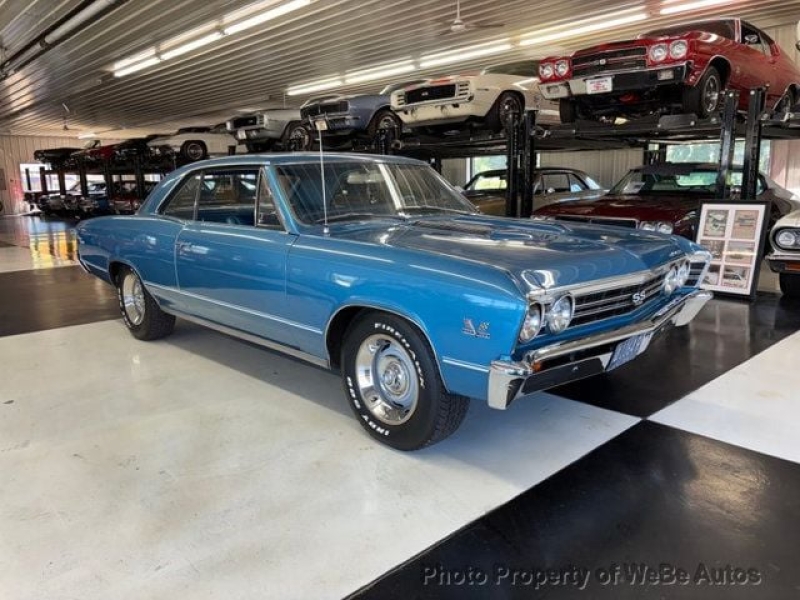
1967 Chevrolet Chevelle SS
 Dealer
United States
Dealer
United States
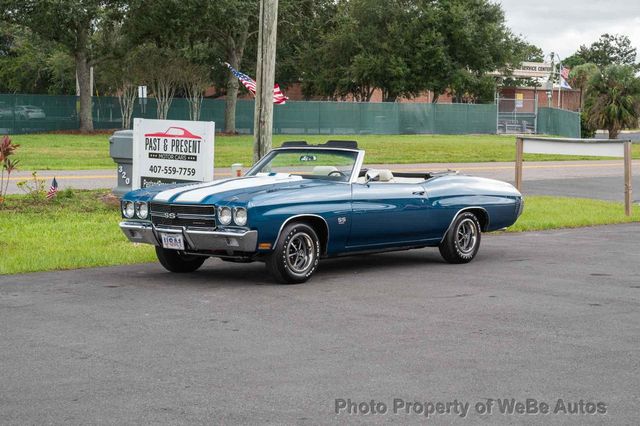
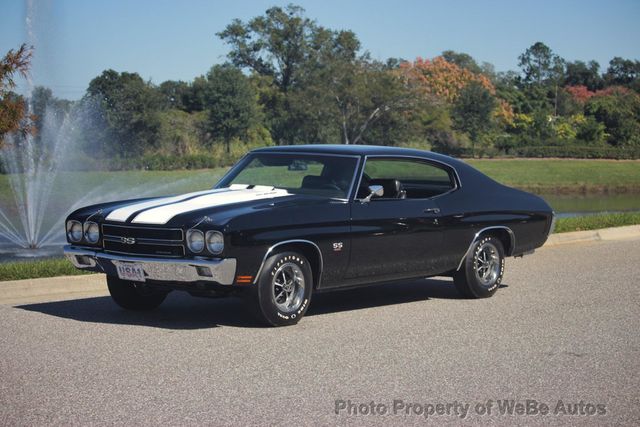
1970 Chevrolet Chevelle SS
Pricing Guide
1964–1965 SS 283/327 cars: $20,000–$35,000. 1966–1967 SS 396 drivers: $28,000–$55,000. 1968–1969 SS 396 (documented): $35,000–$75,000. 1970 SS 454 LS5 (360hp, documented): $65,000–$110,000. 1970 SS 454 LS6 (450hp, documented): $150,000–$400,000+. 1971–1972 SS 454 (emissions-era): $35,000–$75,000. Base Malibus misrepresented as SS: $15,000–$40,000 — avoid without documentation.Fun Facts
The 1970 Chevelle SS LS6 was officially the most powerful American production car of the muscle car era — 450 horsepower from the factory, with actual output estimated by most engineers at 490–510 horsepower. Chevrolet understated the rating to avoid insurance surcharges. The "SS 396" badge was kept on 1970 models even after the engine grew to 402ci — Chevrolet judged that "SS 396" had better marketing cachet than "SS 402." True 1970 SS cars have 396 badges on cars with 402ci engines.Frequently Asked Questions
Ready to find your Chevelle SS?
Browse 6+ active Chevrolet Chevelle SS listings on Classic Cars Arena.
View Listings →