
Classic Chevrolet El Camino Buyer's Guide
Definitive buyer's guide for classic Chevrolet El Camino 1959-1987. SS variants, frame and bed inspection, A-body and G-body generations, current market pricing for survivors and restomods.

The Chevrolet El Camino has lived two distinct lives across nearly thirty years of production. The original 1959-1960 cars were full-size Brookwood-based station wagon-pickup hybrids that competed directly with the Ford Ranchero. The El Camino disappeared for three years before returning in 1964 as a mid-size A-body car-pickup based on the Chevelle, and that's the El Camino most enthusiasts know and want today. From the 1968-1972 SS396 cars to the 1970 SS454 LS6 (yes, the El Camino was available with the 450-horsepower LS6 in 1970) to the smooth Colonnade-bodied 1973-1977 cars and the squared-off 1978-1987 final-generation, the El Camino market is one of the most underappreciated segments in the entire classic GM hobby. The truck guys love them, the muscle car guys love them, and the prices have moved accordingly over the past decade.
Overview
The El Camino has lived three distinct lives across nearly thirty years of production. The 1959-1960 first generation was a full-size Brookwood-based car-pickup that competed with the Ford Ranchero. After a three-year hiatus, the 1964-1977 second generation moved to the mid-size A-body platform shared with the Chevelle and became the muscle-car icon era. The 1978-1987 third generation moved to the G-body platform shared with the Malibu and represents the bargain entry into El Camino ownership today. The truck guys love them and the muscle car guys love them — and over the past decade the prices have moved accordingly across all three eras.
Generations Worth Knowing
First Generation (1959-1960)
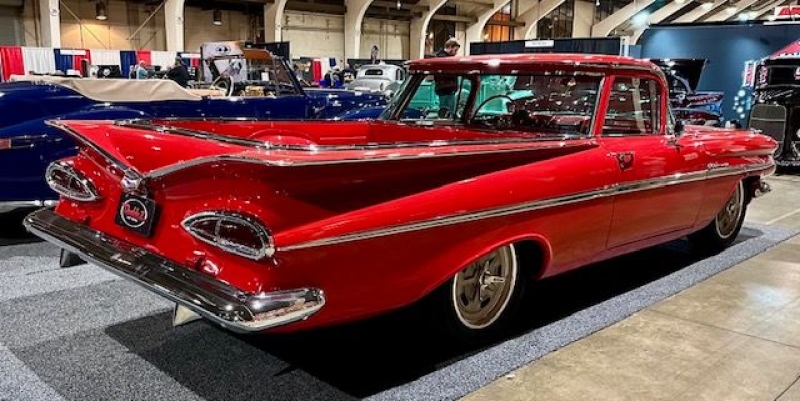
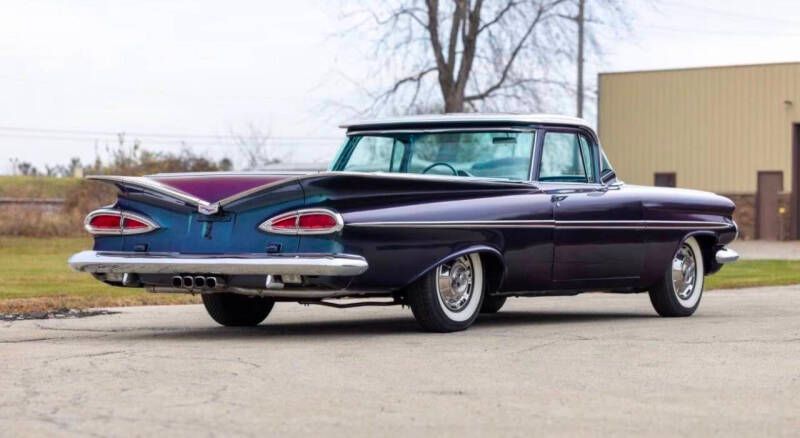
The original. Full-size Brookwood-based car-pickup with distinctive 1959 Chevrolet styling — bat-wing rear fins, horizontal taillights, and the dramatic 1959 face. Available with the 235 inline-six or 283 V8 (with a rare 348 W-block big-block option). Only two model years before the El Camino was discontinued. Driver-quality cars run $22,000-$45,000 today.
Second Generation A-Body (1964-1972)
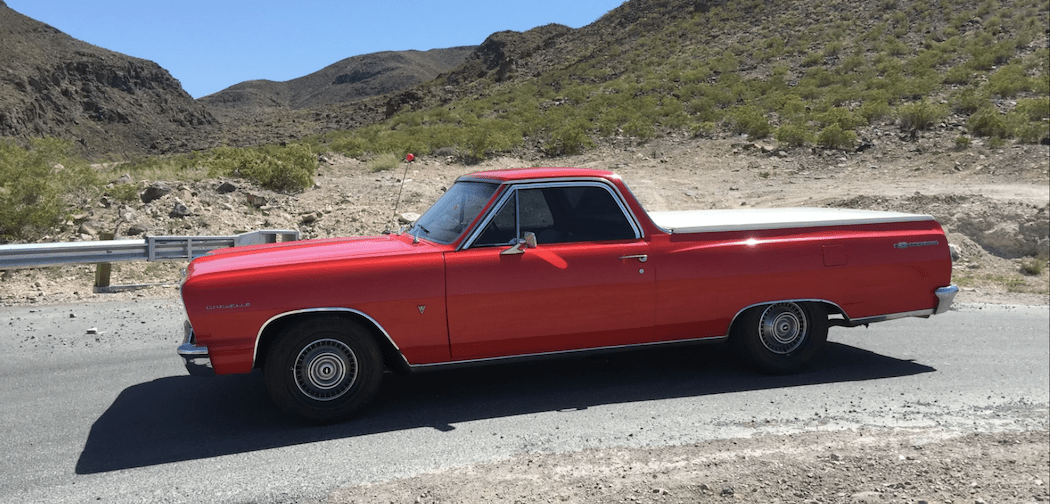
The muscle-car icon era. The 1964 relaunch moved the El Camino to the new A-body platform shared with the Chevelle. From a buyer's perspective, this is the most desirable El Camino era. The SS package (1968+) brought big-block V8s, performance suspension, and unique trim. The 1970 SS454 LS5 and rare LS6 represent the high-water mark — documented LS6 El Caminos now trade in the $120,000-$240,000+ range.
Second Generation Colonnade (1973-1977)
The 1973 redesign brought taller, less-attractive bumpers and the Colonnade body style with stronger pillars and revised proportions. The SS package continued through 1973 with the SS454, then was effectively discontinued. 1973-1977 El Caminos remain dramatically more affordable than equivalent earlier cars at $18,000-$35,000 for solid drivers.
Third Generation G-Body (1978-1987)
The 1978 redesign moved the El Camino to the lighter G-body platform shared with the Malibu and Monte Carlo. The SS package returned for 1983 with unique graphics, hood treatment, and 305 V8 engine. Choo Choo Customs SS conversions added aftermarket-built premium SS variants throughout the 1980s. G-body El Caminos remain the bargain entry into the nameplate at $15,000-$30,000 for driver-quality cars.
What to Look For (in person)
Frame and Bed Inspection
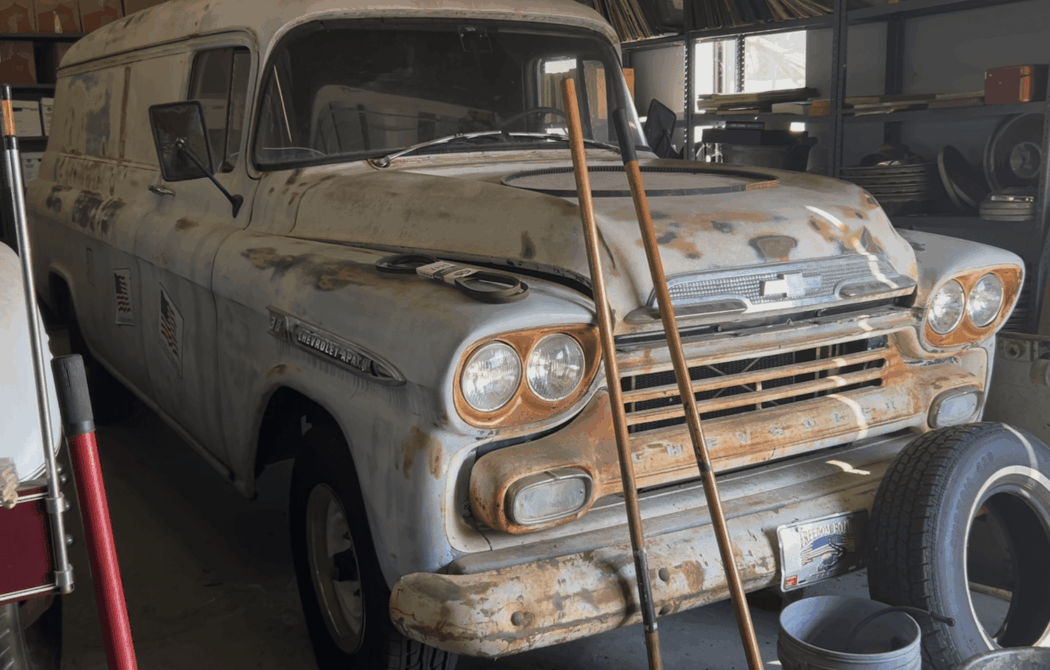
The frame and the cab are non-negotiable. Crawl under the truck with a flashlight and probe the perimeter frame at the rear body mount points and the front kick-up. Lift the bed mat or bed liner and inspect the bed floor with strong light. Rust through is universal on cars used as actual working trucks. Cars used as cruisers tend to have better-preserved beds.
SS Authentication
For 1968-1973 SS El Caminos, demand PHS Documentation. The PHS report ($50-$80) confirms original engine code, transmission code, axle ratio, paint, and options. Without PHS documentation, treat all SS claims as base El Caminos with SS trim added — which is fine if priced as such, but not at SS money.
Engine Verification
Cross-reference the VIN engine code, the engine block casting number, and the two-letter stamp code on the front of the block (just below the cylinder head). The most desirable codes for SS El Caminos: KL/KK (1969 SS396/375 hp), CRV/CRW (1970 LS6 SS454/450 hp), CSU (1970-1971 LS5 SS454/360 hp). All three numbers must agree with PHS documentation.
Pricing Tiers
| Tier | Description | Price Range (2024) |
|---|---|---|
| Driver | 1978-1987 G-body El Camino or 1973-1977 Colonnade base, decent paint, runs and drives | $15,000-$32,000 |
| Survivor | 1968-1972 base El Camino with original drivetrain, or 1983-1987 SS, original paint | $30,000-$55,000 |
| Concours | Documented 1970 SS454 LS6 or 1969 SS396 L78, frame-off restoration, MCACN-grade | $80,000-$240,000+ |
Common Pitfalls
The biggest pitfall in El Camino buying is paying SS money for a base El Camino with SS trim added. Same as the Chevelle market — probably 50% of SS El Caminos in any auction or classified are clones. The PHS report instantly resolves this.
The second pitfall is buying a half-finished restomod with parts in boxes. Don't buy somebody else's project. Either buy a finished truck where the work is documented and verified, or buy a clean rust-free truck and build it yourself. The middle ground is where most first-time El Camino buyers lose serious money.
"The best advice I can give a first-time El Camino buyer is the same I give for any classic truck purchase: don't buy somebody else's project. The frame and the cab are non-negotiable. The bed floor is a third non-negotiable specific to El Caminos and Rancheros. Either buy a finished truck where the work is documented and verified, or buy a clean rust-free truck and build it yourself. The middle ground — a half-finished build with parts in boxes — is where most first-time buyers lose serious money in this market."
— Robert Halloran
Final Verdict
The El Camino market rewards documentation, frame integrity, and patience. Documented SS396, SS454, and LS6 cars are blue-chip investments with steady appreciation curves and strong specialist community support. Driver-quality A-body base cars remain the smart-money entry into the nameplate at $22,000-$45,000. G-body El Caminos at $15,000-$30,000 represent the bargain entry with appreciation potential.
For new buyers, start with a 1968-1972 base El Camino with the 350 small-block and the Turbo 350 automatic, or a 1983-1987 G-body SS El Camino with the 305 V8. Both offer the full El Camino character at attainable price points. From there, the upgrade path is clear: 1971-1972 SS454, then 1968-1969 SS396, then 1970 SS454 LS5, then LS6 documented cars. Patience and PHS documentation beat impulse buys every time in this market.
Browse Chevrolet El Camino listings
What to Look For
PHS Documentation is the gold-standard verification for any El Camino SS claim from 1968 through 1973. PHS confirms original engine, transmission, axle ratio, paint, and options. For any SS El Camino priced over $35,000, PHS documentation is mandatory. Cars without documentation should be priced as base El Caminos with SS trim — fine if priced as such, but not at SS money.For 1968-1972 cars, the SS package was the high-trim performance variant. Verify the SS option code (RPO Z25 for 1969+) on the cowl tag. The 1970 SS454 (LS5/360 hp) and the rare 1970 SS454 LS6 (450 hp) are the high-water marks of El Camino performance — only 4,475 LS6 cars were built across all 1970 GM A-body production (Chevelle hardtops, convertibles, and El Caminos combined), making LS6 El Caminos extraordinarily rare.
Frame inspection is the first non-negotiable. Crawl under the truck with a flashlight. Probe the perimeter frame at the rear body mount points and at the front kick-up. The frame and the cab are non-negotiable — if the frame is rusted through at the body mounts, walk away or budget $8,000-$15,000 for proper frame replacement.
Bed inspection is the second non-negotiable for an El Camino. Lift the bed mat or bed liner and inspect the bed floor with strong light. Rust holes in the bed floor mean either expensive replacement ($2,000-$5,000 for proper sheet metal repair) or accepting the truck as a cruiser rather than a working vehicle.
For 1978-1987 G-body El Caminos, inspect the rear quarter panels (the area behind the cab where the bed sides meet the cab corners) for rust. This is the universal failure point on G-body El Caminos. Verify also the bed-side seam where the bed wall meets the bed floor — water collects here and rusts both surfaces.
Document the truck. Photograph every panel, every frame rail, every body mount, every engine bay component, and every identifying tag/stamp. Build the case before you wire money.
Pre-Purchase Checklist
-
Order PHS Documentation Report ($50-$80)
Confirms original engine, trans, axle, options for 1968-1973 SS El Caminos. Mandatory for premium-trim claims. -
Verify SS option code on cowl tag
RPO Z25 for 1969+ SS package. Cross-reference with VIN body code and PHS report. -
Read engine stamp code on front pad
KL/KK = 1969 SS396/375. CRV/CRW = 1970 LS6 SS454/450. CSU = 1970-1971 LS5 SS454/360. -
Inspect frame at body mount points
Same as Chevelle — body mount cushions collapse and water pools above. Frame rust = $1,500-$3,500 minimum. -
Lift bed mat and inspect bed floor
Universal rust point on working trucks. Rust through = $2,000-$5,000 sheet metal repair. -
Check cab corners (G-body 1978-1987)
Where bed sides meet cab corners. Universal failure point on G-body El Caminos. -
Inspect bed-side seam
Where bed wall meets bed floor. Water collects and rusts both surfaces. -
For LS6/SS454 claims, demand specialist authentication
Re-stamped blocks and cloned cowl tags are well-documented forgeries. $200-$500 specialist inspection for $120K+ cars. -
Verify Choo Choo Customs build (1983-1987 SS)
Aftermarket SS conversions add 10-20% premium when documented. Verify build documentation. -
Compression test all eight cylinders
Should read 145-185 PSI uniformly. Variance >15% = head gasket or worn rings.
Common Issues
El Camino rust follows the Chevelle pattern with one critical addition: the cargo bed. The bed floor is a stamped steel pan welded to the body structure, and water and cargo wear accelerate rust significantly. Lift the bed mat (or any bed liner installed) and inspect the bed floor with strong light. Rust through is universal on cars used as actual trucks; cars used as cruisers tend to have better-preserved beds.Frame rust on 1964-1972 A-body El Caminos hits at the same body mount points as the Chevelle — rear body mount cushions collapse and water pools above the frame, rotting from inside. The 1973-1977 Colonnade-body El Caminos use a slightly revised frame; the 1978-1987 G-body El Caminos use the lighter G-body frame derived from the Malibu.
Mechanically, El Caminos share drivetrains with the Chevelle (1964-1977) and the Malibu (1978-1987). The small-block 327, 350, and 305 V8s are bulletproof. The big-block 396, 402, and 454 V8s are similarly durable. Common issues include broken motor mounts (a Big Block specialty), worn timing chain on tired engines, and tired Quadrajet carburetors. The Turbo 350 and Turbo 400 automatics are essentially indestructible; the Saginaw three-speed and Muncie four-speeds are robust.
Don't buy somebody else's project. The El Camino market is full of half-finished restomod builds with parts in boxes. The frame and the cab are non-negotiable — verify both are solid before considering any cosmetic or mechanical work.
More El Camino for sale
 Dealer
 United States
1959 Chevrolet El Camino
 Dealer
United States
Dealer
United States
1959 Chevrolet El Camino
Pricing Guide
1959-1960 first-generation El Caminos: driver-quality cars run $22,000-$45,000 today. The 1959 launch year is more desirable than 1960. Documented original-paint cars: $45,000-$75,000.1964-1967 second-generation A-body El Caminos: driver-quality base cars run $22,000-$38,000. The 1966 SS396 (the rare second-generation SS) is the desirable variant of this era at $45,000-$75,000 documented.
1968-1972 second-generation A-body El Caminos are the muscle-car icon era. Driver-quality 1968-1972 base cars run $25,000-$45,000. SS396 cars: driver-quality $45,000-$75,000, documented L78 cars $80,000-$140,000. 1970 SS454 LS5: driver-quality $60,000-$100,000. 1970 SS454 LS6 (rare and desirable): $120,000-$240,000+ for documented numbers-matching cars.
1973-1977 Colonnade-body El Caminos: driver-quality cars run $18,000-$35,000. SS variants from this era: $28,000-$55,000 documented. The 1973 SS454 (last year of the SS454 in El Camino) is increasingly desirable.
1978-1987 G-body El Caminos are the bargain entry: driver-quality cars run $15,000-$30,000. The 1983-1987 SS variants (with the 305 V8 and the iconic SS graphics package) trade for $20,000-$38,000. Choo Choo Customs SS El Camino conversions (aftermarket-built premium SS variants) command 10-20% premium when documented.
Project El Caminos start around $10,000-$22,000 for A-body cars and $6,000-$15,000 for G-body cars. Either buy a finished truck or buy a clean rust-free truck and build it yourself — the middle ground is where most first-time buyers lose money.
Fun Facts
The El Camino name is Spanish for "the way" or "the road," and Chevrolet chose the name to evoke the Spanish heritage of California's El Camino Real (the historic road system connecting Spanish missions). The name was suggested by GM's Advanced Concepts group in 1958 and selected over alternatives including "Chevy Pickup" and "Roadster Pickup."The 1970 SS454 LS6 El Camino is the rarest of the LS6 production run. Only a small percentage of the 4,475 total LS6 cars built across all 1970 A-body production were El Caminos — Chevrolet has never released exact production figures. Documented LS6 El Caminos now command $120,000-$240,000+ at auction, making them among the most valuable production trucks ever built.
The Choo Choo Customs SS conversions of the 1980s were aftermarket-built premium El Caminos produced in Chattanooga, Tennessee (hence the name) by a specialty conversion company. Choo Choo built thousands of SS conversions on standard El Caminos in the 1983-1987 era, applying the SS hood, SS graphics, and unique trim to base El Caminos. Documented Choo Choo cars command 10-20% premium over equivalent factory cars when verified.
Frequently Asked Questions
Ready to find your El Camino?
Browse 6+ active Chevrolet El Camino listings on Classic Cars Arena.
View Listings →