
Chevrolet Nomad Buyer's Guide
The most beautiful station wagon ever built — the 1955–1957 Chevrolet Nomad is a rolling Motorama dream at the intersection of practicality and pure 1950s style.

History & Overview
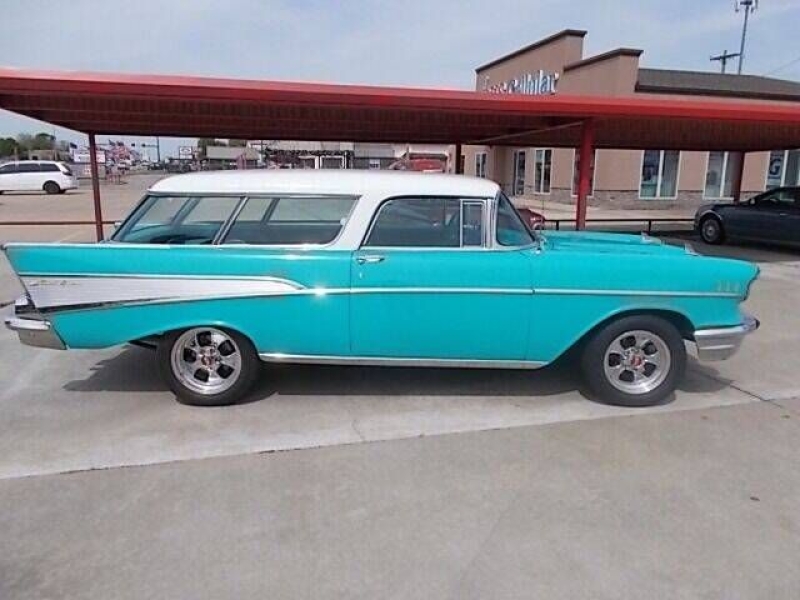
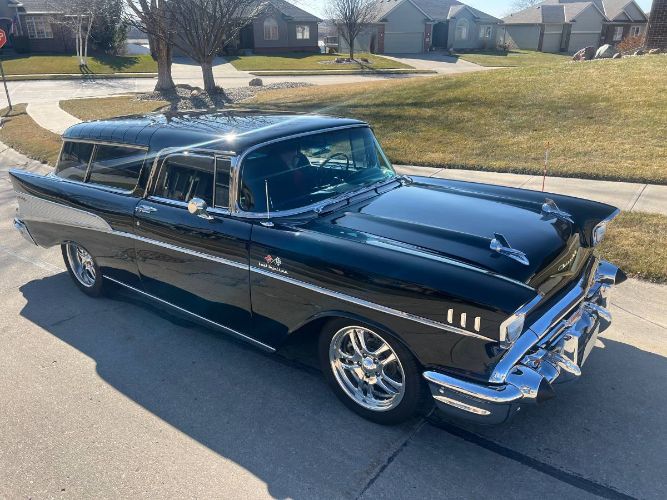
The Nomad story begins with a 1954 Motorama show car — a glamorous two-door hardtop wagon on the Corvette chassis that drew enormous crowds. Harley Earl pushed to put it into production, and Chevrolet compromised by adapting it to the standard 1955 passenger car chassis. The result was a unique B-pillarless two-door wagon with a raked rear roofline, stainless steel B-pillar trim, and ribbed rear roof panels that have no equivalent in American automotive history.
The original 1955–1957 Nomad is the grail — three model years, each sharing the fundamental two-door hardtop-wagon body on the tri-five platform. All three years used the Small Block Chevy V8 (introduced in 1955) in various states of tune. Production was limited: 8,530 in 1955, 7,886 in 1956, and only 6,534 in 1957 — making these among the rarest tri-five Chevrolets.
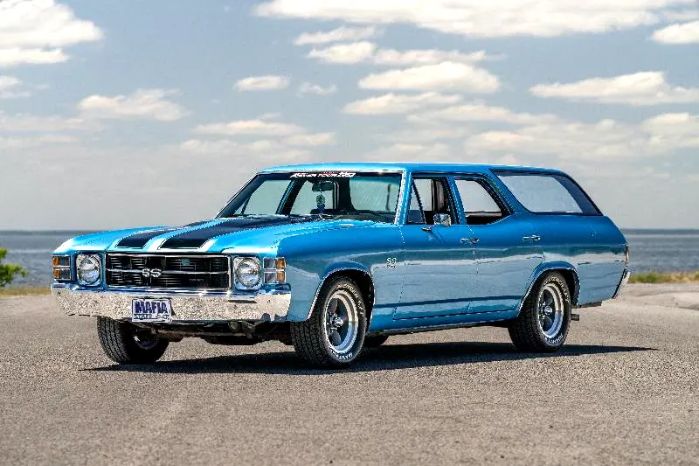
The 1958–1961 Nomad is a completely different animal — a conventional four-door wagon using the new full-size Chevy platform. Visually clean but lacking the drama of its predecessors, these cars are collectible in their own right but trade at a significant discount.
Which Nomad to Buy
For the pure collector, the 1957 Nomad combines the most refined tri-five styling with the largest small-block displacement (283ci with optional Fuel Injection) and the lowest production numbers. The 1955 Nomad carries the distinction of being first — and the 265ci small-block in its debut year is a historical landmark. The 1956 Nomad splits the difference.
For buyers wanting the Nomad look at a lower price, the 1955–1956 Bel Air station wagon or the four-door 1958–1961 Nomad provide similar visual cues at significantly lower cost. But the real thing — a 1955–1957 two-door — is irreplaceable.
Common Problems & What to Inspect
Engine Guide
| Engine | Year | Output | Notes |
|---|---|---|---|
| 265ci V8 (2-bbl) | 1955 | 162 hp | Debut year small block; historically significant |
| 265ci V8 (4-bbl) | 1955–1956 | 180 hp | Power Pak option; strong runner |
| 265ci V8 Dual 4-bbl | 1956 | 225 hp | Rare Super Turbo-Fire option |
| 283ci V8 (2-bbl) | 1957 | 185 hp | Standard 1957 V8 |
| 283ci Fuel Injection | 1957 | 283 hp | One hp per cubic inch — very rare in Nomad |
"A 1957 Nomad in correct condition is the most visually arresting car at any tri-five show. It's not a Bel Air — it's not even a Corvette — it's something entirely unique that GM never attempted again." — Mike Sullivan
Pricing & Market
The 1955–1957 Nomad commands a significant premium over comparable tri-five sedans and hardtops. Expect $55,000–$85,000 for a driver-quality original-paint car, $90,000–$130,000 for a professionally restored example, and well above $150,000 for concours-quality cars with FI engines. The 1956 commands a slight discount vs 1955 and 1957. Budget buyers should look at the 1958–1961 Nomad: a clean 1959 in running condition can be found for $15,000–$28,000.
Browse Chevrolet Nomad listings
 Dealer
 United States
1957 Chevrolet Nomad
 Dealer
United States
Dealer
United States
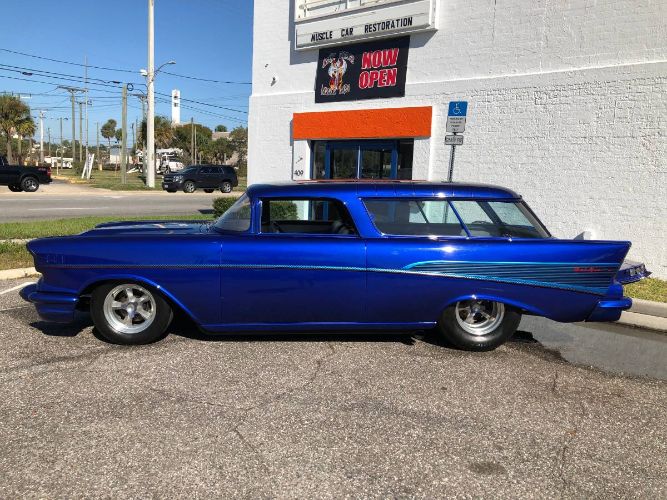
1957 Chevrolet Nomad
What to Look For
The ideal Nomad purchase is a southern car with continuous ownership history, verifiable VIN/trim/engine stampings, and original or correct-era stainless trim. A 1957 with the FI 283 is the ultimate find — extremely rare in Nomad guise. For the budget collector, a solid-bodied 1956 with a freshly rebuilt 265 and good glass is the safest entry. Avoid any car where the seller can't produce stamping documentation at these price levels.Pre-Purchase Checklist
- Inspect rear roof seams and inner roof structure for trapped moisture and rust
- Test two-piece tailgate mechanism fully (drop-down and lift-up glass)
- Probe floor pans under carpet and full rocker panels
- Verify stainless B-pillar trim condition — budget $800–$2,000 for replacement
- Confirm engine pad stampings and trim tag match documentation
- Inspect tailgate skin and hinge pockets for hidden rust
- Check all glass and rubber seals (especially rear quarter windows)
- Verify any FI equipment is complete and original (not reproduction)
Common Issues
The unique rear roof structure with its ribbed panels traps water and rusts from the inside — this is the Nomad's signature problem and the most expensive to fix correctly. The two-piece tailgate mechanism is complex and prone to misalignment. Stainless B-pillar trim is scarce and expensive in perfect condition. Numbers-matching fraud is a real concern at these price levels.More Nomad for sale
 Dealer
United States
Dealer
United States
1971 Chevrolet Nomad
 Dealer
United States
Dealer
United States
1957 Chevrolet Nomad
Pricing Guide
1955–1957 Nomad: driver quality $55,000–$85,000; professional restoration $90,000–$130,000; concours $150,000+. FI cars add 25–40% premium. 1958–1961 Nomad: $15,000–$28,000 in good driver condition, $35,000–$50,000 restored.Fun Facts
The Nomad was originally designed for the Corvette chassis — Harley Earl's dream was a sports-wagon Corvette. When GM decided the volume couldn't justify the Corvette tooling cost, it was adapted to the standard chassis, but the original name 'Corvette Nomad' was used at Motorama before it became simply 'Nomad.' Only 22,950 two-door Nomads were built across all three years — roughly the same as a single month of Chevrolet Bel Air production.Frequently Asked Questions
Ready to find your Nomad?
Browse 6+ active Chevrolet Nomad listings on Classic Cars Arena.
View Listings →