
Chevrolet S10 Buyer's Guide
The Chevrolet S10 was America's best-selling compact pickup for two decades — a practical, capable small truck that is now crossing into classic territory with an enthusiast following that appreciates its simplicity, its lowrider heritage, and its growing status as a 1980s icon.

Robert Halloran here. The S10 is an interesting case study in how the classic market evolves. Ten years ago, these were cheap used trucks. Five years ago, they were cheap used trucks with a growing fan base. Today, clean S10s — especially the early examples and the performance variants — are crossing $10,000 for the first time, and the trend is accelerating. The people who bought nice S10s three years ago made smart investments.
The S10 ran from 1982 through 2004, making it one of the longest-lived compact truck platforms in American history. It spawned the GMC S15, the Blazer/Jimmy mini-SUV, and established a template for compact truck performance that competitors spent years trying to match. The lowrider and mini-truck scenes adopted it early, and its heritage in those cultures is now part of its collector appeal.
The First Generation (1982–1993)
The S10 launched for 1982 as Chevrolet's response to the imported compact truck market — primarily the Toyota and Datsun/Nissan trucks that had been gaining US market share throughout the 1970s. The design was conventional: body-on-frame construction, rear-wheel drive (4WD optional), and an initially underwhelming 1.9-liter four-cylinder engine. The 2.0-liter and then 2.5-liter "Iron Duke" four-cylinders followed, and the 2.8-liter V6 that arrived in 1983 transformed the truck from adequate to genuinely capable.
The 2.8-liter V6 is the engine that defined the first-gen S10 for performance buyers. It made about 110 horsepower early on, rising toward 125 horsepower by the late 1980s, which was enough to make the lightweight compact truck feel quick, and it responded well to basic modifications. The 4.3-liter V6 that replaced it in 1988 was a quantum leap — derived from the small-block V8, it made 160 horsepower and delivered near-V8 performance in a compact package.
The first-gen S10 is the collector's choice today. The styling is cleaner, the truck is lighter, and the aesthetic aligns with the 1980s nostalgia wave that's driving values in period-correct vehicles. Finding a clean, rust-free first-gen S10 is increasingly challenging — these trucks were used hard, and the survivor pool is thinning.
The Second Generation (1994–2004)
The redesigned S10 that arrived for 1994 was roomier, more refined, and better in every measurable way than the truck it replaced. The extended cab option became genuinely practical, the 4.3L Vortec V6 was more powerful and fuel-efficient, and the ride quality improved noticeably. These are better trucks than the first-gen in almost every objective sense.
The collector market, however, is focused on the first-gen. The second-gen is a good driver and a practical vehicle, but it lacks the period-specific styling that drives 1980s nostalgia buying. For buyers who want a daily driver rather than a show truck, the second-gen offers more capability per dollar. For buyers who want an authentic 1980s experience, the first-gen is the target.
Performance Variants
The S10 SS (Super Sport) was offered from 1994–1995 and 2003–2004, featuring lowered suspension, specific exterior trim, and (in the 2003–2004 versions) a 190-horsepower 4.3L Vortec. These factory performance trucks are the most collectible variants outside of the custom world and command a premium over equivalent standard S10s.
Beyond the factory SS, the S10 has been the canvas for some of the most creative aftermarket work in the compact truck scene. The mini-truck and lowrider cultures built elaborate custom S10s in the late 1980s and 1990s that are now period-correct customs in their own right — the truck equivalent of the 1950s leadsleds.
Rust and the S10's Primary Challenge
The S10's greatest vulnerability is rust, and it's predictable in its locations: the cab corners behind the doors, the floor pans, the lower door edges, and (critically) the rear cab area where the cab meets the bed. First-gen trucks from northern states are badly compromised — the cab corners on these trucks are thin metal that rusted through on otherwise solid examples. Sun Belt trucks are dramatically better and command the premiums they deserve.
Browse Chevrolet S10 listings
 Dealer
 United States
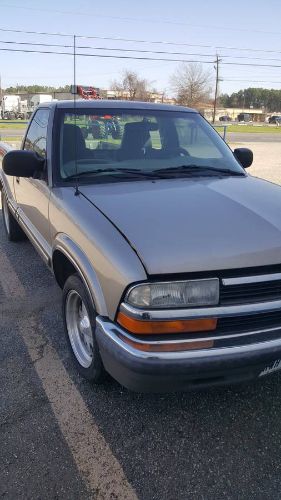
1998 Chevrolet S10
 Dealer
United States
Dealer
United States
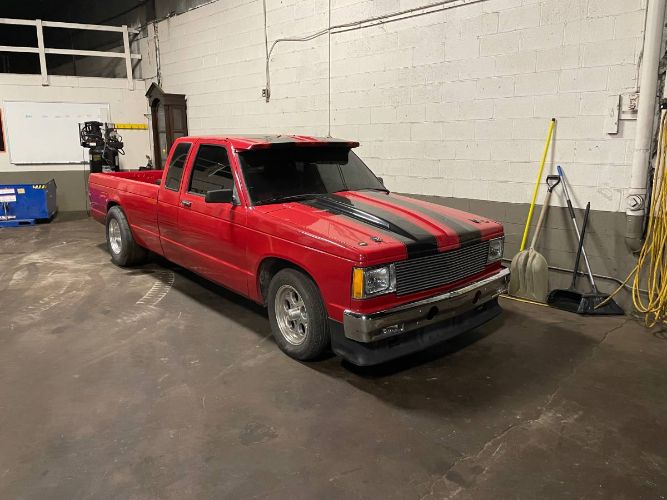
1985 Chevrolet S10
What to Look For
Rust inspection is the primary task: check cab corners behind the doors, floor pans, lower door edges, and the rear cab-to-bed junction. First-gen S10s from northern states are often badly compromised in these areas despite serviceable exteriors. Verify the 4.3L V6 (1988+) doesn't have a collapsed lower intake manifold gasket — a known issue on these engines that causes coolant and oil mixing. On first-gen trucks, check the frame rails for rust at the cross-member welds. Verify 4WD engagement on K-model trucks. Confirm the S10 SS trim is factory rather than dealer-added badges.Pre-Purchase Checklist
-
Cab Corner Rust
Probe cab corners behind the doors — thin metal that rusts through even on well-maintained trucks. -
Floor Pan Condition
Check floor pans from underneath and inside — perforation is common on older examples. -
4.3L Intake Gasket
Check oil filler for creamy emulsification — a sign of the known lower intake manifold gasket failure on 4.3L V6 engines. -
Rear Cab Area
Inspect the rear cab where it meets the bed — rust accumulates in this joint on both generations. -
Frame Rails
Check frame rails for surface rust and cracks at cross-member welds. -
4WD Engagement
On 4WD models, engage 4WD high and low — both should work smoothly. -
SS Trim Authenticity
On claimed SS models, verify factory SS codes on the trim tag — dealer-added badges exist. -
Transmission Condition
Test automatic through all gears — 4L60-E (second-gen) is known for solenoid failures on high-mileage units.
Common Issues
Cab corner rust is nearly universal on northern-state first-gen S10s. Floor pan perforation from mat deterioration and water intrusion. 4.3L V6 lower intake manifold gasket failure (causes coolant/oil mixing — a well-known issue with a known fix). Worn front axle U-joints on 4WD models. Automatic transmission (4L60-E on second-gen) electrical issues from age. Rust at rear cab mounts and tailgate corners.More S10 for sale
 Dealer
United States
Dealer
United States
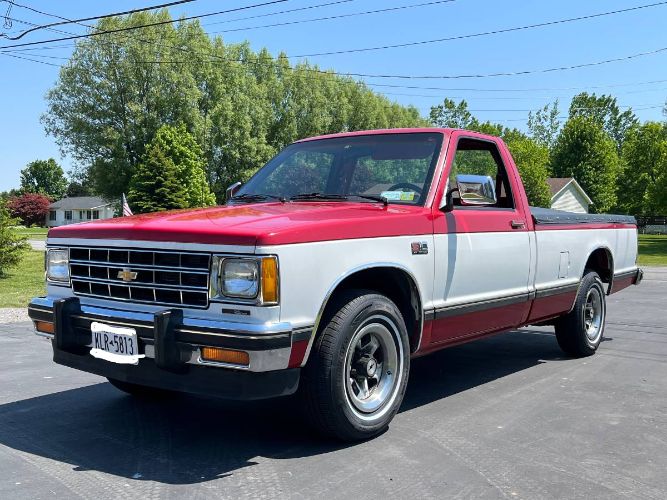
1986 Chevrolet S10
 Dealer
United States
Dealer
United States
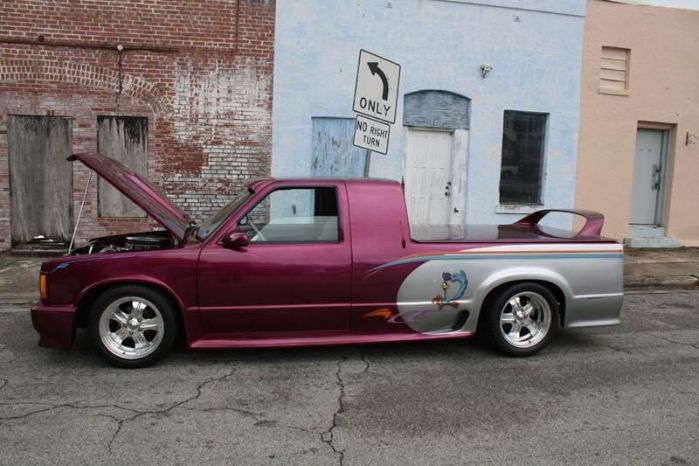
1984 Chevrolet S10
Pricing Guide
1982–1987 first-gen S10, driver condition: $4,000–$9,000. Clean, rust-free first-gen: $9,000–$18,000. 1988–1993 first-gen with 4.3L: $5,000–$12,000. Second-gen (1994–2004) standard: $3,000–$10,000. S10 SS (2003–2004): $8,000–$18,000 for clean examples. Custom or show-truck builds: highly variable, $8,000–$50,000+.Fun Facts
The S10 was the best-selling compact pickup in America for most of the 1980s and 1990s, outselling the Toyota and Nissan competitors that prompted its creation. The 4.3L V6 in the S10 was literally half of a small-block V8 — GM removed two cylinders from the 350ci V8 architecture to create it, giving the engine exceptional parts compatibility with the V8 ecosystem. The S10-based Blazer was the first compact SUV to find mainstream acceptance in America, predating the "SUV boom" by nearly a decade.Frequently Asked Questions
Ready to find your S10?
Browse 6+ active Chevrolet S10 listings on Classic Cars Arena.
View Listings →