
Chrysler Imperial Buyer's Guide
The Imperial was Chrysler's answer to Cadillac and Lincoln — positioned as a separate marque from 1955 to 1975, the flagship American luxury car that combined Virgil Exner's boldest Forward Look styling with the legendary Hemi V8 in a car that cost more than any Cadillac and deserved to.

Sarah Whitfield here. The Imperial's history is a study in the challenge of creating a prestige marque from scratch. From 1955 to 1975, Imperial was officially a separate brand — not a Chrysler model, but Imperial, with its own dealers, its own marketing, and its own identity. The effort was genuine: the cars were more carefully built than standard Chrysler products, the interior materials were more lavish, and the styling in the 1957–1963 period was among the most dramatic of any American luxury car.
The failure was that Imperial could never fully escape Chrysler's shadow in the public perception, while Cadillac's century of identity and Lincoln's Ford connection gave both competitors institutional credibility that Imperial could not replicate in two decades. What Imperial left behind is a series of extraordinary automobiles that trade at fractions of their Cadillac equivalents — a pricing anomaly that serious collectors understand and exploit.
The Separate Marque Strategy: 1955–1975
Chrysler had used the Imperial name as a top-trim model designation since the 1920s. In 1955, the company elevated it to full separate-marque status — Imperial would have its own dealerships, its own advertising, and its own identity distinct from Chrysler. The strategy was to compete directly with Cadillac and Lincoln at the highest price levels.
The timing was right: 1955 was also the year Virgil Exner's Forward Look transformed the entire Chrysler product lineup. The Imperial received the full treatment and then some — longer wheelbase, more elaborate interior materials, and styling details that went beyond what the standard Chrysler lineup offered. The first separate-marque Imperials are genuinely distinguished cars.
The Forward Look Imperials: 1957–1963
The 1957 Imperial is the most dramatic expression of Exner's design philosophy applied to the flagship American luxury car. The tailfins — swept upward and rearward in a form that Exner described as "the jet age in motion" — were more restrained than the 1959 Cadillac's extreme fins but arguably more elegant: integrated into the body rather than appended to it. The 1957 Imperial sits on its own as a design object.
| Era | Styling | Engine | Key Models |
|---|---|---|---|
| 1955–1956 | First Forward Look | 331ci Hemi | Newport, Custom |
| 1957–1963 | Peak Forward Look fins | 392ci Hemi / 413ci | Crown, LeBaron |
| 1964–1966 | Post-Exner transition | 413ci / 440ci | Crown, LeBaron |
| 1967–1968 | Elwood Engel era | 440ci TNT V8 | Crown Coupe/Sedan |
| 1969–1975 | Final separate-marque | 440ci V8 | LeBaron, Crown |
The Crown and LeBaron Variants
Within the Imperial lineup, the Crown was the standard model and the LeBaron was the luxury summit — named for the historic LeBaron coachbuilding firm, a deliberate reference to American coachbuilding heritage. The LeBaron added the most elaborate interior treatments, additional sound deadening, and specific exterior chrome details. From a concours judging perspective, the LeBaron designation on any Forward Look Imperial elevates the car's significance.
The Crown Imperial — not to be confused with the Crown model — was a separate extended-wheelbase formal sedan and limousine built on a longer platform. These were produced in extremely small numbers by Ghia in Turin rather than at the Chrysler assembly plant, and they are among the rarest postwar American production cars. Documentation and authentication are essential before any Crown Imperial purchase.
The 392ci Hemi: Imperial's Performance Credential
The 1957–1958 Imperials used the 392ci Hemi V8 that also powered the Chrysler 300 series — the most powerful American production engine of its era, officially producing 325 horsepower but with actual output that engineering staff acknowledged was higher. In the context of a luxury car, the 392 Hemi provides effortless, almost imperious power delivery that matches the car's character perfectly. It is the correct engine for the Forward Look Imperial.
"The Imperial is the correct answer to Cadillac for the collector who values genuine engineering substance over institutional prestige. The 1957 Crown LeBaron with the 392 Hemi is a more technically ambitious car than the contemporary Cadillac DeVille in most respects. The market prices them differently — Cadillac commands the premium of familiarity. The Imperial collector is paying for reality rather than reputation."
— Sarah Whitfield
Browse Chrysler Imperial listings
What to Look For
The LeBaron or Crown designation should be verified against the broadcast sheet or body tag — sellers occasionally misrepresent standard Imperials as the more valuable trim variants. Inspect the tailfin bases on 1957–1963 cars for the same inside-out rust from water accumulation that affects all Forward Look Chrysler products. The 392ci Hemi authenticity requires specialist verification — casting codes and date codes must match the car's production date. On 1959–1975 cars with the 413ci or 440ci engine, verify the engine isn't running hot — these large engines require proper cooling system maintenance. The TorqueFlite push-button transmission (1956–1964) should operate through all positions cleanly.Pre-Purchase Checklist
-
LeBaron/Crown Documentation
Verify trim designation against broadcast sheet or body tag — misrepresentation exists. -
Tailfin Base Rust (1957–1963)
Probe all tailfin bases — Forward Look Chrysler products accumulate water here. -
Hemi Authenticity (1957–1958)
Verify 392ci Hemi casting codes and date codes against a Hemi specialist. -
TorqueFlite Push Buttons
Test all push-button positions — selector mechanism failures are common on 60+ year old cars. -
Torsion Bar Ride Height
Check for level front stance — torsion bar deterioration causes uneven height on 1957–1966 cars. -
Rear Floor Pan
Inspect trunk and rear floor for water intrusion rust. -
Interior Material Authenticity
Assess interior against known LeBaron/Crown specifications — replacement with incorrect materials devalues. -
Power Accessories
Test all power seats, windows, and antenna — circuit failures are common age-related issues.
Common Issues
Forward Look tailfin base rust (1957–1963). 392ci Hemi casting authenticity issues — clones exist. 1957 body quality control issues affecting all Chrysler products that year. TorqueFlite push-button mechanism failures. Rear floor pan rust on salt-belt examples. Torsion bar front suspension deterioration on 1957–1966 cars. Power seat and window circuit failures from age. Interior material deterioration — LeBaron-specific materials can be difficult to source correctly.More Imperial for sale
 Dealer
 United States
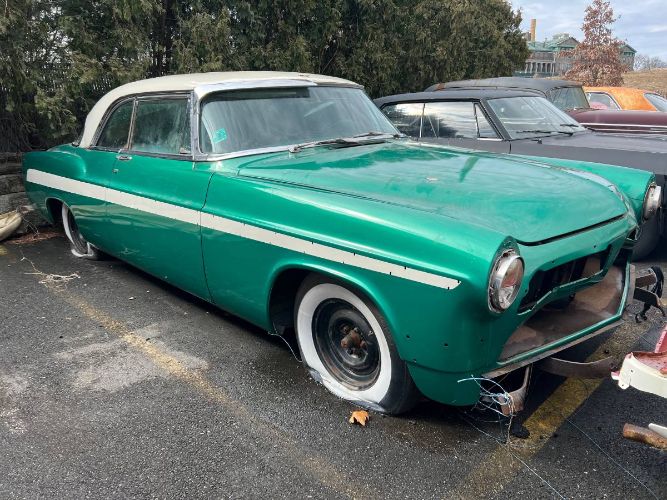
1955 Chrysler Imperial
 Dealer
United States
Dealer
United States
1974 Chrysler Imperial
Pricing Guide
1955–1956 Imperial (331ci Hemi driver): $18,000–$35,000. 1957–1960 Imperial Crown (driver): $22,000–$50,000. 1957–1960 Imperial Crown LeBaron: $30,000–$65,000. 1957–1958 Imperial with 392ci Hemi (documented): $40,000–$80,000. Crown Imperial limousine (Ghia-built, any year): $25,000–$75,000+. 1964–1975 Imperial: $12,000–$30,000. All Imperial variants trade 20–35% below Cadillac equivalents — the key value proposition.Fun Facts
The Crown Imperial limousines (1957–1965) were not built at Chrysler's American assembly plant — they were shipped as incomplete cars to Ghia in Turin, Italy, where Ghia's craftsmen extended the body, fitted the custom interior, and completed the cars. This Italian coachbuilding connection gives the Crown Imperial a legitimate claim to coachbuilt status. The Imperial was officially a separate marque for exactly 20 years (1955–1975) before Chrysler reintegrated it as a Chrysler model — a decision driven by the cost of maintaining separate dealer networks during the 1973 oil crisis.Frequently Asked Questions
Ready to find your Imperial?
Browse 6+ active Chrysler Imperial listings on Classic Cars Arena.
View Listings →