
Chrysler New Yorker Buyer's Guide
The Chrysler New Yorker defined American luxury at its most confident — the flagship that carried the Hemi V8 into showrooms while Virgil Exner's Forward Look styling made it arguably the most dramatic American automobile of the late 1950s.

Sarah Whitfield here. The Chrysler New Yorker occupied a position in the American hierarchy that is difficult to convey today: it was the car that Cadillac drivers noticed. Not because the New Yorker outspent Cadillac on chrome or ornamentation — Chrysler's approach was different, more engineering-led, with the remarkable Hemi V8 doing the heavy work that Cadillac's 331ci V8 couldn't match. The combination of Hemi power and Forward Look styling in the 1955–1961 New Yorker created a series of automobiles that remain among the most significant American cars of the postwar era.
I have written about the Chrysler Windsor in this series. The New Yorker is the Windsor's more powerful, more expensive, more celebrated sibling — same chassis, same Forward Look body, different engine, different trim level. Understanding both helps you understand what the Chrysler premium actually bought.
The New Yorker Before the Hemi: 1940–1950
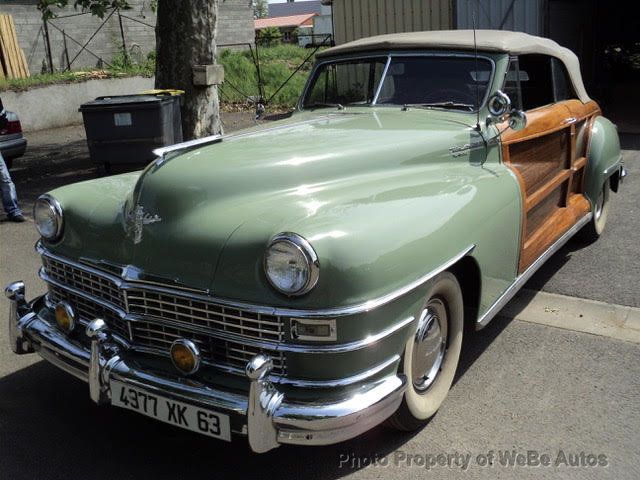
The Chrysler New Yorker name was introduced for the 1940 model year as the top of the Chrysler lineup — above the Windsor and Saratoga, below only the Imperial (which in the 1950s became its own separate marque). The early New Yorkers used Chrysler's L-head straight-eight cylinder engine — 323.5ci producing 143 horsepower by 1942. These are historically important and attract prewar marque specialists, but they represent a different collector audience from the Hemi-era cars.
The Hemi V8 Arrives: 1951–1954
In 1951, Chrysler introduced the "Fire Power" Hemi V8 — 331ci with hemispherical combustion chambers that produced 180 horsepower, the highest specific output of any American production V8 at the time. The engineering logic behind the hemispherical chamber was correct: larger valves, better combustion efficiency, and higher potential output than contemporary wedge-head designs. This was not a marketing claim — the Hemi genuinely outperformed every competitive V8 in the market at its introduction.
The 1951–1954 New Yorker with the original 331ci Hemi is the historically correct Hemi purchase for the collector who wants the first iteration. These cars predate the Forward Look styling — they retain the upright, somewhat conservative Chrysler look of the late 1940s. They're valued by Hemi historians and are considerably rarer than the Forward Look cars that followed.
Fire Power Specifications (1951–1954)
| Year | Displacement | Output | Notes |
|---|---|---|---|
| 1951–1952 | 331ci | 180 hp | Original Fire Power; highest output in class |
| 1953 | 331ci | 180 hp | Minor refinements |
| 1954 | 331ci | 195 hp | Revised compression; final upright-body year |
The Forward Look New Yorker: 1955–1961
The 1955 New Yorker was transformed by Virgil Exner's Forward Look. The new body was longer, lower, and more aggressive than anything Chrysler had produced — or anyone else had produced, for that matter. The wraparound windshield, the chrome accents, and the developing tailfins gave the New Yorker a visual drama that the contemporary Cadillac DeVille could not match.
Paired with the new 331ci Hemi producing 250 horsepower (versus the 331ci Hemi's 180 hp in 1951), the 1955 New Yorker was genuinely the most powerful full-size American car available. The car's performance reputation was legitimate: Motor Trend named the 1955 Chrysler products Car of the Year specifically because of the combination of styling and performance.
The 1955–1961 Forward Look Era
The styling evolution across the Forward Look era was rapid and dramatic. The 1957 New Yorker — with the highest tailfins yet attempted and a radically extended body — is the peak design expression. The 1959–1960 cars represent a slight step back toward control, with revised fins that are still dramatic but more integrated. The 1961 car introduced unit body construction and the last year of the classic New Yorker before the nameplate entered a different era.
| Year | Engine | Output | Styling Notes |
|---|---|---|---|
| 1955–1956 | 331ci Hemi | 250–280 hp | First Forward Look; wraparound windshield |
| 1957 | 392ci Hemi | 325 hp | Apex fins; quality control issues |
| 1958 | 392ci Hemi | 310–345 hp | 392 peak; revised trim |
| 1959–1960 | 413ci V8 | 350 hp | Hemi replaced by wedge-head; revised fins |
| 1961 | 413ci V8 | 350 hp | Unit body construction; final classic era |
The 1957–1958 New Yorker with the 392ci Hemi is the peak performance configuration. The 392ci Hemi producing 325–345 horsepower was one of the most powerful American passenger car engines of the era, and the combination with the 1957 body creates the most dramatic New Yorker ever built. The quality control issues that affected all 1957 Chrysler products (the body was rushed from design to production) are real — inspect these cars carefully for structural integrity.
"From a concours judging perspective, a correctly restored 1957 Chrysler New Yorker convertible with the 392ci Hemi and its original color is one of the most coveted American cars I am called to evaluate. The combination of audacious styling and genuine engineering substance — that Hemi is not ornamental, it is exceptional — makes these cars the definitive expression of American automotive confidence at its peak."
— Sarah Whitfield
Browse Chrysler New Yorker listings
What to Look For
On 1957–1958 New Yorkers, inspect the body structure with extra care — the rush from design to production introduced quality control issues that affected panel fit and structural integrity across the full 1957 Chrysler lineup. Probe the lower rear quarters, the A-pillar bases, and the cowl area. On any Hemi-equipped New Yorker (1951–1958), verify the engine by a Hemi specialist before purchase — the original 331ci and 392ci Hemis have been widely cloned and transplanted. The original Hemi identification requires engine casting codes and date codes matching the car's production date. On the push-button TorqueFlite (1956–1961), verify all push buttons operate correctly and band adjustment is current. Inspect the tailfin bases on 1957–1960 cars — water accumulates and creates inside-out rust.Pre-Purchase Checklist
-
Hemi Engine Verification
Verify casting codes and date codes on any Hemi engine against a specialist — transplants are common. -
Body Structural Integrity (1957)
On 1957 cars, inspect panel gaps and probe for structural rust — quality control issues make this critical. -
Tailfin Base Rust
Probe tailfin bases on all 1955–1961 cars — inside-out rust from water accumulation. -
TorqueFlite Push Buttons
Test all push-button positions (R, N, D, 2, 1) — selector mechanism failures are common. -
Torsion Bar Ride Height
Check for level stance and consistent front suspension feel — torsion bars deteriorate causing uneven height. -
Rear Floor Rust
Probe rear floor and trunk pan — water intrusion rust on salt-belt examples. -
Convertible Structure (if applicable)
On convertibles, inspect behind rear doors for structural rust from top-down water intrusion. -
Chrome Completeness
Inventory exterior chrome — New Yorker-specific trim pieces are specialized and expensive to source.
Common Issues
1957 body quality control issues: panel fit problems and structural compromises more common than adjacent years. Hemi engine cloning — verify original casting codes before paying the Hemi premium. 392ci Hemi rebuild costs are significant; specialist knowledge required. Tailfin base rust on 1955–1961 cars. TorqueFlite push-button selector mechanism failures. Torsion bar front suspension wear causing uneven ride height (all 1957–1965 Chrysler products). Convertible top hydraulic seal failures. Rear floor and trunk pan rust on salt-belt examples.More New Yorker for sale
 Dealer
 United States
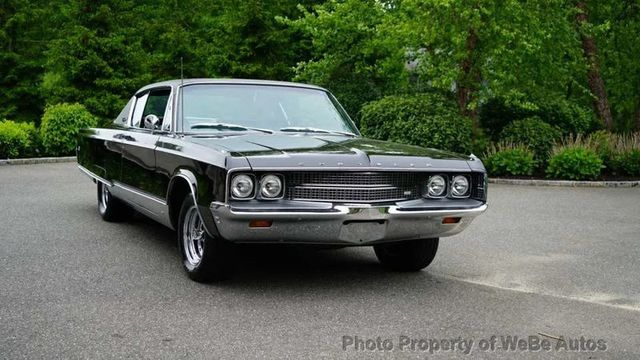
1968 Chrysler New Yorker
 Dealer
United States
Dealer
United States
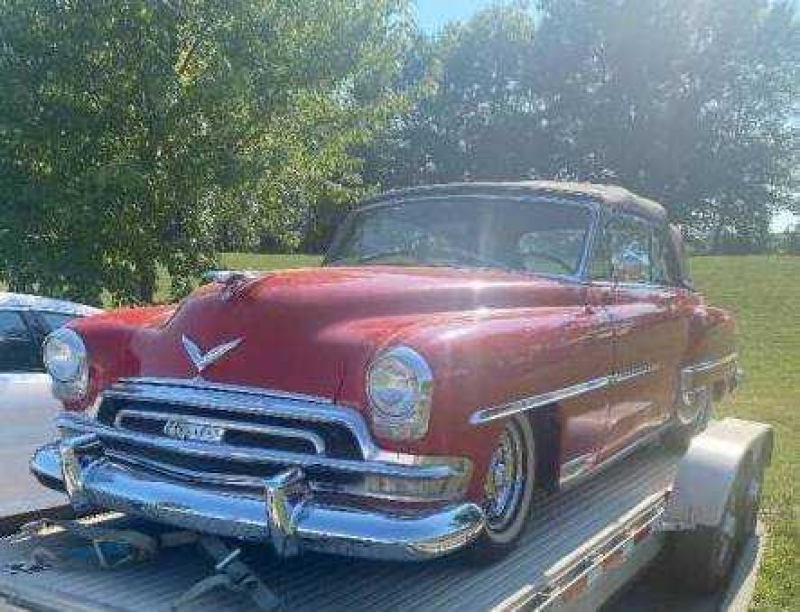
1954 Chrysler New Yorker
Pricing Guide
1951–1954 New Yorker Hemi (331ci): $18,000–$40,000. 1955–1956 New Yorker (331ci Hemi): $22,000–$50,000. 1957 New Yorker (392ci Hemi, structurally sound): $30,000–$65,000. 1957 New Yorker Convertible (verified): $60,000–$120,000+. 1958 New Yorker (392ci Hemi): $28,000–$60,000. 1959–1961 New Yorker (413ci): $18,000–$38,000. Documented original Hemi cars command 25–40% premium over transplanted-Hemi equivalents.Fun Facts
The 1955 Chrysler Fire Power Hemi V8 was directly responsible for Motor Trend's Car of the Year award going to Chrysler — the first time in the award's history that a technical achievement, rather than styling alone, drove the decision. The 1957 Chrysler lineup (including the New Yorker) was designed and taken to production in approximately 18 months by Virgil Exner's team, setting a record for the era — and paying for it in quality control. The push-button TorqueFlite automatic transmission, introduced in 1956 Chrysler products and standard on the New Yorker, moved the gear selector to a bank of dashboard push buttons — eliminating the floor or column lever and representing the most futuristic transmission interface of the era.Frequently Asked Questions
Ready to find your New Yorker?
Browse 6+ active Chrysler New Yorker listings on Classic Cars Arena.
View Listings →