
Classic Ford Deluxe Buyer's Guide (1935–1940)
The 1935–1940 Ford Deluxe put Henry's flathead V8 within reach of working Americans — and gave hot rodders their favorite raw material for the next eighty years. Here's how to buy one right.

Few cars shaped American car culture as completely as the prewar Ford Deluxe. Between 1935 and 1940, Ford built millions of V8-powered coupes, sedans, and convertibles that were affordable enough for everyday buyers and fast enough to embarrass far more expensive competition. Today those same cars anchor show fields from Goodguys to GNRS, get chopped and channeled into kustoms, or sit glass-encased as factory-stock survivors. The market is broad, the parts supply is deep, and the prices — if you know where to look — can still be surprisingly reasonable. But the buying traps are just as broad. Here's what I've learned buying and building them for thirty years.
History & Generations
Ford entered 1935 with a thoroughly redesigned body — longer, lower, and more streamlined than the earlier V8s — while keeping the flathead V8 that had already made the marque a performance legend. The "Deluxe" trim sat above the base Standard and added chrome brightwork, a nicer interior, and, crucially, the V8 as standard equipment. The Standard could be had with a 136-cubic-inch V8-60 (the small flathead V8), but almost nobody wanted it.
1935–1936: The Transitional Years
The 1935 introduced the new body and the 221-cubic-inch flathead producing 85 horsepower — plenty for a car weighing under 3,000 pounds. Mechanical brakes on all four wheels were a weakness Ford finally addressed in 1939 with hydraulic units, a genuine safety upgrade. First-time buyers should prioritize 1936 or later simply for that reason.
1937–1938: Independent Front Suspension Arrives
Ford's use of a solid front axle on a transverse leaf spring continued into the late 1940s compared to the old transverse-spring setup. The car steers more predictably, corners more confidently, and simply feels more modern on the road. The 1938 got recessed headlights integrated into the fenders — a styling step toward the cleaner look that would define the 1939 and 1940 models.
1939–1940: The Most Sought-After Years
The 1940 models brought sealed-beam headlights (a genuine improvement in night driving) and cleaner bodywork. The 1940 is widely considered the pinnacle of the design — the last year before Ford's wartime pause and postwar redesign. Smoother, quieter, and better-finished than anything that preceded it, the '40 commands a consistent premium in the market and represents the best blend of style and refinement.
Years to Target
- 1940: Last of the design, most refined, highest resale values — worth the premium if your budget allows.
- 1939: Nearly equal to the '40 in refinement, usually slightly less expensive.
- 1936: First year with hydraulic brakes — the minimum I'd recommend for anyone planning to drive regularly.
- 1937–1938: Best value proposition; IFS improves handling significantly, and prices are often lower than '39–'40.
- Avoid the 1935 base Standard with the six-cylinder — slow, less desirable, and harder to part out if you ever sell.
What to Look For in Person
The body panels on these cars are relatively forgiving to straighten, but there's a difference between honest metalwork and a car buried in lead filler. Run a magnet along every panel — anything that doesn't stick is filler, and thick filler over rust means you're buying someone else's covered problem. Pay particular attention to the cowl area between hood and windshield, the lower door skins, and the running board attachment points.
The frame rails on a 35–40 Ford run exposed under the body and are prone to rust at the rear kick-up section. Poke them with a screwdriver. If the metal gives, walk away — frame repair on a boxed prewar Ford is expensive and rarely invisible. A solid frame on a rough car is a better starting point than a beautiful car with a compromised frame.
The flathead V8 should start easily when cold, idle without smoking, and pull cleanly through the rev range. A slight oil seep at the valley gasket is normal and almost universal; a dripping external oil leak suggests deferred maintenance. Listen for a knock at idle — bottom-end bearing knock on a hot engine means a rebuild, not a tune-up.
| Spec | Details |
|---|---|
| Engine (V8) | 221 ci flathead V8, 85 hp |
| Engine (six) | 136 ci inline-six, 60 hp (Standard trim only) |
| Transmission | 3-speed manual, column shift |
| Wheelbase | 112 inches |
| Curb weight | approx. 2,700–3,000 lbs depending on body style |
| Brakes | Mechanical (1935–1938) / Hydraulic drum (1939–1940) |
| Front suspension | Transverse leaf, solid I-beam axle (1935–1948) |
| Electrical system | 6-volt positive ground |
"I've built close to forty prewar Fords over the years — customs, hot rods, stock restorations, the whole range. The ones that always give me grief aren't the rough ones, they're the pretty ones somebody's already messed with. A car that sat in a garage for forty years untouched is worth twice as much as one that's been 'restored' by a guy who learned on YouTube. When in doubt, buy the survivor."
— Jim Vasquez
Market Outlook
The market for 1935–1940 Fords is unusually deep and has shown consistent appreciation across all categories. Factory-original survivors in presentable driver condition trade between $18,000 and $28,000. Show-quality stock restorations with documented provenance reach $45,000–$65,000. At the top of the market, a correctly chopped and channeled custom or a fresh flathead-powered street rod with quality metalwork commands $70,000–$110,000 at auction.
Project cars — complete, not destroyed — remain attainable at $6,000–$14,000, making them one of the few remaining entry points into the prewar Ford hobby. The parts supply is genuinely excellent: reproduction sheetmetal, new-old-stock flathead parts, and a network of specialists mean you can build almost any of these cars to a high standard without hunting for years.
Browse Ford Deluxe listings
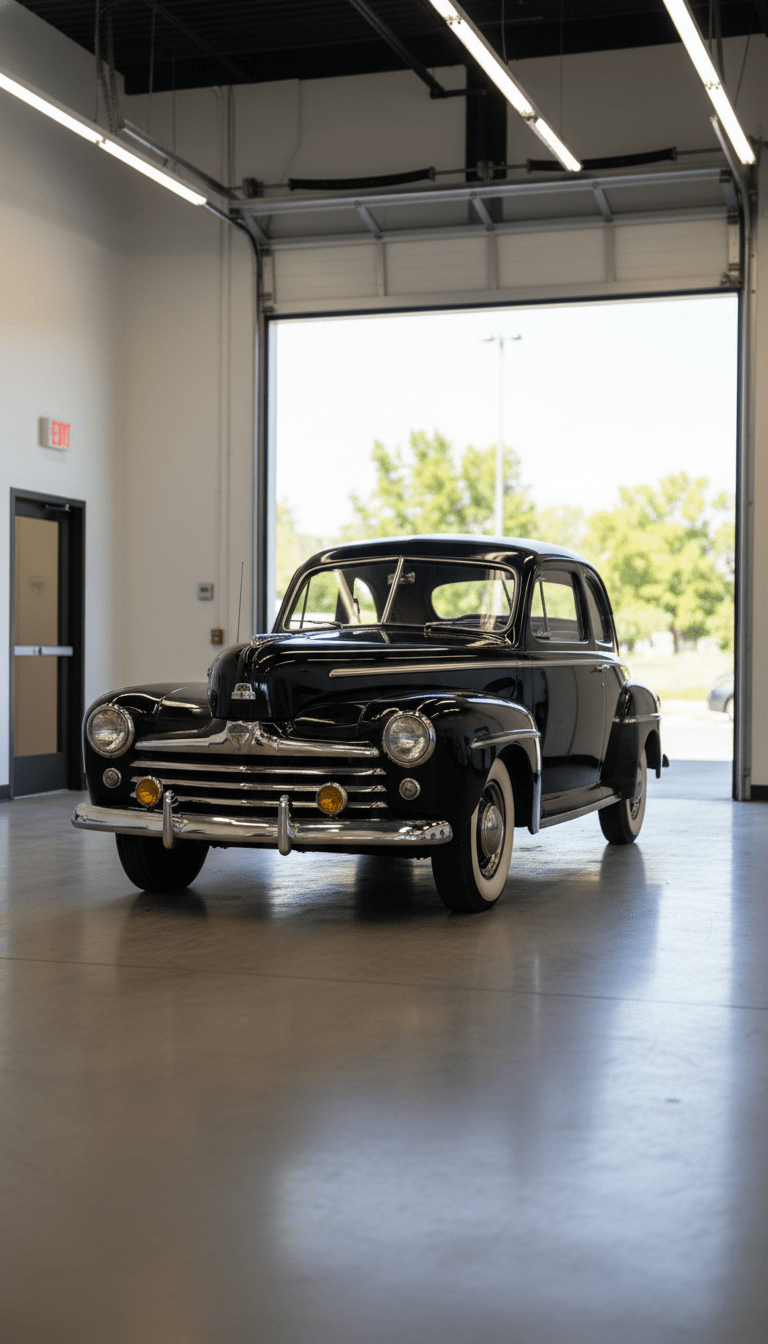
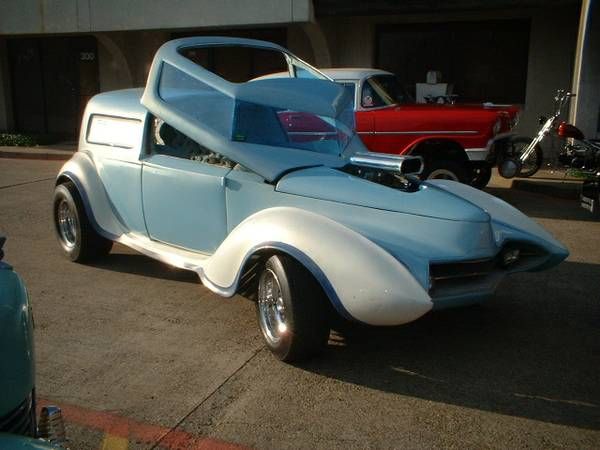 Dealer
 United States
1937 Ford Deluxe
What to Look For
Check the frame rails first — poke both sides at the rear kick-up section with a screwdriver. Soft metal means frame repair and a renegotiated price or a walk. Run a magnet across all body panels; thick non-magnetic areas indicate lead or filler over rust. Open the cowl vent and look down into the firewall area with a flashlight — water traps here and rusts from inside out. Pop the trunk, lift the spare tire, and check that area closely. Pull the door sill plates and look at the floor pan edges where they meet the rockers. Start the engine cold and watch for blue smoke on startup (worn rings or valve guides); let it reach operating temperature and check for oil seeps at the valley cover and the timing cover. Verify the transmission shifts cleanly into all three gears and that the torque tube (the driveshaft housing) is not bent or cracked — cracks are typically found at the rear axle connection. Confirm the body style and trim level match the title; swapped firewalls and dash panels are common in the hot rod world and may affect value.Pre-Purchase Checklist
-
Frame rails
Probe rear kick-up sections with screwdriver for corrosion — soft metal is a deal-breaker -
Floor pans
Check from underneath with flashlight; assess patch quality and extent of any repairs -
Cowl area
Open cowl vent, inspect firewall and cowl channel for rust and water damage -
Body panel filler
Run magnet across all panels — non-magnetic areas indicate filler, assess thickness -
Flathead compression
Cold compression test all 8 cylinders — minimum 100 psi, consistent across all -
Cooling system
Verify re-cored 3- or 4-row radiator; check thermostat type and coolant condition -
Trunk floor
Lift spare tire and inspect trunk floor and spare well for rust penetration -
Electrical system
Confirm 6-volt positive ground is intact and unmolested; check grounds for corrosion -
Torque tube
Inspect driveshaft housing for cracks, especially at rear axle union -
Title and trim verification
Verify body style and trim level match the title and any claimed original spec -
Engine oil consumption
Drive at least 20 minutes and check for blue smoke — indicates valve or ring wear -
Cold start behavior
Start from cold; should fire within a few cranks and idle without significant smoke
Common Issues
Flathead V8 overheating is the most common mechanical issue. The cooling system design puts the water pump on the engine block rather than the radiator hose circuit, and the early thermostats are often replaced with incorrect parts. Make sure the radiator has been re-cored with modern three-row or four-row copper/brass — the original single-row units are inadequate for modern driving conditions. Cylinder head cracking is the consequence of repeated overheating; the thin walls are unforgiving. Frame rust at the rear kick-up is structural and expensive — a car with a compromised frame is not a deal at any price until you know the repair cost. Six-volt positive-ground electrical gremlins: corrosion on grounds is the most common cause of intermittent starting and lighting issues. Floor pan rust is almost universal on cars stored outside; assess severity carefully before committing. The torque tube and rear axle seals commonly weep gear oil. Windshield glass on the earlier models was single-pane flat glass — cracks are common and correct replacements are expensive reproduction units.More Deluxe for sale
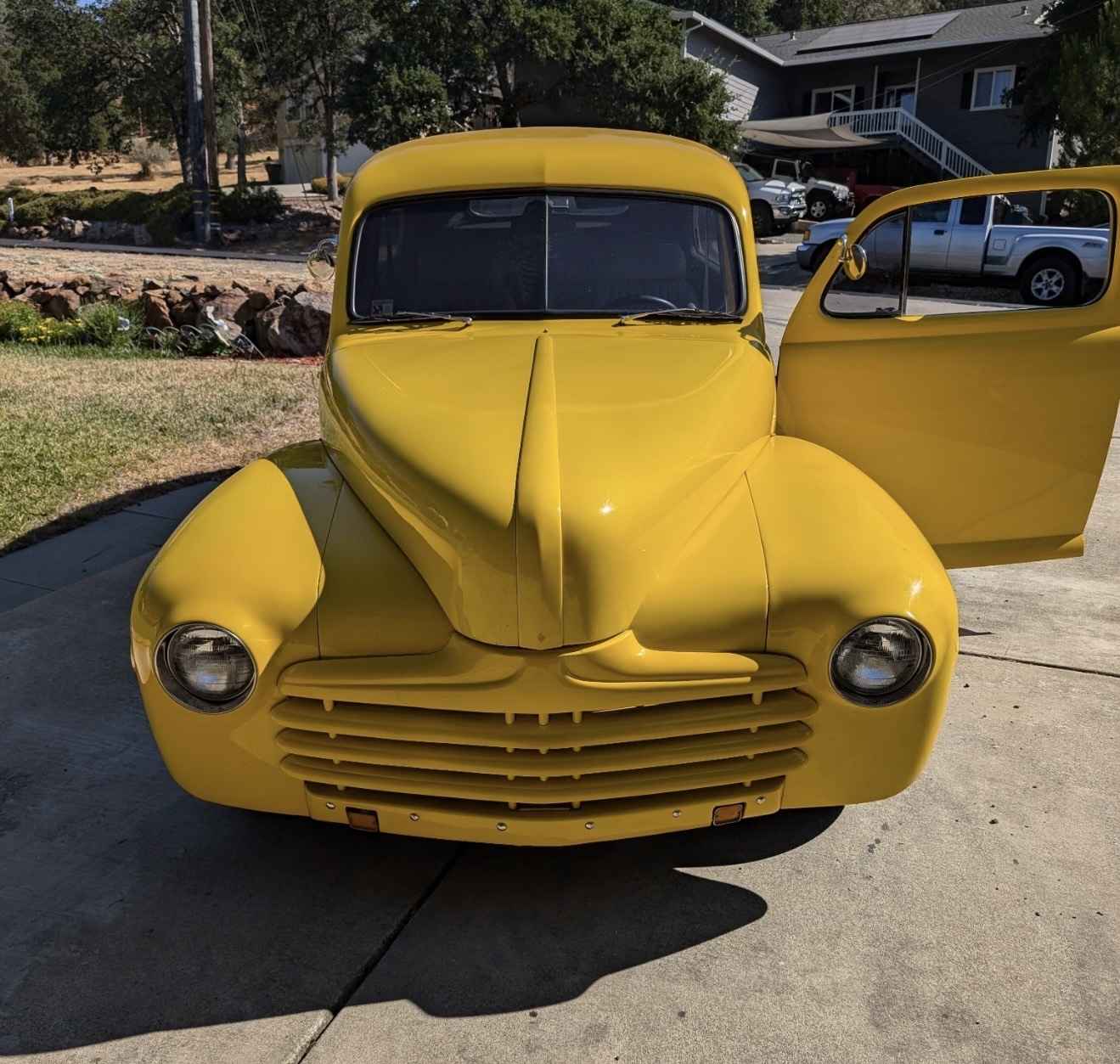
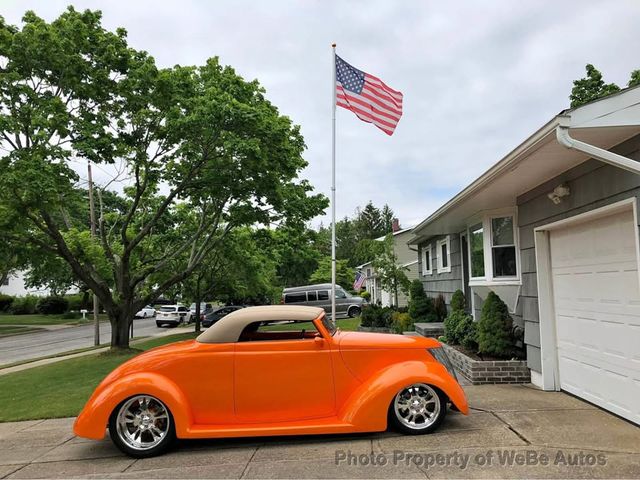 Dealer
United States
Dealer
United States
1937 Ford Deluxe
Pricing Guide
As of 2025, a driver-quality original in presentable condition with a solid body and running flathead V8 trades in the $18,000–$28,000 range. Full show-quality stock restorations with documented history push $45,000–$65,000, with concours-level cars occasionally reaching $80,000. The 1940 model consistently commands a 15–25% premium over equivalent 1935–1938 examples. For project cars — complete, all-original, not cut up — expect to pay $6,000–$14,000 depending on body style (coupes and convertibles carry premiums over sedans). Hot rods and customs are priced on quality of build rather than original condition: a correctly executed period-style custom with professional chop and running flathead can reach $90,000–$120,000 at major auction. Convertibles (cabriolets) carry a 20–40% premium over closed cars across all condition grades. Be cautious of cars priced well below market — hidden structural rust and bad "restorations" are common at the lower end.Fun Facts
The flathead V8 in these cars is the same basic design Ford introduced in 1932 as a response to Chevrolet's six — the first mass-produced V8 in an affordable American car. Hot rodders immediately recognized the potential: with simple modifications the engine could produce nearly double its stock output. The Beach Boys song "Little Deuce Coupe" immortalized the 1932 Ford, but the 1935–1940 models benefited from the same cultural halo. Edsel Ford personally signed off on the styling direction for the 1940, considering it the most beautifully proportioned car his company had produced. The 1939 Ford was the first production car in the world to offer sealed-beam headlights as standard equipment.Frequently Asked Questions
Ready to find your Deluxe?
Browse 6+ active Ford Deluxe listings on Classic Cars Arena.
View Listings →