
Classic Ford F-150 Buyer's Guide
Buyer's guide for classic Ford F-150 pickups (1975–1996). Dentside, Bullnose, and Aero generation breakdown, frame and cab inspection, engine identification, and current market values.

Ford introduced the F-150 designation in 1975 as a half-ton pickup positioned between the original F-100 and the heavier F-250 — and it quickly became the most popular vehicle in America. The first three generations of the F-150 span the era when American pickup trucks were simple, repairable, and built to actually work. Today those same trucks are increasingly collectible, and the cleanest examples are disappearing from the affordable end of the market fast.
History & Generations
First Generation — Dentside (1975–1979)
The F-150 nameplate debuted in 1975. The early F-150s shared their body style with the F-100 and F-250 of the era — the 1973–1979 "Dentside" generation, named for the indented character line running along the lower body. The 302 Windsor V8 and the 360 FE big-block were the primary engine options. First-gen F-150s with original big-block engines and 4x4 drivetrains are the most sought-after of this era.
Second Generation — Bullnose (1980–1986)
The 1980 redesign introduced the "Bullnose" F-150 — a squarer, taller front end with a prominent rectangular grille. The 300 inline-six became a popular choice for its reliability and torque, while the 302 and 351 Windsor V8s carried the performance burden. The Lariat trim (introduced mid-decade) gave buyers a well-appointed interior that rivaled the Chevrolet Silverado for comfort.
Third Generation — Aero (1987–1996)
The "Aero" generation — Ford's aerodynamically styled F-150 with flush headlights and smoother bodywork — ran for a decade and is the longest-running F-150 generation in history. The spread of electronic fuel injection by 1987 (the 5.0L V8 had gone EFI in 1985-1986) improved cold-start reliability. The 5.0L V8 (EFI) is the engine collectors want: strong, smooth, with decades of aftermarket support. Low-mileage 1987–1996 F-150s in XLT Lariat trim are the current market sweet spot for this generation.
| Generation | Years | Nickname | Top Engine |
|---|---|---|---|
| 1st Generation | 1975–1979 | Dentside | 360 FE V8 / 302 Windsor |
| 2nd Generation | 1980–1986 | Bullnose | 351 Windsor V8 / 300 I6 |
| 3rd Generation | 1987–1996 | Aero | 5.0L EFI V8 / 300 I6 |
"The F-150 has been outselling every other vehicle in America for over forty years — which means there's more variation in quality and condition in the classic F-150 market than almost anything else. The best ones were never abused; the worst ones were worked until they fell apart. Your job as a buyer is to find the ones that were cared for. Look at the service records, look at the floors, look at the frame. The honest trucks announce themselves."
— Robert Halloran
Market Outlook
Dentside trucks (1975–1979) in XLT trim with a big-block engine command $22,000–$42,000 for clean drivers, $50,000–$70,000 for professional restorations. Bullnose trucks are $15,000–$35,000 for clean examples. Aero-generation trucks (1987–1996) are the best-value entry point: low-mileage XLT Lariats can be found for $12,000–$28,000 — and the appreciation trajectory is gaining speed as this generation enters prime collector age.
Browse Ford F-150 listings
 Dealer
 United States
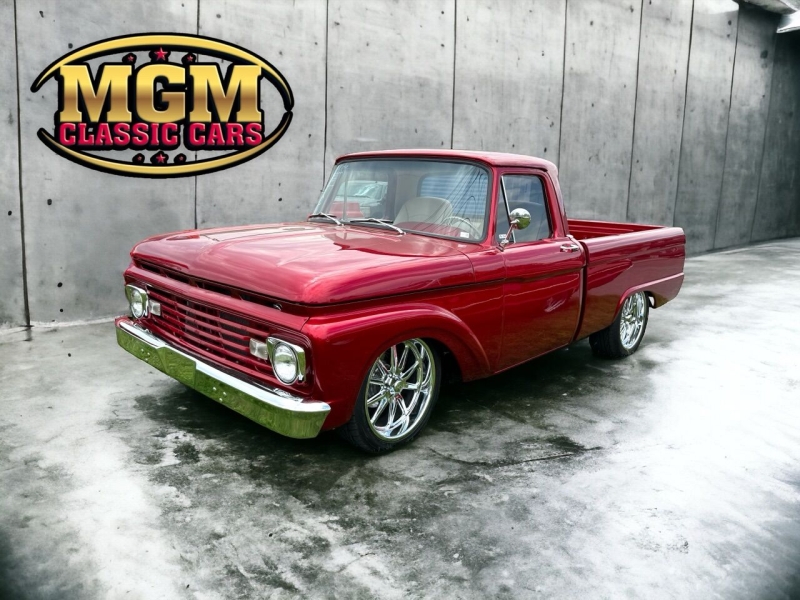
1963 Ford F-150
 Dealer
United States
Dealer
United States
1987 Ford F-150
What to Look For
Frame and cab first. Flashlight under the truck, screwdriver to probe frame rails, magnet on the cab corners and lower quarters. F-150s lived as work trucks and the evidence shows.Engine identity second. Verify casting numbers on the block against the claimed displacement. The firewall data plate lists the engine code.
Trim level documentation. XLT Lariat trucks carry meaningful premium over base Custom trucks. The trim tag on the door jamb lists the trim code — verify it matches the interior before paying the premium.
Pre-Purchase Checklist
-
Inspect cab corners and lower quarters
Dentside: lower rear cab corners. Bullnose: inner fender and battery tray area. Aero: cab corners and lower door skins. Use magnet to detect filler. -
Pull floor mats and check floor pans
Driver and passenger sides. Floor pans rust from below on salt-belt trucks. -
Inspect frame rails with flashlight
Under the cab and at rear crossmembers. Probe paint bubbles with a screwdriver. -
Test 4WD engagement on 4x4 trucks
Engage both high and low 4WD ranges. Should engage cleanly without grinding. -
Check engine oil and coolant condition
Milky oil or white residue in coolant = head gasket. Dark sludge = chronic deferred maintenance. -
Identify engine displacement via casting numbers
Verify claimed engine matches firewall data plate. -
Test EFI system on 1987+ trucks
Should start instantly and idle cleanly cold. Rough idle usually means IAC or TPS sensor — inexpensive fix. -
Check battery tray on Bullnose trucks
Driver-side front under hood. Battery acid accelerates corrosion of tray and inner fender. -
Drive at highway speed minimum 20 minutes
Listen for differential whine, transmission slip, driveline vibration. -
Document with photos before purchase
Every panel, VIN, firewall data plate, engine bay, frame rails, and undercarriage.
Common Issues
Rust patterns depend on which generation. Dentside trucks (1975–1979) rust at lower rear cab corners, rear quarters, and the tailgate. Bullnose trucks (1980–1986) are prone to battery tray corrosion and cab corner rust. Aero trucks (1987–1996) rust at cab corners and lower door skins.The 300 inline-six is bulletproof across all generations. The 302/5.0L Windsor V8 is equally long-lived; the 351 Windsor runs hot in stock form and needs cooling system attention. The 360 FE big-block in Dentside trucks is reliable but parts are less common.
EFI issues on 1987+ trucks are common but inexpensive: idle air control valves, throttle position sensors, and mass airflow sensors age and cause rough-idle complaints. These are $50–$200 parts, not engine problems.
More F-150 for sale
 Dealer
United States
Dealer
United States
1988 Ford F-150
 Dealer
United States
Dealer
United States
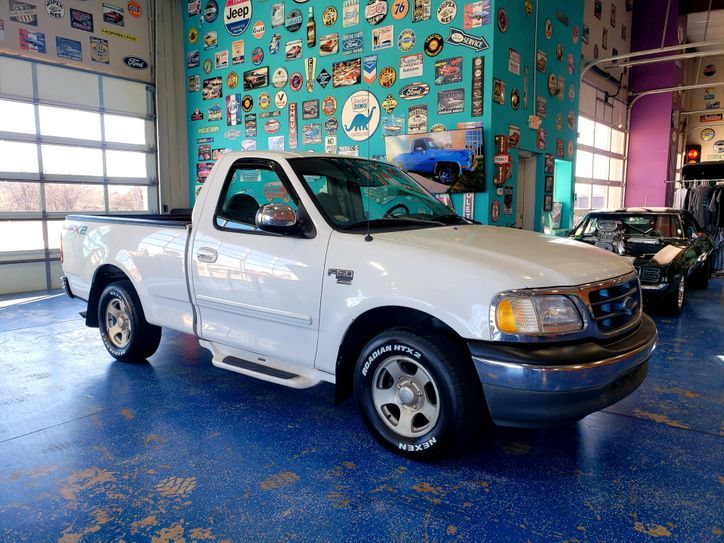
1999 Ford F-150
Pricing Guide
Dentside F-150 (1975–1979): $18,000–$38,000 for clean drivers; $48,000–$70,000 for professional restorations. Big-block and 4x4 configurations add $5,000–$12,000 premium.Bullnose F-150 (1980–1986): $12,000–$28,000 for solid drivers; restorations at $35,000–$55,000. XLT Lariat trim adds 15–20%.
Aero-generation F-150 (1987–1996): $10,000–$28,000 for low-mileage XLT Lariat trucks. This generation is early in its appreciation curve.
Fun Facts
The Ford F-Series has been the best-selling truck in the United States for 48 consecutive years (since 1977) and the best-selling vehicle for over 40 years as of 2024. The F-150 specifically has led US vehicle sales since its 1975 introduction.The 300 cubic inch inline-six fitted to F-150s appeared on multiple "most reliable engines ever built" lists from mechanics' trade publications. Ford offered it from 1965 all the way to 1996 — 31 years of continuous production with essentially no fundamental changes.
Frequently Asked Questions
Ready to find your F-150?
Browse 6+ active Ford F-150 listings on Classic Cars Arena.
View Listings →