
Classic Ford F-250 Buyer's Guide
Definitive buyer's guide for classic Ford F250 1953-1986. Heavy-duty drivetrain inspection, frame and cab rust hotspots, FE and 351 V8 identification, current market pricing for survivors and restomods.

The Ford F250 is the three-quarter-ton heavyweight of Ford's F-Series pickup line, sharing platform with the F100 and F150 across thirty-plus years of production but with significantly heavier-duty mechanicals built to actually work. From the 1953-1956 first-generation F250s with their reinforced frames and beefier rear axles, through the bumpside era (1967-1972), dentside era (1973-1979), and 1980-1986 final-generation cars, the F250 represents the working-truck end of the classic Ford pickup market. These trucks did real labor for real owners, and the surviving examples that haven't been worked to death command genuine respect — and increasingly genuine money. Don't buy somebody else's project — the frame, the cab, and the rear axle are all non-negotiable. Either buy a finished truck or buy a clean rust-free truck and build it yourself.
Overview
The F250 is the three-quarter-ton heavyweight of Ford's F-Series pickup line — same body shells and dimensional packaging as the F100 across most years, but with significantly heavier-duty frame, suspension, brakes, and rear axle. F250s did real labor for real owners across thirty-plus years of production, and the surviving examples that haven't been worked to death command genuine respect — and increasingly genuine money. Each generation has its own buyer profile and its own pitfalls, with the iconic Highboy 4WD F250 (1967-1977) representing the most desirable single configuration.
Generations Worth Knowing
First Generation (1953-1956)
The original F250s shared body shells with the F100 but used heavier-duty frame, suspension, brakes, and rear axle. Engine options included the 215 inline-six (base) and the Y-block V8 (1954+). The 1956 model is the most desirable year of this generation. Driver-quality cars run $25,000-$45,000 today.
Bumpside Era (1967-1972)
The 1967 redesign brought the iconic bumpside crease, and the F250 received heavier-duty mechanicals including the Dana 60 rear axle and heavier leaf springs. The Highboy F250 4WD configuration (produced from 1967 through mid-1977, spanning both the bumpside and dentside eras) is the most desirable single F250 variant. Bumpside Highboys (1967-1972) are the earliest and most collected. Driver-quality cars run $22,000-$40,000, with documented Highboy 4WD trucks at $35,000-$60,000+.
Dentside Era (1973-1979)
The 1973 redesign brought the indented "dented" bedside crease, and the F250 continued with heavy-duty mechanicals. The 1973-1977 Highboy 4WD F250 is the high-water mark of dentside-era F250 ownership. The 1977.5 transition to Lowboy 4WD ended the Highboy era. Driver-quality cars run $18,000-$32,000.
Final Generation (1980-1986)
Modern bigger F-Series styling, refined interior, updated emissions equipment. The 1983 introduction of the 6.9L IDI diesel was the most significant mechanical change, and 6.9L diesel-equipped F250s now command 15-25% premium over equivalent gas-engine trucks. Driver-quality gas F250s run $15,000-$28,000; 6.9L diesel F250s run $22,000-$40,000.
What to Look For (in person)
Frame Inspection
The F250 frame is heavier-gauge steel than F100 frames. Surface rust is less concerning but internal corrosion in boxed sections is harder to detect. Probe with a screwdriver at the rear cross-member, cab mount points, front horns, and inside boxed sections. Frame replacement is $10,000-$22,000 for proper professional work.
Heavy-Duty Drivetrain Verification
The Dana 60 (or Dana 70 on some configurations) rear axle should rotate smoothly without grinding or whining. Verify the rear axle ratio against original specifications. Front axle on 4WD trucks should engage cleanly without binding. The 4-speed manual and C6 automatic transmissions are essentially indestructible — verify smooth engagement and no slipping under load.
Engine Verification
Cross-reference the VIN engine code with the actual block casting number. The most common F250 engines: 240/300 inline-six (1965-1979), 360 FE (1968-1976), 390 FE (1968-1976), 460 (1973-1986), 6.9L IDI diesel (1983-1986). Original numbers add value but aren't critical for working-truck-spec F250s.
Pricing Tiers
| Tier | Description | Price Range (2024) |
|---|---|---|
| Driver | 1980-1986 F250 gas or 1973-1979 dentside 2WD, decent paint, runs and drives, light cosmetic wear | $15,000-$32,000 |
| Survivor | 1967-1979 bumpside or dentside 4WD with original drivetrain, documented mileage | $32,000-$55,000 |
| Concours | Documented 1967-1977 Highboy 4WD F250 or first-generation F250, frame-off restoration | $60,000-$140,000+ |
Common Pitfalls
The biggest pitfall in F250 buying is paying premium money for a Highboy that has been converted to Lowboy configuration. The divorced-style transfer case mounting is the defining Highboy feature — verify from underneath the truck before paying Highboy money.
The second pitfall is hidden frame rust. F250 frames are heavier-gauge steel than F100 frames, which means surface inspection can miss internal corrosion. Demand a thorough underside inspection on a lift before purchase, with particular attention to boxed frame sections under the cab and at the rear cross-member.
"F250s did real work for real owners. The frame and the cab are non-negotiable, and the rear axle is the third non-negotiable on any F250 — that Dana 60 or Dana 70 has to rotate clean. Either buy a finished truck or buy a clean rust-free truck and build it yourself. The market premium for a documented Highboy 4WD F250 versus a Lowboy conversion is real — $15,000 or more on a typical 1971 — and it pays to verify the divorced-style transfer case mounting before you wire money. Don't buy somebody else's project."
— Robert Halloran
Final Verdict
The F250 market rewards documentation, frame integrity, and patience. Highboy 4WD F250s (1967-1977) are blue-chip investments with steady appreciation. 6.9L diesel-equipped 1983-1986 F250s have appreciated dramatically since 2018 and continue to. Driver-quality 2WD F250s remain the smart-money entry into the nameplate.
For new buyers, start with a 1976-1979 dentside F250 2WD with the 351W or 351M small-block and the C6 automatic. They're affordable, parts support is excellent, and the dentside era is increasingly collectible. From there, the upgrade path is clear: bumpside 2WD, then bumpside Highboy 4WD, then dentside Highboy, then 1953-1956 first-generation. Patience and frame inspection beat impulse buys every time in this market.
Browse Ford F-250 listings
 Dealer
 United States
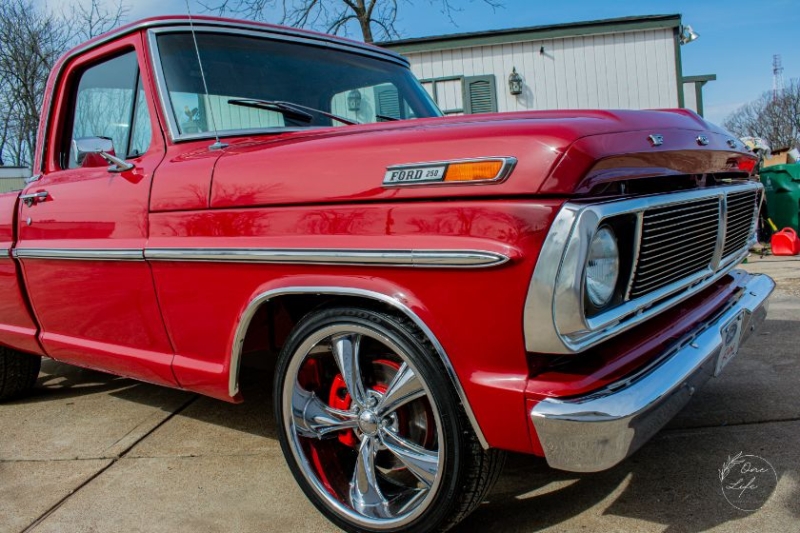
1968 Ford F-250
 Dealer
United States
Dealer
United States
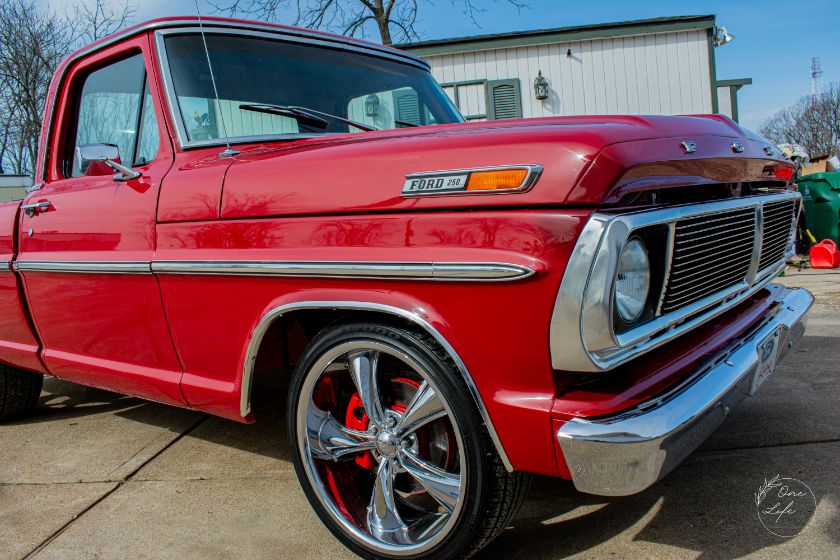
1968 Ford F-250
What to Look For
Frame inspection is the first non-negotiable on any F250. The frame is heavier-gauge steel than F100 frames, which means surface rust is less concerning but internal corrosion in boxed sections is harder to detect. Probe with a screwdriver at the rear cross-member, cab mount points, front horns, and inside boxed sections (where you can reach them). Solid steel resists; rotten metal flakes. Frame replacement on a heavy-duty F250 is $10,000-$22,000 for proper professional work.The frame, the cab, and the rear axle are non-negotiable on an F250. The Dana 60 (or Dana 70) rear axle should rotate smoothly without grinding or whining when the truck is driven on the highway. Differential whine on deceleration indicates worn pinion bearings — $1,500-$2,800 to repair properly. Verify the rear axle ratio against original specifications — F250s with the 4.10 ratio are more desirable for working duty, while the 3.55 ratio is preferred for highway cruising.
Cab inspection is the second non-negotiable. Cab corner rust, rocker panel rust, and floor pan rust are universal on driver-quality F250s. Pull the floor mats and inspect floor pans. Look at the cab corners from outside and from inside through the kick panels. The cab mount points to the frame commonly rust through — replacement requires lifting the cab off the frame, which is a serious undertaking.
Bed inspection is the third non-negotiable. F250 beds saw harder service than F100 beds — the three-quarter-ton payload capacity meant the trucks were used for heavier loads. Lift the bed mat and inspect the bed floor with strong light. Rust through is universal on cars used as actual working trucks; cars used as cruisers tend to have better-preserved beds.
For 1983-1986 6.9L diesel-equipped F250s, demand evidence of regular maintenance. The 6.9L IDI is durable when serviced correctly but expensive to repair when neglected. Verify oil change history, fuel filter replacement, and injector pump service. Proper diesel maintenance budget on these trucks is $2,500-$5,000 annually.
Pre-Purchase Checklist
-
Inspect frame at rear cross-member and cab mounts
Heavier-gauge steel than F100. Internal corrosion harder to detect. Frame replacement = $10,000-$22,000. -
Verify Highboy 4WD transfer case mounting
Divorced-style mount (transfer case behind transmission) defines Highboy. Lowboy conversions reduce value. -
Test Dana 60/70 rear axle for whine
Should rotate smoothly. Differential whine on deceleration = $1,500-$2,800 to repair. -
Verify rear axle ratio against original spec
4.10 ratio for working duty; 3.55 for highway cruising. Casting numbers identify original. -
Examine cab corners and rocker panels
Cab corner rust universal on driver-quality F250s. Repair requires skilled bodywork. -
Lift bed mat and inspect bed floor
Three-quarter-ton trucks saw heavier loads than F100s. Bed floor rust often more advanced. -
For 6.9L diesel, demand maintenance records
IDI diesel durable when serviced; expensive when neglected. Verify oil, fuel filter, injector pump history. -
Check 4WD engagement on test drive
Should engage cleanly without binding. Worn front axle u-joints cost real money to repair. -
Inspect leaf springs for sag
Decades of cargo loading sags springs. Replacement = $600-$1,200 per pair. -
Cross-reference VIN engine code with block casting
5th digit of VIN (1968+) = engine code. 360/390 FE, 460, 6.9L diesel each have specific casting numbers.
Common Issues
F250 rust patterns mirror F100 patterns but the working-truck duty cycle accelerates wear and damage. Cab corners, rocker panels, floor pans, cab mount points, lower fenders, and bed floor are universal rust zones. The frame on F250 is heavier-gauge steel than F100, which actually makes frame rust slower to perforate but harder to detect — solid-feeling frames can have significant internal corrosion in boxed sections.The heavy-duty rear axle (Dana 60 most common, Dana 70 on some configurations) is bulletproof but the wheel bearings and seals require periodic replacement. Worn front kingpins (with the heavy-duty axle option) cause steering wander and require $800-$1,500 in proper repair. Heavy-duty leaf springs sag over decades of cargo loading — replacement is $600-$1,200 per pair.
Mechanically, F250s used the same engine families as F100s but with heavier-duty cooling and accessory packages. The FE-series 360, 390, and 460 V8s are most common in 1968-1979 trucks. The 6.9L IDI diesel (Navistar/International-built, 1983-1986) became available in the final-generation cars and represents a unique chapter in F250 ownership — diesel-equipped trucks command 15-25% premium over gas-engine equivalents in the current market.
The C6 automatic and the 4-speed manual transmissions used in F250s are essentially indestructible. Common issues include leaky transmission seals on neglected trucks, worn front pump seals, and tired carburetor settings on gas engines. The 460 big-block is thirsty (8-12 mpg typical) but powerful and durable — proper rebuild is $5,500-$9,500 in parts and labor.
More F-250 for sale
 Dealer
United States
Dealer
United States
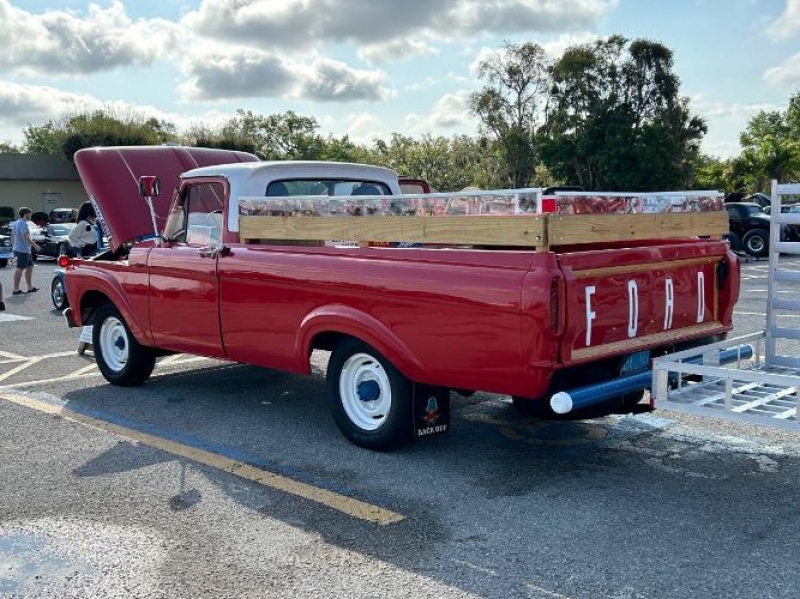
1961 Ford F-250
Pricing Guide
1953-1956 first-generation F250s: driver-quality cars run $25,000-$45,000 today. The 1956 model is the most desirable. Restomod first-generation F250s: $45,000-$85,000+. Documented original cars: $45,000-$80,000.1957-1960 second-generation cars: driver-quality cars run $22,000-$38,000. The second-generation F250s are dramatically cheaper than equivalent F100s of the same era and represent good value for buyers who don't need a half-ton's lighter handling.
1961-1966 third-generation F250s: driver-quality cars run $18,000-$32,000. The 1961-1963 unibody configuration was actually more common on F250s than F100s due to commercial-vehicle demand. Conventional cab/bed 1964-1966 F250s are the more practical choice for collector ownership.
1967-1972 bumpside F250s have appreciated dramatically since 2018. Driver-quality cars run $22,000-$40,000, with restomod builds at $50,000-$85,000. Highboy 4WD F250s (1967-1977) command 25-40% premium over equivalent 2WD trucks due to off-road desirability.
1973-1979 dentside F250s: driver-quality cars run $18,000-$32,000. The 1973-1977 highboy 4WD F250 is the most desirable variant of this era. The 1978-1979 cars represent the smart-money entry into dentside F250 ownership.
1980-1986 final-generation F250s: driver-quality cars run $15,000-$28,000 for gas-engine examples. 6.9L diesel-equipped 1983-1986 F250s command 15-25% premium — $22,000-$40,000 for documented diesel trucks.
Project F250s start around $8,000-$18,000 across most generations. Stripped roller candidates: $3,500-$8,000.
Fun Facts
The F250 designation began with the 1953 F-Series redesign as the three-quarter-ton model in Ford's payload-class numbering scheme. Ford's product planners chose the round numbers (F100, F250, F350) over the alphabetical predecessors (F-1, F-2, F-3) to provide clearer payload-class identification for fleet buyers. The naming convention has remained essentially unchanged through Ford's modern Super Duty production.The iconic 4WD Highboy F250 was Ford's response to growing off-road demand in the late 1960s and 1970s. Highboy F250s (1967-1977) feature an unusually high 4WD ride height due to the divorced-style transfer case mounting, which positioned the transfer case behind the transmission rather than directly attached. The configuration provided exceptional ground clearance but required modifications to the bed and fender heights. Documented Highboy F250s now command 25-40% premium over equivalent 2WD trucks.
The 6.9L IDI diesel introduced in 1983 was actually built by Navistar International for Ford and represented the first widely-available diesel option in the F-Series. The 6.9L's combination of working-truck reliability and acceptable fuel economy (15-19 mpg typical) made it the preferred F250 engine for commercial buyers, and surviving 6.9L F250s in good condition are now genuinely sought-after by collectors and restorers.
Frequently Asked Questions
Ready to find your F-250?
Browse 6+ active Ford F-250 listings on Classic Cars Arena.
View Listings →