
Classic Ford Model T Buyer's Guide
Buyer's guide for the Ford Model T (1908–1927). Year-by-year differences, body styles, mechanical inspection of the unique planetary transmission, common issues, and current market values for drivers through to concours examples.

The Ford Model T is the automobile that made the automobile universal — and it remains the most historically significant production car ever built. Manufactured from 1908 to 1927 in volumes that made it the most numerous automobile of its era by an enormous margin, the Model T transformed American society, democratised personal transportation, and established manufacturing practices that the rest of the world spent decades learning to replicate. Buying a Model T today is an act of connection to that history — and, with proper preparation, an accessible one.
Understanding the Model T
The Model T occupied nineteen model years of continuous production, during which Ford refined rather than replaced the basic design. Understanding the year-by-year evolution is essential for buyers — not merely for authenticity purposes, but because parts interchangeability between years is more complex than many newcomers expect.
Early Production (1908–1914)
The earliest Model Ts are the rarest and the most complex for new collectors. The 1908–1910 cars used a two-piece windshield, brass fittings throughout, and a firewall-mounted fuel tank — details that differ significantly from later cars. From 1911 onward, the steel body became standard on most body styles. Brass-era Model Ts (roughly 1908–1914) command significant premiums from collectors who specialise in the earliest cars and are generally not recommended as first acquisitions without specialist guidance.
Standard Production (1915–1923)
The 1915–1923 cars represent the sweet spot for most new Model T collectors. By 1915 the design had been sufficiently standardised that parts interchangeability is more straightforward, the body styles are well-documented, and the availability of reproduction parts — which is excellent for the Model T generally — is at its strongest for these years. The 1919 introduction of the electric starter (optional, standard by 1919) transformed the car from a hand-cranked specialist's machine to something approaching ordinary usability. Bodies available in this era include the Runabout (two-seat roadster), the Touring (four-seat open tourer), the Coupe, the Fordor sedan, and various commercial body styles.
Late Production (1924–1927)
The final years of Model T production saw significant refinements: a balloon tyre option, a new colour range (black remained dominant but was not the only option after 1925), and mechanical improvements that made the late cars the most driveable in the range. The 1926–1927 cars are the last and the most refined Model Ts — and for the collector who wants a car they will actually drive, these are the recommended starting point.
The Mechanical Character of the Model T
The Model T's engineering was conceived to be operated and maintained by people with no mechanical background — a radical design brief for 1908. The result is a machine of extraordinary simplicity and durability, provided it is not asked to do things it was not designed for.
| Specification | Value |
|---|---|
| Engine | 177 cu in (2.9L) inline-four, cast en bloc |
| Power output | ~20 hp (early), ~22 hp (late) |
| Transmission | Planetary two-speed forward, one reverse |
| Fuel | Gravity-fed from cowl or firewall tank (year-dependent) |
| Ignition | Flywheel magneto (unique system, no battery required) |
| Top speed | ~40–45 mph |
"Among the antique automobile registries I work with, the Model T community is one of the most generous and most technically thorough. The Ford Model T Club of America has documented nearly every aspect of year-by-year production variation — a resource that is invaluable when authenticating a car being offered at a significant price. I always recommend joining before buying."
— Sarah Whitfield
Market Outlook
The Model T market is broad, accessible, and remarkably stable. A driver-quality touring car or runabout in honest running condition: $12,000–$22,000. A fully restored, correct-specification touring car in correct colour and trim: $28,000–$45,000. Concours-quality restorations verified by marque experts: $45,000–$70,000 for the finest examples. Brass-era cars (1908–1914) in concours condition exceed these figures significantly, with the rarest body styles and earliest production cars approaching $80,000–$120,000. The Model T has never been financially inaccessible as a collector car, and that broad market is its strength.
Browse Ford Model T listings
 Dealer
 United States
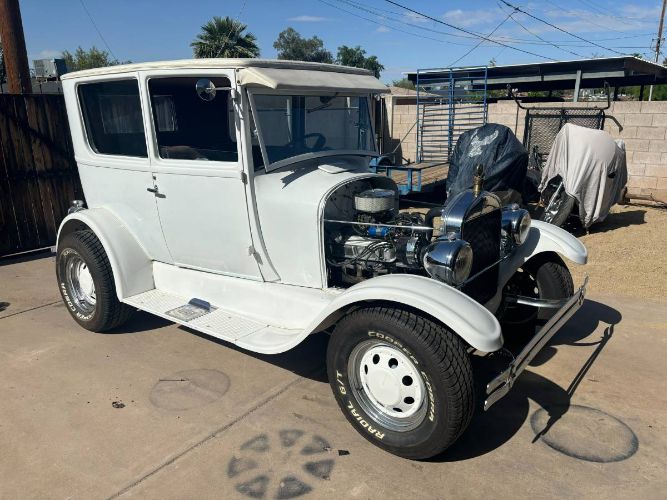
1926 Ford Model T
 Dealer
United States
Dealer
United States
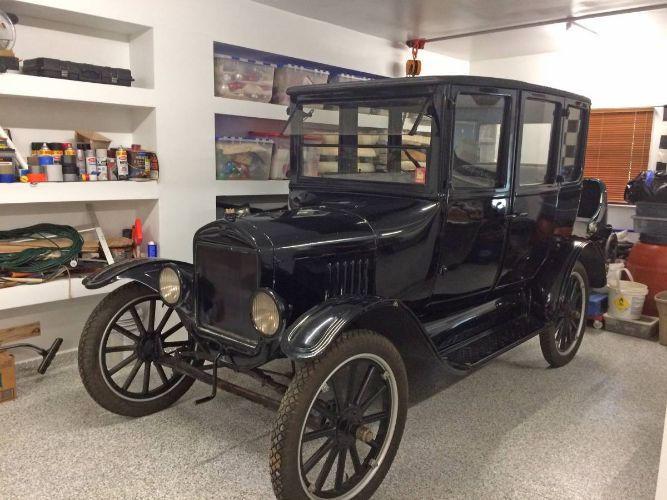
1924 Ford Model T
What to Look For
Engine block authenticity first. The casting number and date code on the block are the primary provenance indicators. A correctly dated engine for the claimed year is the foundation of any significant valuation.Transmission condition second. The planetary transmission is the most mechanically consequential component. A smooth, positive-engaging transmission without slipping indicates recent service or careful preservation.
Body style and year-correct detail third. Model T body styles and trim details changed annually in ways that are well-documented by the marque registries. A car presented as a specific year should have year-correct body hardware, lamps, radiator core style, and fender profile. The Model T Ford Club of America's technical library is the authoritative reference.
Pre-Purchase Checklist
-
Verify engine block casting numbers
The engine block casting number and date code are the primary authentication points. Correct stampings for the claimed year are essential for any car presented as original. Cross-reference with Model T Club documentation. -
Test planetary transmission function
The two-speed planetary transmission engages via foot pedal. Should engage cleanly in low and high, and reverse without slipping or grinding. A slipping transmission needs band adjustment or replacement. -
Check magneto output
The flywheel magneto powers the ignition system. Weak spark indicates worn magneto coils. A magneto test at idle and at speed will identify weakness. -
Inspect engine for bearing condition
Listen at idle for bottom-end knock. Model T babbit bearings can be poured and recast — not expensive — but a knocking engine needs immediate attention. -
Verify body style authenticity
Year-correct body styles vary considerably. Touring, Runabout, Coupe, and sedan bodies changed annually. Cross-reference body hardware and stampings against Model T Club year-specific documentation. -
Check brass fittings and trim authenticity
Brass-era cars (1908–1914) have specific brass lamps, radiators, and fittings. Authentication of brass components is a specialist exercise — involve a marque expert. -
Inspect wooden structural elements
Early Model T bodies used wood framing. Check for rot, delamination, and previous repair at all wooden structural points. -
Test fuel delivery system
Gravity-fed from cowl or firewall tank depending on year. Check fuel line, sediment bowl, and carburettor. Model T carburettors are simple and easily rebuilt. -
Drive the car for at least 20 minutes
Model Ts reveal their condition in use. Check for transmission slipping, cooling adequacy, brake effectiveness (rear drums via foot brake pedal), and steering response. -
Consult the Model T Club registry
For any car priced above $20,000, cross-reference the claimed year and specification with MTFCA documentation before completing the purchase.
Common Issues
The planetary transmission is the most commonly misunderstood and most frequently worn component on surviving Model Ts. The transmission bands — which control forward low, forward high, and reverse — wear with use and must be adjusted or replaced. A car that slips or refuses to hold in gear needs immediate band service.The flywheel magneto ignition system is unique to the Model T and has no equivalent in any other vehicle. Weak magneto coils are common on cars that have sat for years. Replacement coil sets are inexpensive and widely available, but the flywheel must be removed for replacement.
Wood rot in early body styles is a significant concern — particularly in cars that were stored in damp conditions. The wooden body framing can appear sound and still be structurally compromised. A specialist inspection of any car with wooden body framing is strongly recommended.
Overheating is common on cars with blocked cooling passages — a Model T engine runs fine when the cooling system is clear and fails quickly when it is not. A chemical flush and thermostat check should be among the first maintenance tasks on any newly purchased car.
More Model T for sale
 Dealer
United States
Dealer
United States
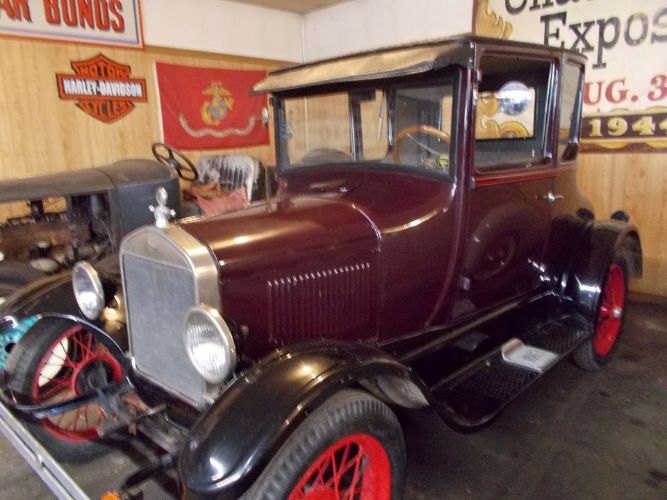
1926 Ford Model T
 Dealer
United States
Dealer
United States
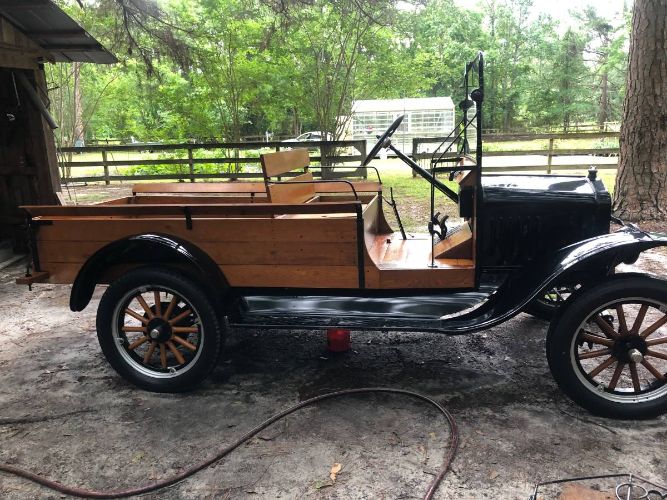
1922 Ford Model T
Pricing Guide
Driver-quality touring car or runabout in honest running condition: $12,000–$22,000. Restored, correct-specification touring car: $28,000–$45,000. Concours-quality marque-verified restorations: $45,000–$70,000.Brass-era cars (1908–1914) in correct condition: $35,000–$80,000 for the finest examples; rarest body styles and very early production (1908–1909) can exceed $100,000.
Commercial body styles (depot hacks, snowmobiles, early trucks): $20,000–$55,000 depending on rarity and condition. The Model T truck and commercial variants are increasingly collected by a separate buyer community.
Fun Facts
The Model T's 177 cubic inch inline-four engine was not significantly changed from 1908 to 1927. Ford made incremental improvements, but the basic engine design that powered the final 1927 car was recognisably the same as the one in the first 1908 production vehicle.Henry Ford offered the Model T in any colour a customer wanted — as long as it was black. The famous line, however, was not entirely accurate: earlier Model Ts were available in other colours, and black only became truly universal from about 1914 to 1925, when the fast-drying Japan black paint was required for production-line efficiency. From 1926, additional colours returned.
Frequently Asked Questions
Ready to find your Model T?
Browse 6+ active Ford Model T listings on Classic Cars Arena.
View Listings →