The end of an era that almost nobody noticed at the time
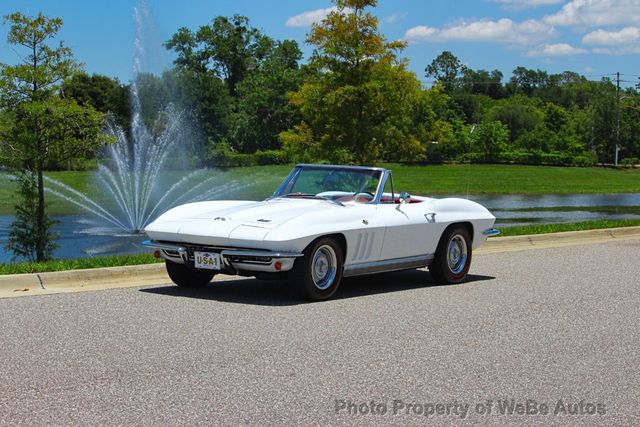
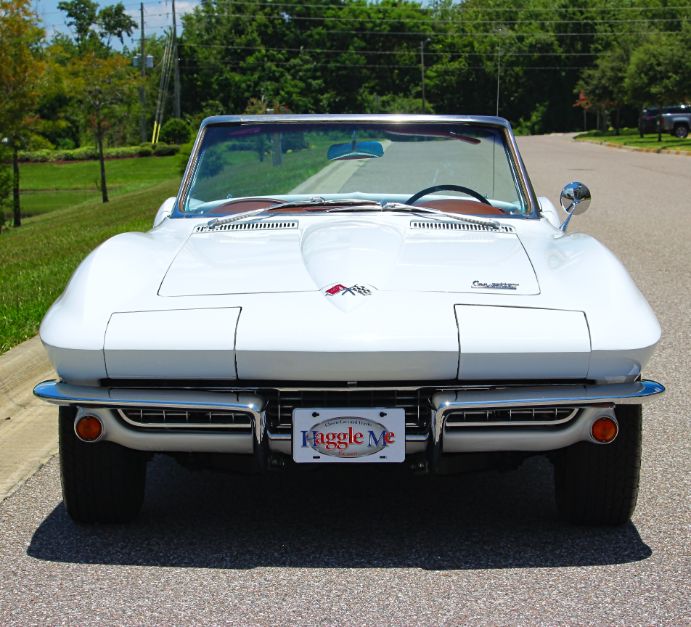
When Chevrolet rolled the last 1975 Corvette convertible off the St. Louis assembly line, there were no ceremonies. No press releases marking the occasion. The Corvette had carried a convertible option continuously since 1953, through every generation up to that point, and now the body style was simply gone from the order sheet. Most buyers at the time had no particular reason to mourn. The coupe sold better anyway. The emissions-strangled engines of the mid-1970s were not inspiring anyone to seek the wind in their hair.
What no one could have known in 1975 was that the convertible would stay gone for eleven years. Not until the 1986 model year, as the C4 generation was finding its footing, would an open-top Corvette become available again. That gap turned the 1975 into something it was never intended to be: a bookend. The final statement of one way of experiencing America's sports car, followed by a long silence.
Patrick Walsh writes about the C3 generation as a car that kept reinventing itself within the same body. The 1975 convertible is the story of a reinvention that simply stopped.
Why GM walked away from the open top
The decision to drop the convertible after 1975 was not primarily about sales, though the coupe did outsell the open-top model by a wide margin through the early 1970s. According to industry accounts of the period, the more pressing concern was regulatory. The federal government had been working toward rollover protection standards that would have required structural reinforcement in convertibles, potentially adding significant cost and engineering complexity to a car that was already under pressure from emissions regulations and rising insurance costs.
The rollbar legislation, as it was discussed in the industry, never actually passed. GM committed to the coupe configuration anyway, reportedly based on the reasonable expectation that the rules were coming regardless. The engineering hedge became a decade-long absence. It is a peculiar footnote: the 1975 Corvette convertible was discontinued in response to a regulation that never materialized, leaving the open-top version of America's sports car in suspension for a stretch of time that now feels almost inexplicable.
Some period accounts suggest that manufacturing simplicity played a role as well. The C3 body, with its complex fiberglass curves derived from the Mako Shark design language, was already demanding to produce. A single body style offered cost savings that mattered as the economic pressures of the mid-1970s reshaped what GM could afford to build. The regulatory anxiety and the production economics pointed the same direction.
What the 1975 model year actually brought
The 1975 Corvette carried changes that defined the late C3 as a fundamentally different machine from the cars that had preceded it earlier in that generation's run. The most significant was the arrival of the catalytic converter, which pushed the emissions-control story in a new direction but also forced further detuning of the available engines.
The base L48 small-block V8 was rated at 165 horsepower net, a number that reads poorly against the 350-horsepower LT1 of 1970 and feels especially deflating when measured against what the big-block era had produced. The L82, the performance option that survived into 1975, was rated at 205 horsepower net. Neither figure inspired the kind of road test prose that had characterized Corvette coverage a few years earlier.
| Spec | 1975 Corvette (Base L48) | 1975 Corvette (L82) |
|---|---|---|
| Engine | 350 cu in V8 | 350 cu in V8 |
| Horsepower (net) | 165 hp | 205 hp |
| Transmission options | 4-speed manual or 3-speed automatic | 4-speed manual or 3-speed automatic |
| Convertible production | 4,629 total (both engine options) | |
| Coupe production | 33,836 total | |
| Base price (convertible) | Approximately $7,100 (roughly $40,000 in 2026 dollars) | |
The catalytic converter also meant the end of leaded fuel for Corvette buyers, which changed the maintenance picture for the cars. The compression ratios that had made earlier engines tick had already been reduced substantially. By 1975, the Corvette was running on regular unleaded and producing power figures that would have seemed unambitious even by the standards of ordinary American sedans from a decade earlier. That the car remained desirable at all says something about how much of the Corvette's appeal was carried by its shape and its identity.
The 1975 model year was also the last for the chrome bumper treatment at the rear. The 1974 cars had introduced the urethane rear cap; the 1973 cars had brought the rubber nose. For the full history of how that transition happened, the 1973 rubber-nose story covers the engineering and regulatory context in detail. By 1975, the exterior was in its fully federalized form, which divided opinion sharply among enthusiasts then and still does now.
What it meant to lose the convertible through the C3's final years
The C3 generation ran from 1968 through 1982. That is fifteen model years on a single platform, making it the longest-running Corvette generation. Within that span, the convertible existed for only eight of those years. The car's final four years, from 1979 through 1982, were coupe-only. The convertible's absence shaped what the late C3 felt like as a cultural artifact.
There is something about an open car that changes the relationship between the driver and the road, and between the car and the people who see it. The Corvette's identity had always been built partly on spectacle. The C3 body, derived from the Shark design language that Bill Mitchell's studio developed through the 1960s, had lines that read best in sunlight, with shadows moving across the fenders and the long hood catching the light at angles that a coupe roof interrupts. The absence of the convertible option through the late C3 years muted something.
The malaise-era power story is well documented. What gets less attention is the aesthetic flatness that accompanied it. The coupe was handsome. But the late C3 coupe, with its T-tops, its federalized bumpers, and its softened performance numbers, was a car that had retreated from its earlier ambitions in multiple directions at once. The convertible had been one of the things that kept the car connected to its original purpose.
"The 1975 wasn't the worst Corvette ever built. It was a perfectly capable grand tourer in a decade that had decided grand touring was what the car should be. But when you stand next to one of the 4,629 open-top cars that came off the line that year, you're standing next to the end of something. The next buyer who wanted that experience would wait until Ronald Reagan was in his second term."
— Patrick Walsh
The gap years and what they cost the model's identity
Between 1976 and 1985, a buyer who wanted an open American sports car had few obvious places to go. The Triumph TR7 convertible existed. The Fiat Spider had its adherents. But nothing carried the Corvette's specific combination of American muscle identity, recognizable shape, and brand heritage. The market for that experience simply went unserved for a decade.
The enthusiast press covered the absence periodically. There were persistent rumors through the late 1970s and early 1980s that the convertible would return. The 1982 model year brought cross-fire fuel injection and a sense that something was building, but no open top. The 1983 Corvette, the notional first C4, was so troubled in development that no 1983s were publicly sold. The 1984 brought the new generation properly to market. Still no convertible.
When the 1986 Corvette convertible finally arrived, it was a C4, not a C3. The gap between the last 1975 open-top car and the first 1986 open-top car spans an entire generation change. Whatever thread of continuity had connected every Corvette convertible from 1953 onward had been cut. The 1986 car was essentially starting fresh.
That makes the 1975 not merely the last of its immediate model year, but the last of an unbroken line going back thirty-two years. The full arc of the Corvette convertible from its inception is covered in the complete American sports car story, and the 1975 sits at the hinge of that narrative in a way that only becomes clear in retrospect.
Why the 1975 convertible reads differently now than it did then
Collector markets have a way of reassigning meaning to cars that were overlooked when new. The 1975 Corvette convertible is not a performance car. Its 165-horsepower base engine is not going to excite anyone comparing dyno sheets, and even the L82 option is a long way from what the LS6 454 had represented just four years earlier. The car's value is not in what it did on the road in 1975.
The value is in what it is: the last open-top expression of the C3 generation, produced in numbers low enough to make original, unrestored examples genuinely scarce, at a moment when the factory was transitioning the Corvette's identity from performance machine to personal luxury coupe. That specific combination, last of a line, built in small numbers, carrying a historical footnote that most people do not know, is exactly the kind of story that collector markets eventually discover.
Period accounts suggest that 1975 Corvette convertibles were not treated with particular reverence in the decade after they were built. They were used, modified, and in some cases parted out as the muscle car market focused on earlier, more powerful examples. The attrition rate for cars that were simply driven hard and then neglected is difficult to estimate precisely, but it is reasonable to assume that the surviving population of unmodified, correct 1975 convertibles is a fraction of the 4,629 that left St. Louis.
What remains is a car that sits at an intersection. It is part of the long C3 story without being the most celebrated chapter. It carries the catalytic converter and the low horsepower ratings that mark it as a product of its regulatory moment. And it is, definitively, the last open Corvette for eleven years. Each of those things is a reason to look past it. Together, they are a reason to look more carefully.
Sources and notes
- National Corvette Museum — Corvette History — institutional documentation on Corvette production history and model-year changes
- Hagerty Media — 1975 Corvette coverage — market valuations and historical context for the C3 generation
- Motor Trend Classic — Corvette archive — period road test data and model-year specifications
- National Corvette Restorers Society (NCRS) — production number documentation and authenticity standards for C3 Corvettes
- Car and Driver — Corvette specification archive — historical engine ratings and option code reference