Fuel injection comes back — and it's complicated
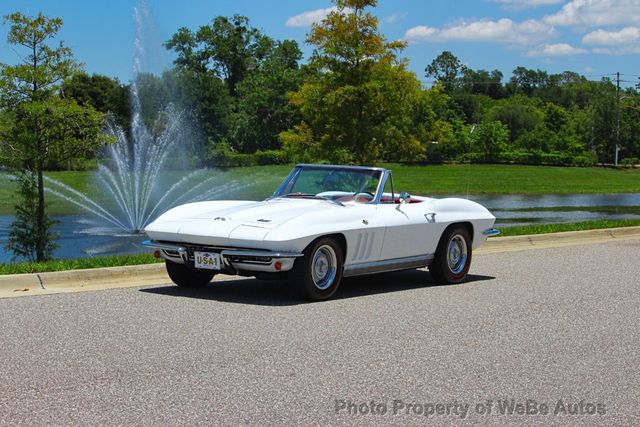
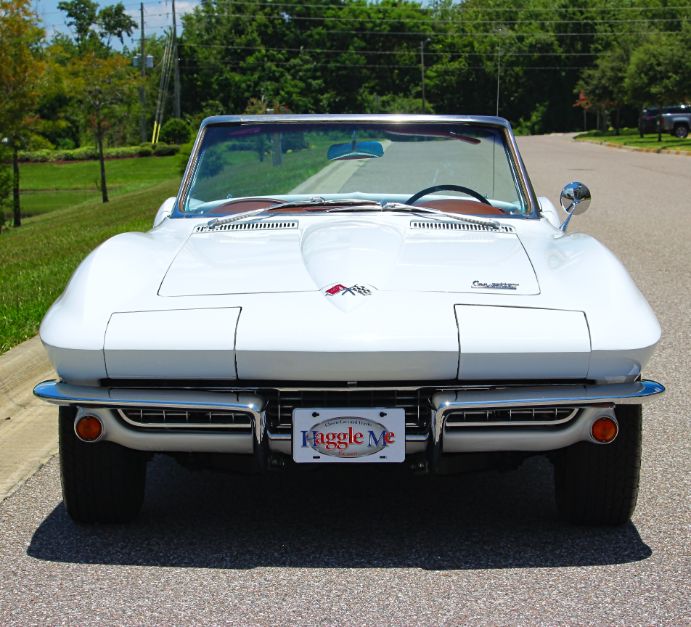
The last time a production Corvette left the factory with fuel injection, Lyndon Johnson was president and the Vietnam War was still something most Americans thought would be over quickly. That was 1965. The Rochester mechanical injection system on the L84 327 was finicky, expensive to service, and eventually killed by emissions regulations that the carbureted engines could meet more cheaply. Chevrolet pulled it after that model year and didn't look back. For seventeen years, every Corvette that rolled out of St. Louis wore a carburetor.
Then came 1982, and the Cross-Fire Injection. It wasn't what anyone in the enthusiast community would have called a return to form — two throttle-body injectors feeding a cross-ram intake manifold is a long way from the high-revving Rochester unit of the early 1960s — but it was something. It was Chevrolet saying, out loud, that the fuel injection story wasn't finished. That signal mattered more than the horsepower numbers.
What Cross-Fire Injection actually was
The system deserves an honest description, because it gets romanticized in ways it doesn't entirely earn. Cross-Fire Injection used two throttle-body units, one positioned over each cylinder bank on a cross-ram intake manifold. Each throttle body carried a single injector squirting fuel above the throttle plate — which is to say, not into the ports, not near the valves, but upstream, where a carburetor would have sat. Rochester called this type of injection TBI: throttle-body injection. The fuel still had to travel down the intake manifold runners before reaching the cylinders, and fuel distribution across all eight cylinders depended on how well the intake managed that process.
The cross-ram manifold was the interesting part. Each throttle body fed the opposite cylinder bank — intake charge from the driver's-side throttle body crossed over to feed the passenger-side cylinders, and vice versa. The geometry was meant to improve charge distribution and give the intake a more aggressive look than a conventional single four-barrel setup. Period accounts suggest it worked reasonably well, though the manifold's thermodynamic characteristics caused some cold-weather driveability complaints in early cars that Chevrolet addressed through ECM calibration updates.
Fuel delivery was controlled by the Computer Command Control system, Chevrolet's first generation of closed-loop engine management. A manifold absolute pressure sensor, coolant temperature sensor, and exhaust oxygen sensor fed data to the ECM, which adjusted injector pulse width and ignition timing accordingly. Compared to a properly calibrated carburetor, the system was more consistent across temperature and altitude variations. Compared to the port-injection systems that would appear on the C4 within two years, it was a first-generation compromise.
The L83 engine — the designation covering the 350 cubic-inch small-block equipped with Cross-Fire — was rated at 200 horsepower and 285 lb-ft of torque. Compare that to the L81 carbureted 350 it replaced: 190 horsepower. The injection system was worth roughly ten horsepower on paper, which is not nothing, but it's not the kind of number that generates headlines. What it did deliver was improved throttle response, slightly better fuel economy than the outgoing carbureted setup, and a cleaner calibration across operating conditions. For 1982, that counted.
Why throttle-body injection rather than port injection
Anyone who knew what was coming with the C4 would have asked this question. Chevrolet's engineers understood port injection. They were already developing the Tuned Port Injection system that would debut on the 1985 Corvette and the 1985 Camaro. So why fit a less sophisticated throttle-body system to the final C3?
The answers are practical and not particularly complicated. Port injection in 1982 required individual injectors at each cylinder port, separate fuel rails, higher fuel pressures, and a considerably more complex wiring harness and ECM to manage all of it. The tooling investment for a system that would be replaced in two model years made no economic sense. The C3 was already a mature platform — Chevrolet wasn't going to reengineer the intake side of the engine for a two-year run. Throttle-body injection could be adapted to the existing small-block without major changes to the cylinder heads or lower intake manifold.
There's also the matter of where Chevrolet's engineering resources were concentrated. The C4's architecture was absorbing the serious technical work. The 1982 Corvette got what Chevrolet could deliver within the constraints of the existing platform, and within those constraints, throttle-body injection was a reasonable solution. The more ambitious technology was being saved for the car that would follow.
| Specification | 1982 Corvette L83 | 1981 Corvette L81 (carbureted) |
|---|---|---|
| Engine | 350 cu in (5.7L) small-block V8 | 350 cu in (5.7L) small-block V8 |
| Fuel delivery | Cross-Fire Injection (TBI) | Rochester Quadrajet 4-barrel |
| Horsepower (gross rated) | 200 hp @ 4,200 rpm | 190 hp @ 4,200 rpm |
| Torque | 285 lb-ft @ 2,800 rpm | 280 lb-ft @ 2,800 rpm |
| Compression ratio | 9.0:1 | 8.2:1 |
| Transmission options | 4-speed automatic only | 4-speed manual or automatic |
One figure in that table needs to be acknowledged directly: the 1982 was the first Corvette offered without a manual transmission option since the car's earliest years. The four-speed automatic was the only gearbox available. Chevrolet made the decision based on the Cross-Fire system's calibration requirements — the ECM tuning was optimized around the automatic's shift characteristics, and engineering a manual-transmission calibration for a one-year application wasn't justified. Purists noticed. Some are still annoyed.
The Collector Edition and the end of the C3
Chevrolet knew the 1982 would be the last C3. They had known for years. And to their credit, they marked the occasion properly. The Collector Edition package was offered as a separate model, not merely an option group, and it remains the most visually distinctive Corvette that came out of the Mako Shark design era that defined the C3 generation.
The paint was Silver Beige Metallic, sometimes described in period materials as bronze metallic. The glass roof panels were bronze-tinted. The rear glass hatch was a lift-off unit. Interior trim used silver-beige leather with appropriate badging, and the seats carried the Collector Edition designation. Wheels were a distinctive turbine-style aluminum casting not used on the base model. The car presented as a coherent package, which the C3 hadn't always managed in its final years.
There was also a practical significance to the Collector Edition that gets overlooked. After 1975, Chevrolet had discontinued the convertible Corvette. The T-top cars continued, but a fully open Corvette was gone. The Collector Edition's lift-off rear glass hatch, combined with the removable roof panels, created what some period observers called the closest thing to a convertible experience available in a new Corvette at the time. It wasn't a true convertible — the body structure was unchanged — but the open-air combination was something. The real roadster would return with the C4 in 1986.
"The Collector Edition was Chevrolet's way of closing the C3 book properly. These cars weren't produced in enormous numbers, and the ones that stayed original — correct paint, correct glass, matching documentation — are genuinely worth tracking. Not because they're the fastest C3, but because they're the last one, and Chevrolet treated that with some seriousness."
— Tom Ramirez
Production figures for the Collector Edition are around 6,759 units, out of a total 1982 Corvette production of roughly 25,407 cars. The Collector Edition carried a significant premium over the base Corvette — reportedly in the range of $4,000 above the base price, which itself started around $18,290. In 1982 dollars, a fully equipped Collector Edition could approach $24,000 or more, which was serious money for a domestic sports car.
The missing year: why there was no 1983 Corvette
This is one of those facts that sounds like a trick question until you understand what happened. There is no 1983 model year Corvette. None were sold to the public. The C4 development program ran into serious problems — chassis, quality, fit and finish issues that Corvette chief engineer Dave McLellan and his team weren't willing to accept at launch. Roughly 43 pre-production 1983 Corvettes were reportedly built at the new Bowling Green, Kentucky assembly plant before the decision was made to push the launch to the 1984 model year. Most of those cars were destroyed. One survives at the National Corvette Museum.
The consequence of that decision is that the C3's long run of fifteen-plus years ended with the 1982 model year, and the C4 launched as a 1984. The two generations are directly consecutive from a production standpoint, with no 1983 in between. For the 1982 Collector Edition, that gap gives the car an additional historical weight: it was the last C3, the bridge was gapped, and the next new Corvette was a fundamentally different automobile.
What Cross-Fire Injection meant, beyond the spec sheet
The honest performance assessment of the 1982 Corvette L83 is that it wasn't dramatically faster than what came before. Period road tests typically showed 0–60 times in the 7–8 second range, depending on conditions and who was driving. The C3's long struggle through the horsepower drought of the mid-1970s had brought the car to a point where 200 horsepower felt like progress, and it was — but not the kind of progress that makes collectors reach for their checkbooks on the basis of performance alone.
What the Cross-Fire system represented was a direction. Chevrolet was publicly committing, in hardware form, to computer-managed fuel injection as the future of the Corvette. The system itself was a starting point, not a destination. Anyone paying attention in 1982 could see that the technology was preliminary, that it would be superseded. What they were also seeing was that Chevrolet hadn't abandoned the ambition. The fuel injection story that Rochester had started in 1957 and that the 1965 L84 had nearly completed wasn't over. The 1984 C4 would arrive with a significant leap in power, and the 1985 Tuned Port Injection would push the small-block to a place where performance arguments became serious again.
The 1982 Corvette sits at the junction between those two eras. It's the car that carried a compromised but functional fuel injection system through the last year of one generation, into the gap year, and pointed toward everything that followed. The 1978 fastback restyle had updated the C3's visual language for its final years; the 1982 Collector Edition and Cross-Fire Injection closed that chapter with some technology and some dignity attached. Given where the Corvette had been in 1975 and 1976, that's not a small thing.
Sources and notes
- Hemmings Motor News — 1982 Corvette Collector Edition feature — period production context and Collector Edition option documentation
- National Corvette Museum — Corvette History — 1983 pre-production history and surviving car details
- Hagerty — 1982 Corvette profile — production numbers, valuation context, L83 specification details
- Motor Trend — 1982 Corvette original road test archive — period performance figures and press impressions of the Cross-Fire system