
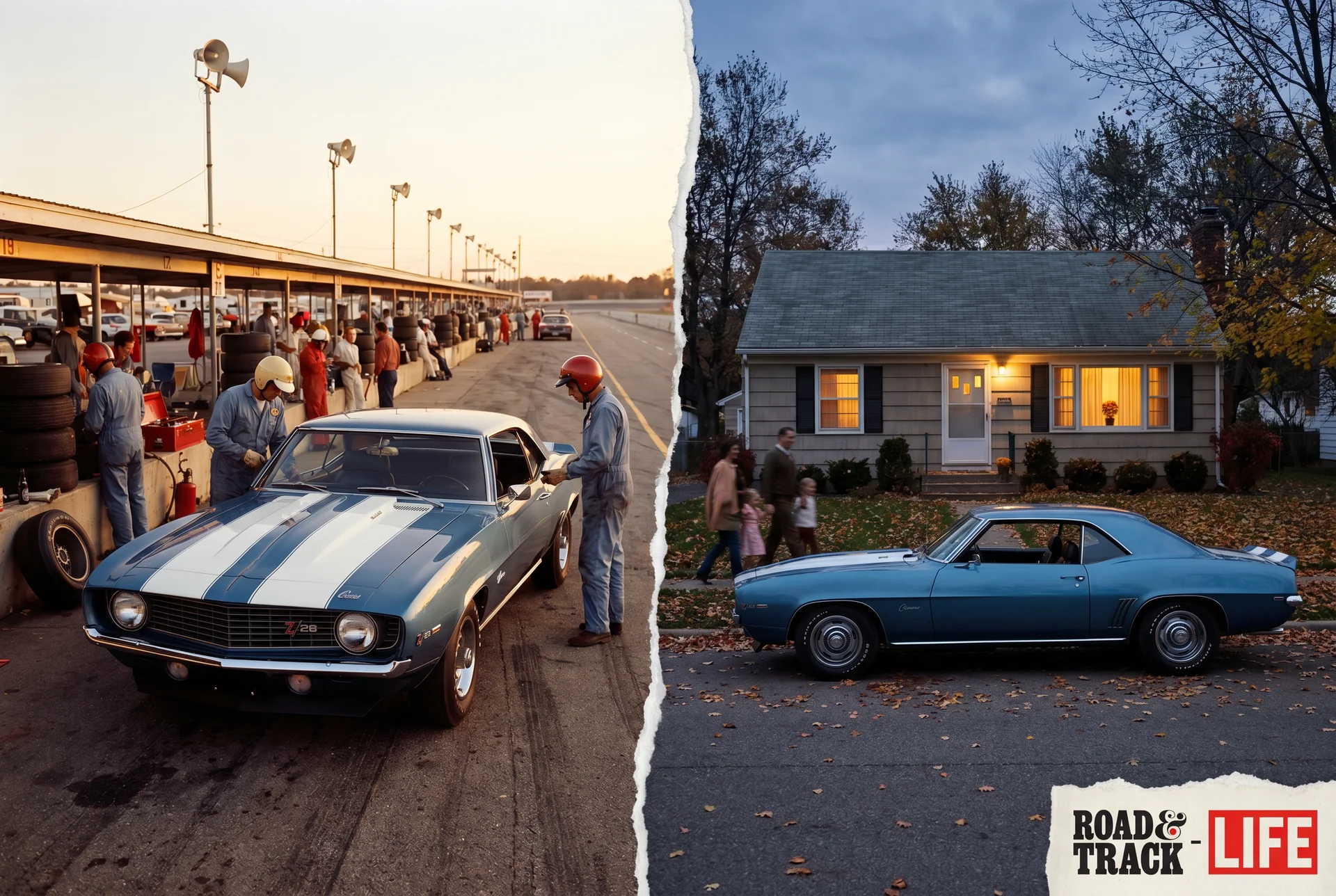
The Z28 option package was never supposed to be popular. When Vince Piggins, Chevrolet's product promotion engineer, pushed the idea through corporate approval in 1966, the goal was simple: build a Trans-Am racing homologation car, satisfy the SCCA's production car requirements, and win a championship. The fact that buyers would pay for it was secondary. The fact that sixty years later the 1969 Chevrolet Camaro Z28 would be among the most sought-after collector cars ever built was inconceivable at the time.
This is the car that proved a homologation special could also be a street legend — and why finding a genuine, numbers-matching example for sale today requires both patience and a serious budget.
What Was the 1969 Chevrolet Camaro Z28?
The 1969 Chevrolet Camaro Z28 was not a trim level, a marketing package, or a cosmetic upgrade. It was RPO Z28 — Regular Production Option — a purpose-built performance specification created specifically to qualify the Camaro for SCCA Trans-Am Series competition. The rules required a minimum number of street-legal production cars to be built and sold before a manufacturer could race the model. Chevrolet built the Z28 to meet that threshold, and buyers responded in numbers nobody at General Motors had anticipated.
The Z28 was available exclusively as a sport coupe — no convertible, no fastback variant. The coupe body gave the car structural rigidity that mattered on a road course, and every Z28 came with a close-ratio 4-speed transmission as standard equipment. There was no auto option in the Z28 specification for 1969: if you wanted the package, you drove a manual. The car was a driver's car in the most literal sense — configured for someone who wanted to use it, not just display it.
How Did the Z28 Engine Compare to the Camaro SS?
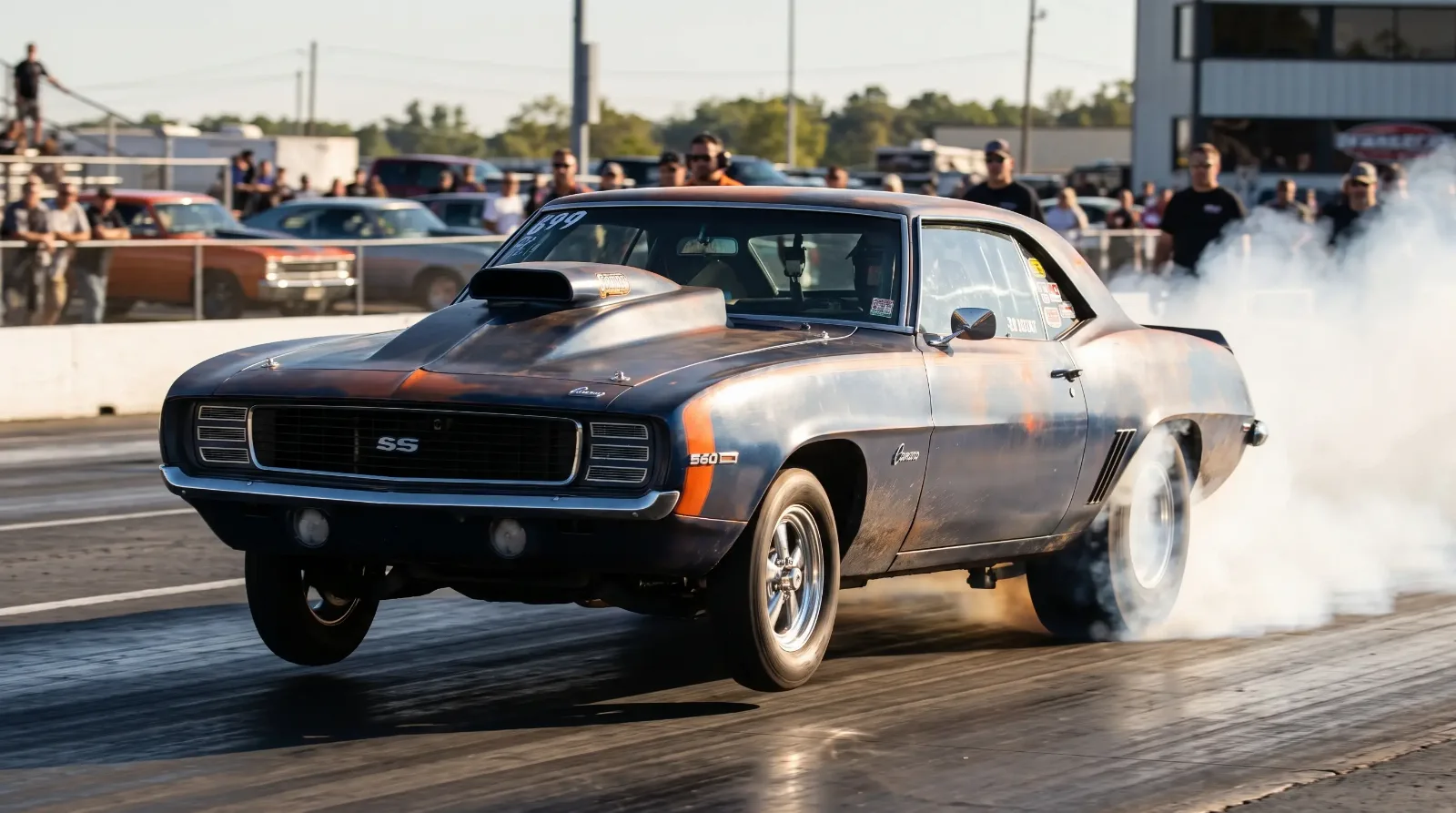
Understanding the Z28 requires understanding what it wasn't. The Camaro SS — available with 350, 396, and 427 cubic inch engines — was built around displacement and straight-line torque. The SS 396 and SS 427 big block variants were brutal in a straight line, but their weight and power delivery made them less suited to road course competition than the street impression suggested.
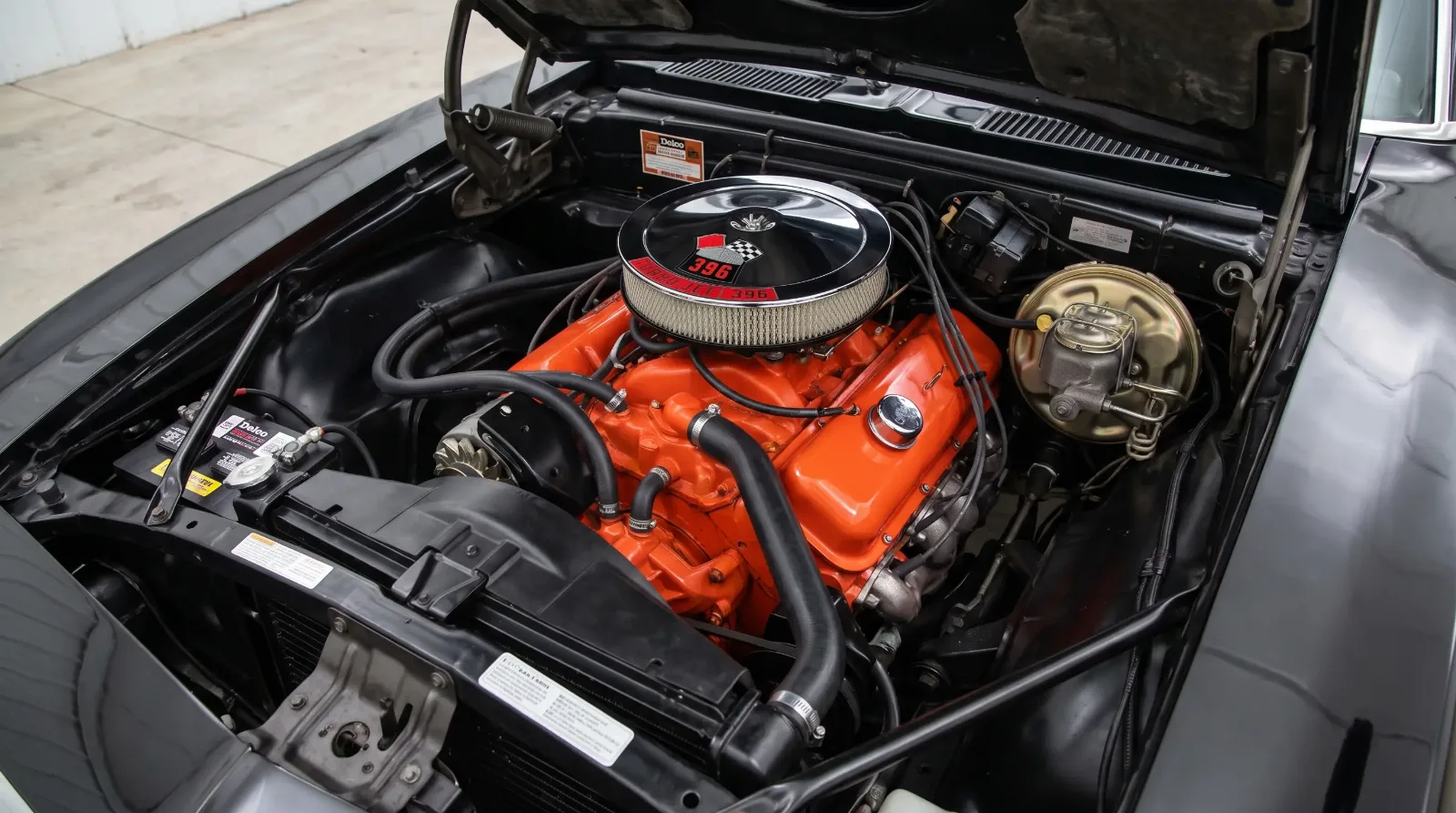
The Z28's engine took a completely different approach. Chevrolet's engineers took a 327 block, fitted it with a 283 crankshaft, and produced a 302 cubic inch V8 that was compliant with SCCA Trans-Am's 305 cubic inch displacement cap. The result was a small block that revved freely to 7,500 rpm — behavior the big block SS engines couldn't replicate. A buyer choosing between a Camaro SS coupe and a Z28 coupe in 1969 was choosing between two entirely different automotive philosophies.
The RS (Rally Sport) appearance package could be combined with the Z28, giving the car hidden headlights and additional trim without changing the mechanical specification. RS/Z28 combinations are among the most visually striking of the first generation cars.
Where Did the Z28 Come From? The 1967 First Generation Origins
The Z28's origins trace directly to 1967, the first generation Camaro's debut year. Vince Piggins recognized an opportunity in the SCCA Trans-Am Series almost immediately after the Camaro launched. Ford was competing with the Mustang, and Chevrolet needed a credible counter. The Z28 package was created in time for the 1967 season but sold in relatively modest numbers — the car wasn't heavily advertised, and many dealers had limited knowledge of what it actually was.
The 1967 and 1968 Z28s established the formula that the 1969 car refined. The 302 engine carried through all three years of first generation production, as did the emphasis on handling over straight-line speed. The base Camaro used a 230 cubic inch inline six for economy buyers — the Z28 was at the opposite extreme of the same model range, sharing only the body and basic architecture.
What Changed Between 1968 and the 1969 Z28?
The 1968 Z28 was a capable car, but the 1969 revision addressed nearly every criticism the earlier cars had received. The 1969 body received longer hood lines, revised character lines along the flanks, and a more aggressive front fascia — changes that gave the car a visual presence the 1968 model lacked. The result was a coupe that looked as purposeful as it performed.
Mechanically, the 1969 Z28 gained front disc brakes as a near-universal option — buyers understood that a car capable of the Z28's cornering performance needed proper stopping power. Front and rear spoilers became available for the first time, functional on the race track variants and aesthetically correct on street cars. The cowl induction hood, which drew high-pressure air from the base of the windshield at speed, was another 1969 addition that gave serious drivers a genuine performance upgrade over the standard setup.
The Muncie M22 "Rock Crusher" 4-speed transmission was the choice for track use, with its closer ratios and heavier construction suited to the 302's high-rpm power delivery. The upgraded suspension package tightened handling responses and reduced body roll without making the car unusable on public roads — a balance that made the Z28 genuinely street-legal while remaining competitive on a road course.
How Did the Z28 Compete in the SCCA Trans-Am Series?
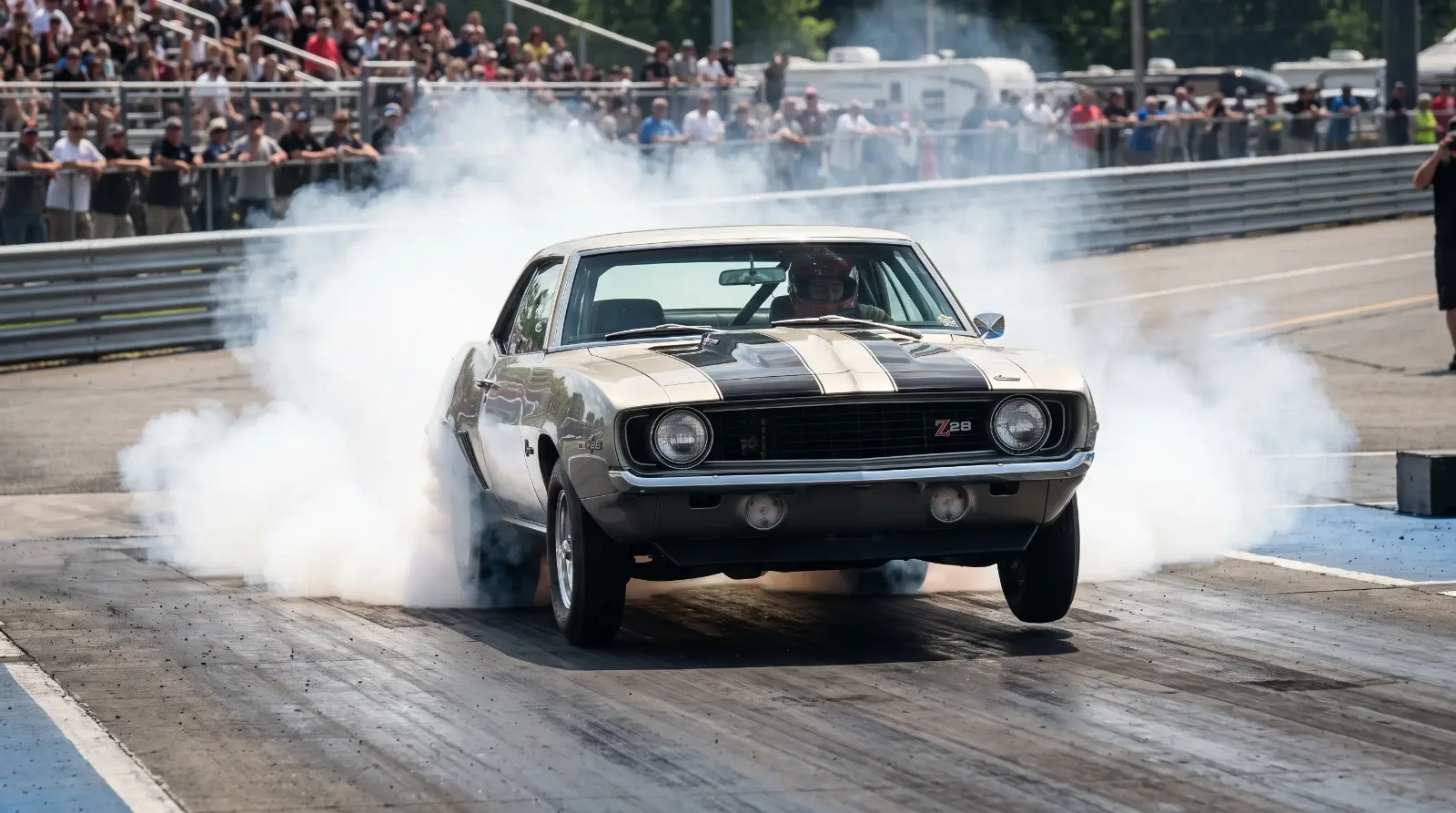
The 1969 Trans-Am season was the Z28's defining moment. Chevrolet's effort was run by Roger Penske with Mark Donohue driving — a combination that had already demonstrated what a prepared Camaro Z28 could do against Ford's Mustang entries and the other factory-backed teams.
Donohue's approach to the race cars was methodical. His vehicles were known for reliability as well as speed — an unusual combination in period Trans-Am racing, where mechanical attrition was common. The association between Donohue's race-winning Camaros and the street Z28 that shared their basic architecture gave Chevrolet a genuine performance narrative. When Chevrolet won the manufacturer's championship in 1969, every Z28 coupe on a dealer's lot carried that reflected credibility. The car's ability to compete in the SCCA Trans-Am was not a marketing claim — it was a documented result.
Ford's Mustang was the primary rival, and the Z28 versus Mustang dynamic on the race track mirrored the sales competition in showrooms. Buyers who wanted to align with the winning side in 1969 had a clear answer: the camaro z28.
What Trim and Options Did the 1969 Z28 Offer?
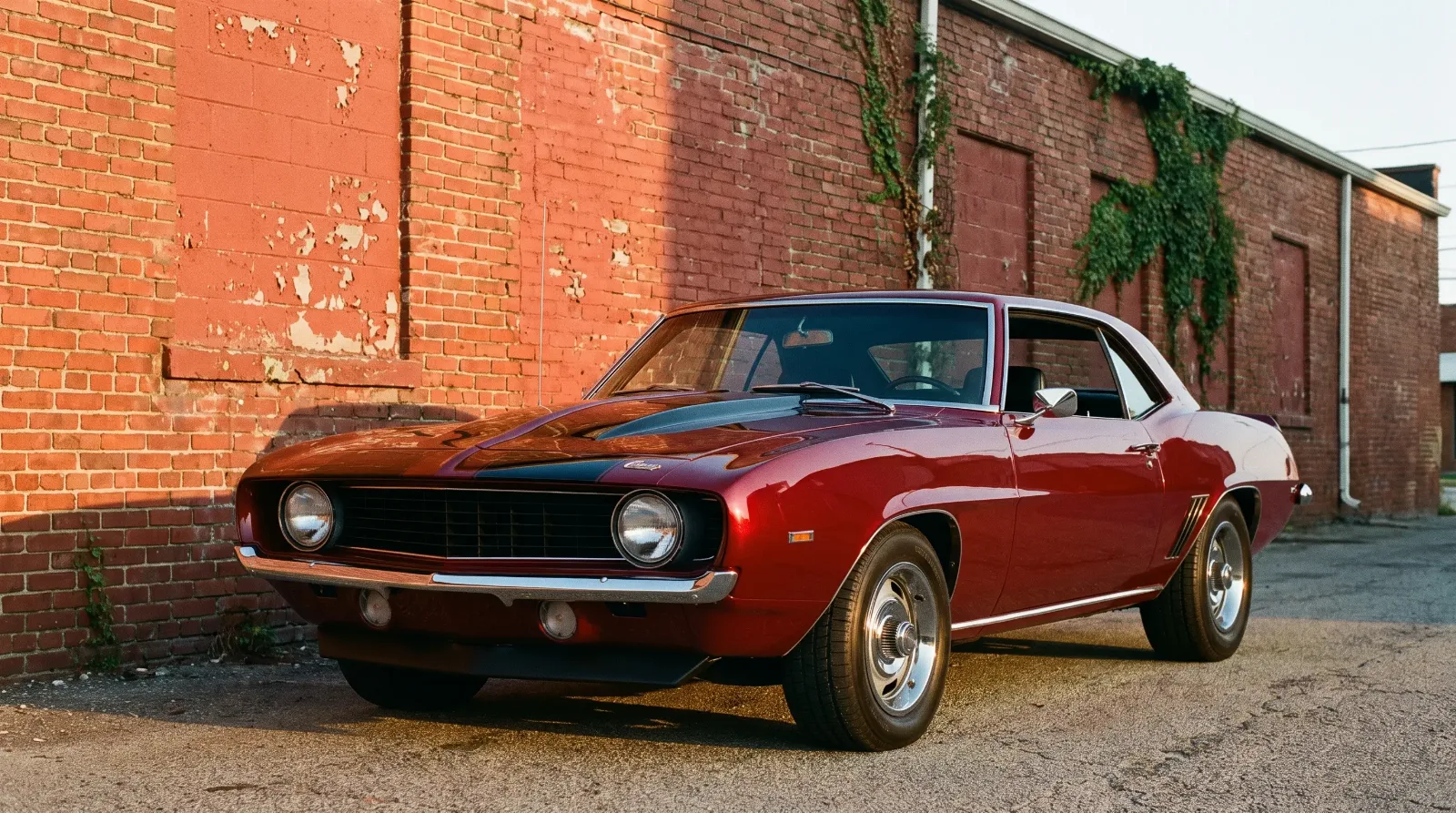
Beyond the mechanical specification, the 1969 Z28 offered a range of options that allowed buyers to configure the car for different purposes. The appearance package included special striping — a broad dual stripe running over the hood and rear deck — that identified the Z28 visually from the SS and base Camaro models. The stripe was functional in that it reinforced the car's performance identity, but it was optional: buyers who wanted a cleaner look could delete it.
Interior options included the standard bucket seats and full instrumentation expected in a performance coupe, with a tachometer positioned where it could be read quickly under hard driving. The vehicle's interior trim options were more limited than the standard Camaro's — the Z28 spec prioritized the driver's experience over passenger comfort features.
The RS package remains the most popular Z28 option combination in the collector market. An RS/Z28 with documented factory options, a surviving build sheet, and matching numbers commands a premium over a base Z28 coupe — the combination of appearance and performance is what many buyers were specifying in 1969, and the collector market reflects that original demand sixty years later.
How Did the 1969 Z28 Influence the 1970 Camaro?
The 1970 Camaro represented a complete redesign that built on everything the 1969 car had established. The Z28 carried forward into the new body style, retaining the small block philosophy and manual transmission requirement while gaining a more refined chassis and updated aerodynamics. The 1970 Z28 used a 360-horsepower LT-1 350 V8 rather than the 302 — a change driven by evolving SCCA rules — but the car's character remained focused on the same driver-oriented priorities.
Collectors who can't find or afford a 1969 1969 chevrolet camaro z28 sometimes consider the 1970 as an alternative. The values are comparable for high-condition examples, but the 1969 car's direct Trans-Am championship connection and its first generation body style give it a historical significance the 1970, despite being an excellent car, can't quite replicate. The 1969 remains the reference point.
What Is the Price of a 1969 Camaro Z28 Today?
The Z28 market has stratified significantly based on documentation, specification, and condition. A numbers-matching car with the correct DZ 302 block verified by casting date codes and engine stamp, in driver-quality condition with some repaint and a correct interior, typically lists for sale in the $55,000–$75,000 range. Show-quality correct cars with date-coded engines, matching transmission numbers, and documented dealer history have brought $90,000–$130,000 at major auction venues in recent years.
Mileage matters, but documentation matters more. A low-mileage car without a build sheet is worth less to a serious buyer than a higher-mileage car with full paperwork. The vehicle's Camaro build sheet — most commonly found folded under the rear seat cushion — is the single most important provenance document a Z28 can carry. Dealer prep records, original window stickers, and Protect-O-Plate documentation add further value.
The most valuable listings are cars with the cowl induction hood, front and rear spoilers, four-wheel disc brakes, and the Muncie M22 transmission — a combination that represents the factory's most complete performance specification. Expect to pay 15–25% above comparable cars for that package. Insurance for high-value Z28s has become a meaningful cost consideration; agreed-value classic car coverage is standard practice for anything over $75,000.
What Should Buyers Check Before Purchasing a 1969 Camaro Z28?
The Z28's value makes it worth cloning, and convincing fakes exist. Any serious purchase requires verification of the engine block casting number and date codes against the car's build date, the transmission stamp against the build sheet, and the VIN-derivative partial stamp on the engine block. A pre-purchase inspection by a Z28-specialist should be non-negotiable on any car over $60,000.
Camaros of this era are susceptible to cowl rust — the area behind the dashboard where water collects — and floor pan rust in cars stored in wetter climates. A car that has been garaged and maintained in a dry region starts from a better position than a vehicle with unknown storage history. The rear quarter panels are difficult and expensive to repair correctly, and incorrect patch panels reduce value significantly.
Mileage claims on Z28s should be approached with caution. Many cars have had their odometers rolled back or replaced over six decades of ownership. Condition of the chassis, undercarriage, and mechanical components tells a more reliable story than the gauge cluster. Bring a specialist. Bring a borescope. Don't let enthusiasm override diligence.
Key Facts to Remember
- The Z28 was RPO Z28 — a homologation package built to qualify the Camaro for SCCA Trans-Am Series competition, not a standard trim level
- Engine: 302 cubic inch small block (327 block + 283 crank) producing ~290 hp officially, ~350 hp in reality — built to rev to 7,500 rpm
- 1969 was the first year for front and rear spoilers, cowl induction hood, and near-universal front disc brakes on Z28s
- The only transmission available was a close-ratio 4-speed manual — no auto option existed for the Z28 in 1969
- Roger Penske and Mark Donohue won the 1969 SCCA Trans-Am manufacturer's championship in a prepared Camaro Z28
- RS/Z28 combinations (Rally Sport appearance package plus Z28 mechanical spec) are the most popular collector configuration
- Current sale prices: $55,000–$75,000 for driver-quality numbers-matching cars; $90,000–$130,000+ for show-quality documented examples
- Build sheet location: under the rear seat cushion — its presence or absence significantly affects collector value