A competition between studios, not just designers
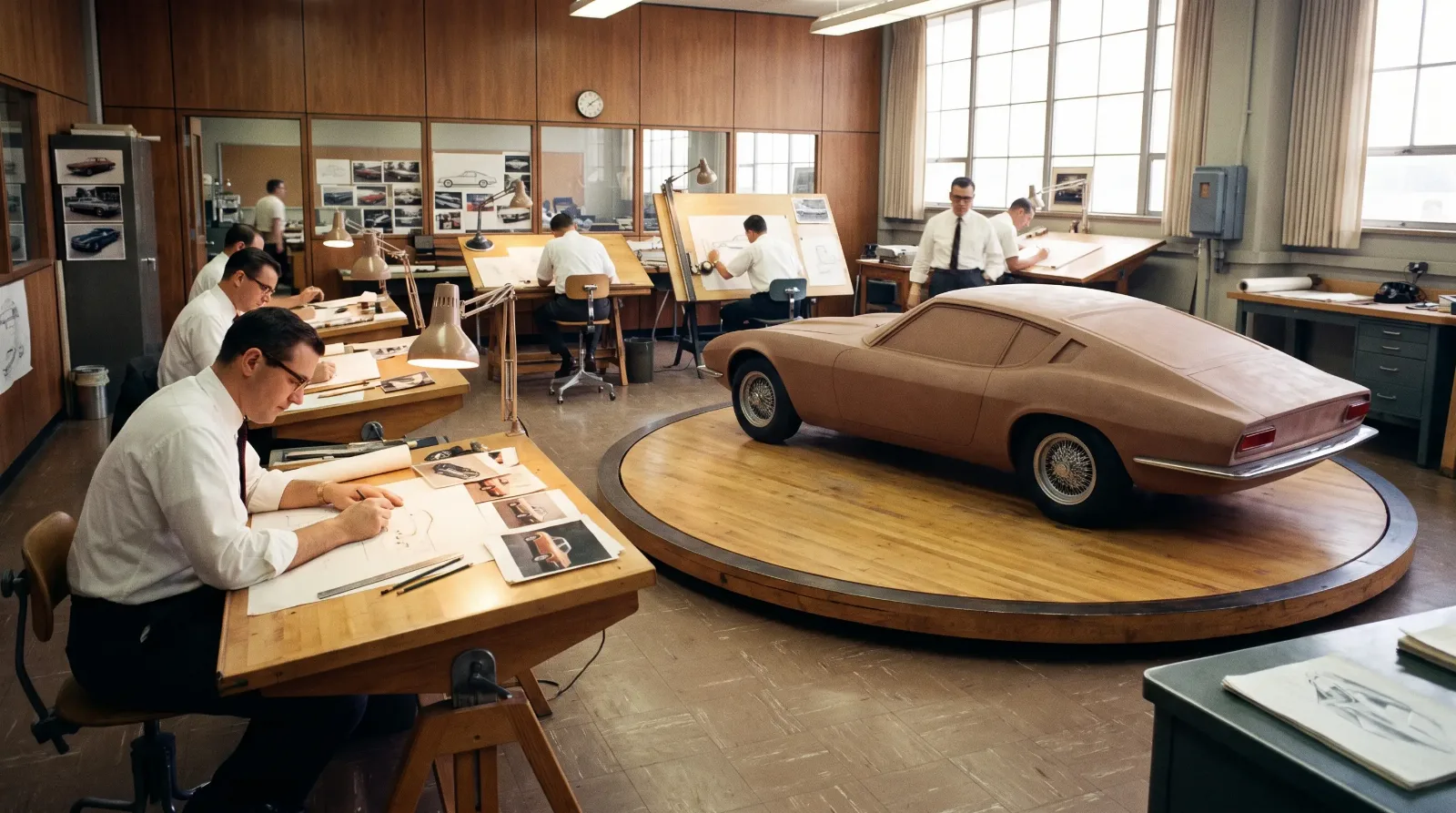
In the early 1960s, Ford's design department was not a single unified studio. It was a collection of competing groups, each with its own chief designer, its own clay bays, and its own pride. When Ford management decided to hold an internal competition to shape the production successor to the Showcar Mustang I concept, they set these studios against one another, giving each team the same brief: a small, sporty personal car riding on a 108-inch wheelbase, priced to appeal to the youth market.
Three studios entered the competition, the Ford Division studio, the Lincoln-Mercury studio, and the corporate Advanced studio. Between them they produced seven full-size clay proposals, with the Advanced studio contributing the most entries and the Ford Division studio submitting a single decisive model. The stakes were real. Whichever studio produced the chosen design would define the look of a car that Ford's product planners believed could move in enormous numbers. None of the designers involved in 1962 knew they were shaping what would become the fastest-selling Ford since the original Model A.
You can read more about the broader context of the design and styling story to understand how product planning and studio politics shaped the final car.
Joe Oros, Ford Division studio, and the overnight sketch
The Ford Division studio was led by Joe Oros, a disciplined design executive who had risen through Ford's ranks over more than two decades. Oros understood that winning the internal competition required more than competent draftsmanship. It required a decisive design statement that studio management and product executives could immediately read as both fresh and saleable.
Working under Oros was Gale Halderman, a staff designer whose approach was meticulous and fast. When the competition brief came through in mid-1962, Halderman sat down and produced a sketch in a single overnight session. That drawing established the key proportions that would survive all the way to the production car: the long hood, the short rear deck, the side scoop treatment behind the doors, and the crisp, nearly fastback-like roofline silhouette viewed in profile.
The sketch was not a finished rendering. It was a directional study, the kind of loose but purposeful line drawing that tells a clay modeler where to go. But it had clarity. Oros recognized it immediately and directed the studio's clay modelers to develop it into a full-size model for the competition presentation.
What the Ford studio clay actually looked like
The clay that emerged from Halderman's sketch was presented under a working name that reflected Ford's broader naming explorations at the time. The winning studio model wore Cougar nameplates, and a stylized cat sat within its grille, because Cougar had emerged as an early favorite while the program searched for a production name. Allegro was another of the names floated during this period, though it became attached to a separate two-seat styling exercise shown to the press in 1963. Ford's naming deliberations ran in parallel with the design competition itself, and the clay bays were sometimes labeled with whichever name was current that week.
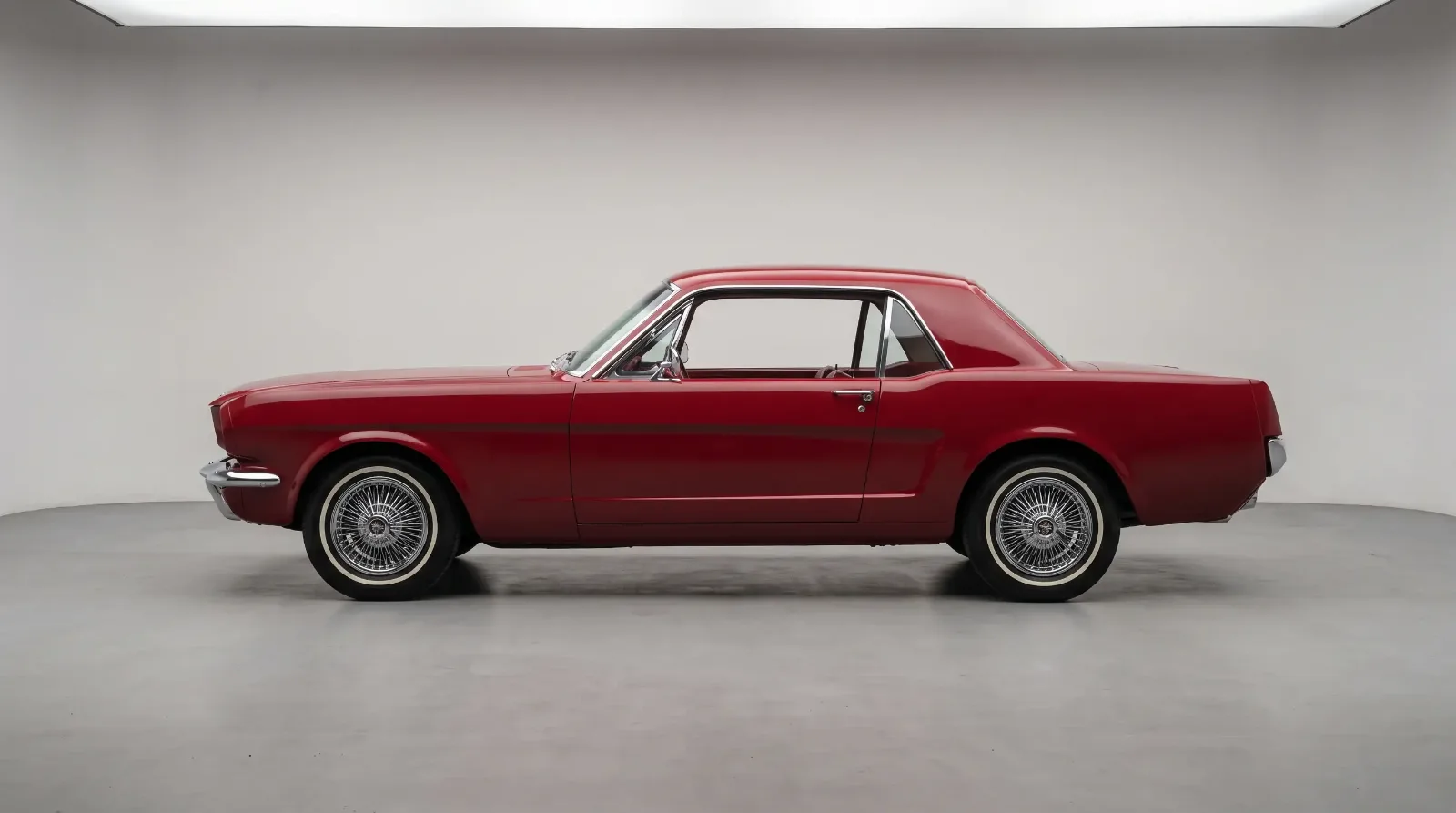
The Ford Division clay that went before the selection committee in the fall of 1962 showed the long hood and short deck ratio that Halderman had established in his sketch. The front end was cleaner and less ornate than some competing submissions. The side treatment was taut. What the committee saw was a design that looked like it belonged on a showroom floor rather than on a motorshow pedestal, which was precisely what product planning needed.
The other studios brought strong entries. Some featured more aggressive greenhouse treatments, others experimented with different proportions at the rear. But the Ford Division submission under Oros had a production readiness the others lacked, and that counted heavily with the executives making the final call.
How the winning design was chosen
Ford's design selection process in 1962 was run through the product development committee, with senior executives including Lee Iacocca walking the clay models. Iacocca had championed the youth-oriented personal car concept from early in the program and had strong opinions about proportion and price accessibility. He was not a passive observer during the studio reviews.
The review process involved multiple walk-arounds of the competing full-size clays, typically in the design center's viewing courtyard under both artificial lighting and daylight. Executives, product planners, and senior design staff all had a voice, though the final selection authority rested with company leadership.
When the Ford Division studio under Joe Oros was selected as the winning direction, it was Halderman's proportional language that had carried the day. Oros, as studio chief, took formal credit in the organizational sense. Halderman, as the designer who had originated the key sketch, was the man whose hand had shaped what everyone was looking at. Both credits are accurate. Design studios in the Detroit system of that era functioned as collaborative hierarchies, where the studio executive guided and approved and the staff designer executed and originated.
"In a studio competition, the man who draws it first and the man who approves it both own the result, and the argument about which matters more has never been fully settled."
— Jim Vasquez
Phil Clark and the running horse: a separate credit
One point of recurring confusion in accounts of the Mustang's design history is the question of who created the galloping pony emblem that became the car's most recognizable symbol. That credit belongs to Phil Clark, a Ford designer who worked on the badge and emblem program separately from the body design competition.
Clark's running horse, set within the horizontal chrome corral that appeared on the grille of every production Mustang, was its own design exercise. The proportions of the horse, its stance and angle, the weight of the corral surround, all of these details went through their own rounds of refinement independent of what Halderman and Oros were doing with the body clay. Clark's emblem became inseparable from the car's identity, but it is a distinct contribution from a distinct designer, and conflating it with the body design credit does a disservice to both men.
The production 1964-and-a-half Mustang that went on sale April 17, 1964 carried Halderman's proportional logic in its sheet metal, Oros's studio authority behind it, and Clark's horse on its grille. Three designers, three contributions, one car.
Sources and notes
This article is an editorial retelling drawn from published histories of the Mustang's design program. Period accounts differ on small details, and figures here reflect the most consistently corroborated record. Key facts, including the three competing studios producing seven clay proposals, Joe Oros's leadership of the winning Ford Division studio, Gale Halderman's originating sketch, the Cougar working name, and Phil Clark's separate running-horse emblem, were verified against the sources below.
- Joe Oros — Wikipedia
- Ford Mustang (first generation) — Wikipedia
- Remembering Gale Halderman, the Man Behind the Ford Mustang — MotorCities
- Early Ford Mustang Design Sketches and Clay Models — Ford Authority
- The Evolution of the Mustang's Pony Emblem — FordMuscle
- Along the Mustang Trail: The 1963 Ford Allegro Concept — Mac's Motor City Garage