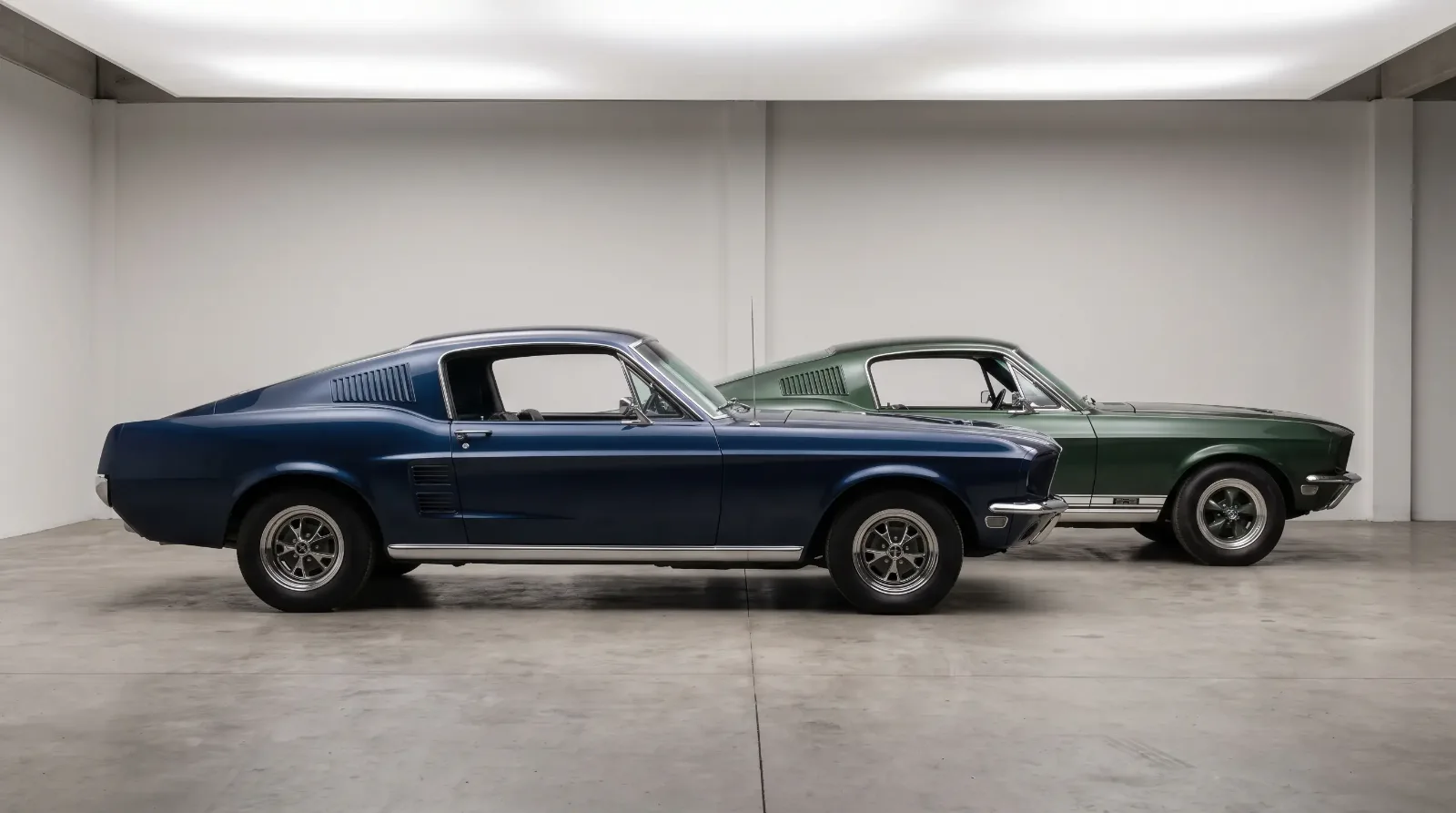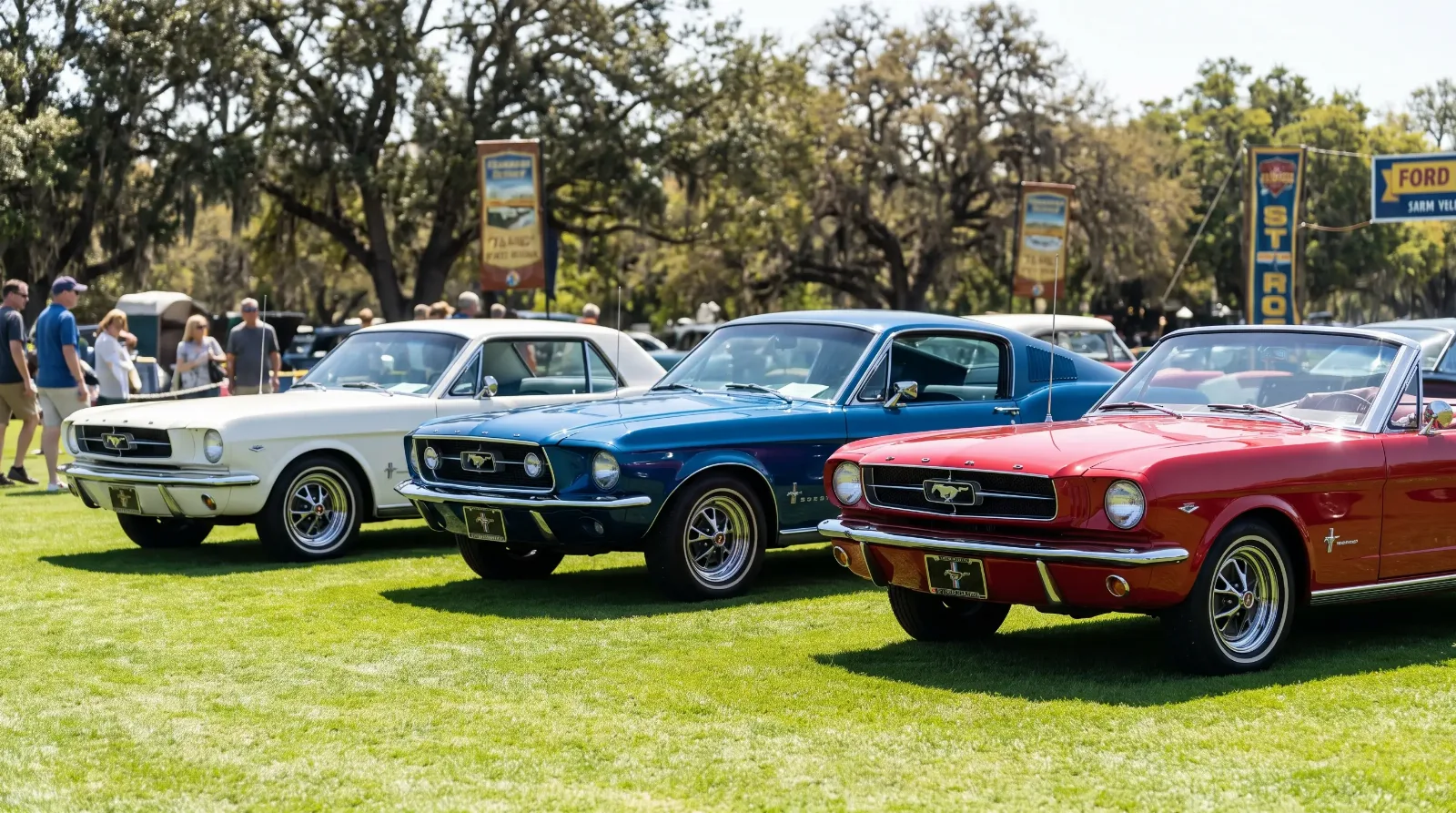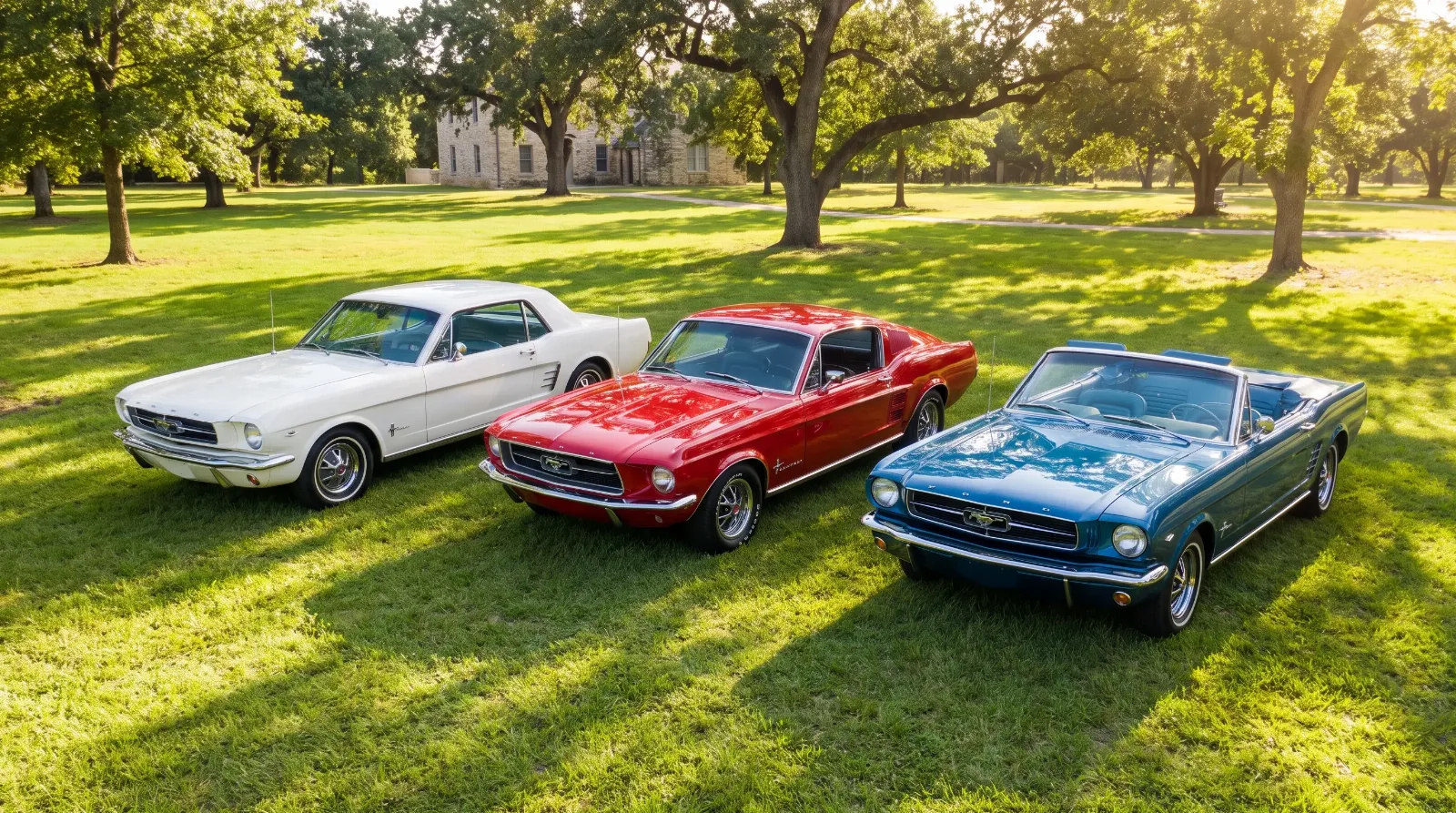

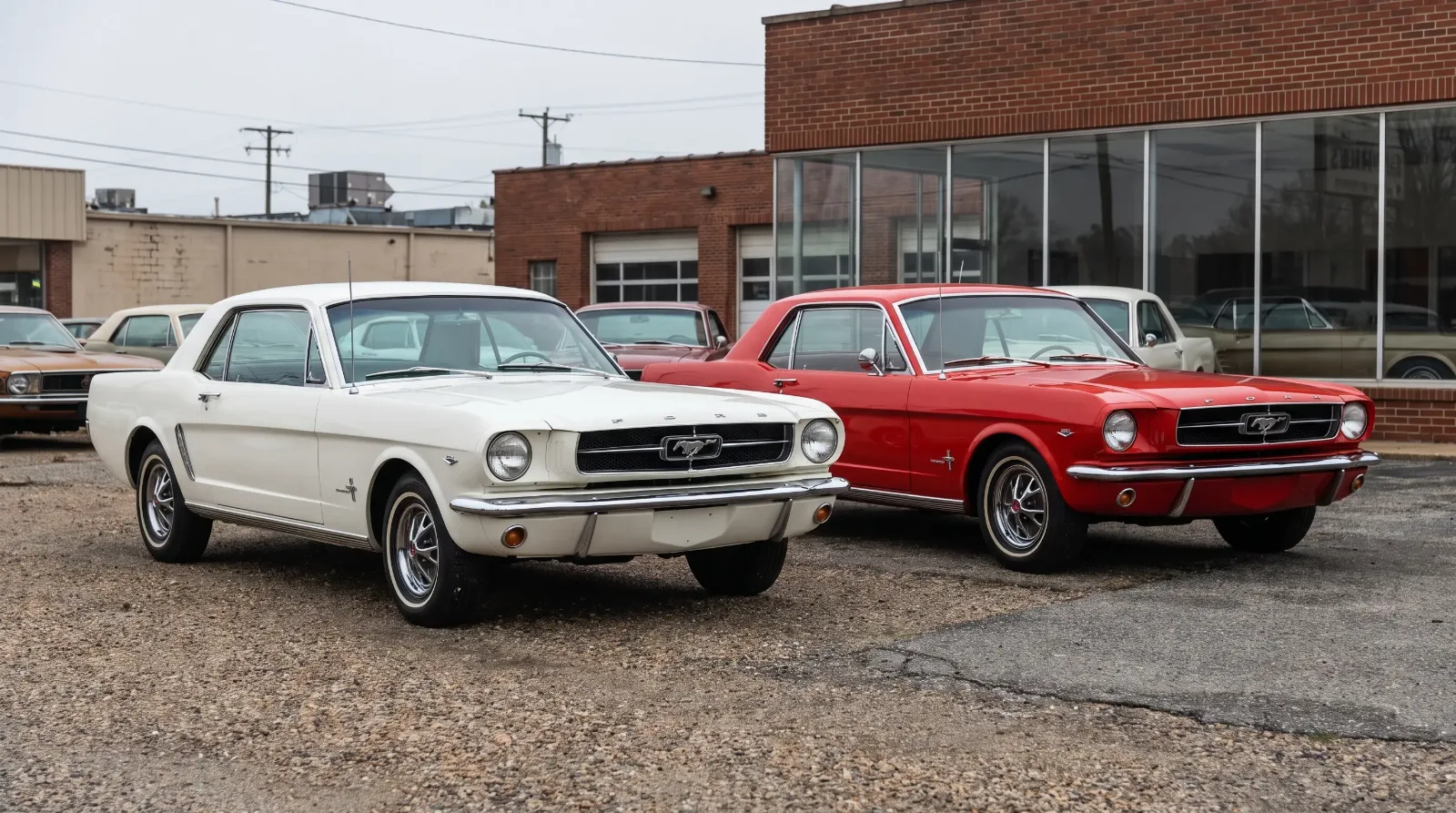
The "1964½" was never a Ford designation
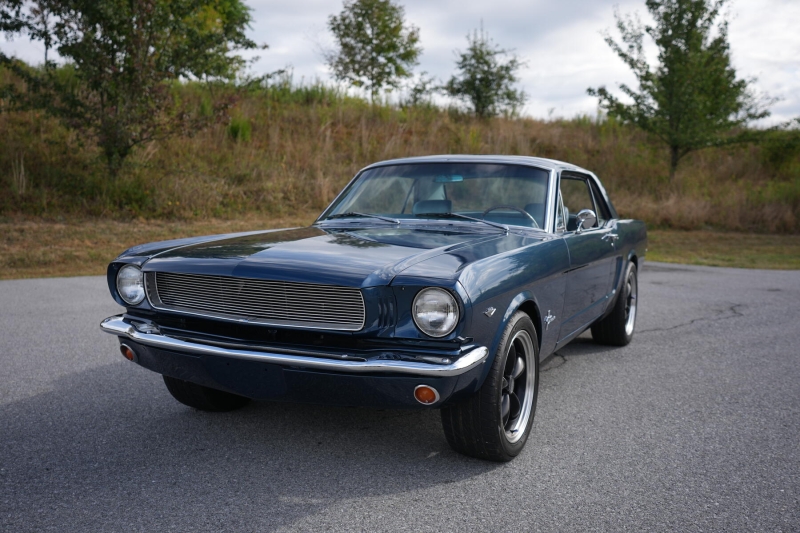
Walk into any Mustang show and you will hear someone refer to an early car as a "1964½." The term feels intuitive, almost logical, given that Ford began producing the Mustang in March 1964 and held the public debut at the New York World's Fair on April 17, 1964. But here is the problem: Ford never used that designation, never printed it on a window sticker, and never assigned a separate model year to those early cars. Every Mustang built from the March 1964 start of production through the end of the 1965 model run was titled, registered, and sold as a 1965 model. The "1964½" is an enthusiast shorthand, born from the genuine differences between early-production and late-production cars, not from any factory document. Understanding the first-generation Mustang story means starting with this correction.
The distinction matters for more than trivia. Collectors, restorers, and buyers use the term to signal a specific range of serial numbers and build dates, roughly March 1964 through August 1964, after which Ford introduced a series of running changes that transformed the car in subtle but documented ways. If you are looking at early classic Mustangs, knowing what those changes were, and how to read a door data plate, separates an informed purchase from a costly mistake.
Why Ford titled them all 1965
The answer is simple and rooted in how the industry works. Model year designation is an administrative decision made by the manufacturer, not a calendar function. Ford internally classified the Mustang as a 1965 model from the moment it approved the car for production. The vehicle identification number structure, the federal title documentation, and the window Monroney sticker all reflected 1965. There was no mid-year reclassification, no recall of titles, and no internal memo acknowledging a split model year.
Dealers sold the April 1964 cars under the 1965 model year banner, and every insurance document, state registration, and loan paper followed. The popular mythology of a distinct half-year model emerged later, as enthusiasts noticed real, tangible differences between the first cars off the line and those built after mid-summer 1964. The differences are real. The designation is not.
The real running changes between early and late 1965 cars
The differences that drove the enthusiast term are genuine and worth understanding in detail. Ford made a cluster of engineering and trim changes during the transition from the early production run to the late 1965 cars, most of them taking effect around August 1964 as the new model year ramped up in earnest.
The most mechanically significant change involved the charging system. Early-production cars used a generator, the older DC-current system that was already becoming obsolete across the industry. Cars built after approximately August 1964 switched to an alternator, which was more reliable at low engine speeds and better suited to the growing electrical load of accessories. A generator under the hood of a claimed early car is one of the cleaner identification points, but the system is also commonly swapped out during restoration, so its presence alone does not confirm originality.
The engine lineup also shifted. Early cars offered the 170-cubic-inch inline six as the base engine and the 260-cubic-inch V8 as the step-up option. By the time the late 1965 cars were in full production, Ford had replaced the 170 six with the 200-cubic-inch six and dropped the 260 V8 entirely in favor of the 289-cubic-inch V8 in multiple states of tune. The 289 became the Mustang's signature small-block, available in two-barrel, four-barrel, and the high-performance K-code configuration rated at 271 horsepower gross (the solid-lifter "Hi-Po" 289). If an early car still carries a numbers-matching 260 V8, that engine alone tells you a great deal about when it was built.
Interior and trim differences are smaller but catalogued. The horn ring configuration differed between early and late cars. Certain seat trim patterns and dashboard details varied. The passenger-side sun visor mounting and specific interior color codes available to buyers shifted during the model run. None of these are dramatic changes, but together they create a coherent profile of an early-production car that a trained eye can read quickly.
How to identify an early-production car
The door data plate, sometimes called the warranty plate, is the primary documentation tool. It is riveted to the driver's door jamb and encodes the car's build information: body style, exterior color, interior trim, axle ratio, transmission, and, critically, the build date. The build date is expressed as a two-digit number for the week and a letter for the month, counting from the start of the model year. A car with a build date in the spring or early summer of 1964 falls squarely in the early-production window.
The VIN sequence is a secondary check. Early cars have lower production sequence numbers within their assembly plant code, which can be cross-referenced against published production records. The VIN also encodes the model year as a single character, and every genuine Mustang from this era will show 5 for 1965, regardless of when in the model run it was built.
A combination of door plate build date, matching generator (if unrestored), and an early engine code such as the 170 or 260 creates a strong case for an early-production car. Factory documentation such as a Marti Report, a data service that decodes Ford production records by VIN, can confirm every specification as Ford built it.
"The factory records do not lie. If a seller calls a car a 1964½ but the door plate shows an August 1964 build date and an alternator under the hood, they may be selling you a late-1965 car in early clothes."
— Tom Ramirez
Early vs. late 1965: a side-by-side reference
The table below summarizes the key differences between cars built in the early-production window and those built later in the 1965 model year. Keep in mind that Ford made some of these changes gradually, and examples with mixed specifications exist at the transition points.
| Feature | Early 1965 ("1964½"), approx. March-Aug 1964 | Late 1965, approx. Aug 1964-Aug 1965 |
|---|---|---|
| Charging system | Generator (DC) | Alternator (AC) |
| Base six-cylinder engine | 170 cu in inline six | 200 cu in inline six |
| Standard V8 option | 260 cu in V8 | 289 cu in V8 (multiple tunes) |
| Model year title | 1965 | 1965 |
| Horn ring | Early design | Revised design |
| Build date (door plate) | Spring-summer 1964 | Late summer 1964 onward |
The model year row is there deliberately. Whatever else differs between these cars, Ford's documentation treated them identically on the question of model year. A collector can argue about the historical significance of a generator car, but no court, title office, or insurance company will record it as a 1964 vehicle.
Sources and notes
This article was fact-checked against the references below. Production dates, figures, and engine specifications reflect widely documented Ford records; minor running-change dates can vary car-to-car because Ford phased in changes gradually and used up existing parts inventory during the transition.
- Ford Motor Company — Mustang Debut at the World's Fair (April 17, 1964)
- HISTORY — Ford Mustang debuts at World's Fair, April 17, 1964
- Wikipedia — Ford Mustang (first generation): production, engine lineup and running changes
- Classics on Autotrader — 1965–1967 Ford Mustang K-Code: 271-hp 289 Hi-Po
- Classic Industries — 1964½ (Early 1965) Mustang VIN & Data Plate Decoder
- CJ Pony Parts — First-Generation Mustang Engine Codes (170/200 six, 260/289 V8)