
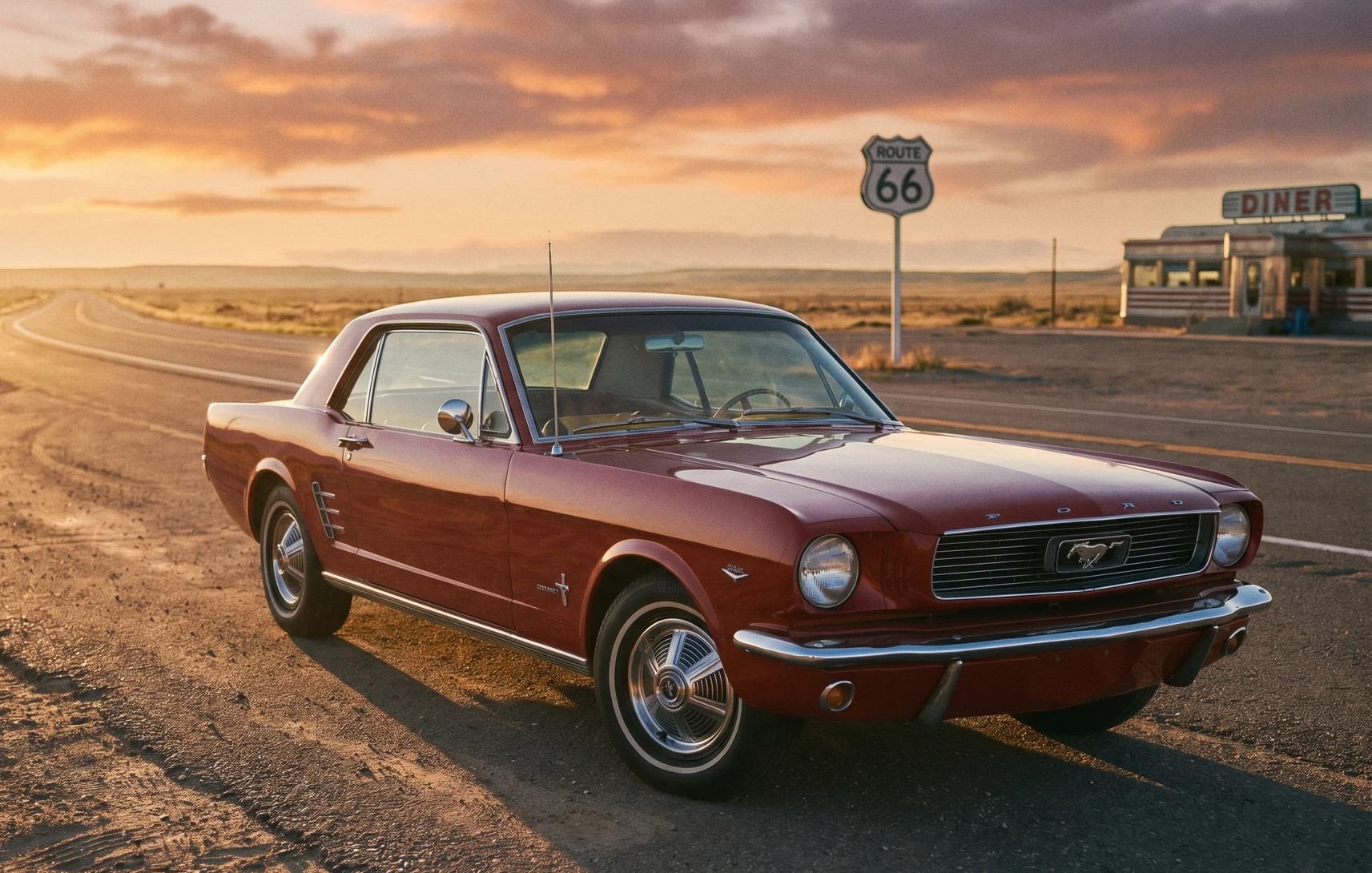
The 1964½ Ford Mustang: How One Car Created the Pony Car Market
On April 17, 1964, Ford introduced a car at the New York World's Fair that dealers hadn't seen, automotive writers hadn't driven, and the buying public hadn't imagined. By that evening, showrooms across the country were overwhelmed. A Ford dealer in Garland, Texas, locked his doors and auctioned the Mustang inside off to the highest bidder because the crowd refused to leave. In Chicago, a dealer placed his Mustang on a hydraulic lift so more people could see it at once. Ford received 22,000 orders on the first day.
The 1964 Ford Mustang didn't just sell well. It invented a category, rewrote Detroit's product strategy, and created a nameplate that never left production. Sixty years later, the first Mustang remains the most commercially successful new car launch in American automotive history — and the used 1964 Ford Mustang market reflects that status every time one crosses the auction block.
What Was the 1964 Ford Mustang?
The Ford Mustang was a sporty, four-seat coupe and convertible built on a modified Ford Falcon platform and introduced to the public on April 17, 1964. Ford Motor Company positioned it between the economy car and the sports car — affordable enough for a young buyer's first new vehicle, expressive enough to feel personal in a way that a Ford Falcon never could.
The first mustang offered buyers something no major American automaker had delivered at that price: genuine configurability. The base car was modest — an inline 6 cylinder engine, a 3 speed manual transmission, and simple trim — but the options list transformed it. A buyer could order a daily driver or work toward something approaching a racer, all from the same base vehicle. That flexibility was central to the Mustang's appeal and central to why Ford sold so many of them so quickly.
What Is a 1964½ Ford Mustang — and Why Does the Half Matter?
The 1964½ designation isn't an official Ford model year classification — it's a term used by collectors and historians to identify early production Mustangs built between March and August 1964, before the formal 1965 production year began. Ford's model year conventions put the true 1965 models into production in September 1964, which means the cars introduced at the World's Fair technically occupy a transitional period that collectors have labeled "1964½" to distinguish them.
The mechanical difference that matters most: early production 1964½ Mustangs used a generator rather than an alternator in their electrical systems. The alternator replaced it at the start of the 1965 production run. Serial number ranges and build date codes are the most reliable way to confirm whether a specific car falls in the early production window. For collectors hunting a genuine first model year example, these details are not negotiable.
Production began in March 1964 at Ford's Dearborn plant, with a second line added quickly at the San Jose facility to meet demand. By august 1964, the waiting lists at dealerships across the country had stretched to weeks. By september 1964, Ford had already produced more Mustangs than most automakers sell of an entire model in a full year.
How Did Lee Iacocca's Brief Build the Mustang?
Lee Iacocca's mandate to his design and engineering team was deceptively simple: a sporty car that seated four adults, weighed under 2,500 pounds, and sold for under $2,500. The numbers came from market research showing a coming wave of Baby Boomer buyers who wanted something that felt personal without costing what a Thunderbird or Corvette cost. The Mustang was Iacocca's answer to a generation that Detroit had largely ignored.
The platform underneath the Mustang came from the ford falcon — practical, proven, and affordable to produce. Mechanical parts sourced from the falcon and fairlane kept development costs manageable and dealer service straightforward. The body was entirely new, styled under Gene Bordinat's design studio after an internal competition. The winning design came from a team led by Dave Ash and Joe Oros, who hit the brief so precisely that the production coupe barely changed from the clay model. Ford's "Total Performance" marketing campaign, which was already associating the brand with NASCAR and international racing, primed buyers to see the Mustang as more than a rebadged economy car.
The ford mustang i concept that preceded the production car — a two-seat mid-engine roadster shown at Watkins Glen in 1962 — gave the nameplate its initial public exposure, but Iacocca correctly judged that a two-seater couldn't generate the sales volume he needed. The four-seat formula was always the plan.
What Engine Did the 1964 Ford Mustang Have?
The base engine in the 1964 ford mustang was a 170 cubic inch engine — a 6 cylinder unit that prioritized economy over performance, delivering acceptable mpg for the era but little excitement. It was the powertrain for buyers who wanted the Mustang's style without the running costs of a V8.
The performance options elevated the car entirely. The 260 V8 was available at launch; the 289 followed quickly, offered in standard and high-performance 289 forms. The K-code version — the high-performance 289 v8 — was the mechanical highlight of the early Mustang lineup, delivering 271 horsepower and the kind of performance that justified Ford's racing claims. This was the engine that connected the Mustang to Ford's broader competition efforts, including Shelby's cobra program that ran 289-powered cars in international competition.
The transmission options matched the engine range: a three-speed manual was standard, with a four-speed available for performance buyers and an automatic for those who prioritized convenience. The wheelbase of 108 inches gave the Mustang a compact footprint that made the V-8 variants feel genuinely quick despite the relatively modest displacement numbers by muscle car standards.
How Much Did the 1964 Ford Mustang Cost?
The base ford mustang hardtop launched at $2,368 — deliberately priced to hit Iacocca's sub-$2,500 target and undercut anything remotely comparable in the market. The mustang convertible added approximately $200 over the hardtop. The 2+2 fastback body style, which would become the most visually distinctive of the three body options, arrived later in the model year at a slight premium over the coupe.
Options added quickly. A fully equipped Mustang with the high-performance 289, four-speed manual, handling package, and styled wheels could approach $3,500 — but the base price made it possible for a young buyer to get into the car at a number that felt achievable. The coupe and convertible combination gave Ford a product for nearly every buyer in the segment, at prices that left the Corvette and imported sports car market essentially untouched.
For buyers today looking for deals on 1964 ford mustang examples, the range is considerably wider. Condition, body style, engine, and documentation drive values dramatically — from driver-quality sixes to concours-restored K-code cars worth ten times as much.
What Made the Mustang's Design So Influential?
What the Mustang's design team popularized was the long hood, short deck proportional formula that would define the pony car category for decades. A long hood implies a large engine, even when the engine underneath is modest. The short deck creates visual tension that makes the car look ready to move. These proportions were so effective that every competitor that followed used some variation of the same logic.
The mustang fastback — the 2+2 body style added during the model year — extended the roofline into the rear deck in a way that made the car look lower and faster than the hardtop. The mustang convertible opened the car to fair-weather buyers who wanted the experience without a roof. Together, the three body styles — ford mustang hardtop, fastback, and convertible — gave Ford coverage across nearly the entire sporty car market from a single platform.
The design's influence went beyond direct competitors. The long-hood formula appeared in European cars, Japanese coupes, and eventually in every sporty car segment globally. The Mustang didn't just win its market — it changed the visual language of what a sporty car was supposed to look like.
How Did the Mustang Create the Pony Car Category?
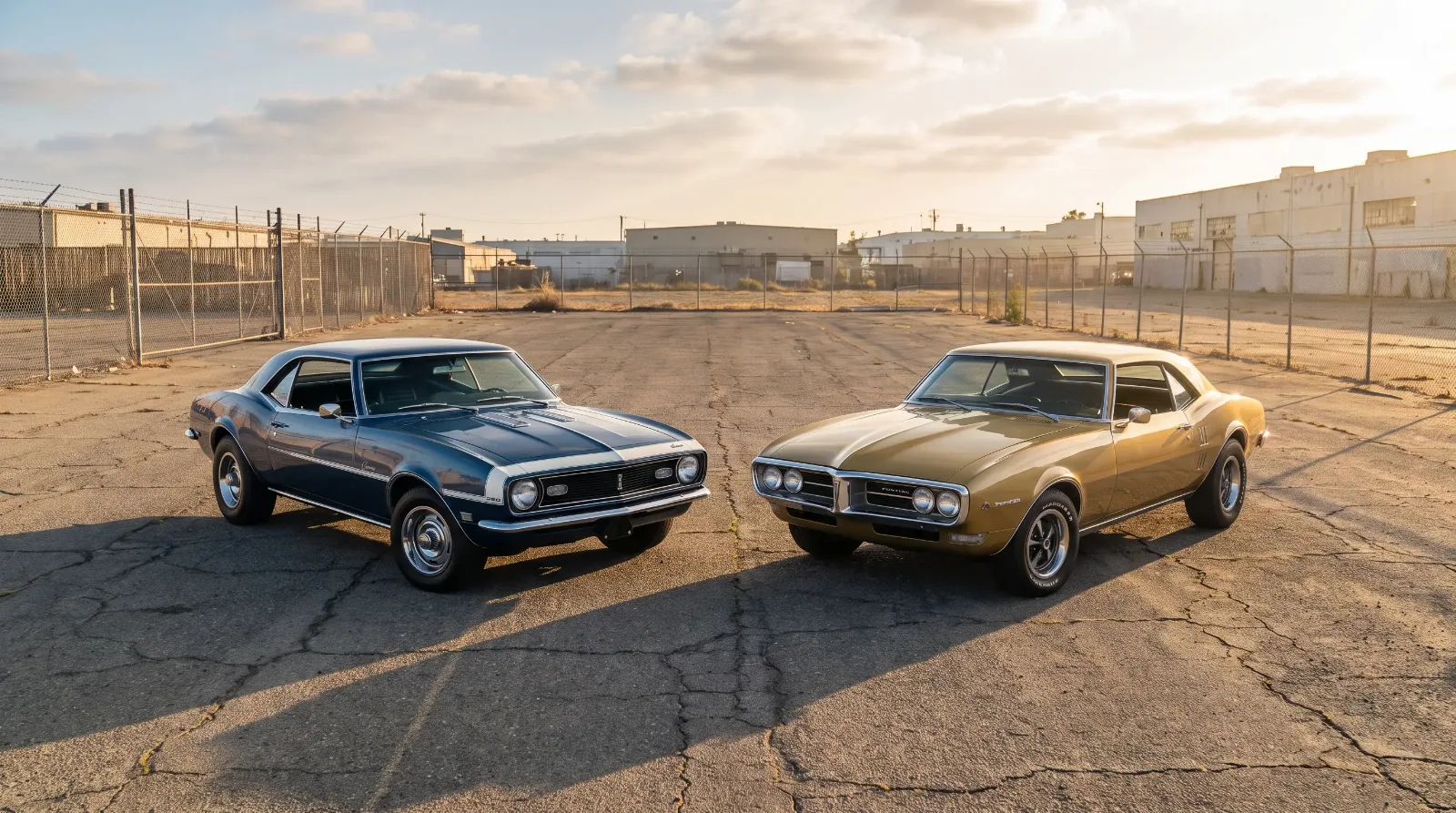
Ford sold 418,812 Mustangs in the first twelve months — a record for a new model that stood for decades. General Motors convened an emergency product meeting. Chevrolet accelerated development of the F-body platform that would become the Camaro. Pontiac took the same platform and called it the Firebird. The cougar gave Mercury its own pony car entry on the Mustang's platform. Chrysler rushed the Barracuda to market, beating the Mustang by two weeks but generating considerably less fanfare. American Motors produced the Javelin.
Every automaker in Detroit had a new segment to address, and the Mustang had named it. "Pony car" entered the automotive vocabulary because of the Mustang's galloping horse badge. The 1965 models refined what the 1964½ had established, and the 1965 mustangs sold even better than the originals. By any measure of commercial and cultural impact, no single new model launch in American automotive history has matched what ford achieved on april 17, 1964.
The Mustang's influence extended internationally. The car appeared in film and popular culture across multiple countries — including a memorable appearance in a James Bond film — in a way that made it a symbol of American automotive confidence at the precise moment that American cars needed a symbol.
Was the 1964 Mustang a Sports Car, a Muscle Car, or Something New?
The honest answer is: something new. The Mustang was not a sports car in the European sense — it was too heavy, too softly suspended, and too focused on comfort to compete with a British roadster or Italian coupe on a road course. It was not a muscle car in the GTO sense — the base engine was a six-cylinder, and even the high-performance 289 was modest by the standards of the 427 and 440 engines that muscle car buyers were ordering.
What the Mustang was — and what made it commercially unique — was a sporty car. It looked fast, it could be made fast through the options list, and it cost what an ordinary buyer could manage. The model years that followed expanded the performance range dramatically: the Boss 302, the mach 1, the cobra jet, the 429-powered Super Cobra Jet, and eventually the 1965 production year cars with the big-block options brought genuine muscle car performance to the platform. But the original 1964 ford mustang was never really about outright speed. It was about what a car could mean to the person who owned it.
How Much Is a Used 1964 Ford Mustang Worth Today?
The used 1964 ford mustang market rewards documentation and originality above almost everything else. A base six-cylinder coupe in driver condition typically sells for $20,000–$28,000. A numbers-matching K-code high-performance 289 in original paint and correct trim can bring $65,000–$90,000 or more at major auction. The mustang convertible at any spec level carries a 20–35% premium over a comparable hardtop or fastback.
The Mustang's broad production — over a million in the first two model years — means supply remains stronger than most collectible cars from the same era, which keeps values accessible compared to lower-volume muscle cars. But genuinely original, unrestored early production examples are becoming scarce. The serial number documentation, build sheets, and Marti Reports that confirm a car's original specification are increasingly the difference between a car that sells quickly at a strong number and one that sits.
Any buyer looking seriously at a 1964½ should verify the alternator/generator distinction, confirm engine stamp dates against the VIN, and review model cars documentation carefully before bidding. The Mustang's popularity makes it worth cloning, and convincing fakes exist.
Key Facts to Remember
- Ford introduced the Mustang at the New York World's Fair on April 17, 1964, receiving 22,000 orders on the first day
- The "1964½" designation identifies early production Mustangs (March–August 1964) distinguished by a generator rather than alternator electrical system
- Three body styles at launch: ford mustang hardtop coupe, mustang convertible, and the 2+2 fastback added mid-year
- Base engine: 170 cid inline 6 cylinder; top option: K-code high-performance 289 V8 with 271 hp
- Base price: $2,368 for the hardtop — deliberately below Iacocca's $2,500 target
- Production: 418,812 units in the first twelve months, a new car sales record
- The Mustang's success triggered emergency response from every major automaker and created the pony car category
- Values today: $20,000–$28,000 for driver-quality sixes; $65,000–$90,000+ for documented K-code cars; convertibles carry a 20–35% premium