
The Engineer Who Spent a Career Losing the Same Argument
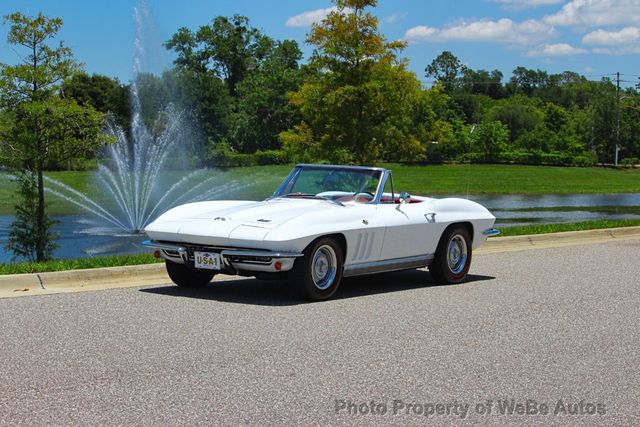
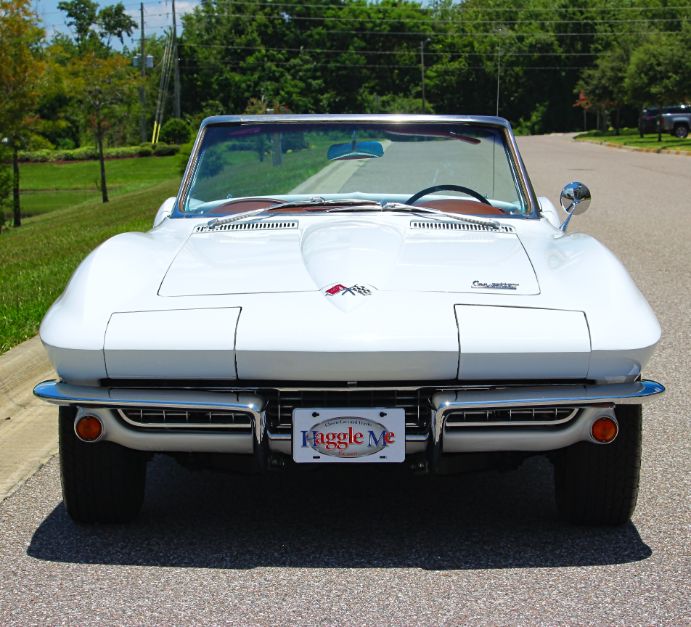
Zora Arkus-Duntov joined General Motors in 1953, the same year the Corvette was born. He did not fall in love with the car as it existed. He fell in love with what he believed it could become — and the gap between those two things defined the next four decades of his professional life.
The argument was simple, at least in engineering terms: put the engine behind the driver, not in front. A mid-engine layout drops the heavy drivetrain mass between the axles, lowers the center of gravity, and gives a sports car the kind of balanced, responsive handling that front-engine designs can only approximate. Duntov understood this in 1953. He was still arguing it when he retired in 1975. He died in 1996, still not having seen it done. The Chevrolet Corvette he championed for twenty-two years remained, to the end of his life, a front-engine car.
Then, in 2020, General Motors built the car Duntov spent his career describing. They named one of its performance packages after him. He had been dead for twenty-four years.
A Campaign Measured in Concept Cars
Duntov did not make his case in memos. He made it in metal. Throughout the late 1950s and into the 1970s, he used GM's experimental vehicle programs to build working arguments — rolling demonstrations of what the Corvette could be if corporate management would only say yes.
The first was the CERV I in 1960 — Chevrolet Engineering Research Vehicle. It was a single-seat open-wheel racer with its engine mounted amidships, directly behind the driver. Period accounts suggest Duntov used it partly as a legitimate test bed for suspension geometry and partly as a persuasion tool: put a GM executive in the passenger area, let them feel what the layout could do, and hope the sensation proved what the engineering papers could not. The CERV I reportedly hit 206 mph at Pikes Peak and turned handling numbers that no contemporary production car could approach. Management admired it. Management did not authorize a production version.
The CERV II followed in 1964, more radical still — twin turbocharged engines, all-wheel drive, a car that reportedly generated enough power to embarrass virtually anything racing at the time. Again, it demonstrated the principle with extraordinary force. Again, the principle was not adopted.
The XP-819 came in 1964 as well, a more production-oriented study with a rear-mounted engine. It handled poorly in testing — a result that critics of the mid-engine concept pointed to for years afterward, though Duntov reportedly considered the XP-819's problems a matter of specific execution rather than proof that the layout itself was flawed.
The most tantalizing near-miss came with the Aerovette. Through the early 1970s, what eventually became known as the Aerovette project reached an extraordinary level of development — a genuine mid-engine Corvette show car that GM briefly, credibly considered for production. In 1977, reports indicated that GM chairman Thomas Murphy had personally approved the Aerovette for the 1980 model year. Then the business calculus shifted: a new front-engine design was further along in development, fuel economy concerns were reshaping the entire industry, and the mid-engine Corvette was deferred again. Duntov had retired two years earlier. His successor, Dave McLellan, ultimately steered the C4 in a different direction.
"I want it to be a world-class sports car. The engine belongs in the middle."
— Zora Arkus-Duntov, paraphrased from period accounts of his internal GM presentations
Why the Front-Engine Layout Finally Hit Its Ceiling
The C7 Corvette — the generation that preceded the C8 — was, by virtually any measure, the most capable front-engine sports car GM had ever built. The Z06 variant produced 650 horsepower. The ZR1 produced 755. Both were extraordinary machines. And both, according to GM's own engineers, were approaching the practical limits of what the front-engine rear-wheel-drive configuration could achieve.
The fundamental constraint is physics. In a front-engine car, the heaviest component sits ahead of the front axle. Under hard acceleration, weight transfers rearward — away from the driven wheels. Under hard braking, weight pitches forward — over the front axle, which is not driving the car. The suspension engineers spend enormous effort managing the consequences of this weight distribution: the tendency to understeer, the limits on front-end mechanical grip, the aerodynamic compromises required to force the nose down at speed. By the time the C7 ZR1 was extracting 755 horsepower from its front-mounted supercharged V8, Chevrolet's engineers reportedly acknowledged they had reached the point where further power increases would yield diminishing — or negative — returns on actual lap times.
The decision to move to a mid-engine layout for the C8, announced in 2019 and confirmed with production cars the following year, was framed by GM not as a styling exercise or a radical departure for its own sake, but as the only remaining path to meaningful performance improvement. The engineers were describing, in the language of contemporary product development, exactly what Duntov had been saying since 1953.
What the C8 Actually Achieves
The 2020 C8 Corvette Stingray, in Z51 configuration, reportedly runs zero to sixty miles per hour in under three seconds. The base model competes in performance terms with European sports cars priced at three to four times its MSRP. These numbers, while striking in isolation, become more meaningful when understood as the direct consequence of the weight distribution Duntov spent his career advocating for.
The C8's engine — a 6.2-liter naturally aspirated LT2 V8 — sits behind the driver and ahead of the rear axle. The weight distribution this produces, reportedly near 40/60 front-to-rear, allows the rear tires to do what rear tires are meant to do: put power down without fighting the weight bias of a front-heavy chassis. The front end is free to handle steering inputs without the mass of an engine complicating the geometry. The aerodynamics work with the car's natural balance rather than against it.
This is not a description of a new idea. It is a description of the idea Duntov demonstrated in the CERV I in 1960, argued in engineering meetings through the 1960s and 1970s, and saw brushed aside at the Aerovette decision point in 1977.
| Model Year / Variant | Engine Position | 0–60 mph | Peak Power |
|---|---|---|---|
| C5 Corvette Z06 (2001) | Front-engine | ~4.0 sec | 385 hp |
| C6 Corvette ZR1 (2009) | Front-engine | ~3.4 sec | 638 hp |
| C7 Corvette ZR1 (2019) | Front-engine | ~2.85 sec | 755 hp |
| C8 Corvette Z51 (2020) | Mid-engine | ~2.9 sec | 495 hp |
The table above illustrates the point more clearly than any argument: the C8, with 260 fewer horsepower than the C7 ZR1, achieves comparable zero-to-sixty times because it is no longer fighting the fundamental weight distribution problem that required the C7 to produce 755 horsepower in the first place.
The Zora Package: A Name on the Door He Never Opened
General Motors offers, on the C8, a factory performance package called the Zora. The name is not incidental. It is an explicit acknowledgment, from the company that blocked the mid-engine Corvette through Duntov's entire career, that the car he kept trying to build is the car they finally built.
There is something in this that resists easy categorization. It is tribute, certainly — but tribute to a man who spent twenty-two years losing arguments at GM, who watched his most ambitious proposals get shelved, defunded, or redirected, and who retired in 1975 without having achieved the thing he had argued for most consistently. The Zora package on the C8 is a kind of institutional confession: he was right, and we knew he was right, and we are naming the car after him now that the reasons to say no have finally run out.
Duntov spent his career in a recurring pattern: propose the mid-engine layout, build a compelling demonstration of it, watch management decline to act on it, and begin preparing the next demonstration. He was not a man who gave up on an idea. He was a man whose idea proved more durable than the institutional resistance to it — durable enough to outlast him by twenty-four years and arrive in showrooms in 2020, priced accessibly enough that the average American enthusiast could own it.
That last detail would likely have pleased him most. Duntov consistently argued that the Corvette's purpose was not to be an exclusive European-style supercar available only to the wealthy, but to be America's answer to the best sports cars in the world, available at a price Americans could realistically reach for. The C8, competitive with cars costing three or four times its price, is precisely that. It took sixty-seven years and a man had to die before the engineers stopped hearing no, but the argument Duntov made in 1953 is now parked in garages across the country, with his name on the optional performance package.
The idea won. It just took longer than he had.
Sources and notes
- Car and Driver — "Zora Arkus-Duntov: The Man Behind the Corvette" — Long-form profile of Duntov's career and his repeated mid-engine campaigns at GM
- MotorTrend — 2020 Chevrolet Corvette C8 First Drive — Performance data and engineering rationale for the mid-engine transition
- Chevrolet — Official Corvette history and C8 specifications — Manufacturer documentation on the Zora package and C8 platform
- Road and Track — "The Long Road to a Mid-Engine Corvette" — Historical overview of GM's mid-engine Corvette prototype programs including CERV I, CERV II, and the Aerovette
- Hagerty — "Zora Arkus-Duntov, Father of the Corvette" — Biographical account of Duntov's tenure at GM and the context of his engineering philosophy