The concept cars that paved the way
Long before the Mustang that millions of Americans came to love rolled off the Dearborn assembly line, Ford's design and engineering teams were already exploring what a sporty, affordable American sports car could look like. The story of where it all started runs through two influential concept vehicles that revealed both the ambition and the direction of the project.
In October 1962, Ford unveiled the Mustang I, a two-seat mid-engine roadster built in cooperation with Troutman-Barnes. Powered by a 1.5-liter V4 engine mounted amidships and clothed in a low, open aluminum body, it appeared at the United States Grand Prix at Watkins Glen with race driver Dan Gurney at the wheel. It generated enormous public interest, but Ford's executives quickly recognized a problem: a true mid-engine sports car at a production price point was not realistic, and two seats would limit the buying audience too sharply.
The follow-up came on October 5, 1963, at Watkins Glen again, the day before the United States Grand Prix. Ford showed the Mustang II concept, a more practical open 2+2 that carried four passengers and a front-mounted 289 V8, fitted with a detachable fiberglass hardtop. Reworked by stylist John Najjar using elements of the Mustang I, this car was far closer to what Ford vice president Lee Iacocca had been pushing for: something sporty but affordable, versatile but exciting. The Mustang II concept proved that the pony-car formula could work for a broad audience, and it served as the direct template for the production car announced just months later.
April 17, 1964: the Mustang goes on sale
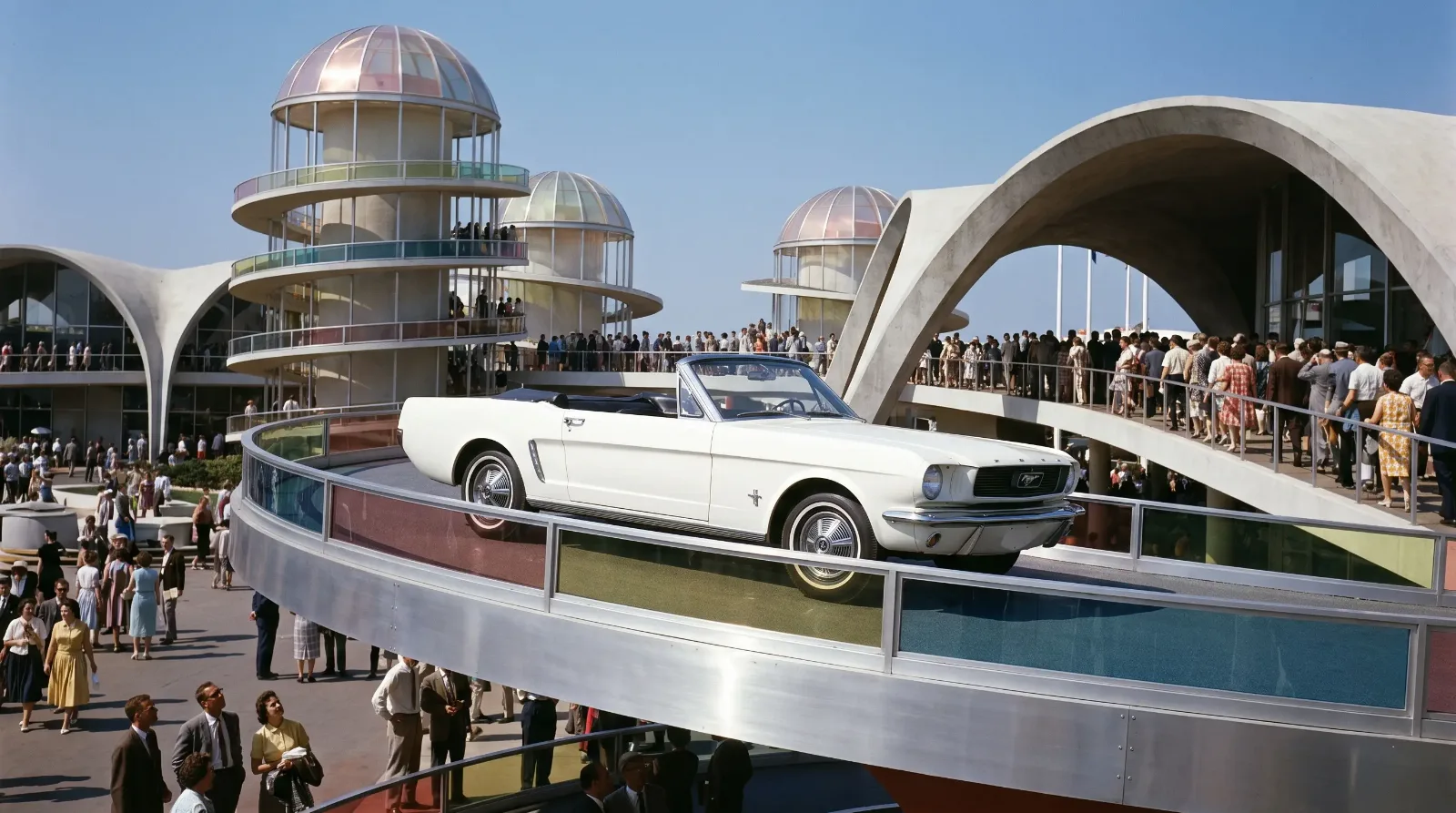
Ford chose April 17, 1964 as the official launch date for the production Mustang, and it orchestrated one of the most effective product introductions in automotive history. Advertisements ran simultaneously in 2,600 newspapers across the country. Life and Newsweek both carried the car on their covers the same week. Ford dealers reported crowds that blocked showrooms and, in some cases, prompted potential buyers to camp overnight to secure a spot at the front of the line.
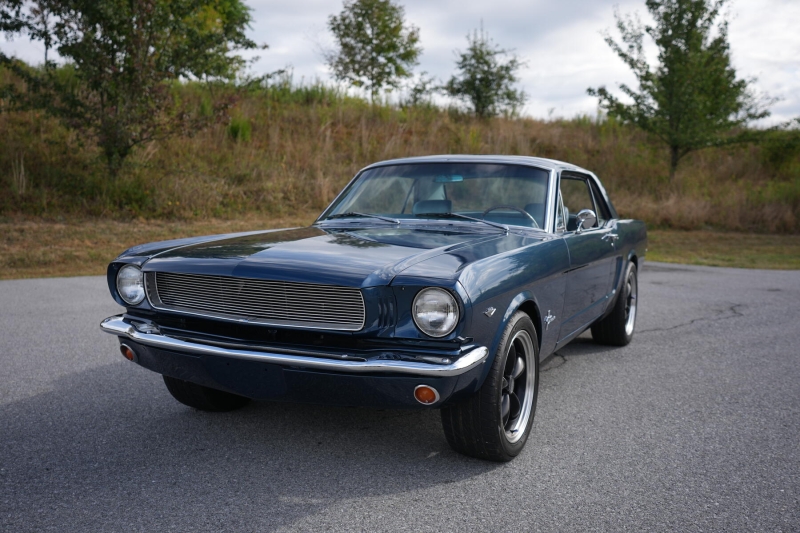
The base Mustang hardtop was priced at $2,368 and came standard with a 170-cubic-inch inline six. Buyers could also choose from a 260-cubic-inch V8 or, later in the model year, a 289-cubic-inch V8 in varying states of tune. The long options list let buyers configure a car ranging from a practical commuter to a genuine performance machine, all on the same body. Ford had predicted sales of roughly 100,000 units in the first year. The actual figure was closer to 418,000, a record that still stands for a first-year American model.
Because the car entered production in early 1964 but carried a 1965 model year designation, early cars are commonly called "1964-and-a-half" Mustangs among enthusiasts and historians, a distinction Ford never officially used but has never disputed either.
VIN 5F08F100001: the car that was never meant to be sold
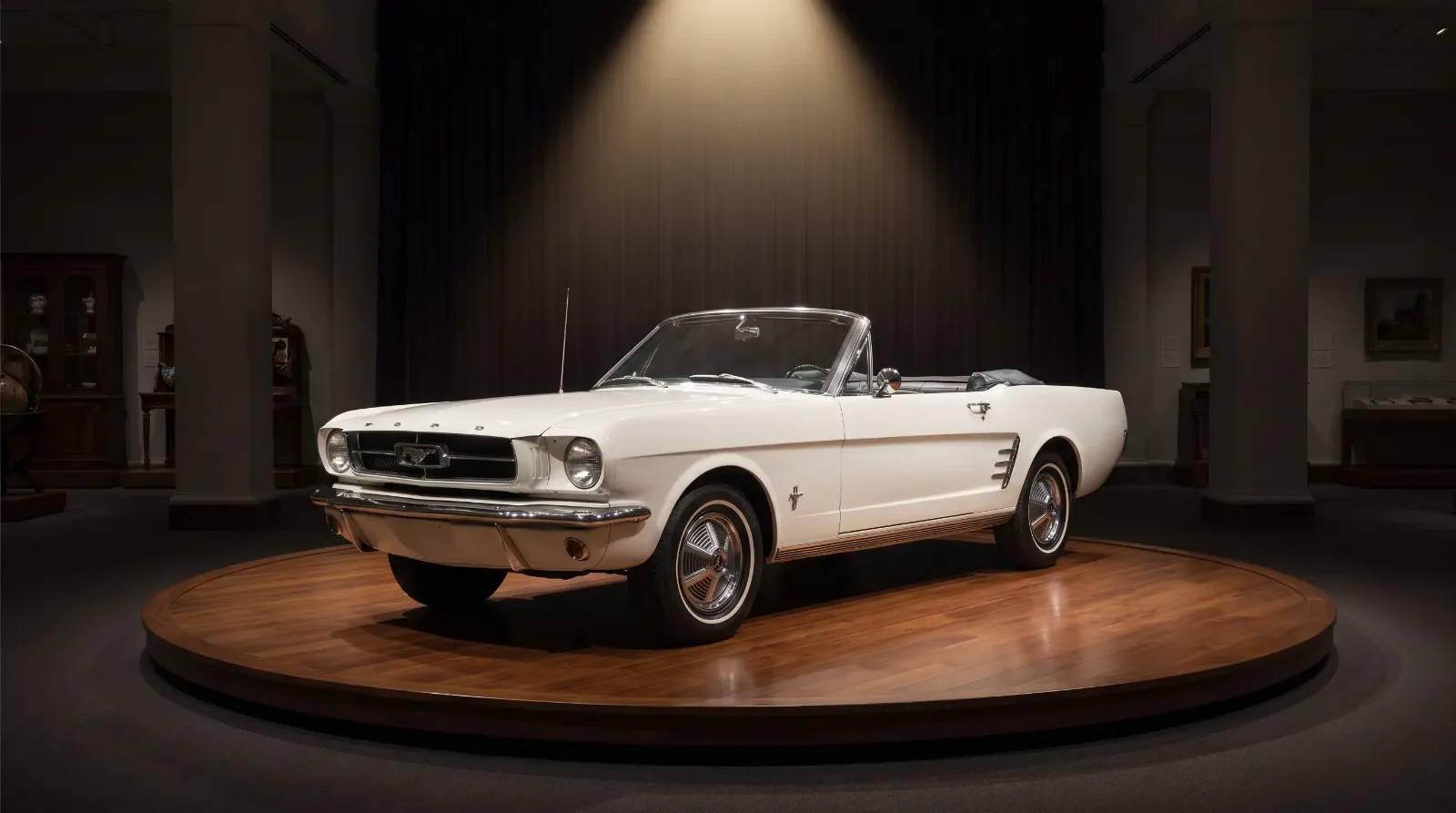
Among the very first Mustang convertibles to emerge from the Ford Dearborn assembly line was a Wimbledon White example carrying VIN 5F08F100001. Factory procedure dictated that serial number one of any new model should be retained by the manufacturer, not sold to the public. This car was earmarked to stay in Ford's possession as a historical record of the launch.
Somewhere between the factory floor and the dealership network, the plan fell apart. The convertible was shipped to a Ford dealer in St. John's, Newfoundland, Canada, and sold to a customer before anyone at Ford caught the error. The buyer was Captain Stanley Tucker, a pilot for Eastern Provincial Airways based in Newfoundland, who purchased the car in good faith with no knowledge of its intended status as a factory keepsake. He simply wanted a new Mustang and had found one on the lot.
When Ford's records team discovered what had happened, company representatives reached out to Tucker. He was aware of the situation by then and understood the car's significance. Negotiations followed. Ford offered Tucker the opportunity to trade his white convertible for an upgraded replacement, and Tucker eventually agreed, though the specifics of what Ford provided in exchange have varied in the telling over the decades.
The trade: Tucker gets the one-millionth Mustang
The resolution came in 1966, when the first-generation Mustang story reached a milestone worth marking on its own terms. Ford produced its one-millionth Mustang on March 2, 1966, and the company arranged to present that milestone car to Captain Tucker in exchange for returning VIN 5F08F100001.
The swap was a genuine gesture rather than a reluctant business transaction. Tucker received a brand-new Mustang that carried its own historical significance, and Ford recovered the car it had always intended to keep. By most accounts Tucker was satisfied with the arrangement, and the episode ended without legal dispute or lingering acrimony.
What made the story resonate beyond a simple paperwork error was the character of both parties. Tucker had every right to keep his purchase; he had paid for the car legally. Ford, for its part, could not compel the return of a car that had been sold through ordinary retail channels. The outcome depended entirely on goodwill, and both sides found a way to honor the moment rather than fight over it.
"There is something quietly remarkable about the fact that the first Mustang ever sold ended up in the hands of a pilot in Newfoundland of all places, and that it came home to Detroit not through legal pressure but through a handshake and a fair deal."
— Patrick Walsh
Where the first Mustang lives today
VIN 5F08F100001 is now preserved and on display at The Henry Ford museum in Dearborn, Michigan, where it sits as one of the most historically significant American production cars of the twentieth century. The museum, which also houses the chair Abraham Lincoln was sitting in when he was shot, the bus Rosa Parks refused to give up her seat on, and the limousine President Kennedy was riding in on November 22, 1963, gives the first Mustang company appropriate to its place in the national story.
The car remains in its original Wimbledon White finish and retains its convertible configuration. It has not been restored to a different specification and is displayed as a document of the moment rather than a show-quality restoration. For visitors who make the trip to Dearborn, it offers a direct physical connection to the April 1964 launch, to Captain Tucker's unexpected purchase in Newfoundland, and to the negotiation that brought the car back across the border two years later.
The first Mustang's journey from an assembly-line production error to a national museum exhibit is, in its own way, a fitting metaphor for the car itself: something that was not quite supposed to happen the way it did, but that ended up exactly where it belonged.
Sources and notes
This article was fact-checked against the published record. Dates, figures, and names reflect the most reliable sources available at the time of writing; where accounts differ slightly across decades of retelling, the version supported by primary museum and archival sources has been used. Details such as Captain Tucker's airline (Eastern Provincial Airways) and the exact dates have been verified, though minor variations appear in some secondary tellings.
- The Henry Ford — Stanley Tucker and Ford Mustang Serial Number One
- Wikipedia — Stanley Tucker (Mustang owner)
- Wikipedia — Ford Mustang I (1962 concept)
- Wikipedia — Ford Mustang II (1963 concept car)
- International Motor Racing Research Center — Mustang Prototype Debuts at the Glen in 1962
- Wikipedia — Ford Mustang (launch, pricing, and first-year sales)